What F1 Means on a Pomsky
The world of Pomskies can be exciting but also a little overwhelming, especially when you start hearing terms like "F1," "F2," or "multigen." If you're scratching your head wondering what "F1" actually means when it comes to these adorable dogs, you're not alone. This guide is here to demystify the generations of Pomskies and help you understand exactly what makes an F1 Pomsky unique.
Decoding the "F" in F1: Understanding Filial Generations
When you're looking at designer dog breeds like the Pomsky, you'll inevitably encounter terms like "F1," "F2," or even "F1b." These aren't just fancy labels; they actually refer to the specific generation of the crossbreed. Understanding this terminology is crucial because it gives you a glimpse into the dog's genetic makeup, which can influence everything from its appearance to its temperament and potential health traits. It's like a shorthand for their family tree.
The "F" in F1 stands for "Filial," which is a biological term meaning "of a son or daughter." Essentially, it refers to the offspring generation resulting from a specific cross. The number that follows the "F" indicates which generation the dog belongs to, moving away from the original parent breeds. So, when we talk about an "F1" Pomsky, we're talking about the very first generation born directly from the two original parent breeds.
What "F" and "1" Actually Stand For
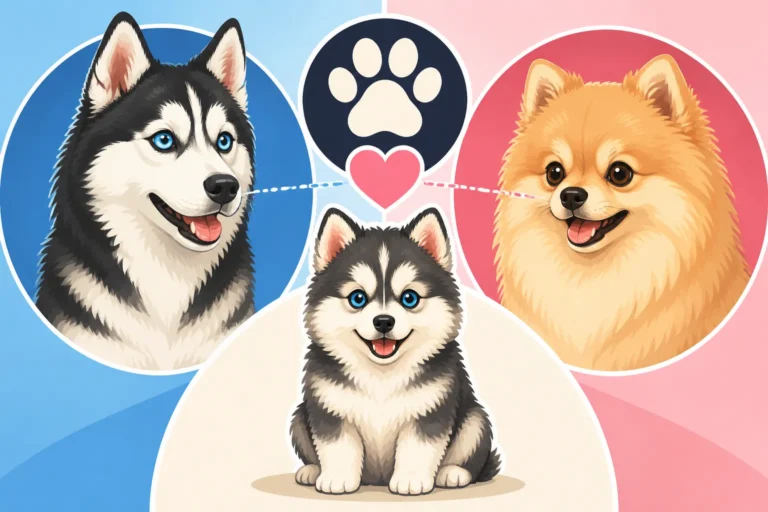
Let's break it down further. "F1" literally means "First Filial Generation." This designation is given to puppies that are the direct result of breeding two purebred dogs from different breeds. In the case of a Pomsky, this means an F1 Pomsky has one purebred Siberian Husky parent and one purebred Pomeranian parent. There’s no mixing of previous Pomsky generations in an F1. It’s the purest form of the crossbreed, the very initial blend of those two distinct genetic lines.
This first cross is often where the magic, and sometimes the unpredictability, happens. You're combining two vastly different gene pools, and the outcome can be a delightful surprise, or a wide variation within the same litter. Each F1 puppy gets 50% of its genes from its Husky parent and 50% from its Pomeranian parent, but how those genes express themselves is where the real fun begins. It's like tossing a coin on every single trait; some will lean Husky, some will lean Pomeranian, and some will be a unique blend.
The Importance of First-Generation Crosses
First-generation crosses are incredibly important for several reasons. For starters, they're the foundation of the entire Pomsky breed. Without the initial F1 crosses, there would be no F2, F3, or multigen Pomskies. They represent the moment when the two breeds officially "meet." From a genetic diversity standpoint, F1 crosses often benefit from what's called "hybrid vigor." This concept suggests that crossing two unrelated purebred lines can sometimes lead to offspring that are healthier and more robust than either parent, due to increased genetic diversity. Essentially, undesirable recessive genes from one breed might be masked by dominant, healthy genes from the other, reducing the likelihood of certain breed-specific ailments appearing.
However, "hybrid vigor" isn't a magical shield against all health problems. An F1 Pomsky can still inherit any health issues common to either the Husky or the Pomeranian, so it's not a guarantee of perfect health. It simply means they might be less prone to conditions that are a result of limited gene pools found in highly inbred purebred lines. Responsible breeders will still conduct health screenings on both parent dogs to minimize risks, just as they would for any purebred litter.
The Parents of an F1 Pomsky: Husky and Pomeranian
The creation of an F1 Pomsky is a deliberate and carefully managed process, primarily due to the significant size difference between the Siberian Husky and the Pomeranian. It's not something that happens accidentally, and it certainly isn't a simple backyard breeding scenario. The choices made about the parent dogs directly impact the health, size, and temperament potential of the resulting F1 litter.
The specific roles of each parent breed are crucial, particularly for the safety and well-being of the female dog during pregnancy and birth. This is one of the key reasons why a particular breeding strategy is almost always followed for F1 Pomskies, ensuring the best possible outcome for both the mother and the puppies.
The Husky Dam: Why Size Matters
For an F1 Pomsky, the mother (dam) must be the Siberian Husky. This isn't a preference; it's a non-negotiable safety requirement. A female Pomeranian simply isn't large enough to safely carry and give birth to puppies sired by a much larger male Siberian Husky. The size of the puppies can easily exceed what her small frame could handle, leading to severe complications, potential harm to the mother, and even the loss of the entire litter. This crucial detail is often Why a Pomsky Cannot Be Bred Naturally.
The Husky dam provides the crucial uterine environment for growth and gestation. She contributes half of the genetic material, including the potential for traits like the striking blue eyes, the thick double coat, and the classic "Husky howl" that many people adore in Pomskies. However, she also passes on the potential for some Husky-specific health concerns. A responsible breeder will have their Husky dam fully health tested for conditions like The Eyes a Pomsky Gets From the Husky or Hip Dysplasia in a Twenty Pound Pomsky, reducing the risk for the puppies. The temperament of the dam is also incredibly important, as her disposition will influence the puppies' early development and socialisation.
The Pomeranian Sire: Contributing the Smaller Half
Conversely, the father (sire) in an F1 Pomsky cross is always the purebred Pomeranian. He contributes the other 50% of the genetic blueprint, bringing in the smaller stature, fluffy coat variations, and often the spirited, confident personality associated with Pomeranians. While his physical size is much smaller than the Husky dam, his genetic contribution is equally significant. He's the primary reason a Pomsky is considered a "miniature Husky" rather than just another medium-sized dog.
The Pomeranian sire also brings his own set of potential genetic predispositions. For instance, he can pass on genes related to dental crowding, patellar luxation, or even tracheal issues. The Collapsing Trachea a Pomsky Gets From the Pomeranian is a concern often inherited from the Pomeranian side. Just like the Husky dam, a reputable breeder will ensure the Pomeranian sire undergoes thorough health screenings, specifically looking for common Pomeranian health issues, to ensure the healthiest possible offspring. His temperament also plays a vital role in shaping the overall disposition of the F1 Pomskies, contributing to the blend of traits that makes each Pomsky unique.
The Role of Artificial Insemination
Given the drastic size disparity between a male Pomeranian and a female Siberian Husky, natural breeding is simply not feasible, and more importantly, it's unsafe. Therefore, F1 Pomskies are almost exclusively conceived through artificial insemination (AI). This veterinary procedure allows for the safe collection of semen from the Pomeranian sire and its controlled introduction into the Husky dam. It’s a precise process, often involving careful timing and monitoring of the female's reproductive cycle to maximize the chances of conception.
Artificial insemination is a significant factor in Why Artificial Insemination Sets a Pomsky's Floor Price. It requires the expertise of a veterinarian, specialized equipment, and sometimes multiple attempts, all of which add to the overall cost and complexity of breeding F1 Pomskies. This method ensures the safety of both parent dogs and the eventual litter, making it the only responsible way to create a first-generation Pomsky. It's a testament to the dedication required from ethical breeders to bring these crossbreeds into the world.
Characteristics and Predictability of an F1 Pomsky
One of the most defining, and sometimes challenging, aspects of an F1 Pomsky is its inherent unpredictability. Unlike purebred dogs, which have been selectively bred over many generations to produce consistent traits, an F1 Pomsky is a genetic toss-up. You're combining two breeds with very distinct characteristics, and the outcome can vary wildly even within the same litter. This is part of their charm, but also something prospective owners need to be acutely aware of.
No two F1 Pomskies are exactly alike, and that's truly what makes them so fascinating. You might see a litter where one puppy looks like a fluffy miniature Husky, while its sibling looks much more like a larger Pomeranian. This variability extends beyond just looks, influencing their size, coat type, and even their behavioral quirks.
The Genetic Lottery: Why F1s Vary So Much
The reason F1 Pomskies are such a "genetic lottery" lies in the principles of Mendelian inheritance. Each parent contributes a random half of its genetic material to each puppy. When the parents are from two breeds that are genetically very different – like the Husky and the Pomeranian – there's a huge array of possible combinations. There isn't a long line of previous Pomsky generations to "stabilize" the traits. It's truly a 50/50 blend at the genetic level, but how those genes express phenotypically (what you actually see) can range dramatically.
Imagine trying to mix two distinct paint colors without a precise formula; sometimes you get a perfect blend, other times one color dominates. This is why you can see F1 littermates that look like they belong to entirely different breeds. Some might get the Husky's independent streak, while others inherit the Pomeranian's clingy nature. You might get a puppy with all the floof of a Pomeranian but the size of a smaller Husky. It’s a big part of the reason Why an F1 Pomsky Is Not the One Breeders Want for consistency in breeding programs.
Size and Appearance: A Wide Spectrum
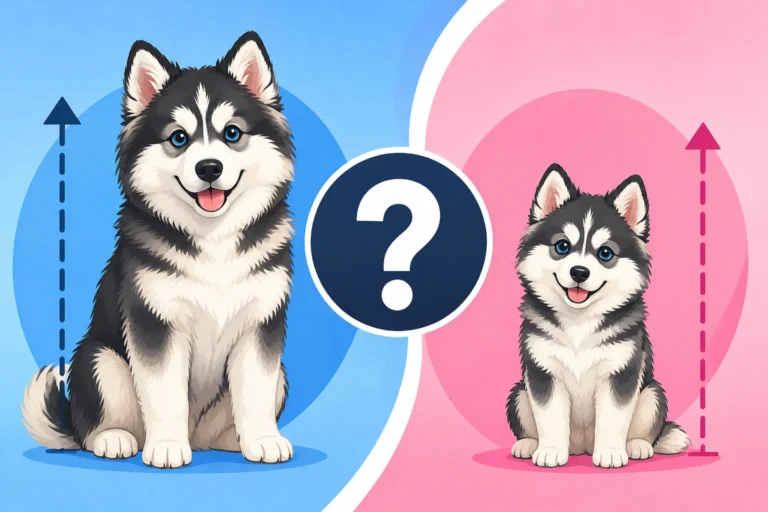
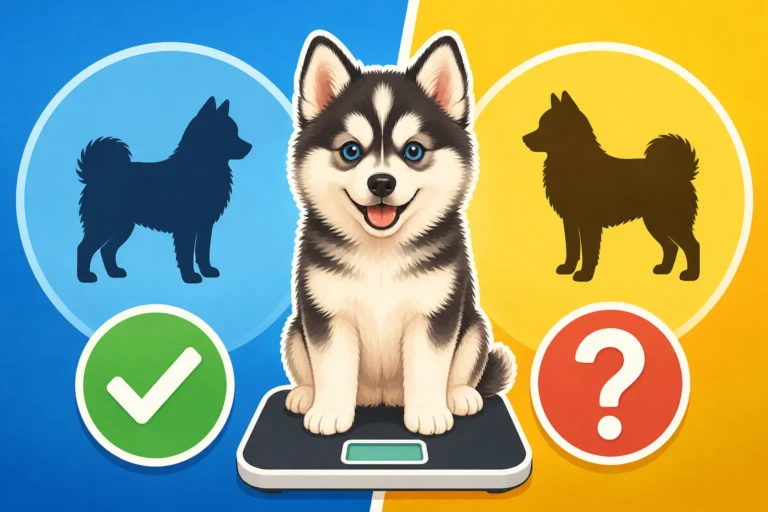
When it comes to size, an F1 Pomsky can literally be anywhere on the spectrum between a Pomeranian and a Husky. While the goal is often a smaller version of a Husky, the reality is that adult F1 Pomskies can weigh anywhere from about 10 pounds (leaning heavily Pomeranian) up to 30-35 pounds (leaning more Husky). What a Pomsky Actually Weighs can be a major point of contention for owners who bought a puppy expecting a very specific size. Some F1 puppies might have the delicate bone structure of a Pomeranian, while others will have the more robust build of a Husky.
Their appearance is equally diverse. Coat colors can include black and white, grey and white, red and white, sable, or even solid colors. Markings can range from the full Husky mask to none at all. Eye color is also a big variable; some F1 Pomskies will have the coveted blue eyes, others brown, or even heterochromia (one blue, one brown). Some may inherit the stand-up ears of a Husky, while others have ears that flop down more like a Pomeranian puppy's. You might get The Pomsky That Carries a Husky Coat at Twenty Pounds or one with a softer, more Pomeranian-like fluff. During shedding season, you’ll definitely be glad for reliable pet supply retailers like Chewy to stock up on undercoat rakes and deshedding tools, no matter what coat type your F1 gets.
Temperament Traits: A Blend of Two Worlds
The temperament of an F1 Pomsky is also a fascinating blend, capable of leaning towards either parent breed or creating a unique personality entirely. From the Husky side, they can inherit independence, a strong prey drive, high energy levels, and a tendency to "talk" rather than bark. You might find yourself with a Pomsky that loves to The Husky Howl in a Pomsky or attempts to be The Pomsky Escape Artist in a Twenty Pound Body. This means they can be intelligent and playful, but also stubborn and strong-willed, requiring consistent training and mental stimulation.
From the Pomeranian side, F1 Pomskies can get a more outgoing, confident, and sometimes "bossy" streak. They might be more prone to barking (though many still howl!), can be very affectionate, and enjoy being the center of attention. This blend means you could have a dog that's fiercely loyal and cuddly but also has an independent streak that makes recall training a challenge. It's essential for prospective owners to understand that their F1 Pomsky will be an individual, and early socialization and training are key to nurturing a well-adjusted companion. Finding suitable training treats and interactive toys on sites like Chewy can be a huge help in channeling that energy.
Health Considerations for F1 Pomskies
When considering an F1 Pomsky, health is, naturally, a top priority for any responsible potential owner. While crossbreeds often come with the promise of "hybrid vigor," it's crucial to understand what that truly means and what it doesn't. F1 Pomskies are not immune to health issues; rather, they inherit a broader spectrum of potential concerns from both parent breeds. A truly comprehensive health strategy involves understanding these risks and ensuring breeders take proactive steps to mitigate them.
The blend of genetics in an F1 Pomsky means they have the potential to express conditions from either the Siberian Husky or the Pomeranian, or even a combination thereof. This makes thorough health testing of the parent dogs absolutely paramount, as it’s the best way to predict and prevent the passing on of known genetic predispositions.
Hybrid Vigor: Is an F1 Healthier?
The concept of "hybrid vigor," or heterosis, suggests that the offspring of two genetically distinct purebred parents may exhibit increased health and fertility compared to their parent breeds. In theory, by mixing two separate gene pools, you dilute the concentration of specific recessive genes that might cause breed-specific diseases. For example, if a disease is prevalent in Pomeranians but rare in Huskies, an F1 Pomsky has a lower chance of inheriting two copies of the problematic gene needed to express the disease, compared to a purebred Pomeranian. This can make Whether an F1 Pomsky Is Healthier Than an F2 a common question.
While hybrid vigor can offer some benefits, it's not a cure-all. An F1 Pomsky is not inherently immune to all diseases. They still carry the genetic predispositions from both the Husky and Pomeranian lines. They can still develop conditions common to either breed. For instance, if hip dysplasia is present in the Husky line, or patellar luxation in the Pomeranian line, an F1 Pomsky can still be affected. It simply means that the overall risk for some specific recessive diseases might be slightly reduced due to the broader genetic mix, but it doesn't eliminate the risk entirely. This makes ethical breeding practices, including comprehensive health clearances for both parent dogs, absolutely essential.
Inherited Health Concerns from Both Sides
An F1 Pomsky inherits genes from both a Husky and a Pomeranian, meaning they are susceptible to the health conditions common to each breed. This is why it's so important for prospective owners to research The Two Opposite Disease Lists a Pomsky Inherits thoroughly. From the Husky side, potential concerns can include certain eye conditions like juvenile cataracts or progressive retinal atrophy, and conditions like hip dysplasia. These are structural or hereditary conditions that can manifest in an F1 Pomsky.
From the Pomeranian side, an F1 Pomsky might inherit a predisposition to conditions such as patellar luxation (slipping kneecaps), The Collapsing Trachea a Pomsky Gets From the Pomeranian, dental crowding (which can lead to periodontal disease), and Alopecia X (black skin disease). Zinc responsive dermatosis is another condition seen in northern breeds like Huskies that can crop up in Pomskies. While "hybrid vigor" might offer a slightly wider genetic base, responsible breeders will perform extensive health checks on both parent dogs for these specific issues, including hip and elbow evaluations, eye certifications, and patella examinations. This diligence helps to ensure that the F1 puppies have the best possible start in life, free from easily preventable inherited conditions.
F1 vs. Later Generations: Why Breeders Often Aim Beyond F1
While F1 Pomskies are the foundation of the breed and highly sought after, many dedicated breeders actually aim to produce F2, F3, and even multi-generational (multigen) Pomskies. This isn't because F1s are somehow "lesser," but rather due to a desire for greater consistency and predictability in future generations. The vast variability of F1s, while exciting, can make it challenging to produce puppies with specific desired traits.
The progression from F1 to later generations represents the ongoing effort of breeders to refine the Pomsky, moving it closer to a more consistent and recognized type, much like how many established purebreds developed over centuries. This meticulous breeding process involves careful selection to accentuate positive traits and minimize undesirable ones.
What F2, F3, and Multigen Mean for Pomskies
Let's clarify what these other "F" terms mean.
- F2 Pomsky: An F2 (Second Filial Generation) Pomsky is the result of breeding two F1 Pomskies together. This means the puppy has two parents who are both 50% Husky and 50% Pomeranian. While the genetic contribution is still technically 50/50 from the original purebred lines, the combination of genes in an F2 can be even more varied than in an F1, as there's a wider mix of traits coming from two mixed parents.
- F3 Pomsky: An F3 (Third Filial Generation) Pomsky is born from breeding two F2 Pomskies together.
- Multigen (Multi-Generational) Pomsky: This term is used when a Pomsky is an F3 or higher generation. For example, an F4 Pomsky would be the result of breeding two F3 Pomskies.
As you move beyond F1, the goal of breeders is to selectively breed dogs that exhibit the most desirable Pomsky traits—a balanced size, a beautiful coat, good temperament, and robust health. This involves carefully choosing parent dogs from previous Pomsky generations that consistently display these characteristics, hoping to "set" those traits for future litters. This systematic approach helps in achieving a more uniform outcome, which is the cornerstone of developing any new breed.
The Quest for Consistency in Future Generations
The primary reason breeders focus on F2, F3, and multigen Pomskies is the pursuit of consistency. As mentioned, F1 Pomskies can be incredibly varied in size, appearance, and temperament. While fascinating, this variability makes it difficult to reliably predict what an F1 puppy will grow up to be. Imagine a breeder trying to establish a "standard" for the Pomsky breed; if every F1 litter is a complete wildcard, it's an impossible task. This is Why Pomsky Breeders Prefer F2 and Beyond.
By breeding F1 to F1 (to get F2), and then F2 to F2 (to get F3), breeders are attempting to narrow down the genetic possibilities and create a more predictable line of Pomskies. They select breeding pairs that embody the traits they wish to see consistently reproduced—for example, a specific size range, a desirable coat texture, or a calm disposition. This selective breeding over generations aims to move the Pomsky from being merely a "designer cross" to potentially a recognized breed with its own consistent characteristics. It's a long-term process that requires immense dedication, careful record-keeping, and a deep understanding of genetics and breed standards. The hope is to eventually produce Pomskies that "breed true," meaning they consistently pass on their traits to their offspring.
F1 Pomsky Characteristics Comparison
To help illustrate the differences and similarities, here's a quick comparison between F1 and F2 Pomskies, keeping in mind that variability exists within each generation.
| Feature | F1 Pomsky | F2 Pomsky |
|---|---|---|
| Parents | Purebred Husky X Purebred Pomeranian | F1 Pomsky X F1 Pomsky |
| Genetic Mix | ~50% Husky, ~50% Pomeranian | ~50% Husky, ~50% Pomeranian (on paper) |
| Predictability | Least predictable, wide variation in litter | More varied than F1 in some traits, aiming for consistency |
| Size Range | Very broad (10-35 lbs) | Still broad, but breeders aim for narrower ranges |
| Appearance | Can lean heavily Husky or Pomeranian, or blend | Can be more consistent, but still varied |
| Temperament | Mix of Husky/Pomeranian traits, less predictable | Similar mix, breeders select for desired traits |
| Hybrid Vigor | Potentially highest due to initial cross | Still present, but often less pronounced than F1 |
| Breeding Goal | Initial creation of the crossbreed | To selectively refine and stabilize traits |
Conclusion
Understanding what "F1" means for a Pomsky is the first step in appreciating the complexities and unique charm of this crossbreed. An F1 Pomsky is a direct offspring of a purebred Siberian Husky and a purebred Pomeranian, representing the very first blend of these two distinct worlds. This initial cross often results in a wide array of fascinating variations in appearance, size, and temperament, making each F1 Pomsky a delightful and sometimes unpredictable individual.
While the appeal of an F1 Pomsky lies in its direct genetic link to its purebred parents and the potential for hybrid vigor, it's also the generation where consistency is least assured. This delightful unpredictability is what drives dedicated breeders to pursue later generations, like F2 and multigen, with the goal of refining and stabilizing the Pomsky's characteristics. Ultimately, bringing an F1 Pomsky into your life means embracing a dog that is truly one of a kind, a beautiful blend of two beloved breeds, ready to bring endless joy and a touch of the unexpected to your home.
Disclaimer
This article is for general informational purposes only and does not constitute professional advice. Laws, prices and regulations vary by location and change over time. Consult a qualified professional for guidance on your specific situation.