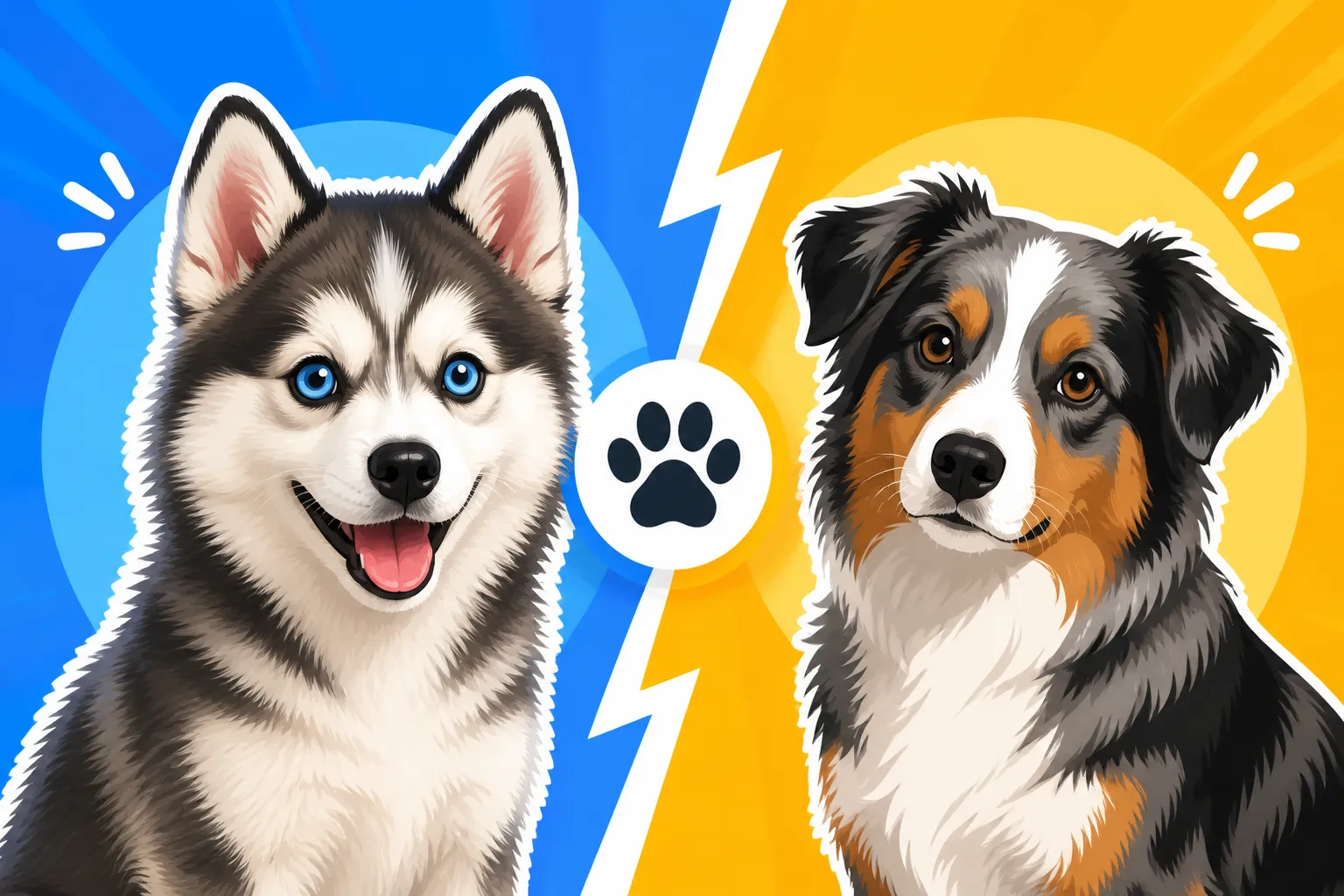
Pomsky or Miniature American Shepherd
Choosing between a Pomsky and a Miniature American Shepherd can be tricky: both are compact, clever dogs, but their size, predictability, exercise needs, and grooming demands can differ a lot. This guide compares what daily life with each breed is really like, so you can look beyond puppy photos and decide which dog is a better fit for your home and routine.
Pomsky and Miniature American Shepherd at a glance
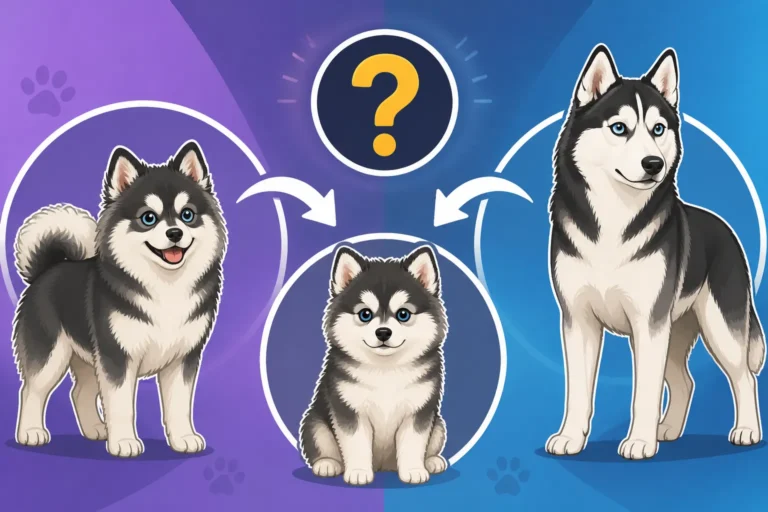
A Pomsky is a cross between a Pomeranian and a Siberian Husky, while the Miniature American Shepherd is a distinct, established breed. That difference matters: a Pomsky’s adult size and temperament can be harder to predict, even within the same litter. Miniature American Shepherds are more consistent in type, although individual dogs still vary.
| Trait | Pomsky | Miniature American Shepherd |
|---|---|---|
| Breed type | Pomeranian and Siberian Husky cross | Established herding breed |
| Adult size | Highly variable; many are small to medium, but some grow larger than expected | Generally small to medium, with a more consistent height range |
| Energy | Often lively and mentally alert; needs vary by individual | Usually energetic and happiest with regular activity and training |
| Coat care | Often a dense double coat with substantial shedding; coat can vary | Double coat that sheds and needs routine brushing |
| Training style | Intelligent but may be independent, vocal, or easily distracted | Intelligent, responsive, and often strongly motivated to work with a person |
| Best fit | A household comfortable with variation and consistent management | An active home prepared to provide training, exercise, and a job-like routine |
Breed type and predictability
The Miniature American Shepherd is not simply a small Australian Shepherd or a Pomsky with a more predictable label. It is a separate breed developed in the United States from small herding dogs related to Australian Shepherds. It has a more established breed type, so its likely size, coat, and general working-dog tendencies are easier to anticipate than those of a Pomsky.
A Pomsky, by contrast, can inherit different combinations of traits from its parents. One puppy may be compact and Pomeranian-like, while a littermate may grow taller, heavier, or more Husky-like. A puppy’s fluffy appearance or small paws are not guarantees of adult size. If size is a deciding factor, look closely at the parents and the breeder’s records, and read What a Pomsky Actually Weighs Full Grown before assuming a Pomsky will stay tiny.
Size and the realities of everyday handling
Miniature American Shepherds are generally more predictable in height than Pomskies, but they are not miniature lap dogs. They are sturdy, athletic dogs, and a fit adult may be more physically capable than someone expects from the word “Miniature.” Pomskies can be smaller, but some grow into a medium-sized dog that needs more room, exercise, and secure handling than the buyer pictured.
This difference shows up in practical ways. A small Pomsky may be easier to lift into a car, but a dog that inherits a strong prey drive or escape instinct can still be difficult to manage outdoors. A Miniature American Shepherd may be easier to plan for by size, but its herding instincts and stamina can make it demanding in a sedentary home. Neither breed is automatically low-maintenance just because it is not a full-sized Husky or Australian Shepherd.
Appearance is a poor shortcut to fit
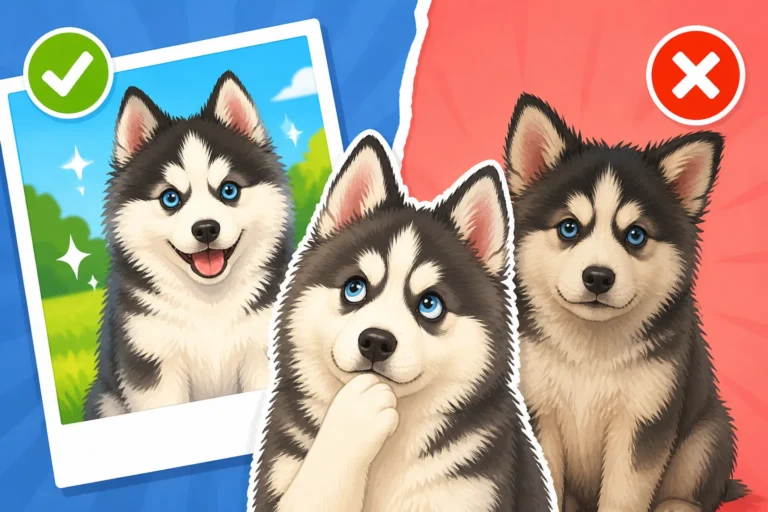
Pomskies often attract attention for Husky-like markings, blue eyes, upright ears, or a curled tail. Those traits are appealing, but they do not tell you whether a particular dog will be calm indoors, easy to train, or content with a short neighborhood walk. Appearance also changes as a puppy matures; coat color and facial markings may shift.
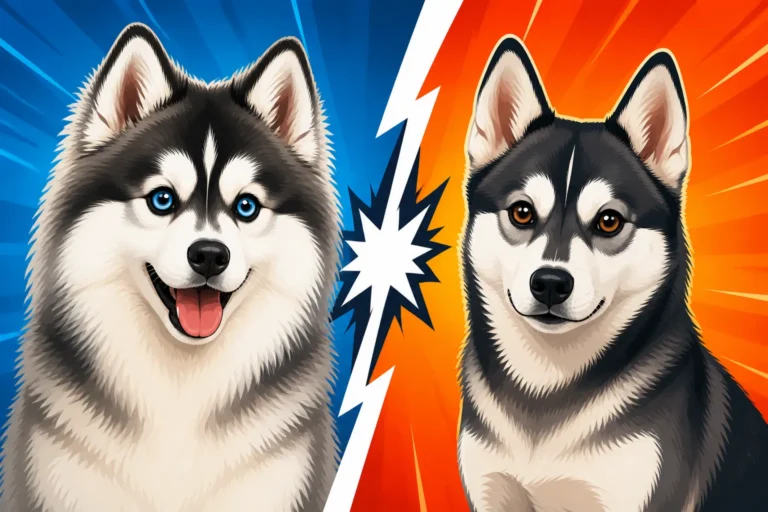
Miniature American Shepherds come in several coat colors and patterns, and they may also have striking eyes. Their looks can be eye-catching, but the more useful question is whether you can meet their needs for activity, socialization, and training. If you are choosing based on a photo, pause and consider What Nobody Warns a Pomsky Buyer About as well as the responsibilities that come with a high-energy herding dog.
Temperament and training differences
Both breeds are bright and observant, but they may use that intelligence differently. A Miniature American Shepherd was developed as a herding dog and often enjoys learning tasks that involve cooperation and direction. A Pomsky may be clever and quick to notice patterns, but some inherit a more independent streak or the urge to follow a scent, chase movement, or find their own entertainment.
Trainability is not the same as obedience
A Miniature American Shepherd may pick up cues quickly, but quick learning does not mean a dog will automatically obey in every setting. A dog that can perform a cue in the kitchen may still struggle to respond near a moving squirrel, at a busy park, or when another dog is nearby. Training needs to include gradual practice in different places, not just repeated commands at home.
Pomskies can learn just as impressively, but their motivation can vary. One dog may work eagerly for food or a game; another may understand the cue and decide that exploring is more interesting. Keep sessions short, reward the behavior you want, and practice before distractions become overwhelming. For a closer look at individual variation, see Whether a Pomsky Is Trainable at All.
Herding instincts, prey drive, and recall
Miniature American Shepherds may try to herd moving people, children, or other pets by circling, staring, or nipping at heels. That is not necessarily aggression, but it can be startling and needs calm, consistent training. Give the dog appropriate outlets such as structured games, trick training, or a well-run dog sport, rather than expecting instinctive behavior to disappear on its own.
Pomskies may inherit a strong interest in chasing or roaming, particularly if they take after the Husky side. Reliable recall can be difficult when a compelling distraction appears, so a secure enclosed area and a leash or long line are sensible safeguards. A fenced yard is helpful only if it is secure and supervised; a fence does not replace exercise or training. Explore Whether a Pomsky Needs a Fenced Yard before relying on the yard as your main safety plan.
Social behavior and life with children
Neither breed should be assumed to be automatically easy with children. A Miniature American Shepherd may be sensitive to fast movement and may attempt to control running children through herding behavior. A Pomsky may be small enough to be accidentally injured by rough handling, yet energetic enough to jump, mouth, or become overexcited during play.
For either dog, children should be taught to leave the dog alone while it is eating, resting, or retreating to its safe space. Adults need to supervise interactions, especially with toddlers, and make sure the dog has a way to disengage. Early, positive exposure to different people and situations helps, but it cannot replace supervision or respectful handling. More practical guidance is available in Whether a Pomsky Is Good With Children.
Exercise, grooming, and day-to-day care
Both breeds need more than food, a yard, and an occasional stroll. Their exact needs depend on age, health, and temperament, but regular movement and mental activity matter for each. The biggest mistake is assuming that a small dog has small exercise requirements—or that a large yard will keep an energetic dog satisfied without interaction.
How much activity each dog may need
A Miniature American Shepherd is often happiest with a mix of walks, training, play, and purposeful activity. This does not mean every dog needs to run for hours. It means a brief walk around the block may not be enough for a young, healthy dog that is alert and ready to work. Try activities such as scent games, fetch with rules, obedience practice, or beginner agility with a qualified instructor.
Pomskies also benefit from regular walks and brain work, but their build and stamina can vary considerably. A Pomsky with a compact frame may not be suited to the same exercise plan as a larger, athletic littermate. Build activity gradually, watch for fatigue, and avoid strenuous exercise in hot weather. The guidance in The Exercise a Pomsky Needs Every Day can help you think through a realistic routine rather than relying on a one-size-fits-all distance.
For either breed, enrichment can be simple: scatter part of a meal for the dog to find, rotate safe toys, or practice a few cues during the day. If you are looking for food puzzles or grooming tools, Chewy is one place owners may browse, but choose items based on the dog’s size, chewing style, and safety rather than buying a large collection all at once.
Coat care and shedding
Pomskies commonly have a dense double coat, though coat texture and length can vary. Loose undercoat can collect around the home, especially during seasonal shedding. Regular brushing helps remove shed hair and catch tangles before they tighten, particularly behind the ears, around the collar, and in the feathering on the legs. Learn more about coat variation in Whether a Pomsky's Coat Comes Out Pomeranian or Husky.
Miniature American Shepherds also have a double coat and need routine brushing. Their coat is not maintenance-free simply because it may look shorter or neater than a fluffy Pomsky’s. Check for debris after outdoor play, and take time to brush through areas where friction and moisture can cause tangles. For both breeds, avoid shaving the coat for convenience unless a veterinarian recommends clipping for a medical reason.
A practical grooming setup does not need to be complicated: a suitable brush, a comb to check down to the skin, dog-safe shampoo, nail trimmers, and a calm place to work. Chewy may be useful for comparing basic grooming supplies, but ask a groomer or veterinarian to help identify tools that suit your dog’s coat and skin. If brushing is new to a puppy, keep sessions brief and reward calm behavior rather than waiting until a full grooming session is unavoidable.
Home setup and managing boredom
A Pomsky may be a better match for someone who wants a compact companion but is still prepared for an active, vocal, and sometimes determined dog. A Miniature American Shepherd may suit a person who enjoys training and outdoor activities, but can become restless if left with little to do. In both cases, think about your weekday routine, not only your weekends.
Before bringing either dog home, plan for safe confinement, rest, and enrichment. A crate or gated area can help a puppy settle, but it should be introduced positively and should not become a substitute for attention, exercise, or toilet breaks. In an apartment, consider how the dog responds to hallway sounds and whether you can provide regular outdoor activity. A quiet home is not guaranteed with either breed; some Pomskies are vocal, and some Miniature American Shepherds alert readily to movement and noise.
Health, choosing a dog, and making the decision
A breed comparison should include health and sourcing, not just appearance and energy. Pomskies can inherit health risks associated with either parent breed, while Miniature American Shepherds have their own breed-related concerns. No individual dog’s future can be guaranteed by breed label alone, and a health history is more useful when supported by appropriate veterinary records and screening.
Health questions to ask
For a Pomsky, ask about the health of both parents and request documentation for relevant screening. Because the cross combines two breeds with different sizes and inherited risks, it is worth learning about both sides rather than accepting a general claim that mixed-breed dogs are automatically healthier. The Two Opposite Disease Lists a Pomsky Inherits explains why the parent-breed picture can be complicated.
For a Miniature American Shepherd, ask about health screening relevant to the breed, including eyes, joints, and inherited conditions. A responsible breeder should be willing to discuss results, explain what they mean, and answer questions without making unrealistic promises. For either breed, find out what veterinary care the puppy has received and whether the breeder will support you if a concern appears after the puppy comes home.
Also ask about temperament and everyday behavior. Has the puppy encountered household sounds, grooming, car travel, and gentle handling? How do the parents behave around people and other dogs? Health records matter, but so does thoughtful early care and a breeder or rescue that can describe the dog as an individual.
Finding the right source and avoiding surprises
A responsible breeder should welcome questions about parentage, health screening, socialization, and the puppy’s expected needs. Be cautious of sellers who promise a guaranteed adult size, use labels such as “micro” as if they were a health or temperament guarantee, or discourage you from meeting the dog and reviewing records. If considering a rescue, ask what is known about the dog’s history, behavior, medical needs, and comfort around children or other pets.
Do not choose solely by eye color, coat pattern, or the smallest puppy in a litter. For a Pomsky, ask how the breeder estimates adult size and what range previous offspring have reached. For a Miniature American Shepherd, ask about the dog’s working energy and sensitivity, not only its height. A thoughtful match is more valuable than a puppy that looks exactly like the one in an advertisement.
Which breed is more suitable for your household
A Miniature American Shepherd may suit you if you enjoy regular training, outdoor activity, and giving a dog structured jobs. It is usually the more predictable choice in terms of breed type and size, but it still needs meaningful daily engagement. If your household wants a low-energy dog that can be left alone for long stretches, this may not be the right match.
A Pomsky may suit you if you are comfortable with uncertainty in adult size and temperament and are ready for consistent grooming, training, and secure handling. It is not simply a miniature Husky, and a smaller body does not necessarily mean an easier dog. If you are a first-time owner, compare the support you can provide with the realities outlined in Whether a Pomsky Suits a First Time Owner.
The best choice comes down to the dog you can care for on an ordinary Tuesday: the rainy walk, the brushing session, the training practice, and the hours when you are busy. If you want a more predictable herding-breed profile and enjoy an active routine, consider the Miniature American Shepherd. If you are drawn to the Pomsky, make the decision with eyes open to its variation and needs—not just its looks. For either breed, a conversation with a veterinarian and a reputable breeder or rescue can help you assess a specific dog more accurately than a breed label can.
Disclaimer
This article is for general informational purposes only and does not constitute professional advice. Laws, prices and regulations vary by location and change over time. Consult a qualified professional for guidance on your specific situation.