Whether the Pomsky Delivered on Its Photos
When the internet first introduced the concept of the Pomsky, images of tiny, fluffy Huskies with piercing blue eyes flooded our feeds, setting an expectation that many hopeful owners eagerly embraced. However, the reality of owning a Pomsky often diverges significantly from those perfectly curated, often misleading, early photographs, leaving many to wonder if their beloved pup truly "delivered" on the initial promise. This guide delves into the origins of those expectations, the genetic realities of the breed, and what prospective owners should genuinely anticipate when bringing a Pomsky into their lives.
The Allure of the "Mini Husky" Image
It’s hard to deny the magnetic pull of those initial Pomsky photos. They captured hearts worldwide and fueled a demand that breeders rushed to meet. Many people envisioned a miniature version of the majestic Siberian Husky, a dog with all the striking features—the mask, the blue eyes, the thick coat—but in a more manageable, apartment-friendly package.
The Viral Photos and Unrealistic Expectations
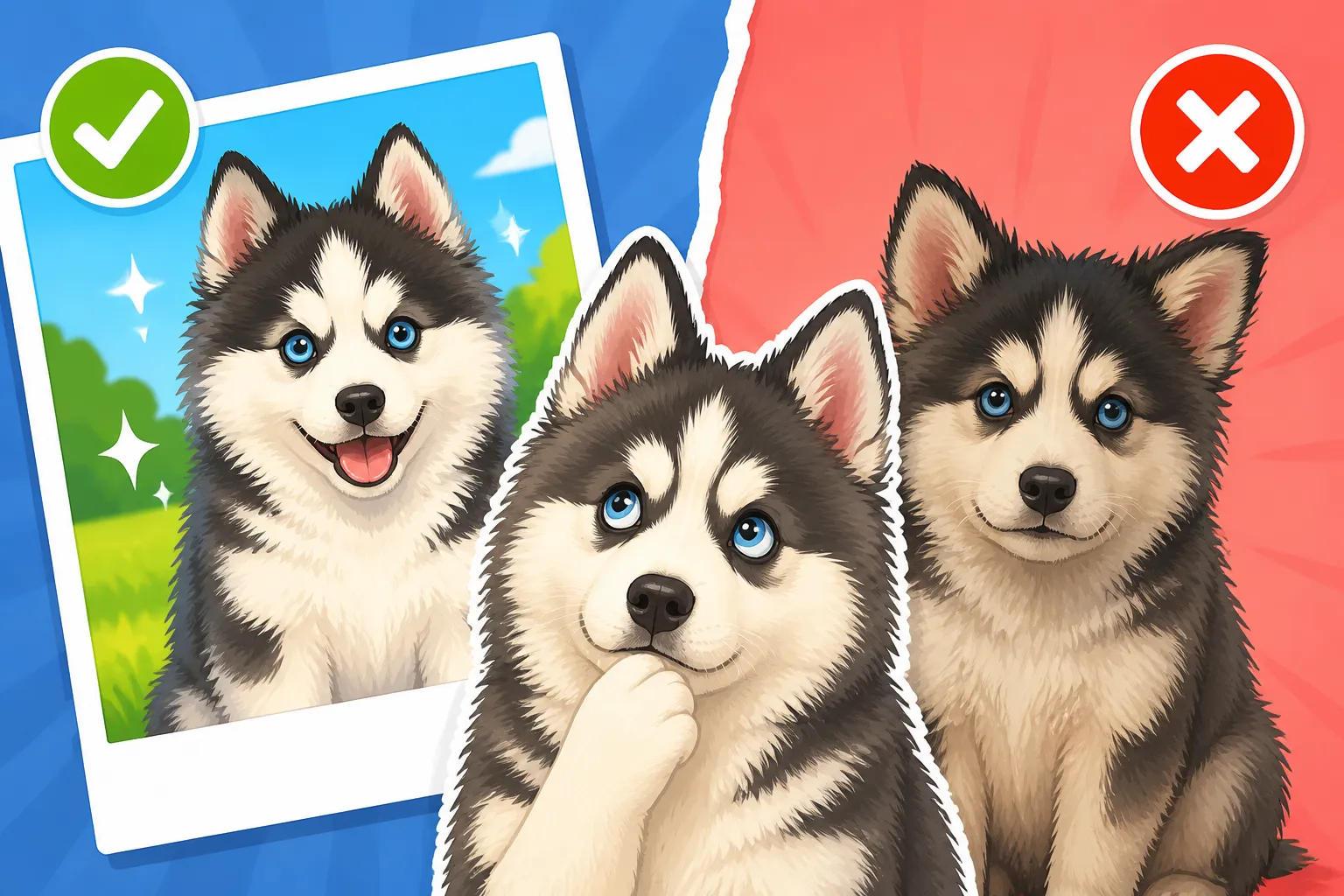
Remember those initial images that went viral, the ones that sparked the entire Pomsky craze? Well, the truth is, many of The 2011 Photos That Were Not Pomskies were actually of other breeds, like the Alaskan Klee Kai, or even cleverly photoshopped images. They presented an idealized vision: perfectly symmetrical Husky markings, often solid blue eyes, and an impossibly small, perpetually puppy-like size. This created a profound disconnect between what people thought they were getting and the actual genetic possibilities of the cross. People would sign up for waitlists, paying significant deposits, based purely on these captivating but often inaccurate visual representations. It was a marketing phenomenon, accidental or not, that shaped the breed's initial perception more than any scientific or breeding standard.
This initial wave of online imagery set the bar impossibly high. Buyers, myself included at one point, would pore over these pictures, imagining their future companion. We pictured a specific size, a particular look, and a certain temperament that seemed to embody the best of both parent breeds. When the actual pups arrived, or when people saw Pomskies in real life, the differences could be jarring. It was like ordering a gourmet meal from a glossy magazine photo, only to receive a perfectly fine, but distinctly different, dish in person. The dream of the "mini Husky" was firmly implanted in the public consciousness long before The 2012 Litter That Made the Pomsky Real even came along, and that dream didn't always align with genetic reality.
The Promise of Predictable Perfection
The very idea of a "designer breed" often implies a certain level of predictability—that you’re getting the "best of both worlds" in a consistent package. People assumed that since the Pomsky was a deliberate cross, breeders would have some control over how traits manifested. They hoped for the intelligence and friendliness of a Husky blended with the portability and potential cuddliness of a Pomeranian, all wrapped up in that irresistible aesthetic. This promise of predictable perfection was a huge selling point.
Unfortunately, genetics don't work quite like that, especially in early generation crosses. The traits from each parent can combine in countless ways, leading to a wide spectrum of appearances and temperaments. The promise wasn't truly about perfection, but about an attempt at a desirable combination, which, by its very nature, carries a high degree of variability. It's easy to see why prospective owners felt let down when their Pomsky puppy grew up to look more like a fluffy Pomeranian with longer legs than the miniature Husky they saw in those viral photos. The early narrative sold a certainty that simply doesn't exist in the unpredictable world of canine genetics.
The Reality of Pomsky Genetics and Appearance
Understanding the reality of Pomsky genetics is key to tempering expectations. This isn't a purebred dog with generations of established breed standards; it's a relatively new crossbreed, and that means a wider range of possibilities.
The Genetic Lottery: Why Pomskies Vary So Much
Every Pomsky is a roll of the genetic dice. When you cross a Siberian Husky with a Pomeranian, you're essentially combining two very different blueprints. There's no guarantee which traits from which parent will dominate, or even how they will combine. This is precisely Why an F1 Pomsky Is Not the One Breeders Want if they are aiming for consistency. An F1 Pomsky (first generation, Husky x Pomeranian) will show the most variability, as the genes are mixing for the very first time in this combination.
This genetic lottery means that out of a single litter, you might have puppies that strongly resemble one parent, others that are a near-perfect blend, and some that look like a completely unique mix. Some might inherit the Husky's leg length and body shape but with a Pomeranian's facial structure, while others could have the compact body of a Pomeranian but with the Husky's markings. It's fascinating from a genetic perspective, but it can be frustrating for someone who bought into the "mini Husky" image wholeheartedly. This variability also extends to health traits, which is why Whether an F1 Pomsky Is Healthier Than an F2 is a common question, as later generations might allow for more selective breeding.
Common Pomsky Appearances vs. the Idealized Image
So, what do most Pomskies actually look like? Far more often than the miniature Husky ideal, you'll find a dog that leans visually towards the Pomeranian side, often with a slightly larger, more robust build than a purebred Pom. Many will have the upright ears and curled tail that are characteristic of Spitz breeds, but their coat density, facial features, and overall body structure can be quite varied. It's a spectrum, not a single, consistent look. Whether Most Pomskies Look Like Big Pomeranians is a question many owners ponder, and often, the answer is yes, at least in certain features.
The reality is that while some Pomskies do inherit those striking Husky blue eyes and mask, it's not a given. Many have brown eyes, or one blue and one brown (bi-eyed), or even merle eyes if that gene has been introduced through one of the parent lines. The beautiful facial mask, so iconic of the Husky, is also not guaranteed. You might get a solid-faced Pomsky, or one with a more subtle white blaze. It’s important to appreciate the individuality of each Pomsky rather than fixating on an image that, in many cases, was never representative of the breed's general population.
Coat Types and Markings: Beyond the Husky Look
When it comes to coats, Pomskies can inherit a range of textures and densities. The standard double coat, common to both parent breeds, is typical, but the length and softness can vary. Some Pomskies will have a denser, fluffier coat resembling a Pomeranian, while others might have a sleeker, more Husky-like coat. There's also the "wooly" coat type, which is longer and more prone to matting, often requiring more intensive grooming. You can learn more about this in The Three Pomsky Coat Types.
As for markings and colors, the palette is vast. While the classic black and white or grey and white Husky markings are highly sought after, Pomskies come in reds, sables, creams, solid colors, and even merle patterns (though merle is not naturally found in purebred Huskies or Pomeranians and indicates the introduction of another breed or a specific line). The "mask" often associated with Huskies isn't a given; many Pomskies have less defined facial patterns or none at all. The blue eyes, while captivating, are also a genetic lottery. Many beautiful Pomskies have warm brown eyes, and this doesn't make them any less genuine or wonderful. Expecting a specific coat color or eye color is often where disappointment can set in, because nature rarely takes specific orders.
Temperament and Size: More Than Just Looks
Beyond the visual aspects, the true "delivery" of a Pomsky also hinges on their personality and physical size, both of which can be just as unpredictable as their appearance.
The Unpredictable Nature of a Mixed Breed Temperament
Just as with looks, a Pomsky's temperament is a blend, not a predictable recipe. They can inherit the independent, sometimes aloof nature of a Husky, coupled with their famous vocalizations and strong prey drive. Or, they might lean more towards the intelligent, sometimes tenacious and watchful personality of a Pomeranian. Many owners discover their Pomsky has The Pomsky Escape Artist in a Twenty Pound Body, making secure fencing a must. Others find their home filled with the unique sounds of Why a Pomsky Talks Instead of Barking rather than traditional barking.
It's crucial for prospective owners to prepare for a wide range of behavioral traits. You might get a highly social, outgoing dog, or one that's a bit more reserved. Energy levels can vary from surprisingly high, requiring significant daily exercise, to more moderate. Training can be a delightful challenge, as both parent breeds are intelligent but can also be notoriously stubborn. Relying solely on the charming image of a tiny, calm lap dog can lead to significant behavioral frustrations if the Pomsky inherited a strong drive to run or a tendency to be vocal. This is why it's so important to really understand the potential behavioral traits rather than just the aesthetic.
Size Surprises: When a "Mini" Isn't So Mini
This is perhaps one of the biggest areas where expectations clash with reality. Those early photos often portrayed incredibly tiny dogs, suggesting a permanent puppy size. The truth is, What a Pomsky Actually Weighs can vary dramatically. While some Pomskies remain on the smaller side, closer to a large Pomeranian, many will grow to be much larger than anticipated, easily reaching the higher end of the 20-35 pound range, sometimes even more. Predicting a Pomsky puppy's adult size is notoriously difficult, even for experienced breeders. Whether a Pomsky Puppy's Size Can Be Predicted is a question frequently asked, and the honest answer is, not with absolute certainty.
Imagine expecting a dog that fits comfortably on your lap, only to find you have a hefty 30-pound canine that still thinks it's a lapdog! This size discrepancy can impact everything from living arrangements (apartments vs. houses with yards) to activity levels and even food costs. A bigger dog needs more food, more robust toys (perhaps sourced from Chewy!), and potentially larger equipment. This is where owners might feel the most significant disconnect from the "mini Husky" dream, as the practical implications of a larger-than-expected dog can be substantial.
| Trait | Idealized Online Image | Common Pomsky Reality |
|---|---|---|
| Size | Tiny, "teacup" or "miniature" Husky | 15-35 lbs (sometimes more), varying from large Pom to small Husky |
| Eyes | Piercing blue, often both blue | Brown, bi-eyed (one blue, one brown), or sometimes blue |
| Coat | Sleek Husky-like, but fluffy | Wide range from Pomeranian-fluff to Husky-dense, can be wooly |
| Markings | Perfect Husky mask, striking black/white or grey/white | Varied facial patterns, diverse colors, often less defined masks |
| Temperament | Calm, cuddly, easily trained | Independent, vocal, energetic, can be stubborn, strong prey drive |
| Shedding | Minimal (often overlooked in initial fantasy) | Heavy, especially during seasonal "blowouts" |
Bridging the Expectation Gap: What Prospective Owners Should Know
The key to a happy Pomsky ownership experience is realistic expectations. It’s about falling in love with the dog you get, not just the image you saw online.
Responsible Breeding and Realistic Guarantees
When seeking a Pomsky, it's absolutely vital to work with a responsible, ethical breeder. A good breeder will be transparent about the inherent variability in the breed and won't make outlandish promises about size, color, or temperament. They'll emphasize health testing for parent dogs, which is crucial for reducing the risk of inherited conditions like Slipping Kneecaps in a Pomsky or The Collapsing Trachea a Pomsky Gets From the Pomeranian. They should be able to discuss the health history of both parent lines.
Ethical breeders understand that predicting every single trait is impossible, especially with a crossbreed. Instead of guaranteeing a "toy" Pomsky or specific eye color, they'll focus on producing healthy, well-socialized puppies and educate prospective owners on the range of possibilities. They'll encourage you to meet the parent dogs if possible and observe the puppies' individual personalities developing. Remember, if a breeder is selling a Pomsky based solely on specific aesthetics with little regard for health or temperament, it's a major red flag. Always ask about the health tests a Pomsky breeder should show. If a deal seems too good to be true, or if you can't verify the parentage, then Whether a Cheap Pomsky Is Really a Pomsky becomes a very pertinent question.
Embracing the Pomsky for Who They Are
Ultimately, finding joy in a Pomsky means embracing their unique blend of traits. It means appreciating the individual dog you bring home, with all their quirks and characteristics, rather than holding them up against a mythical "mini Husky" standard. Your Pomsky might have brown eyes instead of blue, or a fluffy coat that leans more Pomeranian, or be larger than you initially imagined. But they will still be a loyal, often incredibly charming, and intelligent companion.
Preparing for a Pomsky means doing your homework beyond just looking at pretty pictures. Research both Siberian Huskies and Pomeranians thoroughly, understanding the full spectrum of their potential traits. Be ready for the energy and intelligence of a Husky, which means regular exercise and mental stimulation. Equip yourself with the right grooming tools for their double coat, which will shed, often heavily, and consider a diverse range of high-quality foods from retailers like Chewy to meet their varying nutritional needs as they grow. Be prepared for a dog that might be quite vocal and requires consistent, positive reinforcement training. Your Pomsky may not be the internet's "mini Husky," but they will be a wonderful, one-of-a-kind companion if you meet them with open arms and realistic expectations.
Disclaimer
This article is for general informational purposes only and does not constitute professional advice. Laws, prices and regulations vary by location and change over time. Consult a qualified professional for guidance on your specific situation.