Whether an F2 Pomsky Is a Bigger Gamble
When you’re dreaming of bringing a Pomsky into your home, it’s only natural to want to know what to expect. There's a lot of chatter out there about different generations, and a big question often surfaces: is an F2 Pomsky a bigger gamble than an F1? It’s a valid concern, as the genetic lottery can feel a bit daunting. This guide is here to unravel the complexities, helping you understand the nuances of F2 Pomskies so you can make an informed decision for your family.
Understanding Pomsky Generations: F1 vs. F2 Explained
Let's start with the basics of what these "F" numbers actually mean, because it's crucial to understanding the genetic landscape of your potential future furry family member. An F1 Pomsky is a first-generation cross, meaning it's a direct result of breeding a purebred Siberian Husky with a purebred Pomeranian. These dogs were the original "designer" Pomskies, and they often exhibit what's known as "hybrid vigor" – the idea that a first-generation cross can be healthier than its purebred parents due to a wider gene pool. However, the catch with F1s is that their appearance and temperament can be highly variable. You might get a pup that looks exactly like a mini Husky, or one that leans heavily towards its Pomeranian heritage, sometimes even within the same litter. This unpredictability, while exciting for some, can be a bit of a surprise for others.
Now, an F2 Pomsky is born when two F1 Pomskies are bred together. The goal of breeding F1 to F1 is often to try and create a more "solidified" type, hoping to achieve a greater consistency in traits like size, coat, and temperament. Breeders aiming for an F2 generation are typically looking to move towards a more defined breed standard, which is a common practice in the development of new breeds. However, this process introduces a different layer of genetic complexity. While the parents are both Pomskies, their own F1 genetic makeup is a blend, and when you breed two blends together, the possibilities for trait expression actually expand rather than narrow. It’s like mixing two bowls of fruit salad – you know what went in, but the exact proportion of each fruit in a spoonful can still be quite varied.
The journey from F1 to F2 is a fascinating one in genetics. When you breed two F1 Pomskies, you're essentially allowing for a reshuffling of the grandparent genes (Siberian Husky and Pomeranian) in a much more pronounced way. While an F1 pup gets a 50/50 split of genes from its purebred parents, an F2 pup gets a 50/50 split from its F1 Pomsky parents, meaning those original Husky and Pomeranian genes can combine in countless new ways. This can lead to some F2s looking remarkably like miniature Huskies, others more like larger Pomeranians, and a whole spectrum in between, even more so than in an F1 litter sometimes. It’s why you might encounter conversations about Whether an F1 Pomsky Is Healthier Than an F2 because the genetic mechanisms at play are so different between the generations.
Genetic Variability and Predictability in F2 Pomskies
When we talk about whether an F2 Pomsky is a "bigger gamble," a lot of that perception stems from the increased genetic variability you can see in this generation. While F1 Pomskies are themselves a mix and can be unpredictable, F2s take that unpredictability to another level, largely due to Mendelian inheritance patterns. Simply put, when you breed two F1 Pomskies, each carrying a mixed bag of Husky and Pomeranian traits, their offspring (the F2s) can inherit a much wider array of combinations. It’s less like a straight blend and more like drawing from a much larger pool of genetic possibilities.
This variability can manifest dramatically in physical appearance. For instance, you might see significant differences in size within an F2 litter. Some puppies could be smaller, closer to the Pomeranian side of the family, while others could be larger, favoring the Husky stature. The same goes for their beautiful coats. You could end up with a pup sporting the dense, plush double coat that’s so characteristic of Huskies, or one with a coat that leans more towards the stand-offish, softer texture of a Pomeranian, or anything in between. There are generally The Three Pomsky Coat Types to consider, and an F2 litter can produce all of them with varying degrees of likelihood. Eye color, muzzle length, and even ear set can also vary widely, making it genuinely challenging to predict exactly what an F2 puppy will look like as an adult based solely on its parents.
Beyond aesthetics, temperament can also be less predictable in F2 Pomskies. The delightful mix of the Husky's independent, sometimes stubborn nature and the Pomeranian's confident, often vocal personality can combine in unexpected ways. An F2 might inherit a stronger prey drive from its Husky lineage, making it more challenging around smaller pets or in unfenced areas, as discussed in The Prey Drive a Pomsky Gets From the Husky. Alternatively, it might lean into the Pomeranian's propensity for being quite vocal, leading to a pup that loves to express itself with an array of barks, howls, and chatters, akin to Why a Pomsky Talks Instead of Barking. While every puppy is an individual, the F2 generation simply offers more potential for these traits to combine in novel ways, which can feel like a gamble if you're hoping for a very specific personality type. Understanding this broader genetic spectrum is key to appreciating the charm and challenge of the F2 Pomsky.
| Feature | F1 Pomsky (Husky x Pomeranian) | F2 Pomsky (F1 Pomsky x F1 Pomsky) |
|---|---|---|
| Genetic Mix | Direct 50% Husky / 50% Pomeranian | Variable mix of Husky/Pomeranian genes (from F1 parents) |
| Appearance Predictability | Variable, can lean to either parent, but generally a clear mix | Wider variability; can strongly favor one grandparent breed or be a true blend |
| Temperament Predictability | Variable, blend of parent traits | Wider variability; individual traits can be more pronounced |
| "Hybrid Vigor" | Often cited as present, potentially healthier | May be less pronounced than F1, depends on F1 parents' health |
| Purpose | First cross, created new designer breed | Aim to stabilize traits, move towards a true "breed" standard |
| Breeding Stock | Purebred Husky dam, Purebred Pomeranian sire | F1 Pomsky dam, F1 Pomsky sire |
Potential Health Implications in F2 Pomskies
When considering an F2 Pomsky, the "gamble" aspect often weighs heavily on potential health issues. It's true that mixed breeds, in general, can sometimes benefit from a broader gene pool, theoretically reducing the incidence of certain breed-specific genetic conditions. However, this isn't a guaranteed shield, especially as you move into subsequent generations like F2. The critical point for F2 Pomskies is that they are inheriting genes from two F1 Pomsky parents, both of whom carry a mix of Husky and Pomeranian genetic predispositions. If both F1 parents happen to carry a recessive gene for a particular health issue, the F2 offspring have a higher statistical chance of inheriting two copies of that recessive gene, thus expressing the condition. This is why responsible breeding and health screening become paramount.
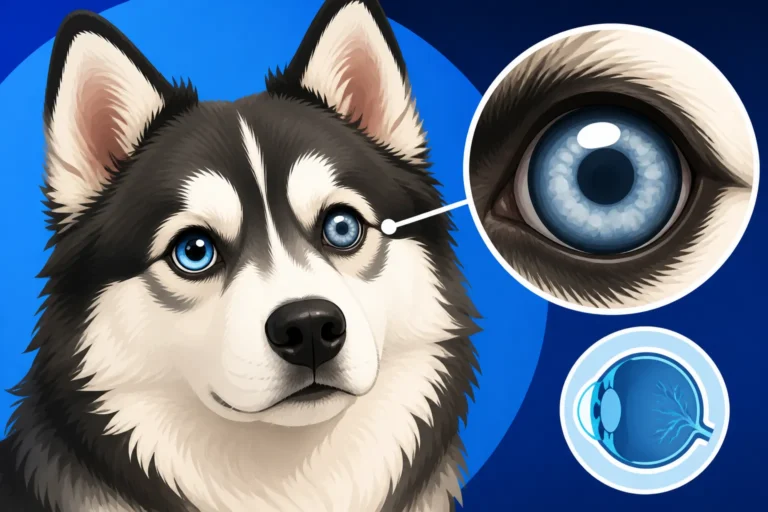
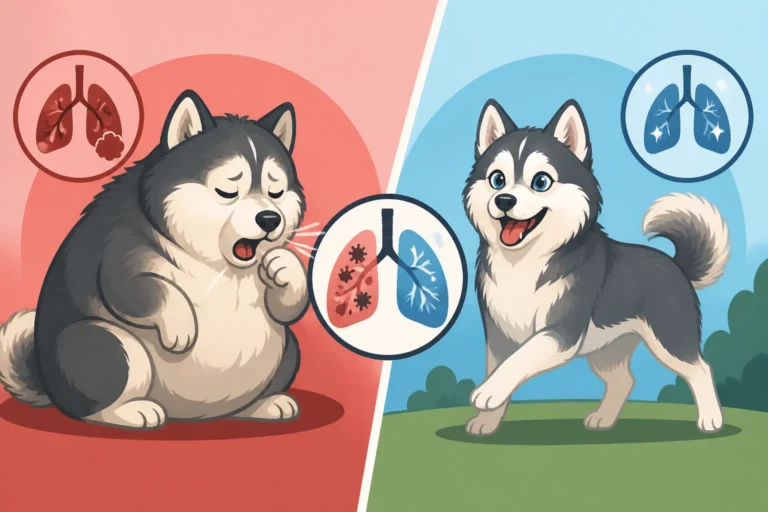
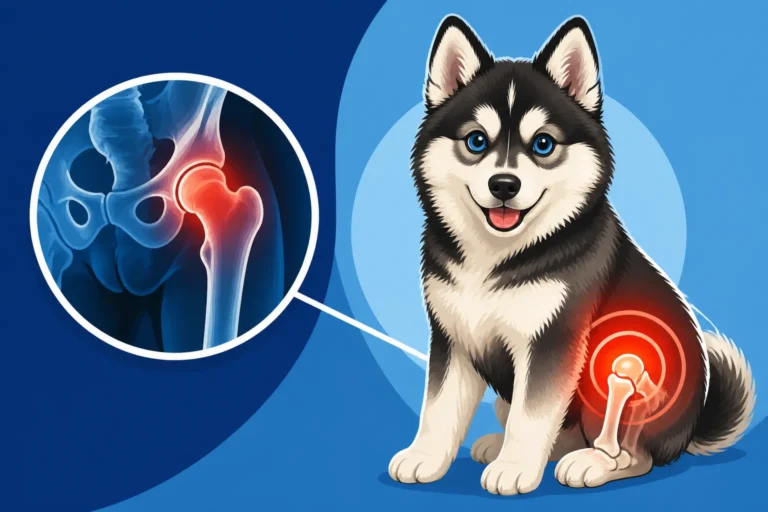
Let's look at some of the common health concerns inherited from the parent breeds that could potentially appear in an F2 Pomsky. From the Siberian Husky side, you might see predispositions to certain eye conditions, like cataracts or corneal dystrophy, a topic explored further in The Eyes a Pomsky Gets From the Husky. There's also a genetic component to issues like hip dysplasia, even in smaller dogs, which is discussed in Hip Dysplasia in a Twenty Pound Pomsky. On the Pomeranian side, we frequently encounter patellar luxation, or slipping kneecaps, a condition where the kneecap can pop out of place, as detailed in Slipping Kneecaps in a Pomsky. Another concern from the Pomeranian lineage is tracheal collapse, leading to a distinctive honking cough, which can be a serious issue for small breeds.
The challenge with F2s is that because you're breeding two F1 individuals, the genetic combinations can unexpectedly bring forward traits from either grandparent that might have been less dominant in the F1 parents themselves. This means that an F2 Pomsky could theoretically be at a higher risk for inheriting a combination of these issues if their F1 parents weren't thoroughly health tested and cleared. For instance, if both F1 parents unknowingly carry a mild predisposition to a specific joint issue or a dental problem like Dental Crowding in a Pomsky's Small Mouth, an F2 puppy could potentially inherit a more severe manifestation. This isn't to say F2s are inherently unhealthy, but rather that the potential for inheriting specific genetic conditions becomes a more complex calculation compared to an F1. It underscores the absolute necessity of working with transparent and health-conscious breeders, and considering comprehensive pet insurance like Healthy Paws for peace of mind.
Mitigating the "Gamble": What to Look for in an F2 Breeder
So, is an F2 Pomsky a bigger gamble? It can be, but a lot of that "gamble" can be significantly reduced by choosing the right breeder. This isn't just about finding someone who loves their dogs, but someone who understands the genetic intricacies of breeding F2s and acts with the utmost responsibility. The single most important factor is the health testing of the parent dogs. Any reputable F2 Pomsky breeder will have performed extensive health screenings on both F1 Pomsky parents before breeding them. This isn't just a casual vet check-up; it involves specific, certified tests.
You should be looking for certifications from organizations like the Orthopedic Foundation for Animals (OFA) for hip and elbow evaluations, patella (knee) examinations, and cardiac screenings. Eye certifications from the Canine Eye Registry Foundation (CERF) or the American College of Veterinary Ophthalmologists (ACVO) are also crucial, given the potential for eye issues from the Husky lineage. Additionally, thyroid panels and genetic testing for any known breed-specific conditions that run in either the Husky or Pomeranian lines should be standard practice. A truly transparent breeder will be eager to share these results with you and explain what they mean. This meticulous screening is what helps minimize the chances of passing on inherited diseases, turning a potential gamble into a much safer bet. You can learn more about these expectations in The Health Tests a Pomsky Breeder Should Show.
Beyond health testing, a responsible F2 breeder will also be incredibly upfront about the potential for variability in their puppies. They won't promise you a "miniature Husky" if the litter has a wide range of looks and sizes. They should be able to provide detailed information about the F1 parents' temperaments and physical traits, and even insights into the F0 (purebred Husky and Pomeranian) grandparents' lines. Asking about previous F2 litters from the same pairing, if applicable, can also give you a better idea of what to expect. They should be honest about the fact that an F2 can still be quite unpredictable in terms of appearance and temperament, and help you understand that while they strive for consistency, nature still has a strong hand in the outcome.
Finally, don't underestimate the importance of a robust health guarantee. A good breeder stands behind their puppies and will offer a written health guarantee covering hereditary conditions for a reasonable period, often a year or two. This shows their confidence in their breeding program and their commitment to the health of their puppies. They will also be a valuable resource for you throughout your Pomsky's life, available to answer questions and offer advice. Even with the most diligent breeding, life happens, and having pet insurance like Healthy Paws in place from an early age can provide a crucial safety net for unexpected vet bills, giving you immense peace of mind regardless of the generation you choose. Investing in a Pomsky, especially an F2, means investing in a breeder who prioritizes health and transparency above all else.
Disclaimer
Please remember that the information provided in this guide is intended for educational and informational purposes only, and does not constitute veterinary advice. Always consult with a qualified veterinarian for any health concerns or before making any decisions about your pet's health or treatment.