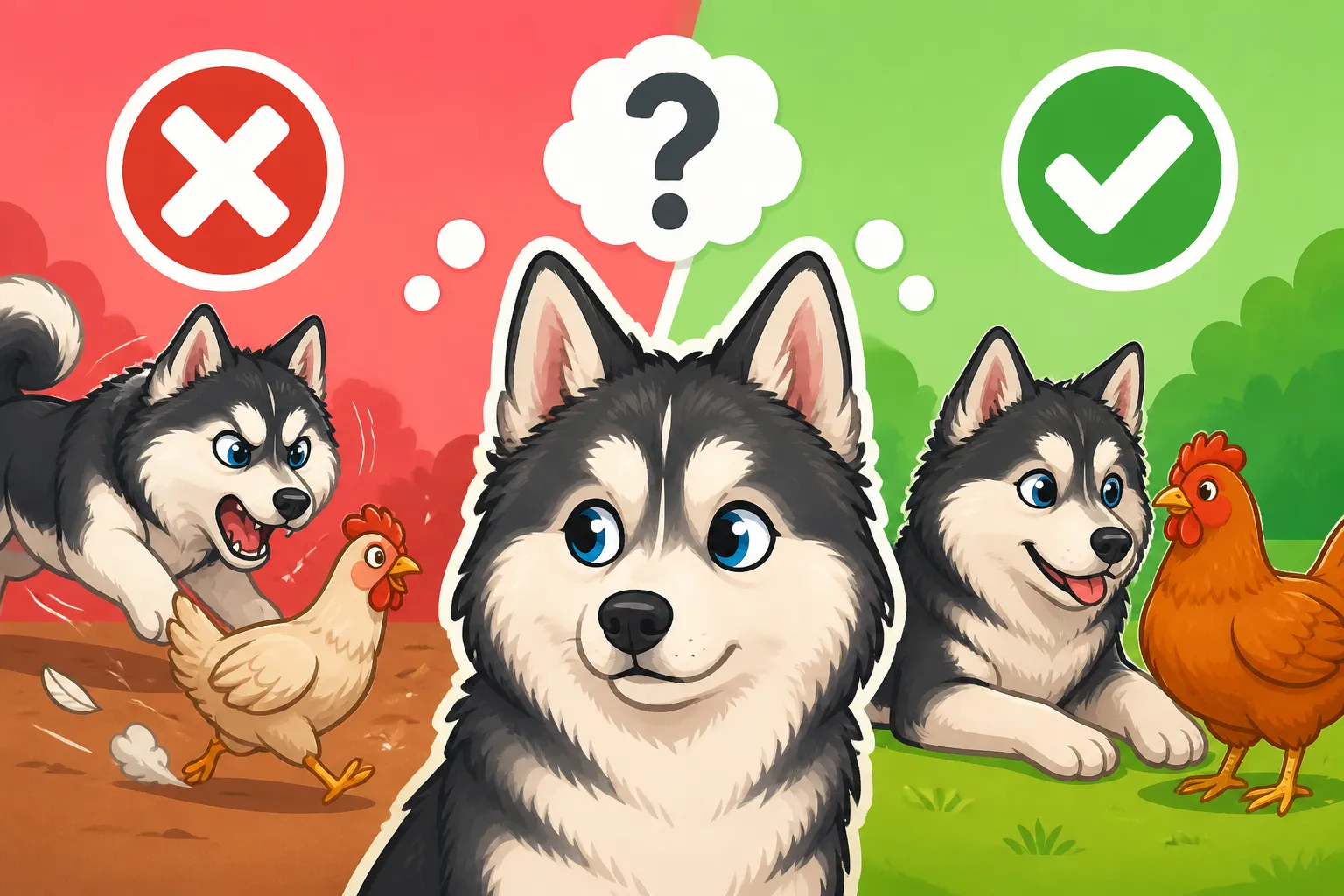
Whether a Pomsky Is Safe Around Chickens
Bringing a new Pomsky into a home that already cherishes a flock of chickens can feel like walking a tightrope – you love both your animals dearly, but their natural instincts might just be at odds. Many Pomsky owners find themselves agonizing over this very question: can these lively, intelligent dogs truly coexist peacefully with backyard poultry, or is it an accident waiting to happen? This guide will dive deep into the inherent traits of your Pomsky, the vulnerabilities of your flock, and practical, realistic strategies to foster a safe environment, helping you understand the real challenges and how to mitigate them.
Understanding the Pomsky's Instinctual Drives
When you bring a Pomsky into your life, you’re essentially getting a charming, intelligent, and often vocal blend of two very distinct breeds: the Siberian Husky and the Pomeranian. Both of these parent breeds carry traits that, when combined, can create a dog with a powerful instinct to chase and hunt, which is perfectly natural for them but potentially disastrous for your feathered friends. Ignoring these innate drives is not only unrealistic but can set both your Pomsky and your chickens up for failure.
The Husky's High Prey Drive
Let's be real, Siberian Huskies are not typically known for their gentle approach to small, scurrying creatures. They were originally bred to pull sleds and thrive in a working environment, but they also possess a strong, inborn prey drive. This isn't a flaw; it's simply part of their genetic makeup, a remnant of their ancestors' need to hunt for survival. A husky will often see a quick movement – like a chicken darting across the yard – and its brain immediately registers "chase." It's not malice; it's instinct.
This instinct means that even the most well-behaved Pomsky, one who has never harmed a fly, might suddenly respond to the sight, sound, or smell of a chicken in a way that’s completely unexpected. The thrill of the chase, the quick darting movements, the squawking – it can all trigger that deep-seated prey drive. For a Pomsky, whose smaller size can sometimes make us forget the Husky half of their DNA, this can be a rude awakening for an unsuspecting chicken owner. It’s why you often hear stories of Huskies escaping yards to hunt local wildlife; this drive doesn't discriminate between a squirrel, a rabbit, or your prize-winning hen. This particular trait is so strong that we even have a dedicated article discussing The Prey Drive a Pomsky Gets From the Husky.
The Pomeranian's Terrier-Like Tendencies
Now, let's consider the Pomeranian side of your Pomsky. While much smaller, Pomeranians often exhibit a feisty, "big dog" personality and can carry surprising amounts of determination and tenacity. Many small breeds, including Pomeranians, were historically bred to hunt vermin. Think about it – a tiny dog designed to go after rats and mice in tight spaces. This isn't quite the same as a wolf pack bringing down a deer, but it’s still a predatory instinct geared towards small, fast-moving animals.
When you mix this with the Husky’s powerful prey drive, you can end up with a Pomsky who might be smaller than a Husky, but no less determined when it comes to chasing. They might lack the brute force of a full-sized Husky, but they make up for it with agility, speed, and that Pomeranian persistence. A chicken, to them, can appear as a large, loud, and very tempting "toy" that moves in exciting ways. It's not about being aggressive; it's about following an ancient, ingrained pattern of behavior that tells them to pursue.
Assessing the Risk: Why Chickens Are Vulnerable
It's tempting to think that because your Pomsky is so loving and gentle with people, or even with other dogs, that they'll automatically extend that courtesy to chickens. Unfortunately, this is a common and dangerous misconception. Dogs often categorize animals differently; a chicken isn't a pack member or a human companion, but often falls into the "prey" category, especially if they weren't raised with chickens from puppyhood or thoroughly trained around them.
The "Prey" Appearance and Behavior of Chickens
Chickens are, by their very nature, prime targets for a dog with a prey drive. They flap their wings, squawk loudly when startled, and often run in erratic patterns. These behaviors are precisely what can trigger a chase response in a dog. Imagine your Pomsky watching a chicken frantically flapping its wings and running across the yard – it's like a live-action video game for their predatory instincts. The movement is irresistible.
Furthermore, chickens don't have effective defense mechanisms against a determined predator like a dog. They can't outrun a Pomsky, and their pecking or flapping isn't usually enough to deter a canine. They are inherently vulnerable, and this vulnerability means that even a "playful" chase from a Pomsky can quickly turn fatal due to the sheer difference in physical capabilities and natural instincts. It’s important to remember that even if your Pomsky isn't intending to kill, the act of catching and shaking a chicken can easily lead to severe injury or death, simply due to the dog's strength and the chicken's delicate frame.
The Pomsky's Size and Agility Advantage
While a Pomsky isn't the size of a full-grown Husky, they are still typically much larger and stronger than a chicken. A Pomsky can range anywhere from 10 to 35 pounds, which is a significant weight advantage over even the largest hen. Their compact, athletic build, combined with the quickness inherited from both parent breeds, makes them incredibly agile and capable of quick bursts of speed.
This means they can easily jump over low obstacles, weave through tight spaces, and quickly close the distance to a fleeing chicken. Even a seemingly small Pomsky can deliver a powerful bite or shake, especially if their prey drive is fully activated. It's a mismatch of evolutionary design; chickens are built to forage and lay eggs, not to outmaneuver or defend against a canine predator. This physical advantage, coupled with their strong instincts, makes the risk to your chickens very real and often immediate if left unsupervised.
Strategies for Management and Prevention
Given the inherent risks, successful coexistence between your Pomsky and your chickens hinges entirely on proactive management and prevention. This isn't about training away an instinct completely – that's often impossible – but rather about creating an environment where those instincts cannot be acted upon, and where your Pomsky learns appropriate boundaries.
Secure Enclosures and Supervision
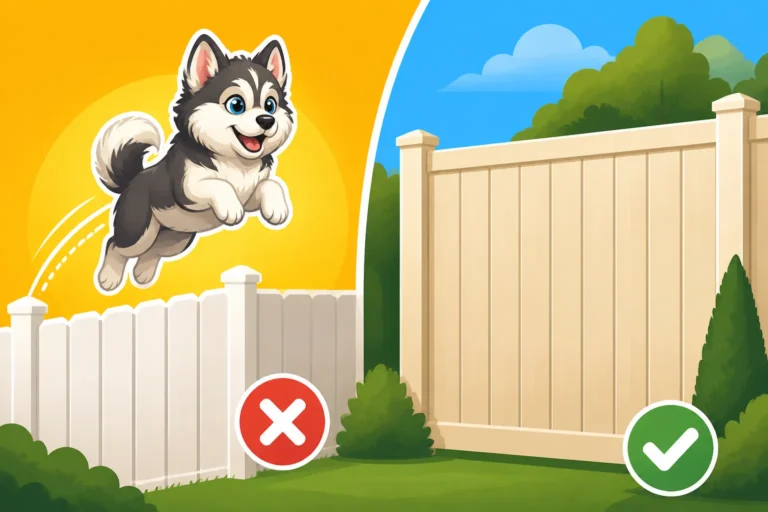
The absolute first line of defense is physical separation. Your chickens need a secure coop and run that your Pomsky cannot access, ever. This means robust fencing that is tall enough to prevent jumping and extends underground to deter digging. Remember, Pomskies inherit the Husky's knack for escape artistry, so what might seem sufficient for other dogs may not be for them. A six-foot fence is a good starting point, and digging prevention, such as burying hardware cloth or a concrete footing, is crucial. You can find many robust fencing options and supplies on platforms like Amazon that are designed for dog containment. It's a significant investment, but far less costly than losing your beloved flock or dealing with vet bills for an injured dog. For more detailed information on preventing escapes, you might want to read up on The Fence a Pomsky Actually Needs.
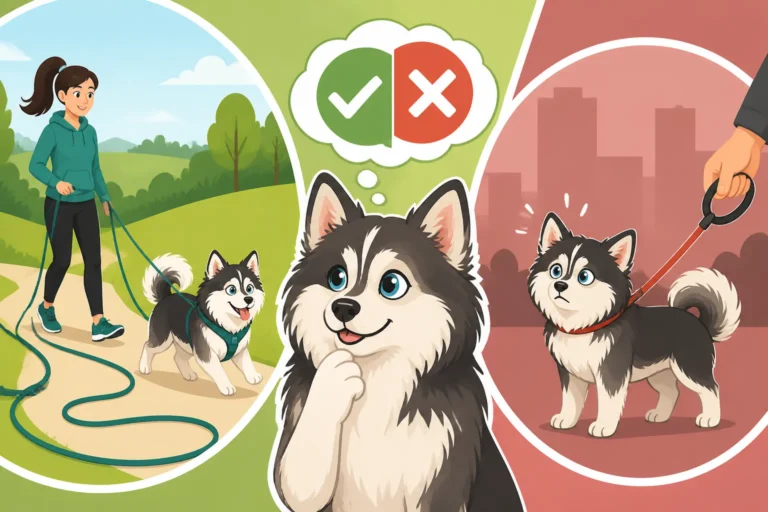
Beyond fencing, constant supervision is non-negotiable whenever your Pomsky is in the same area as your chickens, even if both are supposedly "contained." Never assume that a quick dash inside for a drink means everything will be fine. Accidents happen in seconds. When you are present, keep your Pomsky on a leash or long line. This allows you to immediately interrupt any undesirable behavior and reinforce calm interactions. Even with the best training, that innate prey drive can surface unexpectedly, and your presence is the final barrier between potential disaster and peaceful coexistence.
Early Socialization and Desensitization
While you can't erase prey drive, you can work on early socialization and desensitization if you bring your Pomsky puppy home with chickens already present. This means carefully controlled, positive exposures from a very young age. Start by having your Pomsky on a leash, at a distance from the chickens, rewarding them heavily for calm behavior and ignoring the chickens. The goal is to make the chickens a "non-event." This is a slow, gradual process that requires immense patience.
The key here is desensitization, not confrontation. Never allow your Pomsky to chase or harass the chickens, even playfully. Any such interaction reinforces the prey drive. Instead, consistently reward calm observation. If your Pomsky shows too much interest or starts to get over-aroused, it's a sign they are too close, or the session is too long, and you need to increase the distance or end the session. Consider investing in a quality online puppy training program, such as those offered by BAXTER & Bella, which can provide structured guidance on early socialization and impulse control, building a strong foundation for managing your Pomsky's responses to distractions like chickens.
Training and Behavior Modification
Training is a vital component of living with a Pomsky and chickens, but it must be realistic. You're not going to train away a fundamental instinct, but you can train your Pomsky to obey commands that allow you to manage that instinct effectively and consistently. This requires unwavering commitment and repetition.
Building a Strong "Leave It" and Recall
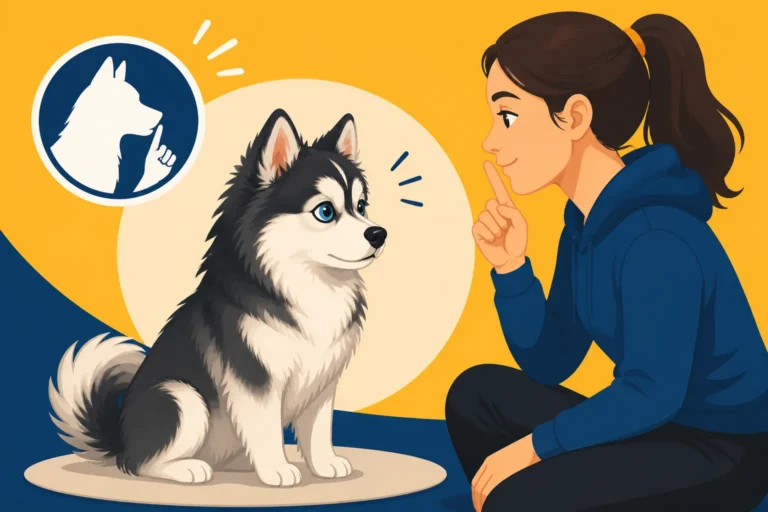
Two commands are absolutely paramount when you have a Pomsky living near chickens: "Leave It" and a rock-solid recall. "Leave It" is your emergency brake. Your Pomsky must understand that when you say this, whatever they are focused on – be it a chicken, a dropped treat, or a fleeing squirrel – is off-limits immediately. This command needs to be practiced relentlessly in various environments and with increasing distractions, long before you ever try it near chickens. Start with low-value items, then move to more enticing ones. High-value treats are your best friend here.
A reliable recall is equally critical. Pomskies, like their Husky parents, can be notoriously independent and have a strong urge to explore and chase. Calling your Pomsky back when they're focused on a chicken, or any other distraction, requires that their desire to return to you (for an amazing reward!) outweighs their urge to chase. This is not a "sometimes" command; it needs to be instantaneous and consistent. Many Pomsky owners find it challenging to get a truly reliable recall, which is why topics like Recall on a Pomsky Bred From a Dog That Runs are so often discussed. This command should be practiced daily, in various settings, always making coming back to you the most rewarding choice they can make. This is also where a program like BAXTER & Bella can be incredibly helpful, as they often provide step-by-step guides and support for building these crucial commands.
Managing Prey Drive Through Enrichment
A bored Pomsky with pent-up energy is a recipe for disaster around any small, moving creature. Managing your Pomsky's prey drive also means providing ample appropriate outlets for their energy and mental stimulation. This can significantly reduce their inclination to seek out "entertainment" by chasing chickens. Ensure your Pomsky gets plenty of vigorous exercise every single day – more than just a short walk around the block. Think long hikes, dog park visits (if appropriate for their temperament and socialization), or engaging play sessions in a secure yard. The Exercise a Pomsky Needs to Stay Sane is a good resource here.
Beyond physical exercise, mental enrichment is key. Puzzle toys, snuffle mats, scent work games, and obedience training sessions can all tap into their problem-solving abilities and energy in constructive ways. Interactive toys purchased from platforms like Amazon can keep their minds busy. If your Pomsky is constantly stimulated and fulfilled, they are less likely to look for trouble. A Pomsky who is bored might also resort to destructive behaviors, as discussed in Whether a Pomsky Destroys Furniture When Bored, and chasing chickens can be a very tempting destructive outlet for that energy.
Living with Both: Realistic Expectations and Ongoing Vigilance
It's natural to want a harmonious homestead where all your animals peacefully coexist. However, when it comes to Pomskies and chickens, it's crucial to adopt a highly realistic perspective. The reality is that for some Pomskies, especially those with a very high prey drive, true "peaceful coexistence" without constant vigilance might never be possible.
The "Never Say Never" Reality
The phrase "never say never" applies acutely here. Even if your Pomsky has been perfectly behaved around your chickens for months or even years, a sudden movement, a change in environment, or a moment of lapsed judgment can trigger their inherent instincts. It only takes one brief, unsupervised moment for a tragedy to occur. This isn't to say it's impossible for a Pomsky to live with chickens, but it means you must operate under the assumption that the risk is always present. You can never fully trust a breed with a high prey drive around such vulnerable animals.
This understanding should shape all your management strategies. It means fences must remain impenetrable, gates must always be latched, and supervision must be constant. It also means you need to be honest with yourself about your capacity for this level of vigilance. If you cannot commit to it, then having both a Pomsky and free-ranging chickens might not be a safe or responsible choice. Many owners have found that while their Pomsky might tolerate the chickens, it doesn't mean they can be left alone together, ever. Remember that heartbreaking truth in What Nobody Warns a Pomsky Buyer About often includes stories of unforeseen prey drive incidents.
What to Do If an Incident Occurs
Despite all your best efforts, accidents can happen. If your Pomsky gets to a chicken, your immediate reaction is crucial. First, safely separate your Pomsky from the chicken. Do not physically punish your Pomsky; this can make them fearful or even aggressive, and it doesn't address the underlying instinct. Instead, a firm "No!" and a leash correction, followed by immediate removal from the situation, is more appropriate. Focus on interrupting the behavior, not on retribution.
Next, assess the chicken's injuries. Chickens are delicate, and even a minor-looking injury can be serious. Get the chicken to a vet immediately, even if you think it's just a scratch. Internal injuries or shock can be fatal. Finally, critically evaluate your management plan. Where did the breakdown occur? Was a gate left open? Was supervision lax? This incident is a clear sign that your current preventative measures are insufficient and need to be strengthened immediately. It's a stark reminder that these animals come with profound instincts, and it's our responsibility as owners to manage them for the safety of all living creatures in our care.
| Factor | Risk Level for Chickens (Pomsky) | Management Strategies |
|---|---|---|
| Prey Drive (Husky) | High | Secure enclosures, strong "Leave It," leash supervision |
| Prey Drive (Pomeranian) | Moderate to High | Early socialization, consistent recall, mental enrichment |
| Chicken Behavior | High (Fleeing, flapping) | Complete physical separation, no unsupervised access |
| Pomsky Agility & Size | High | Tall, dig-proof fences, robust gates, leashing |
| Trustworthiness | Low ("Never Say Never") | Perpetual vigilance, emergency plan, ongoing training |
Disclaimer
This article is for general informational purposes only and does not constitute professional advice. Laws, prices and regulations vary by location and change over time. Consult a qualified professional for guidance on your specific situation.