Whether a Force Dryer Is Essential for a Pomsky
Oh, the battle against the wet Pomsky! If you've ever tried to dry one of these fluffy bundles after a bath, you know the struggle is real. Their glorious double coats, while absolutely stunning, seem to hold onto water with a tenacity that would impress a sponge. This often leaves owners wondering if that big, noisy machine—the force dryer—is truly an essential tool, or just a luxury. Let's dive deep into why this question comes up so often and what the reality is for Pomsky parents.
Understanding Your Pomsky's Double Coat
Before we even talk about drying, we have to talk about what you're up against: that incredible, dense double coat. It's truly a marvel of natural engineering, but it also presents some unique challenges.
The Anatomy of a Pomsky's Coat
Your Pomsky inherited a double coat, a trait common in northern breeds like the Siberian Husky, and even present in the Pomeranian, albeit in a different density. This isn't just one layer of hair; it's two distinct ones, each with a crucial job.
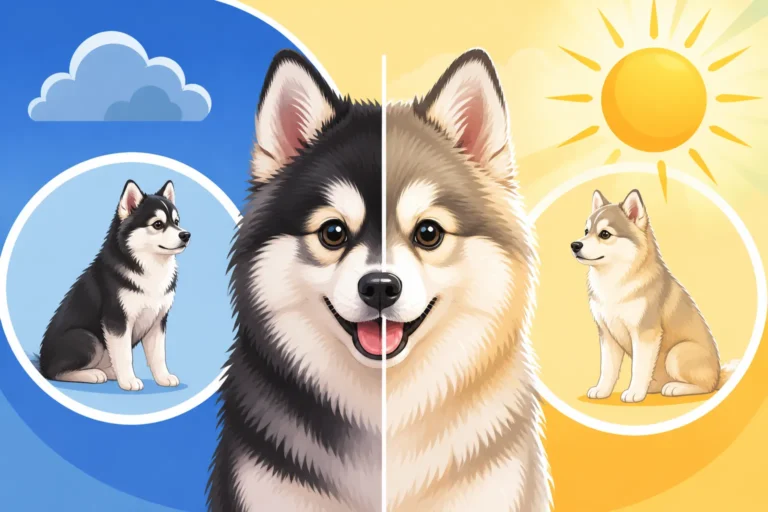
First, you have the outer layer: the guard hairs. These are longer, coarser, and often glossier. Their purpose is to protect your dog from the elements—repelling water, snow, and dirt, and shielding their skin from UV rays. Think of them as the roof shingles on a house. They're tough, they're resilient, and they're the first line of defense. Beneath this protective layer lies the true challenge: the undercoat. This is a super dense, soft, fluffy layer of shorter hairs that provides insulation. In winter, it keeps them toasty warm; in summer, it helps regulate their body temperature by trapping cooler air close to the skin and creating a barrier against heat. It’s like the insulation in your attic – vital for comfort but a nightmare when it comes to getting wet. For a deeper understanding of this amazing fur, you might want to read The Pomsky That Carries a Husky Coat at Twenty Pounds.
Why Drying a Double Coat is a Challenge
Because of this dual-layer system, water doesn't just sit on the surface of a Pomsky's coat. It penetrates the guard hairs and gets absolutely trapped in that dense undercoat. Imagine trying to dry a thick wool blanket by just patting it with a towel; it's going to stay damp for ages. The same goes for your Pomsky. A superficial towel dry might make the outer coat feel dry, but deep down, the undercoat can remain moist for hours, or even days, if left to air dry. This isn't just an inconvenience; it can lead to serious problems. That damp, warm environment is a breeding ground for bacteria and yeast, which can cause skin irritations, infections, and those dreaded "hot spots." Plus, a perpetually damp dog doesn't smell great, and nobody wants a perpetually damp-smelling dog on their couch!
What a Force Dryer Does (and Why It's Different)
So, if traditional drying methods fall short, what's the secret weapon that professional groomers (and many savvy Pomsky owners) rely on? The force dryer.
The Mechanics of a Force Dryer
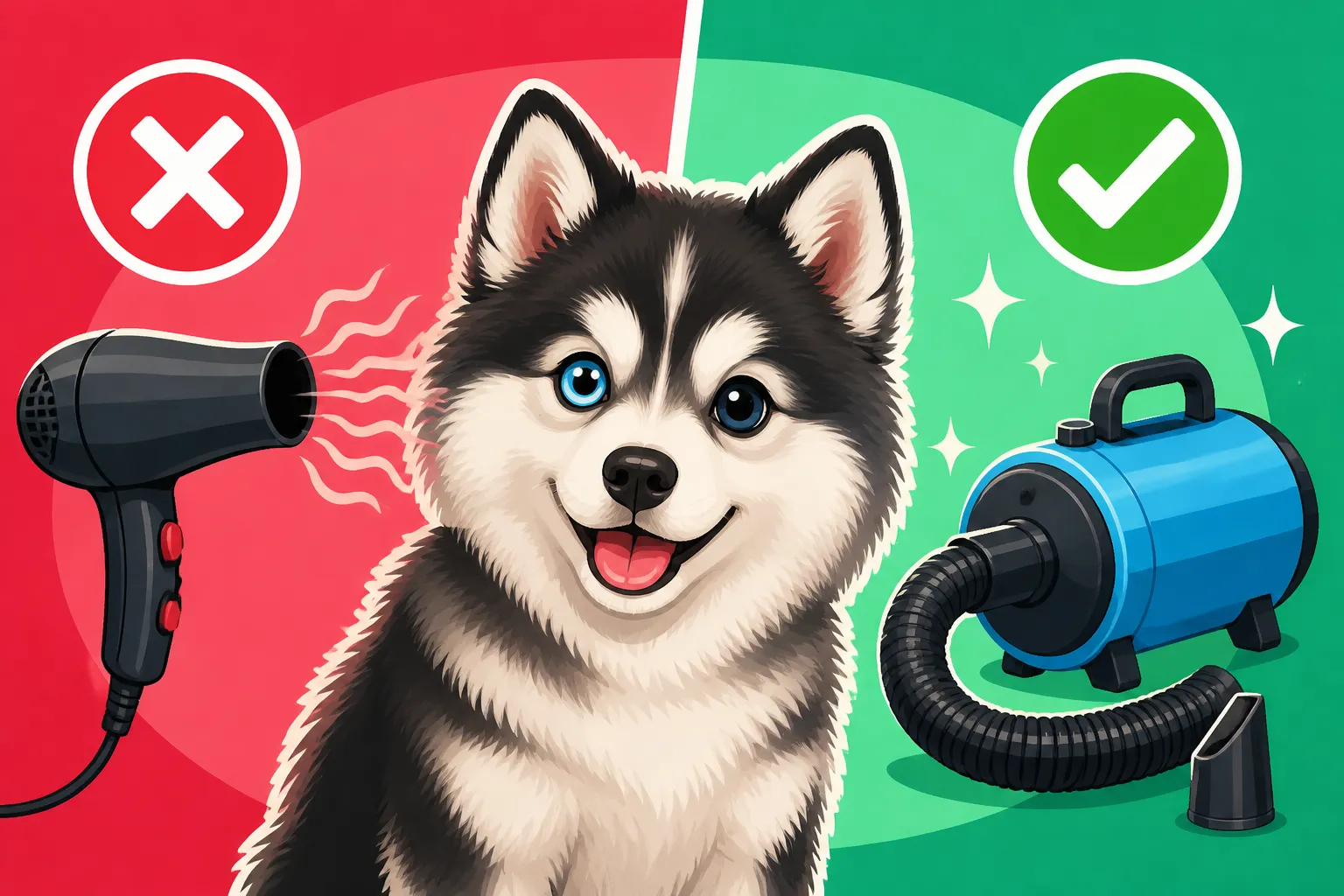
Let's clear something up right away: a force dryer is not a human hairdryer. While both blow air, the similarities end there. Human hairdryers use high heat to evaporate water, which can be incredibly damaging to a dog's sensitive skin and double coat, potentially causing burns or even triggering conditions like "post-clipping alopecia" if the hair follicles are traumatized. A force dryer, on the other hand, operates on a completely different principle. It uses a high-velocity, powerful stream of unheated or minimally heated air. Its purpose isn't to evaporate the water, but to quite literally blast it off and out of the coat. The sheer force of the air separates the hair shafts, pushing water droplets away from the skin and out of the dense undercoat.
This powerful airflow is what makes it so effective. It penetrates deep into the undercoat, reaching places a towel or even a regular hairdryer could never effectively dry. The different nozzles that come with a force dryer help concentrate this air for various parts of the body and coat types, allowing for precise and efficient drying.
The Benefits Beyond Just Drying
While the primary function of a force dryer is, of course, drying, its benefits extend far beyond simply removing water. For Pomsky owners, these additional advantages can be game-changers. For instance, the powerful blast of air is incredibly effective at loosening and removing dead undercoat. This is especially useful during those infamous "blowing coat" seasons. Instead of manually brushing for hours and still finding tumbleweeds of fur, the force dryer can significantly expedite the shedding process, getting rid of huge amounts of loose hair that would otherwise end up all over your home.
Beyond shedding, the force dryer helps to fluff the coat, making it easier to brush and preventing mats from forming. By separating the hairs and getting right down to the skin, it also allows you to get a good look at your dog's skin, making it easier to spot any hidden skin issues, parasites, or dry patches that might be lurking beneath that thick fur. It's truly a multi-tasking tool for optimal coat health.
The Argument for "Essential": Why Many Pomsky Owners Swear By Them
For many Pomsky owners, particularly those committed to at-home grooming, a force dryer quickly moves from a "nice-to-have" to an "absolute must-have." The reasons are compelling and often directly address the frustrations of managing a double-coated breed.
Speed and Efficiency
Let's be honest, washing a Pomsky is an event. And drying them without the right tools? That can turn into an entire afternoon's project. Imagine spending an hour bathing your energetic Pomsky, only to then spend another two or three hours trying to towel dry and air dry them, knowing full well they're still damp underneath. That's where a force dryer truly shines. It dramatically cuts down drying time. What might take three hours with towels and a regular hairdryer could be reduced to an hour or less with a powerful force dryer, depending on your dog's coat density and size. This time-saving factor is huge, especially if your Pomsky loves mud puddles or gets frequent baths.
During seasonal "blowouts" – when your Pomsky sheds profusely, typically twice a year – the efficiency of a force dryer is particularly evident. Rather than relying solely on brushing, which can only do so much, the force dryer helps literally blast out the loosened undercoat. This means less fur floating around your house and a faster transition through that shedding phase. If you're wondering when your Pomsky will go through this, check out Whether a Pomsky Blows Its Coat Twice a Year.
Health and Hygiene Benefits
One of the most critical reasons to consider a force dryer essential is for your Pomsky's health. As we discussed, a damp undercoat is a recipe for disaster. Moisture trapped against the skin for extended periods creates a perfect warm, dark environment for bacteria and yeast to flourish. This can lead to painful skin infections, hot spots, and an unpleasant, musty odor that permeates your home and your dog.
A force dryer ensures that your Pomsky's coat is thoroughly dry, right down to the skin. This significantly reduces the risk of these moisture-related skin issues. Preventing hot spots, for example, is far easier than treating them, which often involves veterinary visits, medication, and considerable discomfort for your dog. Proper drying is a cornerstone of good coat hygiene and overall skin health, preventing issues like Hot Spots Under a Pomsky's Undercoat. Achieving a truly dry coat, sometimes referred to as Drying a Pomsky to the Skin, is much easier with this tool.
Deshedding Power
If you live with a Pomsky, you live with fur. It's just a fact of life. However, a force dryer can dramatically help manage shedding. The powerful stream of air doesn't just remove water; it physically pushes out dead, loose undercoat that's ready to shed. After a bath, when the hair follicles are open and the undercoat is slightly looser, using a force dryer becomes an incredibly effective deshedding tool.
You'll be amazed at the sheer volume of fur that comes flying off your dog during a drying session. This isn't just satisfying to watch; it means that fur isn't accumulating in your home, on your clothes, or getting matted into your dog's coat. By actively removing this loose hair, you're not only keeping your house cleaner but also preventing painful mats from forming in your Pomsky's coat, especially during those heavy shedding periods.
The Argument for "Optional": When You Might Not Need One
While the benefits of a force dryer are undeniable for many, it's also fair to say that it's not strictly "essential" for every single Pomsky owner. There are situations and considerations where you might decide against investing in one.
Cost and Space Considerations
Let's be realistic: a good quality force dryer isn't cheap. They represent a significant upfront investment, often ranging from an entry-level price point to higher figures for professional-grade models. This can be a barrier for some pet parents, especially when factoring in all the other costs associated with dog ownership, from food to vet bills. It's certainly a larger purchase than a new brush or shampoo.
Beyond the financial aspect, force dryers, even compact models, take up space. They're not tiny, and you need somewhere to store it when not in use. You also need a dedicated area where you can comfortably groom your Pomsky with the dryer, ideally somewhere easy to clean up the inevitable flying fur. Not every home has the extra space in a utility room, garage, or even a spare bathroom to accommodate the equipment and the process. If you're in a small apartment, for instance, finding a suitable spot can be a challenge. You can find various options on marketplaces like Amazon or pet supply stores like Chewy, which often have sales.
Alternatives and Professional Grooming
If the cost or space of a force dryer is prohibitive, or if you simply prefer not to tackle the drying process yourself, there are viable alternatives. The most straightforward is professional grooming. Taking your Pomsky to a professional groomer regularly means they'll handle the bathing, drying, and deshedding with all the right tools, including force dryers. While this incurs a recurring cost, it removes the need for you to buy equipment, dedicate time, or deal with the mess. Considering What Grooming a Pomsky Costs annually might help you weigh this option against buying a dryer.
For at-home efforts, you can certainly rely on a combination of thorough towel drying, air drying (if the weather and your dog's coat allow for quick drying), and careful use of a regular human hairdryer on a cool setting, held far from the skin. However, be warned: this takes significantly longer, is less effective at truly getting to the undercoat, and requires extreme caution to avoid overheating your dog. It's a stop-gap measure, not an ideal long-term solution for maintaining coat health.
Specific Pomsky Coat Types
Not all Pomsky coats are created equal. While most inherit a dense double coat, there's quite a range in thickness and length, influenced by their Husky and Pomeranian parentage. Some Pomskies have what might be described as a "short coat" or a less dense undercoat, perhaps leaning more towards the Pomeranian side's guard hairs without the extreme Husky undercoat density. If your Pomsky falls into this category, their coat may dry much faster with simpler methods.
Conversely, a "wooly" coated Pomsky will have an even more challenging coat to dry, making a force dryer even more indispensable. The three main coat types are discussed in The Three Pomsky Coat Types, and understanding which one your dog has can definitely inform your decision. For a Pomsky with a genuinely light or sparse undercoat (which is less common but does happen), the urgency for a force dryer diminishes slightly. However, for the majority of Pomskies with their magnificent, fluffy, water-retaining coats, the thoroughness a force dryer provides is still a huge advantage.
How to Choose a Force Dryer and Use It Safely
If you've decided that a force dryer is the right investment for your Pomsky and your sanity, the next step is choosing one and learning how to use it effectively and safely.
Key Features to Look For
When shopping for a force dryer, you'll encounter a variety of models. Here are some key features to prioritize:
- Variable Speed Control: This is perhaps the most important feature. Being able to adjust the airflow from a gentle breeze to a powerful blast is crucial. You'll want a lower setting for introducing your dog to the dryer, for sensitive areas like the face, and for smaller, less dense parts of the body. A higher setting is for blasting water out of the thickest parts of the coat.
- Minimal or No Heat: Remember, we're blasting water, not baking your dog. Professional force dryers use unheated or minimally heated air (ambient air temperature, warmed slightly by the motor). Avoid models that have high heat settings like a human hairdryer, as these can easily burn your dog's skin.
- Nozzle Attachments: Different nozzles help direct the airflow. A flat, wide nozzle is great for large body areas, while a more concentrated round nozzle can help target specific, dense spots.
- Hose Length and Flexibility: A longer, flexible hose gives you more maneuverability around your dog.
- Noise Level: While no force dryer is silent, some are notably quieter than others. Read reviews about noise levels, as a quieter model can make the experience less stressful for your dog (and you!). Many brands, available on sites like Chewy or Amazon, offer competitive options. You might even find models recommended by independent pet product review sites.
Best Practices for Drying Your Pomsky
Using a force dryer safely and effectively requires a bit of technique and patience, especially initially.
- Introduce it Slowly: The noise and power can be intimidating for a dog. Start by turning it on away from your Pomsky, letting them get used to the sound. Reward them for calm behavior. Gradually introduce the air stream from a distance, starting on the lowest setting. Don't rush this process; positive reinforcement is key.
- Pre-Towel Dry: After bathing, squeeze out as much excess water as possible with your hands, then towel dry thoroughly. The less water there is, the faster the force dryer can work.
- Use Ear Protection: The dryer's noise can be uncomfortable for your Pomsky's sensitive ears. Consider using dog-specific ear muffs or a snood to muffle the sound. You might even consider ear protection for yourself if you're sensitive to noise.
- Work in Sections: Don't try to dry your entire dog at once. Start with the least sensitive areas, like the back or sides, and work your way down to the legs, belly, and eventually the head (always on a very low setting and never directly at the eyes or ears).
- Keep the Nozzle Moving: Never hold the nozzle in one spot for too long, even with unheated air. Constant movement prevents localized drying and discomfort. The goal is to lift and separate the coat, pushing water out.
- Brush as You Go: As the coat dries, use a slicker brush or an undercoat rake to help further separate the hairs and pull out any remaining loose undercoat. This enhances the deshedding effect. For a guide on other grooming tools, see The Undercoat Rake a Pomsky Owner Lives With. Using a brand like Ollie for dog food can also contribute to a healthy coat from the inside out, making grooming easier in the long run.
The Long-Term Impact on Your Pomsky's Coat and Skin Health
It's easy to view grooming tools as just that—tools. But for a Pomsky, a force dryer isn't just about convenience; it's about making a real, long-term difference in their health and comfort.
Preventing Common Coat Problems
The consistent, thorough drying achieved with a force dryer is your best defense against many common double-coat woes. Beyond preventing hot spots, which we've discussed, it actively combats matting. Mats form when loose undercoat gets tangled and compacted, especially when damp. They can be incredibly painful, pulling on the skin, causing irritation, and trapping moisture and debris. Severe matting often requires a professional groomer to shave the dog down, which can be stressful and temporarily compromise their natural insulation. By regularly blasting out loose undercoat and ensuring the coat is completely dry after baths, you dramatically reduce the chances of these painful tangles forming. This means fewer trips to the vet for skin infections and a happier, more comfortable dog overall.
| Drying Method | Key Advantages | Key Disadvantages | Suitable For |
|---|---|---|---|
| Force Dryer | Fast, thorough, excellent for deshedding, prevents skin issues | Initial cost, noise, requires technique, takes up space | All Pomskies, especially those with dense coats |
| Towel/Air Drying | No cost, silent, no special equipment | Very slow, often leaves undercoat damp, high risk of skin issues, poor deshedding | Pomskies with very short/sparse coats, quick touch-ups |
| Human Hairdryer (Cool) | Uses existing household item, some control over airflow | Very slow, less powerful, risk of heat damage (even on cool), poor deshedding | Emergency use, not ideal for full drying |
| Professional Groomer | Expert care, all equipment provided, stress-free for owner | Recurring cost, requires scheduling, dog must tolerate salon environment | All Pomskies, especially owners with limited time/equipment |
Maintaining Coat Luster and Softness
A properly maintained double coat isn't just about cleanliness; it's about vitality. Regular, gentle force drying, combined with brushing, helps to distribute your Pomsky's natural skin oils throughout their coat. These oils are essential for a healthy, shiny, and water-resistant outer layer. When the coat is clean and fully dry, the guard hairs lie correctly, giving that characteristic sleekness and protecting the undercoat.
If the undercoat is constantly damp or matted, the natural oils can't do their job effectively, leading to a dull, greasy, or coarse-feeling coat. By promoting thorough drying and regular deshedding, a force dryer contributes to a coat that is not only healthier but also looks and feels softer, cleaner, and more vibrant. It truly helps unlock the full potential of your Pomsky's magnificent fluff, allowing it to remain beautiful and functional for their entire lives.
Disclaimer
This article is for general informational purposes only and does not constitute professional advice. Laws, prices and regulations vary by location and change over time. Consult a qualified professional for guidance on your specific situation.