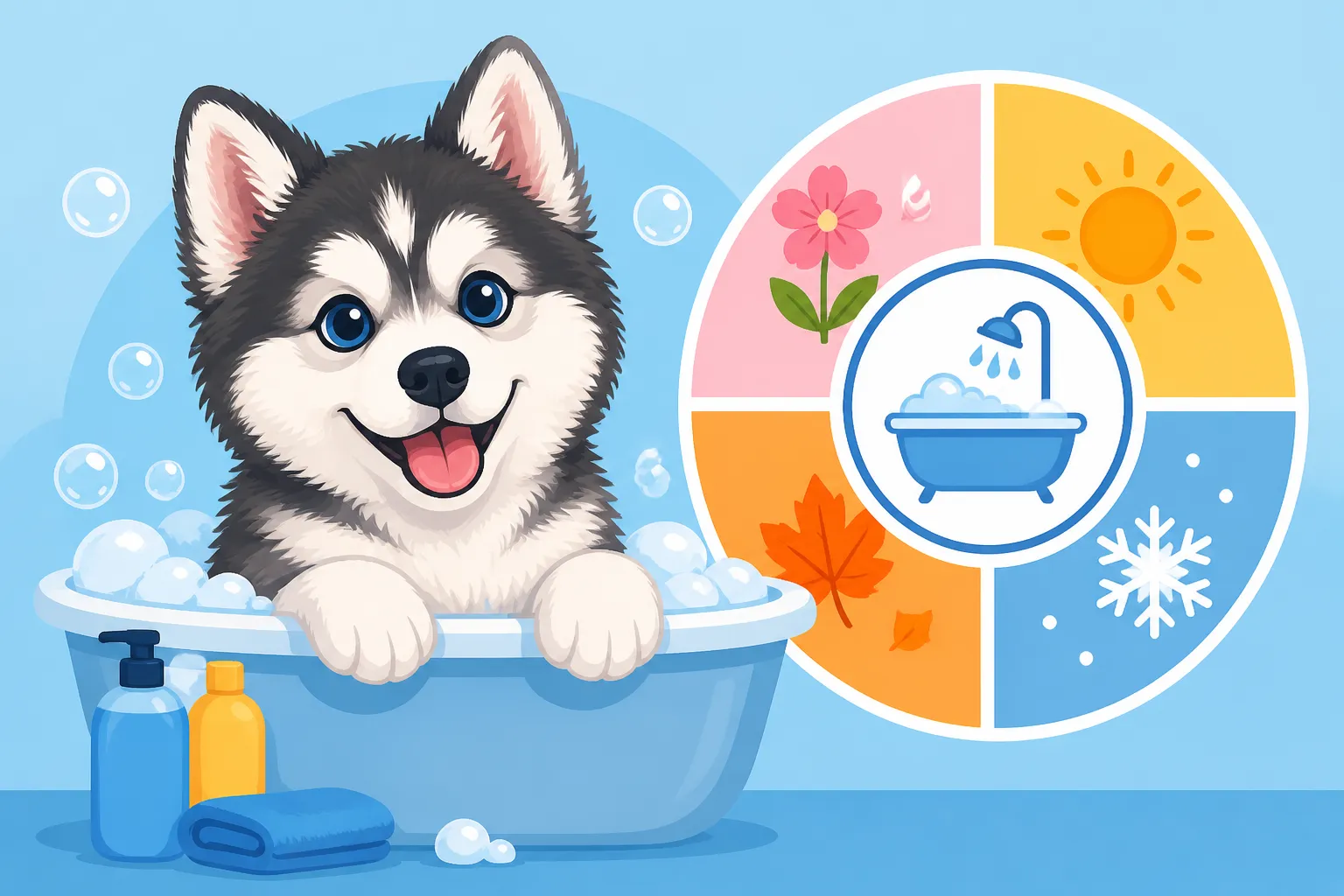
How Many Baths a Year a Pomsky Needs
One of the trickiest things about owning a Pomsky, especially if you're new to double-coated breeds, is figuring out how often to actually give them a bath. You hear all sorts of conflicting advice – some people say never, some say once a month, and you're just standing there with a muddy dog, wondering if you're going to strip their natural oils or end up with a smelly mess. This guide is here to cut through the confusion and help you establish an ideal bathing routine that keeps your Pomsky clean, comfortable, and, most importantly, protects that gorgeous, essential double coat.
Understanding the Pomsky's Double Coat: A Bathing Balancing Act
Before we even talk about how many baths, we need to talk about why bathing a Pomsky isn't quite like bathing a short-haired dog. Your Pomsky carries a marvel of canine engineering on their back: a double coat. This isn't just fluffy hair; it's a vital part of their health and well-being.
The Husky and Pomeranian Influence on Grooming Needs
Think about the parent breeds. Huskies are built for the cold, with thick, insulating coats, while Pomeranians boast a voluminous, stand-off coat. Your Pomsky inherits a blend of these, typically resulting in a dense double coat composed of two distinct layers. There's the soft, downy undercoat, which acts like a thermal layer, keeping them warm in winter and cool in summer by trapping air. Then there are the coarser, longer guard hairs on top. These guard hairs are water-repellent, protect against UV rays, and prevent dirt and debris from reaching the skin easily.
This intricate structure means their coat isn't just for looks; it’s a natural defense system. It repels dirt to a surprising degree, meaning that often, a good brush or a damp cloth can deal with surface grime far more effectively than a full bath. When we talk about how often to bath, we're really talking about preserving the integrity of this natural system. Trying to strip away the very qualities that make the coat work can lead to a whole host of unexpected issues, which we'll dive into next. Your Pomsky's coat is truly special, a topic explored further in The Pomsky That Carries a Husky Coat at Twenty Pounds.
Why Over-Bathing is a Big No-No for Pomskies
It's tempting, especially if your Pomsky loves to roll in questionable things or has a particularly muddy adventure, to want to scrub them clean every week. But over-bathing a double-coated dog like a Pomsky can actually do more harm than good. Each bath, especially with harsh shampoos, strips away the natural oils (sebum) that their skin produces. These oils are crucial for maintaining healthy skin and a lustrous, water-resistant coat.
When these oils are repeatedly stripped, several problems can arise. First, their skin can become dry, flaky, and itchy, leading to discomfort and potentially excessive scratching. This scratching can then break the skin barrier, making them vulnerable to secondary bacterial or yeast infections. Second, the guard hairs can lose their natural water-repellency and become brittle, making the coat less effective at protecting them from the elements and more prone to matting. Lastly, you might even notice that paradoxically, your Pomsky starts to smell worse if you over-bathe. This is because the skin, desperate to restore its protective barrier, can go into overdrive producing oils, leading to a greasier coat that actually attracts more dirt and can develop a stronger "doggy" odor faster. It's a vicious cycle that no Pomsky owner wants to get into.
Factors Influencing Your Pomsky's Bathing Schedule
There's no single, magic number for how many baths a Pomsky needs. Instead, it's a dynamic calculation based on their individual life. Think of it less as a strict rule and more as a flexible guideline tailored to your specific furry friend.
Lifestyle, Environment, and Activity Levels
Let's be real, a Pomsky living in a city apartment with mostly leashed walks on pavement is going to have vastly different bathing needs than a Pomsky who spends weekends hiking through muddy trails and playing in dog parks. If your Pomsky is primarily an indoor dog, their exposure to dirt and grime is naturally lower. They might get a little dusty or pick up some grass from the backyard, but rarely anything warranting a full scrub. For these couch-potato Pomskies, routine brushing often keeps them pristine.
However, if your Pomsky is an adventurer, splashing in puddles, rolling in freshly cut grass, or even worse, finding something truly stinky to wallow in, then a bath becomes a necessity rather than a luxury. Consider the climate you live in, too. A Pomsky in a dry, dusty environment might accumulate more surface dirt than one in a humid, forested area. And of course, the general activity level plays a huge role; an energetic Pomsky who spends hours exploring outside, as discussed in The Exercise a Pomsky Needs Every Day, will likely get dirtier faster. Sometimes, it’s not just dirt but allergens in the environment that might necessitate more frequent bathing, though this would typically be under veterinary guidance for specific skin conditions. A lighter-colored Pomsky might look dirtier faster, but appearance isn't the only factor; focus on actual grime and coat health.
Seasonal Shedding (The "Blowout") and Special Occasions
Pomskies, like their Husky ancestors, are famous for their seasonal "blowouts," typically in spring and fall. This is when they shed their entire undercoat to prepare for the coming season, and the amount of fluff can be truly astounding. During these intense shedding periods, a well-executed "deshedding bath" can be incredibly helpful. This isn't just a regular bath; it's a process involving specialized shampoos, conditioners, and a high-velocity dryer to help loosen and expel all that dead undercoat. It can significantly reduce the amount of hair floating around your home and help the new coat come in properly. You can learn more about this intense period in Whether a Pomsky Blows Its Coat Twice a Year. While helpful during a blowout, this isn't a bath you'd give routinely.
Beyond the regular ebb and flow of seasons, life with a Pomsky often presents "special occasions" that absolutely demand an immediate bath. Did your Pomsky roll in something particularly pungent? Perhaps they found a hidden treasure of decaying leaves or, heaven forbid, had an unfortunate encounter with a skunk. These are non-negotiable bath times. In these instances, prioritize removing the offending substance and odor, making sure to use a gentle, appropriate shampoo. It's about addressing the immediate problem without necessarily counting it as part of their regular bathing cycle.
Pomsky Coat Types and Their Grooming Demands
Not all Pomsky coats are created equal, and while they all share the double-coat characteristic, there are nuances that can affect your overall grooming approach, including bathing frequency. Understanding The Three Pomsky Coat Types is key here.
First, you have the standard coat, which is typically the most common. It's dense, with medium-length guard hairs and a thick undercoat. This coat type usually repels dirt quite well and is relatively low-maintenance in terms of bathing, relying heavily on regular brushing.
Then there's the wooly coat. This one is often longer, softer, and much fluffier, with an even more profuse undercoat and longer guard hairs that might not lie as flat. While absolutely gorgeous, wooly Pomskies are far more prone to matting, especially behind the ears, under the legs, and around the tail. Does this mean more baths? Not necessarily more frequent full baths, as the principles of not stripping natural oils still apply. However, a wooly-coated Pomsky might benefit from more frequent thorough brushing sessions that incorporate a leave-in conditioner or detangling spray to prevent mats, which can then make the occasional bath much easier and safer. If a wooly Pomsky does get truly dirty, the process of bathing and especially drying them thoroughly without causing mats becomes even more critical and time-consuming.
Finally, some Pomskies have a short coat, which might appear sleeker and less fluffy than the standard or wooly varieties. While still a double coat, the shorter guard hairs and perhaps slightly less dense undercoat might give the impression of shedding less or getting less dirty. They still benefit from the same bathing guidelines, but perhaps spot cleaning becomes even easier for minor messes, and thorough brushing remains important for circulation and coat health, even if it feels less urgent than with a wooly coat.
Here’s a quick overview of how these factors might nudge your bathing routine:
| Factor | Typical Impact on Bathing Frequency | Notes |
|---|---|---|
| Standard Coat | Less frequent | Usually every 2-4 months, or as needed for heavy soiling. |
| Wooly Coat | Same frequency, more meticulous care | 2-4 months or as needed, but demands careful de-matting and drying. |
| Short Coat | Less frequent | Often appears cleaner, but still double-coated. 2-4 months or as needed. |
| Active/Outdoor Lifestyle | More frequent (as needed) | May require baths monthly or bi-monthly if consistently muddy/dirty. |
| Indoor/Sedentary Lifestyle | Less frequent | Every 3-4 months is often sufficient, with regular brushing. |
| Shedding Season (Blowout) | Targeted deshedding bath helpful | One comprehensive deshedding bath can aid undercoat removal. |
| Skin Issues/Allergies | Vet-directed schedule | May require medicated baths; always follow veterinary advice. |
| Emergency (Skunk, etc.) | Immediate bath required | These are "special occasion" baths, not part of routine. |
The Ideal Bathing Frequency: Finding Your Pomsky's Sweet Spot
So, after all that, what's the magic number? The truth is, it's not a number, it's a range, and it's about being responsive to your individual Pomsky's needs while respecting their natural coat.
General Guidelines for Healthy Pomskies
For most healthy Pomskies with typical activity levels and no specific skin conditions, the general recommendation for a full bath is surprisingly infrequent: every 6-8 weeks, or even less frequently, sometimes just 2-4 times a year. Yes, you read that right – only a few times a year for many Pomskies! The key phrase here is "as needed," not on a strict calendar schedule. If your Pomsky isn't visibly dirty, doesn't smell (beyond a faint, normal doggy scent), and you're keeping up with regular brushing, you really don't need to bathe them more often.
Regular brushing is truly your Pomsky's best friend when it comes to cleanliness and coat health. A thorough brushing session multiple times a week removes loose hair, redistributes natural oils, and dislodges dirt and debris, significantly reducing the need for wet baths. It’s amazing how much a good undercoat rake, as championed in The Undercoat Rake a Pomsky Owner Lives With, can do to keep their coat fresh and clean, sometimes even better than shampoo. Less bathing means less stripping of those vital oils, which translates to healthier skin and a more resilient coat.
Best Practices for Bathing Your Pomsky
When it is time for a bath, doing it correctly is paramount to avoid problems. This isn't just about getting them wet; it's a process.
First and foremost, always brush your Pomsky thoroughly before the bath. This is non-negotiable, especially for wooly-coated Pomskies or during a blowout. Any mats or tangles will only tighten when wet, becoming nearly impossible to remove without pain or cutting.
Next, use a dog-specific shampoo and conditioner. Human products have a different pH balance and can irritate a dog's skin. You can find excellent options on platforms like Chewy or Amazon. Look for gentle, moisturizing formulas. Apply the shampoo carefully, working it down to the skin, but avoid vigorous scrubbing that could damage the guard hairs. Rinse, rinse, and rinse again! Residual shampoo is a common cause of skin irritation and itching, so be absolutely meticulous, especially in dense areas.
The most critical step, and often the most overlooked, is thorough drying. This is where many DIY bathers run into trouble. A Pomsky's dense double coat, if left damp, creates a perfect breeding ground for bacteria and yeast, leading to hot spots or other skin infections. The undercoat must be dry right down to the skin. This almost always requires a high-velocity force dryer (which you can also find on Amazon). Regular human hairdryers often aren't powerful enough and can be too hot, risking burns. Start drying immediately after the bath, working in sections and brushing as you go to ensure the undercoat separates and dries completely. If you skip this step, you risk severe skin issues, as highlighted in Drying a Pomsky to the Skin and Whether a Damp Pomsky Undercoat Causes Hot Spots.
When to Call in the Professionals (or Your Vet)
Sometimes, despite your best efforts, a professional touch is needed. If you have a particularly wooly Pomsky, or one that sheds heavily, and you find yourself struggling to get them thoroughly brushed and dried without mats, a professional groomer is worth their weight in gold. They have specialized equipment, like powerful force dryers and professional grooming tables, which make the process much safer and more efficient. They can also perform a professional deshedding treatment during blowout seasons that can save your sanity and your vacuum cleaner.
Furthermore, if you're bathing your Pomsky more frequently because of persistent odor, itching, redness, or flaky skin, it's time to put the shampoo down and call your veterinarian. These symptoms are often indicators of underlying health issues like allergies, fungal infections, bacterial infections, or even hormonal imbalances, rather than just needing another bath. Your vet can diagnose the root cause and recommend appropriate treatments, which might include specific medicated shampoos or other therapies. Don't try to self-diagnose skin problems by just bathing more; a proper diagnosis is crucial, and a skin workup, as discussed in What a Skin Workup Costs on a Pomsky, can save a lot of heartache.
Beyond the Bath: Maintaining a Clean Pomsky Between Washes
The secret to a clean, healthy Pomsky isn't just about the baths they get; it's about everything you do in between. Think of bathing as just one tool in your comprehensive grooming toolkit.
The Power of Daily Brushing and Spot Cleaning
This truly cannot be stressed enough: daily or every-other-day brushing is your most effective weapon against dirt, mats, and excessive shedding. A good brushing session, especially with an undercoat rake and a slicker brush, will remove loose hair, distribute natural skin oils, and lift away surface dirt and debris. It also acts as a mini-massage, stimulating blood flow to the skin, which promotes a healthy coat. For those outdoor adventurers, a quick brush-down after a walk can often remove most of the dust and mud before it sets in.
For minor messes, "spot cleaning" is your best friend. Muddy paws? A damp cloth or a paw washer will do the trick. A dirty belly after a romp in the grass? A dog-specific wipe or a damp towel can clean it up without the need for a full bath. Always make sure to check and clean around their mouth after meals, and pay attention to their ears. Regular ear checks and cleaning, as mentioned in How Often a Pomsky's Ears Should Be Cleaned, can prevent issues that might otherwise lead you to think a full bath is necessary for general hygiene. These little acts of vigilance go a long way in keeping your Pomsky fresh.
Regular Grooming Habits for Overall Coat Health
Beyond brushing and spot cleaning, there are other routine grooming habits that contribute significantly to your Pomsky's overall cleanliness and coat health, indirectly reducing the need for frequent baths.
Nail Trims: Overgrown nails can affect your Pomsky's gait, causing discomfort and potentially leading to joint problems. Regular trims (every 2-4 weeks) are essential.
Dental Care: Yes, it affects their overall health and even their breath! Regular tooth brushing and dental chews, as explored in Whether a Pomsky Needs Dental Chews, help prevent dental disease, which can lead to bad breath that some owners might mistake for a "dirty dog" smell.
Nutrition: What goes into your Pomsky's body directly impacts the quality of their skin and coat. A high-quality, balanced diet rich in essential fatty acids will promote a healthy, shiny coat and reduce dry, flaky skin. Brands like Ollie, which focus on fresh, whole ingredients, or reputable kibble brands found on Chewy, can make a noticeable difference in coat luster and skin health. Always discuss dietary changes with your vet to ensure they meet your Pomsky's specific needs, especially considering topics like Feeding a Twenty Pound Pomsky.
Addressing Hot Spots Early: Pomskies, especially during shedding seasons or in humid weather, can be prone to hot spots if moisture gets trapped in their dense coat. Regularly checking their skin during brushing sessions allows you to catch any redness, irritation, or small lesions early. Timely intervention can prevent a minor irritation from escalating into a serious infection that might require medicated baths. You can learn more about this in Hot Spots Under a Pomsky's Undercoat.
By integrating these consistent grooming habits into your routine, you'll find that your Pomsky not only looks and feels cleaner but also requires fewer full baths, ultimately safeguarding their natural coat and skin health for years to come.
Disclaimer
This article is for general informational purposes only and does not constitute professional advice. Laws, prices and regulations vary by location and change over time. Consult a qualified professional for guidance on your specific situation.