Legg Calve Perthes in a Small Pomsky
There’s nothing quite like the boundless energy of a Pomsky puppy, zipping around, playing fetch, and exploring every corner of your home. So, when that joyful bounce starts to falter, when a little limp creeps into their stride, or they hesitate before jumping, it’s absolutely heartbreaking. Your mind immediately races to the worst-case scenarios, wondering what could be causing your beloved furry friend such discomfort. This guide is here to shed light on one such distressing condition, Legg-Calve-Perthes disease (LCP), especially how it impacts smaller Pomskies, detailing everything from its obscure beginnings to the journey of diagnosis and the path to recovery.
Understanding Legg-Calve-Perthes Disease
Legg-Calve-Perthes disease, often simply called LCP, sounds like a mouthful, and the confusion around it can be daunting for any Pomsky parent. It’s a condition that can unexpectedly strike, primarily affecting smaller breeds and, unfortunately, can show up in our little Husky-Pomeranian mixes. Getting a handle on what it is and why it happens is the first step toward understanding your Pomsky’s discomfort.
What Exactly is LCP?
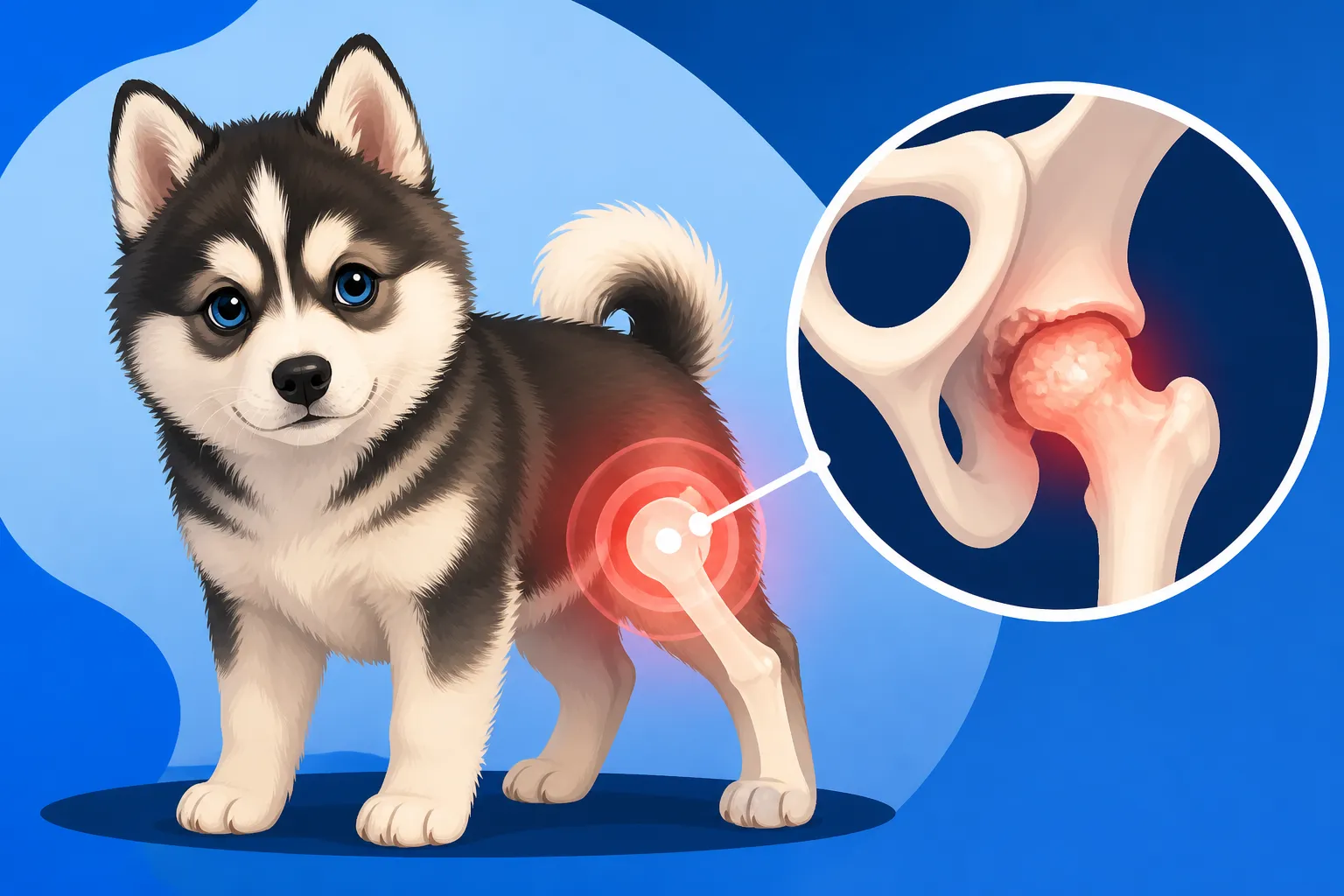
At its core, Legg-Calve-Perthes disease is a non-inflammatory degeneration of the femoral head – that’s the ball-shaped top of the thigh bone (femur) that fits into the hip socket. Imagine a little ball joint, perfectly smooth and round, designed for fluid movement. In LCP, for reasons not entirely clear, the blood supply to this crucial part of the bone becomes interrupted. Without a proper blood supply, the bone tissue starts to die, a process called avascular necrosis. Over time, this dead bone becomes weak and can actually start to collapse and flatten. Instead of a smooth, strong ball, you end up with a misshapen, crumbling structure that causes immense pain and difficulty moving the hip joint.
This is particularly devastating because it often occurs during a Pomsky’s formative months when their bones are still growing and developing. The joint, which should be robustly forming, is instead undergoing necrosis and disintegration. For a small Pomsky, who relies so much on their agility and lively spirit, this is a profound physical setback. The constant pain and instability can transform a playful puppy into a hesitant, withdrawn one, which is incredibly tough to witness.
The Genetic Component and Breed Predisposition
While we don't have all the answers about exactly why LCP happens, there's a strong consensus that genetics play a significant role. It's not something that just pops up randomly; there's often an underlying predisposition in certain breeds, suggesting it's passed down through generations. Breeds like West Highland White Terriers, Cairn Terriers, Yorkshire Terriers, Miniature Poodles, and Chihuahuas are frequently cited as being at higher risk.
Now, where does our beloved Pomsky fit into this picture? When you consider a Pomsky's parentage, the Siberian Husky side isn't typically known for LCP. Huskies are more prone to issues like Hip Dysplasia in a Pomsky, which affects larger breeds. However, the Pomeranian side is where the predisposition for LCP comes in. Pomeranians are a small toy breed, and they, along with many other small breeds, carry this genetic susceptibility. So, a Pomsky, inheriting traits from both parents, can unfortunately draw the short straw and inherit the genetic markers for LCP from its Pomeranian lineage. This is why when you're looking at a small Pomsky who is limping, LCP needs to be on your veterinarian's radar, especially if they trace back to lines with a history of the condition. Responsible breeding aims to minimize such risks, but it remains a possibility in this mixed breed.
The Typical Age of Onset
One of the most frustrating aspects of LCP is its timing. It typically rears its ugly head when your Pomsky is still a puppy or a young adolescent, usually between five and eight months of age. Sometimes, you might see signs a bit earlier or later, but rarely past a year or so. This means your Pomsky is often just hitting their stride, full of puppy exuberance, when this debilitating condition begins to manifest.
Think about it: this is a period of rapid growth, when bones and joints are under immense developmental stress. A puppy at this age is also incredibly active – running, jumping, playing rough. These activities, while normal and healthy, can exacerbate an already weakening femoral head. As the bone struggles to bear weight and movement with an impaired blood supply, the symptoms become more apparent. It's truly heartbreaking to see a young dog's energy and potential curtailed by pain at such a crucial stage of their life. This early onset also makes prompt diagnosis and treatment all the more important to preserve their long-term mobility and quality of life. The condition specifically appears in small breeds, so if you have a Pomsky who’s expected to stay under twenty pounds, this is definitely something to keep an eye out for around The Age Legg Calve Perthes Shows in a Pomsky.
Recognizing the Signs and Symptoms
Catching Legg-Calve-Perthes early can make a big difference in your Pomsky's journey to recovery. However, the signs can be subtle at first, making it easy to dismiss as a minor tweak or just a puppy being clumsy. As a Pomsky parent, being vigilant and knowing what to look for is absolutely crucial.
The Gradual Onset of Lameness
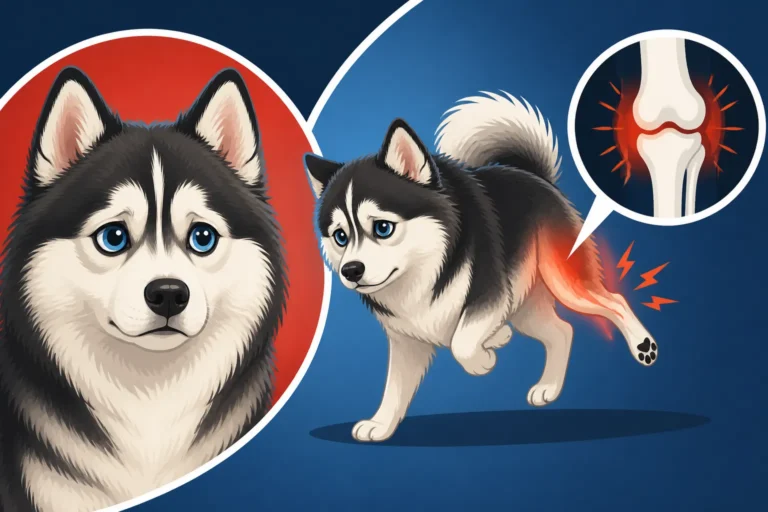
The hallmark symptom of LCP is a progressive lameness in one of the hind legs. This isn't usually a sudden, dramatic injury, like a broken bone. Instead, it typically starts quite insidiously, often with your Pomsky exhibiting a slight, intermittent limp that might come and go. You might notice them just barely "toe-touching" the affected leg to the ground, trying to avoid putting full weight on it. This can make you second-guess yourself, thinking, "Did I really see that, or was it just my imagination?"
As the disease progresses and the femoral head continues to degenerate, the lameness becomes more pronounced and consistent. Your Pomsky might start holding the leg up more often, or become completely non-weight bearing, refusing to put any pressure on the limb. They might also shift their weight noticeably to the unaffected side, or seem generally reluctant to move. A real-life scenario might involve your Pomsky being perfectly fine during morning playtime, then showing a subtle skip or hop in the afternoon, only for it to worsen significantly over a week or two. You might notice them struggling with everyday activities they once loved, like chasing a ball, climbing stairs, or even just getting up from a nap. This progressive nature is key to identifying LCP, as it rarely presents as a sudden, acute injury.
Muscle Atrophy and Pain Responses
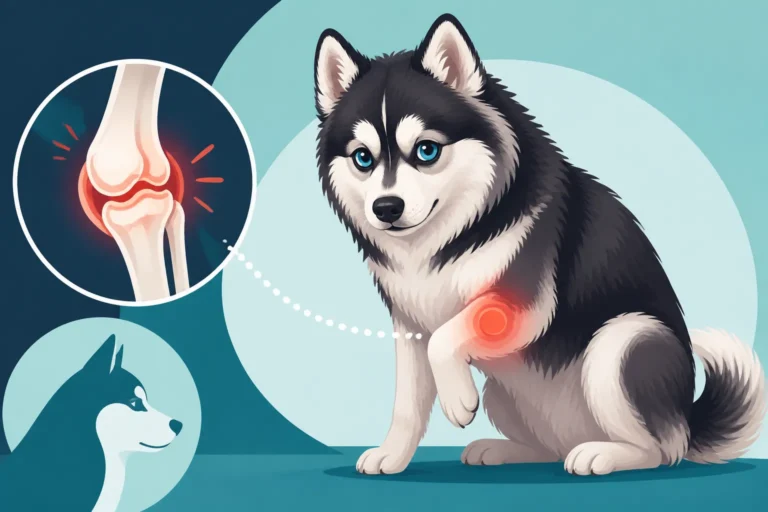
Beyond the obvious limping, LCP brings with it a cascade of secondary symptoms, largely driven by the chronic pain and disuse of the affected limb. One of the most noticeable of these is muscle atrophy, or muscle wasting. Because your Pomsky is trying to avoid using the painful leg, the muscles in that thigh and hip area will gradually begin to shrink. If you gently feel both of your Pomsky's hind legs, you might notice that the affected leg feels significantly thinner or less muscular compared to the healthy one. This imbalance further contributes to instability and weakness.
Pain responses are also tell-tale signs. If you try to gently manipulate your Pomsky's hip joint, or even just touch the area, they might react with signs of pain – yelping, flinching, pulling away, or even snapping if the pain is severe. Their range of motion will likely be restricted; they won't be able to extend or flex the leg as fully as they should. You might also notice them becoming more irritable or withdrawn, especially if they're usually a very social dog. Chronic pain can certainly alter a dog's demeanor, making them less enthusiastic about play or even resistant to being petted in certain areas. Observing these changes, both physical and behavioral, is crucial for helping your vet piece together the puzzle.
Distinguishing LCP from Other Conditions
One of the challenges with diagnosing LCP is that its initial symptoms can mimic those of other common orthopedic issues in dogs, especially in active small breeds like Pomskies. It’s not uncommon for an owner to initially suspect a simple sprain, a minor muscle pull, or even a clumsy fall that resulted in a temporary ache. However, given the progressive nature of LCP, these milder explanations typically don’t hold up over time.
For instance, many small dogs, including Pomskies, are prone to Slipping Kneecaps in a Pomsky, also known as patellar luxation. This condition also causes intermittent lameness and skipping, but it originates in the knee, not the hip. While both involve hind limb lameness, a vet's physical examination can usually pinpoint the source of the problem. Similarly, some owners might worry about Hip Dysplasia in a Pomsky, which is a malformation of the hip joint. While hip dysplasia can affect smaller dogs, it's more prevalent in larger breeds and often has a slightly different presentation on X-rays. Because the symptoms can overlap, it's vital not to self-diagnose. Only a thorough veterinary examination, often including diagnostic imaging, can definitively determine if your Pomsky is suffering from LCP or another condition. Your vet will conduct specific tests to differentiate, ensuring the correct treatment path is chosen.
Diagnosing Legg-Calve-Perthes in Your Pomsky
When your Pomsky is limping and clearly in discomfort, getting an accurate diagnosis is paramount. It’s a process that combines your observations as a dedicated pet parent with your veterinarian’s expertise and diagnostic tools. Don't hesitate to contact your vet immediately if you suspect something is wrong.
The Initial Veterinary Examination
The diagnostic journey for LCP typically begins with a comprehensive physical examination by your veterinarian. They’ll want to gather as much information as possible from you about your Pomsky’s symptoms: when did the limping start? Is it constant or intermittent? What makes it better or worse? Have you noticed any changes in their appetite, activity level, or demeanor? Your detailed history is invaluable in guiding their investigation.
During the physical exam, your vet will observe your Pomsky’s gait, looking for specific patterns of lameness, such as favoring a leg or hopping. They will then meticulously palpate (feel) your Pomsky's legs, hips, and spine, checking for tenderness, swelling, or abnormalities. Crucially, they’ll perform specific orthopedic manipulations of the hip joints, carefully extending, flexing, and rotating the affected leg. If LCP is present, this manipulation will usually elicit a pain response and reveal a restricted range of motion, often with a grinding or clicking sensation indicating bone-on-bone friction within the degenerating joint. This hands-on assessment is often the first strong indicator that something serious is happening in the hip.
X-ray Confirmation
While the physical exam provides strong clues, X-rays are the definitive diagnostic tool for Legg-Calve-Perthes disease. This imaging allows your veterinarian to look inside the hip joint and assess the condition of the femoral head and socket. To get clear, accurate images, your Pomsky will likely need to be sedated. This ensures they are perfectly still, allowing the vet to position them correctly and obtain high-quality radiographs without causing additional pain or stress.
On an X-ray, the signs of LCP are quite distinct. Your vet will look for several key indicators: the femoral head, which should be a smooth, round ball, will often appear flattened, irregular, or even completely collapsed. You might see areas of increased bone density (sclerosis) or areas where the bone has broken down into fragments. The joint space itself might appear widened as the bone deteriorates, or conversely, irregular. These changes are characteristic of the avascular necrosis and subsequent collapse that defines LCP. Seeing these changes on the radiograph provides undeniable confirmation of the diagnosis, allowing your vet to discuss the best course of action.
Ruling Out Other Issues
While X-rays are highly effective at confirming Legg-Calve-Perthes, part of a thorough diagnostic process involves ruling out other potential causes of your Pomsky's limping. As mentioned earlier, conditions like patellar luxation (slipped kneecap) or even muscle strains can present with similar initial symptoms. Your vet's physical examination is crucial in differentiating these by focusing on the specific joint or area affected.
In some rarer instances, especially if the X-ray findings aren't perfectly clear or if there are other complicating factors, your vet might consider additional diagnostics. This could include blood work to check for systemic inflammation or other underlying health issues, though these are not typically primary diagnostic tools for LCP itself. Sometimes, a more advanced imaging technique like an MRI might be discussed, particularly if there's suspicion of soft tissue involvement or other complex orthopedic issues. However, for most cases of LCP, the combination of a detailed physical exam and characteristic X-ray findings is usually sufficient to arrive at a conclusive diagnosis, allowing you and your vet to move forward with a treatment plan tailored to your Pomsky’s needs.
Treatment Options for Legg-Calve-Perthes
Hearing that your Pomsky has Legg-Calve-Perthes can feel overwhelming, but the good news is that there are very effective treatment options available. The primary goal is always to alleviate pain, restore mobility, and give your Pomsky the best possible quality of life. For most LCP cases, surgery is the gold standard, but it’s worth understanding all the paths.
Conservative Management (When It's an Option)
In a very small percentage of cases, particularly if the LCP is caught extremely early, is incredibly mild, or if surgical intervention is absolutely not an option due to other severe health concerns, conservative management might be considered. This approach focuses on strict rest, pain control, and supportive therapy, hoping to allow the femoral head to heal and remodel itself without surgical intervention.
Conservative management typically involves weeks or even months of strict cage rest, meaning no running, jumping, or strenuous activity whatsoever. Your Pomsky would receive pain medication, often non-steroidal anti-inflammatory drugs (NSAIDs), to manage discomfort and reduce inflammation. Physical therapy, initially passive range of motion exercises, might also be incorporated to prevent muscle atrophy and maintain joint flexibility. The challenge, especially with a lively Pomsky puppy, is adherence to such strict confinement, which can be incredibly difficult for both dog and owner. Unfortunately, for most cases of LCP, conservative management has a very high failure rate. The damaged bone rarely heals sufficiently to provide a pain-free, functional joint, and surgical intervention typically becomes necessary eventually. This is why most vets will recommend surgery without delay if LCP is confirmed.
Femoral Head Ostectomy (FHO) Surgery
For the vast majority of Pomskies diagnosed with Legg-Calve-Perthes, Femoral Head Ostectomy, or FHO surgery, is the primary and most successful surgical intervention. The thought of surgery can be scary, but FHO has a long track record of excellent outcomes, especially in small dogs like Pomskies.
So, what exactly does FHO involve? Essentially, the orthopedic surgeon removes the damaged, necrotic femoral head (the "ball" of the hip joint). They literally cut off the top of the thigh bone. It sounds drastic, but the brilliant part is that the body then forms a "false joint" or pseudoarthrosis. The muscles surrounding the hip, along with scar tissue, eventually create a fibrous sling that supports the joint. When your Pomsky moves, the remaining part of the femur rubs against the hip socket, but because there's no longer bone-on-bone grinding of a damaged femoral head, the pain is eliminated. The body essentially learns to live without that ball joint, relying on soft tissue to create a functional, pain-free limb. The smaller a dog is, the better they tend to do with FHO because their body weight puts less stress on this newly formed false joint. This makes FHO an incredibly successful procedure for Pomskies, allowing them to regain significant mobility and live a much more comfortable life. After the surgery, the crucial rehabilitation phase begins, which is just as important as the surgery itself.
Post-Operative Care and Rehabilitation
FHO surgery is a significant step, but the journey to a fully recovered Pomsky doesn't end there. Post-operative care and rehabilitation are absolutely critical for ensuring the best possible outcome. This phase requires dedication and patience from you as the owner, but the effort is well worth it for your Pomsky’s future comfort and mobility.
Immediately after surgery, your Pomsky will need strict rest and effective pain management. Your vet will prescribe pain medications, including NSAIDs and possibly other analgesics, to keep them comfortable. Activity will be severely restricted for several weeks, often involving crate rest or confinement to a small, safe area to prevent excessive movement that could hinder healing. Controlled, short leash walks are typically introduced gradually. The real magic of recovery often happens with physical therapy. This might start with passive range of motion exercises, where you gently move your Pomsky’s hip through its normal range of motion to prevent stiffness and maintain flexibility. As they heal, more active therapies will be introduced, such as controlled weight-bearing exercises, balance work, and potentially hydrotherapy (swimming or underwater treadmill) to build muscle strength without putting excessive strain on the healing joint. It’s also important to remember that during this period, activities like allowing your Pomsky to Whether a Pomsky Should Jump Off Furniture should be strictly avoided to prevent re-injury or unnecessary strain on the healing hip. Full recovery can take several weeks to a few months, but with consistent effort, most Pomskies bounce back remarkably well, often leading active, pain-free lives.
Living with a Pomsky Diagnosed with LCP
A diagnosis of Legg-Calve-Perthes and the subsequent surgery might sound daunting, but it's important to remember that it's not a life sentence of pain for your Pomsky. With the right care and commitment, your furry companion can absolutely thrive and enjoy a happy, active life. It's about proactive management and understanding their needs as they heal and beyond.
Managing Pain and Supporting Recovery
Even after successful FHO surgery, managing any residual pain and continually supporting your Pomsky’s recovery is an ongoing process. Your veterinarian will work with you to develop a long-term pain management strategy, which might include continued use of NSAIDs on an as-needed basis, especially during periods of increased activity or if they seem stiffer. Many owners also find success with joint supplements containing ingredients like glucosamine, chondroitin, and MSM, which can help support cartilage health and reduce inflammation, even in a pseudoarthrosis joint. If you're wondering Whether Joint Supplements Help a Pomsky, the answer is often yes, especially for long-term comfort. Advanced therapies like therapeutic laser treatments, acupuncture, or even regenerative medicine might be explored if your Pomsky experiences persistent discomfort.
Creating a safe and accessible home environment is also key. This means ensuring your Pomsky has comfortable bedding, easy access to food and water without needing to jump or stretch excessively, and potentially using ramps or steps for furniture if they enjoy being on the couch or bed. For those concerned about future health costs, having a good pet insurance plan like Healthy Paws can be a tremendous relief, covering a significant portion of these ongoing veterinary and rehabilitation expenses. While most Pomskies recover very well, it’s worth noting that if not properly managed, or in rare complicated cases, issues like Arthritis in a Pomsky at Ten could become a concern later in life, making proactive care even more important.
Long-Term Outlook and Quality of Life
The good news is that the long-term outlook for small Pomskies who undergo FHO surgery for Legg-Calve-Perthes is overwhelmingly positive. Most dogs, especially those under about 40 pounds, recover very well and go on to lead normal, active, and pain-free lives. The goal of the surgery is truly to eliminate the pain associated with the degenerated femoral head, and in this, it is highly successful.
While the affected leg might never have the exact same range of motion or muscle mass as the healthy one, it will be fully functional. Your Pomsky should be able to run, play, jump (within reason, depending on their recovery and overall activity level), and enjoy all the activities they love. Consistency in their exercise routine, ensuring they maintain a healthy weight, and providing a balanced diet are all crucial for supporting their long-term joint health. Regular follow-up appointments with your veterinarian, potentially including yearly check-ups that include assessing joint health as part of The Screening a Pomsky Should Have Yearly, will help monitor their progress and catch any new issues early. It’s a testament to the resilience of these amazing dogs and the effectiveness of modern veterinary care that such a debilitating condition can be overcome, allowing them to truly thrive.
Financial Considerations and Support
Let's be realistic: a diagnosis of Legg-Calve-Perthes, especially one requiring surgery and extensive rehabilitation, comes with significant financial implications. The cost of diagnosis alone, including multiple vet visits, examinations, and X-rays, can start adding up. The FHO surgery itself, performed by an orthopedic specialist, is a major procedure and can range from several hundred to a few thousand dollars, depending on your location, the complexity of the case, and the veterinary clinic.
Beyond the surgery, you’ll need to factor in post-operative medications, follow-up appointments, and crucially, the cost of rehabilitation. Physical therapy sessions, hydrotherapy, and special equipment can accumulate expenses over several months. It’s no secret that What a Pomsky's Vet Bills Look Like can be substantial, and LCP treatment is a prime example of this. This is where pet insurance truly shines. A comprehensive pet insurance plan, like those offered by Healthy Paws, can cover a large percentage of eligible veterinary expenses, including diagnosis, surgery, hospitalization, medications, and rehabilitation. Having such coverage can turn a financially stressful situation into a manageable one, allowing you to focus on your Pomsky’s recovery rather than worrying about the accumulating bills. If you don't have pet insurance, it's wise to start setting aside an emergency fund specifically for your pet's healthcare needs, as unexpected conditions like LCP can arise without warning.
Treatment Options for LCP: A Comparison
To give you a clearer picture, here's a brief comparison of the two main approaches to managing Legg-Calve-Perthes disease in Pomskies.
| Feature | Conservative Management | FHO Surgery |
|---|---|---|
| Primary Goal | Pain relief, natural bone remodeling (rarely achieved) | Pain elimination, creation of a functional false joint |
| Approach | Strict rest, pain meds, passive physical therapy | Surgical removal of damaged femoral head |
| Effectiveness | Low success rate for full recovery; high risk of recurrence | High success rate, especially in small breeds like Pomskies |
| Recovery Time | Weeks to months of strict rest, often with incomplete healing | Weeks to months of controlled rehabilitation, leading to excellent function |
| Pain Management | Ongoing medication for chronic pain | Significant pain relief post-recovery |
| Cost | Lower initial cost, but potentially higher long-term if surgery is eventually needed | Higher initial cost, but often a one-time solution for permanent relief |
| Ideal Candidate | Very mild, early cases; or when surgery is contraindicated | Most diagnosed Pomskies, particularly those experiencing significant lameness and pain |
Disclaimer
The information provided in this article is for educational purposes only and is not a substitute for professional veterinary advice. Always consult with a qualified veterinarian for any health concerns or before making any decisions about your pet's medical care.