What a Husky Marked Pomsky Costs
Oh, the allure of a Pomsky with those striking Husky markings! It's completely understandable why so many people fall head over heels for that particular look. You see those captivating blue eyes, that distinctive facial mask, or those classic agouti patterns, and suddenly, you're picturing that perfect mini-Husky companion. But then the sticker shock hits, and you're left wondering why some Pomskies seem to cost significantly more than others, especially when they boast that coveted Husky aesthetic. This guide will walk you through the many layers of what makes a Husky-marked Pomsky command its price, from those undeniable visual traits to the intricate realities of how these wonderful dogs come into the world.
Understanding the "Husky Markings" Premium
Let's be honest, a huge part of the Pomsky's appeal stems from the dream of having a Husky's majestic appearance in a more compact, manageable package. When breeders can consistently produce puppies that embody those classic Siberian Husky traits, it often translates into a higher asking price. It’s not just about aesthetics; it's about meeting a specific, highly sought-after vision that many prospective owners have.
The Allure of the Classic Husky Mask and Coat Patterns
When we talk about "Husky markings," we're often picturing that iconic facial mask – a clear, contrasting pattern around the eyes, nose, and forehead that frames the face so beautifully. This can range from a full mask, covering much of the face, to an open mask, which might leave more white around the eyes, or a black bar that runs between the eyes. Beyond the face, there are the traditional Husky coat patterns: the sleek black and white, the striking grey and white, or even the rarer reds and sables, often with intricate saddle markings or "snow caps" on their heads.
These patterns aren't always a given in a Pomsky litter. The genetic lottery of mixing a Husky and a Pomeranian means you can get a huge range of appearances, some leaning heavily towards the Pomeranian side, and others, less commonly, truly capturing that miniature Husky essence. Breeders who have carefully selected parent dogs to maximize the chances of these specific markings, and who consistently deliver on that promise, naturally see their puppies valued higher. It takes a lot of understanding of genetics and careful breeding practices to reliably produce these looks, which isn't just luck. Think about the effort involved in trying to predict What a Husky Marked Pomsky Costs or the specific outcome of a cross.
Blue Eyes and Bi-Eyes: The Husky Eye Trait
Ah, those piercing blue eyes! They are arguably one of the most enchanting and distinct features a Husky-marked Pomsky can inherit. While some Pomeranians can have blue eyes, it's far less common than in Huskies, where it's a well-known breed characteristic. When a Pomsky puppy opens its eyes and reveals those brilliant blues, or even a captivating bi-eyed combination (one blue, one brown, or sometimes even sectoral blue within one eye), it instantly adds to their perceived value. There's just something incredibly captivating about those icy blue gazes looking up at you from a fluffy, pint-sized body.
It’s important to understand that eye color, like coat pattern, isn't something a breeder can guarantee with 100% certainty in every single puppy, especially in the earlier generations. The genetics can be complex. Therefore, puppies displaying these desirable eye colors often command a premium. Many buyers specifically seek out blue-eyed Pomskies, and this demand directly influences the price. If you're wondering Why a Blue Eyed Pomsky Costs More, it boils down to rarity, desirability, and the efforts breeders make to produce such striking examples. It’s a trait that truly sets them apart and fulfills that miniature Husky dream for many.
Factors Beyond Markings That Influence Price
While those gorgeous Husky markings are a huge draw, they're certainly not the only thing that affects a Pomsky's price. There are numerous other considerations that breeders factor into their costs, and that you, as a prospective owner, should be aware of. Understanding these additional elements helps paint a more complete picture of why these designer dogs can carry a significant price tag. It's never just about the pretty face; it's about the entire breeding process and the predicted outcome.
Generation and Breeder Reputation
The "generation" of a Pomsky refers to how many times the cross has been bred. An F1 Pomsky, for example, is a first-generation cross – a purebred Siberian Husky mother bred with a purebred Pomeranian father. An F2 Pomsky results from breeding two F1 Pomskies together, and so on. Generally, later generations (F2, F3, multigen) are often considered more desirable by breeders because they can offer more predictability in terms of size, temperament, and appearance, including the consistency of those Husky markings. Producing an F1 is one thing, but carefully breeding F1s to get consistent F2s is another challenge entirely. If you want to know What an F1 Pomsky Is, you'll learn that while they can be stunning, their traits are sometimes less predictable than later generations.
Beyond generation, a breeder's reputation plays a monumental role. Responsible, ethical breeders invest heavily in their dogs. This includes extensive health testing of parent animals for conditions common to both Huskies and Pomeranians, such as genetic eye conditions, Slipping Kneecaps in a Pomsky, or hip and elbow dysplasia. They provide excellent care for their breeding dogs and puppies, including proper nutrition, socialization, and a clean, stimulating environment. A breeder known for their transparency, health guarantees, and ongoing support for their puppy owners will naturally price their puppies higher to reflect these significant investments. They aren't just selling a puppy; they're selling a meticulously planned and cared-for companion.
Size Expectations and Gender
Many people are drawn to Pomskies specifically for their compact size, hoping for a dog that truly embodies the "miniature Husky" idea. However, predicting a Pomsky's adult size can be quite tricky, especially in earlier generations. Some breeders specialize in producing smaller Pomskies, often aiming for weights under 20 pounds, which can sometimes come at a premium due to the difficulty and specific breeding choices involved. The smaller the desired size, the more meticulous the breeding process often has to be, increasing the perceived value if a puppy looks to be on the smaller end of the spectrum.
Gender can also play a subtle role in pricing, although this varies greatly by breeder and demand. In some cases, females might be priced slightly higher due to their potential breeding value (though responsible breeders will always spay/neuter pets before placement or include spay/neuter clauses in contracts). Other times, a specific male puppy might be deemed more desirable for his temperament or particularly striking markings. Ultimately, while individual breeder preferences and local demand influence gender pricing, the overarching desire for a specific size, especially a smaller one, tends to be a more consistent factor in driving up the cost of a Husky-marked Pomsky.
The Reality of Pomsky Breeding Costs (And Why Prices Are High)
It's easy to look at the price tag of a Pomsky and feel a bit of sticker shock, especially when you're specifically seeking out those beautiful Husky markings. But what many prospective owners don't realize is the extensive, often costly, process involved in ethically breeding these dogs. The price isn't just pulled out of thin air; it reflects a significant investment of time, money, and expertise on the part of the breeder. Understanding these foundational costs can help you appreciate why Pomskies, especially those with desirable traits, come at a premium.
The Necessity of Artificial Insemination
One of the most significant factors driving up the cost of Pomsky puppies is the fact that they generally cannot be bred naturally. This is due to the vast size difference between the Siberian Husky mother and the Pomeranian father. Natural breeding would pose severe health risks to both dogs, particularly the smaller male, and is simply not responsible practice. This means that nearly all Pomskies are conceived through artificial insemination (AI). If you're curious Why a Pomsky Cannot Be Bred Naturally, the answer largely lies in safety and ethics.
Artificial insemination is a veterinary procedure that involves collection of semen from the male and then carefully implanting it into the female. This process often requires multiple vet visits for timing, semen collection, and the actual insemination itself. These veterinary services, along with potential shipping costs for chilled or frozen semen if the sire is not local, add substantially to the breeder's overhead. What Artificial Insemination Costs a Pomsky Breeder can be a significant sum, and this is a non-negotiable step in responsible Pomsky breeding, directly impacting the final price of the puppies, regardless of their markings.
Health Screening and Veterinary Expenses
A responsible Pomsky breeder prioritizes the health of their breeding dogs and their puppies above all else. This means comprehensive health screening for both parent breeds. Huskies are prone to certain eye conditions like juvenile cataracts or progressive retinal atrophy, while Pomeranians can be susceptible to The Collapsing Trachea a Pomsky Gets From the Pomeranian and patellar luxation. Ethical breeders will have their parent dogs thoroughly screened for these and other hereditary conditions before breeding. This involves specialized veterinary exams, genetic testing, and certifications from organizations that ensure breeding dogs are clear of these genetic predispositions.
Beyond initial health screenings, there are ongoing veterinary expenses for the pregnant dam and her litter. This includes regular check-ups during pregnancy, potential ultrasounds or X-rays to monitor the puppies' development, and possibly even a planned C-section if complications are anticipated – a not uncommon occurrence given the size disparity in the parent breeds. Once the puppies are born, they require their own veterinary care, including initial health checks, vaccinations, deworming, and microchipping. These cumulative veterinary costs are substantial and are a core reason why ethical breeders charge what they do. They are investing in producing healthy, well-started puppies, not just adorable ones with perfect Husky markings.
Long-Term Costs Associated with a Pomsky
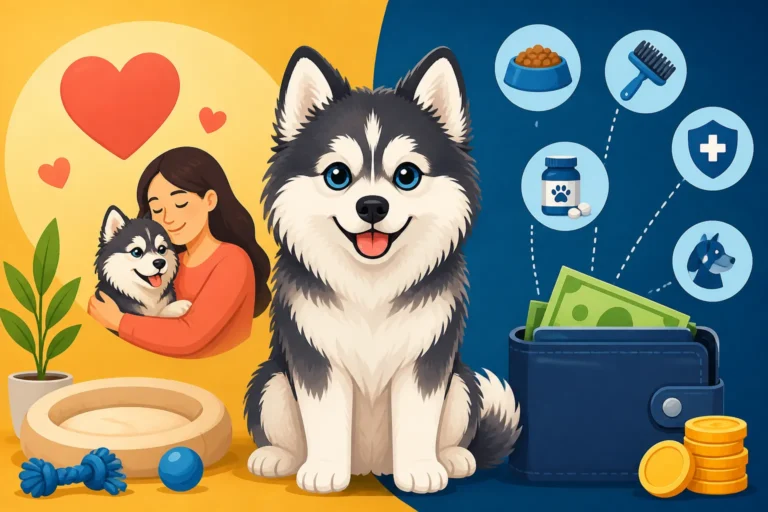
Bringing home a Husky-marked Pomsky, or any Pomsky for that matter, is more than just the initial purchase price. It's a long-term commitment that comes with ongoing expenses. Many new owners, captivated by their puppy's adorable looks, might not fully anticipate these recurring costs. Being prepared for these financial responsibilities is crucial for ensuring a happy, healthy life for your Pomsky, regardless of how much you initially paid for those striking features.
Essential Grooming for a Double Coat
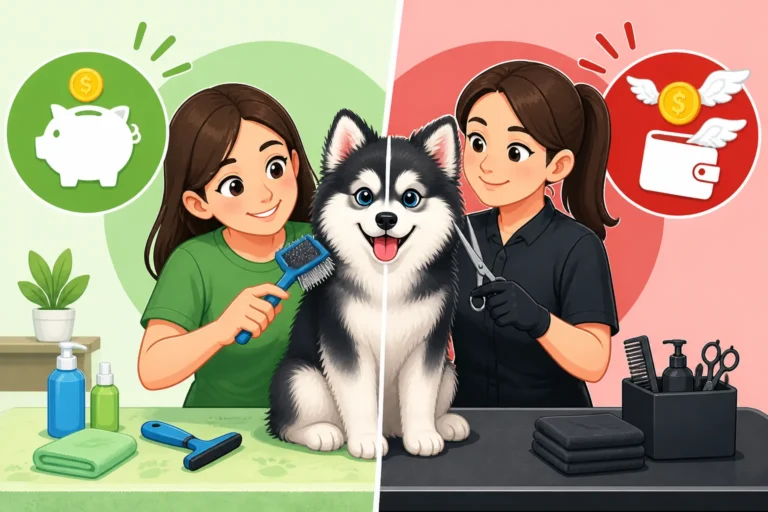
One of the most significant ongoing costs for a Pomsky, especially one with a dense Husky-like double coat, is grooming. Pomskies shed, and when they "blow their coat" twice a year, it's an event. Their thick undercoat and protective guard hairs require consistent maintenance to prevent matting and keep their skin healthy. You might think you can handle it all at home, but the truth is, professional grooming can save you a lot of headache and ensure your dog is properly cared for. The Grooming Bill on a Double Coated Pomsky can be substantial over the years.
Professional grooming often includes de-shedding treatments, thorough baths with specialized shampoos and conditioners, and powerful force drying to ensure the undercoat is completely dry, preventing skin issues like hot spots. While you can certainly invest in good tools like an undercoat rake and a high-velocity dryer for home use, even with DIY efforts, there will be costs. Products from brands available on platforms like Chewy, for example, can add up. Some owners prefer a professional groomer every 6-8 weeks, with daily brushing in between, to manage the incredible amount of hair. Neglecting their coat can lead to painful mats, skin infections, and ultimately, expensive vet visits.
Feeding and Healthcare Considerations
A Pomsky, while smaller than a full-sized Husky, still requires a high-quality diet to support their energy levels and overall health. The type of food you choose can significantly impact your monthly budget. Premium kibble, fresh food options like those offered by Ollie, or raw diets will all have different price points. It's important to select a food that meets their nutritional needs, and this isn't an area to cut corners on. Over the course of their The Twelve to Fifteen Years a Pomsky Lives, feeding them well will be one of your most consistent expenses. Curious about What Feeding a Pomsky Costs Monthly? It's definitely more than you might initially think.
Beyond food, ongoing healthcare is paramount. Regular veterinary check-ups, vaccinations, parasite prevention (flea, tick, heartworm), and dental care are non-negotiable. As Pomskies age, they may develop conditions inherited from their parent breeds, necessitating specialized care. This is where pet insurance from providers like Healthy Paws can be incredibly valuable. While it's an upfront monthly cost, it can provide immense peace of mind and financial relief if your Pomsky faces an unexpected illness or injury. Planning for these essential costs, rather than being surprised by them, is a vital part of responsible Pomsky ownership, ensuring your Husky-marked companion lives a full and happy life.
Here's a quick look at how various factors influence a Pomsky's price:
| Factor | Impact on Price (Generally) | Reason |
|---|---|---|
| Husky Markings & Blue Eyes | Higher | High demand, perceived rarity, aligns with "mini-Husky" ideal. |
| Breeder Reputation | Higher | Investment in health testing, ethical practices, proper socialization, and lifetime support. |
| Later Generations (F2, F3) | Potentially Higher | More predictability in traits, size, and temperament; greater breeding expertise involved. |
| Smaller Adult Size Expectation | Higher | Increased demand for "toy" or "mini" Pomskies; more selective breeding. |
| Artificial Insemination | Higher (base cost) | Necessary veterinary procedure due to size difference, adds significant overhead to breeding. |
| Extensive Health Screening | Higher (base cost) | Ensures healthy parents and puppies, reduces risk of hereditary diseases. |
| Location/Demand | Varies | Prices can differ based on regional popularity and availability of reputable breeders. |
| Temperament/Training | Potentially Higher | Exceptional temperament or early training can increase value (though usually included in breeder's cost). |
Disclaimer
This article is for general informational purposes only and does not constitute professional advice. Laws, prices and regulations vary by location and change over time. Consult a qualified professional for guidance on your specific situation.