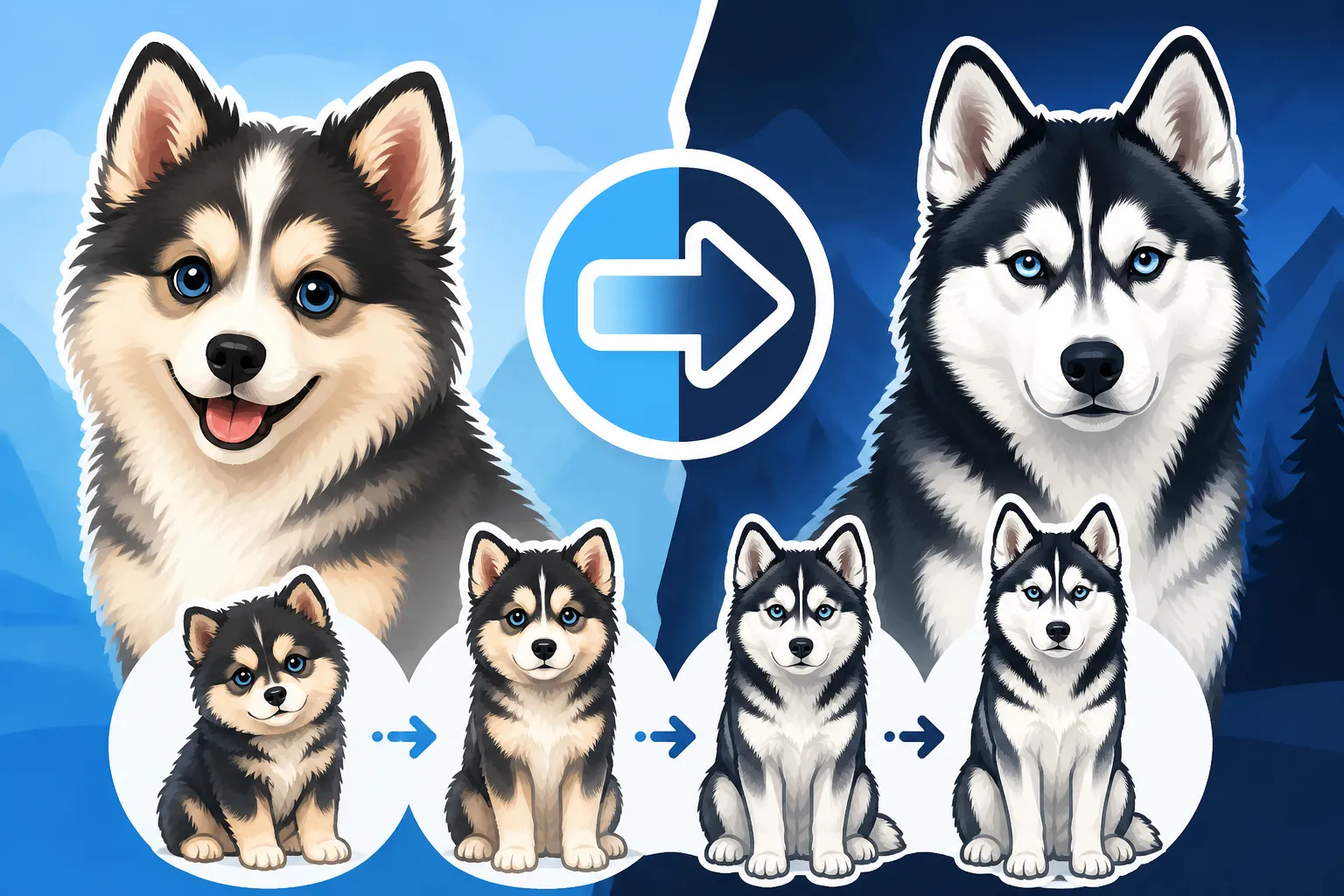
Whether a Later Generation Pomsky Looks More Husky
It’s a common dream for many aspiring Pomsky parents: a tiny, fluffy version of a Siberian Husky, complete with those piercing blue eyes and that iconic mask. You might be wondering if, as breeders move to later generations – F2, F3, and beyond – they somehow get closer to consistently producing this ideal mini-Husky look. It's a valid question, given the wide range of appearances in earlier litters! This guide will delve into the fascinating world of Pomsky genetics and breeding, explaining why the path to a predictable "Husky look" isn't always straightforward, and what you can realistically expect from later generations.
Understanding Pomsky Generations and Their Genetics
The journey of any designer breed, including our beloved Pomskies, starts with a vision and then moves through the complex landscape of genetics. When you talk about "later generations," you're essentially discussing how breeders attempt to refine and stabilize traits through successive pairings.
The Basics of F1, F2, and Beyond
Let's break down what these generation labels actually mean, because it's crucial to understanding the genetic soup that creates each unique Pomsky.
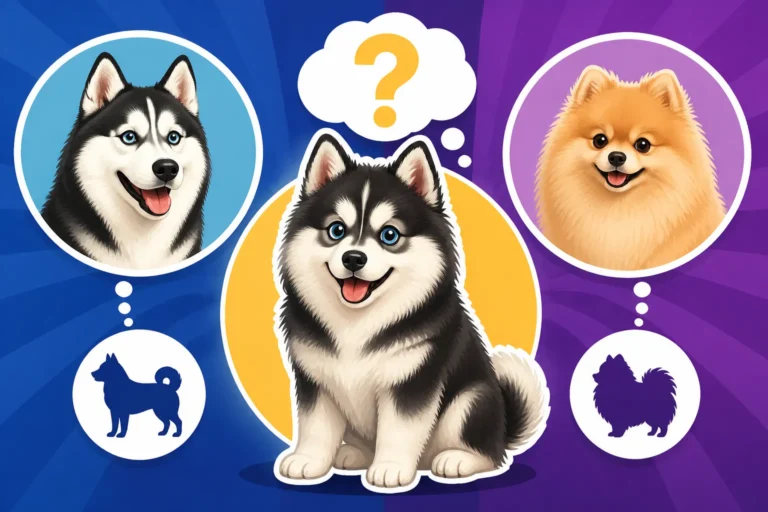
An F1 Pomsky is the very first generation, a direct cross between a purebred Siberian Husky and a purebred Pomeranian. On paper, you might think this means a perfect 50/50 genetic split, but in terms of appearance, it's rarely that neat. Imagine a grab bag of traits from both parents. One F1 puppy might look like a smaller Husky, while its littermate could easily be mistaken for a slightly larger Pomeranian. There's an incredible amount of diversity within a single F1 litter. This generation is often where you see the most surprise, both delightful and sometimes unexpected, because the dominant and recessive genes from two very different breeds are clashing and combining for the first time. It's truly a genetic roll of the dice in many ways. What F1 Means on a Pomsky is a concept many people initially misunderstand, expecting a uniform result.
When we talk about an F2 Pomsky, we're talking about breeding two F1 Pomskies together. You might assume that breeding two dogs that are already a mix would create a more consistent outcome, but often, it introduces more genetic variability into the visible traits. Think of it like this: each F1 parent carries a complex blend of Husky and Pomeranian genes, some visible and some hidden. When you combine those two complex blends, you can get an even wider expression of traits in the F2 litter. You might have puppies that look very Husky, some that look very Pomeranian, and others that are a truly unique blend. This is precisely Why an F1 Pomsky Is Not the One Breeders Want if their goal is consistency. They are foundational, but not the end goal for stabilization.
Multi-generation Pomskies, often labeled F3, F4, or even F1B (an F1 Pomsky bred back to a purebred Husky or Pomeranian, but that's a whole other can of worms!), are where breeders hope to achieve more predictability. The idea here is to selectively breed Pomsky to Pomsky over several generations, choosing parent dogs that consistently exhibit the desired traits. If a breeder wants a "mini-Husky" look, they'll breed two Pomskies that strongly resemble Huskies, hoping to concentrate those genes. While this can increase the likelihood of desired traits appearing, it's still a relatively young crossbreed, and true predictability on par with established purebreds is a long way off. Whether a Multigen Pomsky Is More Predictable is a common aspiration, but the reality is nuanced.
The Genetic Lottery and Dominant Traits
Understanding how specific traits are inherited from the Siberian Husky and the Pomeranian helps explain why achieving a consistent look is such a challenge. It’s not just about mixing two breeds; it’s about which genes are dominant and which are recessive, and how they combine in each individual puppy.
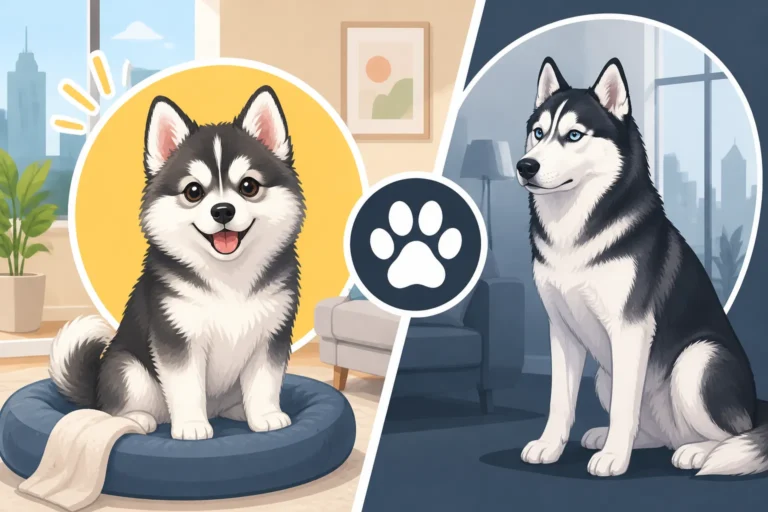
Siberian Huskies bring a whole suite of striking features to the table: their medium-to-large size, athletic build, upright triangular ears, frequently blue or parti-colored eyes, thick double coat, and distinctive facial masks and markings. Pomeranians, on the other hand, are much smaller, have a more compact, often dainty build, typically prick ears (though sometimes small and set high), dark eyes, and a very fluffy, standoff double coat. When these two vastly different genetic blueprints merge, the results can be quite dramatic. Some Husky features, like the upright ears or certain coat patterns, might be more dominant, while others, like size, can be heavily influenced by both sides and remain highly variable.
The unpredictable nature of trait inheritance means that even within a single litter, you’ll see incredible variation. An F1 litter, for instance, might have one pup with bright blue eyes, another with brown, and a third with one of each. One might have the classic Husky mask, while another has a solid face. This is because each parent passes on a random assortment of their genes. A "Husky-looking" F1 Pomsky isn't necessarily passing on all those Husky genes consistently; it simply expressed them strongly itself. This makes the job of a breeder trying to consistently produce a specific look incredibly difficult, especially in earlier generations where the genetic pool is still so broad. It’s why you can have two "mini-Husky" looking parents and still get a litter that includes puppies leaning more heavily towards the Pomeranian side in terms of size or coat.
Even as breeders work through later generations, trying to select for specific traits, they are always contending with the full genetic history of both parent breeds. Hidden recessive genes can pop up unexpectedly, throwing a curveball into the desired outcome. This is part of the fun and frustration of hybrid breeding. You might be aiming for a specific look, but nature often has its own plans.
Breeder Goals and Their Impact on Appearance
The desires of breeders and the demands of the market play a huge role in how Pomsky generations evolve visually. For many, the ultimate goal is that elusive "mini-Husky," and this drives many breeding decisions.
The "Mini-Husky" Ideal and Selective Breeding
Let's be honest, a significant draw for many people considering a Pomsky is the allure of a pint-sized Siberian Husky. It's the image that captivated the internet and drove the initial demand for the breed. This strong market desire for the "mini-Husky" look undeniably influences breeders as they work with later generations. They want to produce dogs that fit this popular aesthetic.
To achieve this, breeders often engage in selective breeding, carefully choosing parent Pomskies for F2 and multi-gen litters that already display strong Husky characteristics. This means looking for dogs with the desired coat texture, color, and markings – especially the classic facial mask. They'll also prioritize those with the correct ear set (prick, triangular ears that stand up) and those beautiful blue or parti-colored eyes that are so synonymous with Huskies. The Blue Eyes People Buy a Pomsky For are a major selling point. They might also select for a more Husky-like body structure, aiming for a sturdy, athletic build rather than a more delicate, toy-breed frame. Breeders meticulously study pedigrees and assess the physical traits of potential breeding pairs, hoping that by doubling up on these desired genes, they can increase the chances of the offspring inheriting them.
However, even with the most careful selection, consistently reproducing these traits remains a significant challenge. Genetics are complex, and it's not simply a matter of "Husky + Husky = mini-Husky." There are many genes at play, and even if both parents look like mini-Huskies, they might still carry recessive Pomeranian genes that can surprise everyone in a subsequent litter. It's a bit like baking; even if you use the same ingredients, subtle variations in technique or oven temperature can lead to different results. Breeders are constantly learning and refining their understanding of how these traits are inherited within their lines.
Why Predictability Remains a Challenge
Despite all the earnest efforts of reputable breeders, true predictability in appearance, especially for a specific "look" like the mini-Husky, remains an ongoing challenge in later Pomsky generations. It's important to set realistic expectations.
Think about purebred dogs – they have been bred for hundreds, sometimes thousands of years, with strict breed standards and closed gene pools, all to achieve consistent physical and temperamental traits. The Pomsky, as a relatively new crossbreed, is still very much in its infancy. Even in F2, F3, or F4 generations, the genetic foundation is still a blend of two distinct breeds with vast differences. This means that while breeders can increase the probability of certain traits appearing, they cannot guarantee them with the same certainty as a purebred breeder. You might have an F3 litter where some puppies have perfect Husky masks and upright ears, while their littermates surprisingly exhibit a more Pomeranian-like muzzle or coat. Recessive genes from either grandparent breed can resurface at any time.
The concept of "breed stabilization" is a long and arduous process, involving many generations of careful selection and often, unfortunately, the culling of animals that don't meet the desired standard (though ethical breeders focus on finding suitable homes for all healthy pups, regardless of how they look). For a Pomsky, this means we're still in the exciting, yet unpredictable, phase of its development. For buyers, this translates to the fact that while a later generation Pomsky might be more likely to have a certain look, there's never a 100% guarantee. This is why when you search for supplies, whether it’s special shampoos for different coat types or toys for various sizes, places like Chewy are invaluable because they offer a huge range to suit any Pomsky, not just the "ideal" one.
Therefore, when considering a later generation Pomsky, it’s vital to understand that you're still embracing an element of genetic lottery. While the odds might be slightly more in favor of a specific look if the breeder has a consistent vision, the beauty of the Pomsky often lies in its unique individuality, not its conformity to a single ideal. What a Pomsky Actually Weighs Full Grown is another area where early predictions can be tricky, even in later generations.
Key Physical Traits and How They Manifest Across Generations
Let's break down some of the most sought-after physical traits and how they tend to manifest (or don't!) across the various Pomsky generations. It’s a fascinating look at the interplay of genetics.
Coat Type, Color, and Markings
The coat is often one of the first things people notice about a Pomsky, and it's also one of the most variable. Siberian Huskies have a dense, plush double coat, while Pomeranians are famous for their incredibly fluffy, stand-off double coat. This means a Pomsky can inherit a wide spectrum.
There are generally The Three Pomsky Coat Types acknowledged: the standard (closest to a Husky), the wooly (long and fluffy like a Pomeranian but still double-coated), and sometimes a short coat. In F1s, you can see all three in one litter. As breeders move into F2 and multi-generations, they often try to select for the standard, plush coat, which is most reminiscent of the Husky. However, the wooly coat genes are strong from the Pomeranian side, and it’s very common to still see wooly coats pop up even in later generations, especially if not carefully bred away from. A wooly coat requires much more grooming, by the way, so ensure you have the right brushes and shampoos, perhaps ordered from a place like Chewy.
When it comes to colors and markings, Huskies come in a variety of striking patterns, including black and white, grey and white, red and white, and pure white, often with distinctive facial masks. Pomeranians also come in a vast array of colors. The classic Husky mask is a highly prized feature in Pomskies. In F1s, it’s a crapshoot – some pups get the full mask, some get a partial mask, and some none at all. In later generations, breeders will specifically choose parents with strong, clear masks hoping to pass that on. They might even select for specific colors like the classic black and white or grey and white. However, the intensity of markings can still vary, and you might notice Whether a Pomsky's Mask Fades over time as the puppy coat transitions to the adult coat. It’s never a guarantee that a perfectly masked puppy will grow into a perfectly masked adult.
Eye Color, Ear Set, and Body Structure
Beyond the coat, other defining features like eye color, ear set, and overall body structure significantly contribute to whether a Pomsky looks more like a Husky.
The captivating blue eyes are arguably one of the most desired Husky traits, and consequently, a major draw for Pomsky enthusiasts. Huskies can have blue eyes, brown eyes, bi-colored eyes (one blue, one brown), or parti-colored eyes (both colors in one eye). Pomeranians typically have dark brown eyes. In an F1 Pomsky litter, blue eyes are certainly possible, but they are not guaranteed and might appear in only a few puppies. As breeders advance to F2 and multi-generations, they will undoubtedly prioritize breeding dogs with blue or bi-colored eyes to increase the chances of this trait appearing in subsequent litters. However, the genetics of eye color are complex, and even if both parents have blue eyes, brown-eyed puppies can still appear. And just to put your mind at ease, Whether Blue Eyed Pomskies See Worse is a common myth that isn't rooted in truth.
Ear set is another strong visual indicator. Huskies have upright, triangular ears, perfectly set atop their heads, while Pomeranians have smaller, often high-set ears that are also prick, but sometimes can be slightly less rigid, especially as puppies. In F1 Pomskies, it’s common to see a mix: some puppies will have floppy ears that may or may not stand up fully as they mature, while others will have perfectly erect Husky-like ears from an early age. In later generations, breeders will actively select for parents with consistently upright, well-set ears to try and make this trait more dominant in their lines.
Finally, body structure plays a huge role in the overall impression. Huskies are medium-sized, athletic dogs with a specific bone structure and proportions. Pomeranians are small, compact dogs. Pomskies can fall anywhere on this spectrum. While F1s are highly variable in size and build, later generation breeders aim for a more refined, compact version of the Husky build – sturdy but not heavy, with good proportions. This also includes the tail set; the iconic Whether a Pomsky's Tail Curls Over Its Back like a Husky is another trait breeders work to maintain. Despite these efforts, variations in leg length, chest depth, and overall size still occur, even in later generations. It can be hard to predict What a Pomsky Actually Weighs Full Grown from puppyhood.
What to Expect When Seeking a "Husky-Looking" Pomsky
So, you're hoping for that perfect miniature Husky. What's the best way to navigate the Pomsky world and what expectations should you really have?
The Importance of Reputable Breeders
When you’re looking for a Pomsky, especially one that fits a specific aesthetic like the "mini-Husky," working with a reputable breeder is absolutely paramount. An ethical breeder doesn't just focus on looks; they prioritize health, temperament, and then, only then, appearance. They understand the complexities of genetics and will be transparent about what they can and cannot guarantee. They will have a clear breeding plan, selecting dogs not just because they look good, but because they have excellent health clearances and stable temperaments. For instance, they will be able to show you documentation for The Health Tests a Pomsky Breeder Should Show, which covers genetic conditions common in both parent breeds.
A good breeder will also be honest about the variability inherent in even later generations. They won't promise a specific look with 100% certainty, but they will show you photos of both parent dogs and previous litters to give you the best possible idea of what their lines typically produce. They should be able to articulate their breeding goals and how they are working towards them over generations. They understand that while a later generation might statistically be more likely to exhibit certain Husky traits, it's never an exact science. They are in it for the long haul, working to develop a healthy, stable line, not just chasing a trend. When it comes to everyday essentials for your future Pomsky, from specialized food bowls to durable chew toys, you can find a comprehensive selection at trusted retailers like Chewy.
Managing Expectations and Embracing Individuality
Ultimately, the most important piece of advice when seeking a Pomsky, regardless of generation, is to manage your expectations and embrace the incredible individuality each one brings. While the initial draw might be the stunning "mini-Husky" appearance, the true joy of owning a Pomsky comes from their unique personality, intelligence, and companionship.
It's easy to get caught up in the online images of perfect mini-Huskies, and many people initially feel that Whether the Pomsky Delivered on Its Photos is a critical question. However, the reality is that every Pomsky is a charming mix, a blend of two distinct breeds that results in an incredibly diverse array of looks and temperaments. Your puppy might not grow up to be the spitting image of that ideal miniature Husky, even if it comes from an F3 or F4 litter meticulously bred for that purpose. It might have ears that are a little less upright, a mask that's a bit faded, or a coat that leans more wooly than plush. But that doesn't make it any less of a wonderful dog.
Focusing too heavily on a specific aesthetic can lead to disappointment. Instead, open your heart to the Pomsky that chooses you, or that your reputable breeder matches you with based on temperament and lifestyle. What matters most is a healthy, happy dog that fits well into your home. A Pomsky's spirit, intelligence, and often mischievous nature are far more enduring than any specific coat pattern or eye color. You'll want to be prepared for all their needs, from their diet to their grooming, and reliable services such as Chewy can help you with supplies, no matter what your Pomsky looks like. Embrace the unique combination of traits they inherit, because that's what makes them, and your relationship with them, truly special.
Appearance of Pomsky Generations
Here’s a general guide to how appearance might vary across Pomsky generations, keeping in mind that individual results can still differ greatly.
| Trait | F1 (Husky x Pomeranian) | F2 (Pomsky x Pomsky) | Multi-Generation (F3+) |
|---|---|---|---|
| Size Range | Highly variable (can be 10-40 lbs), often unpredictable | Slightly more consistent, often closer to desired mid-range, but still significant variation | Breeders aim for a narrower size range, often 15-25 lbs, but some variance remains |
| Coat Type | Wide spectrum from short, sleek to long, fluffy; all three types common | Can start to show more consistency if parents are selected for specific coat types | Higher chance of desired coat type (e.g., standard plush), but wooly coats can still appear |
| Markings | Highly variable (masks, coloring may or may not be distinct); often mottled or unclear | Breeders select for specific markings, but still a genetic lottery | Increased likelihood of consistent, clear Husky-like markings (e.g., full mask), but not guaranteed |
| Eye Color | Blue eyes possible but not dominant; brown eyes common | Blue eyes more common if parents have them, but brown still frequent | Stronger selection for blue or bi-eyes, making them more probable, but not universal |
| Ear Set | Often floppy initially, may stand or stay semi-prick; wide variety in litter | Can be more consistently upright and triangular, but variations still occur | Stronger selection for upright, well-set, triangular ears, becoming more characteristic |
| Overall Look | Very diverse, can lean heavily towards either parent breed; often unexpected combinations | More refined towards a "mini-Husky" or specific blend, but highly individual within litters | Increased likelihood of "mini-Husky" traits, but still a mixed breed with inherent variations |
Disclaimer
This article is for general informational purposes only and does not constitute professional advice. Laws, prices and regulations vary by location and change over time. Consult a qualified professional for guidance on your specific situation.