Whether an F2 Pomsky Costs Less Than an F1
It's such a common question, isn't it? When you start looking into bringing a Pomsky into your life, you quickly realize that there's a huge range in prices, and the "F1" and "F2" labels can feel like a secret code. Many people hope that an F2 Pomsky might be a more budget-friendly option than an F1, but the reality is often more complex. This guide will help you understand the generational differences and the many factors that truly influence a Pomsky's price tag, so you can make an informed decision for your family.
Understanding Pomsky Generations: F1 vs. F2
Before we dive into the nitty-gritty of pricing, let's clear up what these "F" numbers actually mean. It's all about how far removed your puppy is from the original Husky and Pomeranian parents. Understanding this foundational difference is key to understanding why prices fluctuate.
What is an F1 Pomsky?
An F1 Pomsky is what we call a first-generation crossbreed. This means one parent is a purebred Siberian Husky and the other is a purebred Pomeranian. Usually, the mother is the Husky (due to the significant size difference that makes a Pomeranian dam highly dangerous or impossible for natural breeding, requiring techniques like artificial insemination), and the father is the Pomeranian.
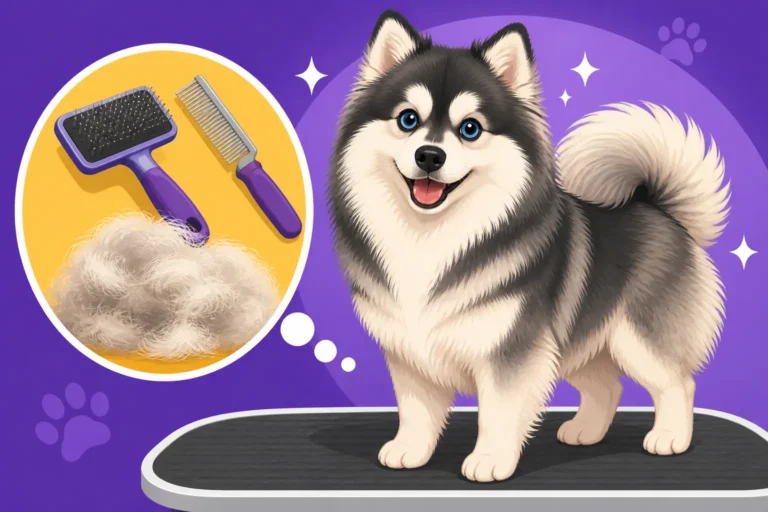
The defining characteristic of an F1 Pomsky is its genetic diversity. Because it's a direct 50/50 split of two distinct breeds, an F1 puppy can exhibit a wide range of traits. Some might look more like a miniature Husky, complete with striking blue eyes and a thick coat, while others might lean more towards the Pomeranian side with a smaller stature and a fluffy, standoffish coat. This unpredictability in appearance, size, and even temperament is both the allure and sometimes the challenge of the F1 generation. When the Pomsky first burst onto the scene, those early, often viral, photos were almost exclusively F1s, creating a high demand for these direct crosses. The 2012 Litter That Made the Pomsky Real really kicked off the phenomenon, setting the stage for these initial prices.
What is an F2 Pomsky?
An F2 Pomsky is a second-generation crossbreed. This means both parents are F1 Pomskies. So, you're essentially breeding two Pomskies together. The idea behind breeding F2s (and subsequent generations like F3 or Multigen) is often to create more consistency in traits. Breeders are hoping to solidify desirable characteristics — like a specific size range, coat type, or temperament — that might have been more variable in the F1 generation.
While F2s can offer more predictability than F1s, they still carry a degree of genetic variation. You might find an F2 puppy that looks very "Pomsky-like," embodying the ideal blend of its parent breeds, but you could also find one that throws back more strongly to either the Husky or the Pomeranian grandparents. It's a stepping stone towards what some breeders hope will eventually become a recognized breed, but it's not a guarantee of identical puppies. The effort to produce more predictable traits in an F2 can actually involve significant planning and investment from the breeder, which impacts their pricing structure. Whether an F1 Pomsky Is Healthier Than an F2 is another common concern that ties into generational breeding choices.
The Core Factors Influencing Pomsky Price
When considering the cost of any Pomsky, whether F1 or F2, it's crucial to look beyond just the generation. Several overarching factors play a huge role in determining the final price you'll encounter.
Breeder Reputation and Health Testing
This is arguably the most significant factor, regardless of generation. Reputable breeders invest heavily in the health and well-being of their breeding dogs and puppies. This includes comprehensive genetic health testing for both parents to screen for conditions common in Huskies and Pomeranians, such as patellar luxation, hip dysplasia, and eye diseases. These tests are not cheap, but they are absolutely vital for producing healthy puppies. Breeders also provide excellent prenatal and postnatal care for the dam, quality nutrition for the puppies, proper socialization, and initial veterinary checks and vaccinations.
An ethical breeder will be transparent about these costs and why their puppies are priced the way they are. They'll have a clean, safe environment, and they'll be eager to answer your questions about their practices. A higher price from a reputable breeder often reflects this extensive investment in health and quality, offering you a better chance at a healthy, well-adjusted puppy. Conversely, a significantly lower price could be a red flag, indicating corners were cut on essential health screening or puppy care. Always ask about The Health Tests a Pomsky Breeder Should Show.
Appearance and Desired Traits
Let's be honest, part of the Pomsky's immense popularity comes from its striking looks. Certain traits are simply in higher demand, and breeders often price puppies accordingly.
- Eye Color: Bright blue eyes, a classic Husky trait, are highly sought after and often command a premium, regardless of whether the puppy is F1 or F2. Bi-colored eyes (one blue, one brown) or heterochromia can also fetch a higher price.
- Coat Markings: The distinctive Husky mask or other clear Husky-like markings are very popular. Similarly, certain rare coat colors (though "rare" can sometimes be a marketing ploy) might influence price.
- Size: Many prospective owners are looking for a specific size – the "miniature Husky" ideal. Puppies projected to be smaller, particularly those on the lower end of the Pomsky size spectrum (often aiming for under 20 pounds), can sometimes be priced higher due to this demand. However, predicting adult size can be tricky. What a Pomsky Actually Weighs is a common question because of this desire for a smaller version of a Husky.
- Coat Type: While the double coat is standard, some buyers might prefer the "wooly" coat type, which is longer and denser, but also requires more grooming.
These aesthetic preferences drive up prices more than the F1/F2 designation itself.
Geographic Location and Demand
Just like real estate, puppy prices can vary based on where you live. In areas with high demand for Pomskies and fewer reputable breeders, prices tend to be higher. Conversely, in regions with more breeders or slightly less demand, you might see prices that are a bit lower. Shipping costs (if you're getting a puppy from out of state) also need to be factored in, which can add a significant amount to the overall expense. The local economy and average income can also play a subtle role in what the market will bear.
Why F1 Pomskies Might Appear More Expensive (or Not)
When the Pomsky first hit the scene, F1s were essentially the only Pomskies available. This created a unique dynamic that continues to influence pricing today.
The "Original" Appeal
There's often a mystique around the "first generation" of anything, and Pomskies are no exception. F1 Pomskies were the original, direct cross that captured everyone's imagination. People saw the viral pictures of those adorable Husky-Pomeranian mixes and wanted that exact blend. This initial, intense demand for the first generation sometimes meant breeders could command higher prices. Buyers were eager for the novelty and the direct genetic blend. It's almost as if being a "pure" cross of the two parent breeds held a special perceived value.
High Breeding Costs
Breeding F1 Pomskies involves a Siberian Husky female and a Pomeranian male. Because of the vast size difference, natural breeding is impossible and highly dangerous for the Pomeranian female (and the Husky male would likely injure a Pomeranian female if attempting to mate naturally). This means that virtually all F1 Pomskies are conceived through artificial insemination (AI).
Artificial insemination is a veterinary procedure that adds significant cost to the breeding process. It often involves progesterone testing to pinpoint the exact ovulation time, vet fees for the insemination itself, and careful monitoring of the Husky dam. These specialized breeding techniques are a non-negotiable part of producing F1 Pomskies, and those costs are naturally passed on to the buyer. This directly contributes to Why Artificial Insemination Sets a Pomsky's Floor Price. Breeders are making a substantial financial and time commitment to these litters.
Unpredictability
While it might seem counterintuitive, the very unpredictability of F1 Pomskies can sometimes drive up the price of those puppies that happen to hit the "ideal" look. Because you can get a wide range of sizes, colors, and coat types in an F1 litter, if a puppy emerges with those coveted blue eyes, a perfect Husky mask, and a smaller, compact size, it can be seen as hitting the jackpot. These highly desirable individuals within an F1 litter can command top dollar because they embody the popular vision of a Pomsky, even if their littermates are quite different. It's a bit of a lottery, and the winners can be highly valued.
The Reality of F2 Pomsky Pricing
Now, let's turn our attention to the F2 generation. You might hope that because they're a "second generation," the price would automatically be lower, but this isn't always the case.
Breeder Investment in Multi-Generational Lines
Producing F2 Pomskies means a breeder has dedicated themselves to developing their Pomsky lines. They're not just crossing two purebreds once; they're investing in F1 Pomskies as their breeding stock. This means they've already paid the higher price for their F1 breeding dogs, and those dogs still need all the same health testing, care, and quality nutrition as any other breeding animal.
Furthermore, breeding two F1 Pomskies together might still involve veterinary assistance, even if it's less complex than the original Husky-Pomeranian cross. The goal of more consistent traits in F2s requires careful selection of the F1 parents, often based on their own health, temperament, and appearance, which adds to the breeder's overall investment. These aren't "cheaper" dogs to produce just because they are one step removed from the initial cross. Whether Breeding Pomsky to Pomsky Concentrates Faults is a major concern for responsible breeders, meaning they must be even more diligent with health screening in F2 generations.
Targeting Specific Traits
As mentioned, F2 breeding often aims for greater predictability. A breeder might specifically select two F1 Pomskies with consistent size, a particular temperament, or desirable physical traits (like stand-up ears or a curly tail) to breed together. Their hope is that the resulting F2 litter will more reliably display these characteristics.
This targeted breeding adds value. If a breeder can more consistently produce puppies that meet the popular "mini Husky" aesthetic or a specific size range, they can justify a price point similar to, or even higher than, some F1s. Buyers seeking a Pomsky with a more assured outcome might be willing to pay more for an F2 from a breeder known for consistency. The predictability can be seen as a premium feature.
Market Perception and Demand
While F1s had the initial buzz, the market for F2 (and beyond) Pomskies has grown considerably. Some buyers specifically seek F2s because they believe they offer a more refined or predictable version of the Pomsky. They might appreciate the breeder's dedication to developing the line and aiming for more consistent results. This demand, coupled with the breeder's continued investment, means that F2 prices often stay competitive with F1 prices. You won't automatically find a steep discount simply because it's an F2.
In some cases, if an F2 litter contains puppies with less "desirable" traits (e.g., larger size, less striking markings), those individual puppies might be priced slightly lower than a highly sought-after F1 puppy, but this is less about the generation and more about individual puppy characteristics and perceived market value.
F1 vs F2 Pomsky: Price Influences at a Glance
Let's break down some of the key differences and what typically drives the cost for each generation.
| Feature | F1 Pomsky (Husky x Pomeranian) | F2 Pomsky (F1 Pomsky x F1 Pomsky) | General Price Influence |
|---|---|---|---|
| Genetic Makeup | 50% Husky, 50% Pomeranian | ~25% Husky, ~25% Pomeranian from each parent, but still 50/50 overall grandparentage | Direct cross of purebreds often perceived as "original." |
| Breeding Method | Almost always Artificial Insemination (AI) due to size difference | Can be natural, but AI or veterinary oversight still common | AI adds significant vet costs, driving F1 prices up. For F2, previous generation costs and careful pairing are factors. Why a Pomsky Cannot Be Bred Naturally for F1s is a huge cost driver. |
| Appearance Predictability | Highly variable in size, coat, markings, eye color | More potential for consistency in size, coat, markings, eye color | A highly desirable F1 (e.g., small, blue eyes, Husky markings) can be very expensive. F2 breeders aim for consistency, which can also command a good price for reliable traits. |
| Health Predictability | Benefit of hybrid vigor, but still carries risks from both parent breeds | Potential for more specific health screening if lines are well-established, but hybrid vigor can dilute over generations | Reputable breeders for both generations will health test. The quality of health testing and parental screening is a bigger price factor than the generation itself. The Two Opposite Disease Lists a Pomsky Inherits apply to both generations, necessitating diligent health screening. |
| Breeder Investment | High cost in AI, vet care for dam, initial health testing | High cost in acquiring quality F1 breeding stock, continued health testing, careful selection for desired traits | Ethical breeders for both generations invest significantly, and these costs are reflected in the price. |
| Market Demand | Strong demand for the "original" and unique variations | Growing demand for more consistent traits and developed lines | High demand for particular aesthetics or perceived "perfection" can inflate prices across both generations. |
Other Cost Considerations Beyond the Purchase Price
When you're dreaming of bringing home a Pomsky, it's easy to focus solely on the initial purchase price. But a responsible pet parent knows that the upfront cost is just the beginning of a long-term financial commitment. Thinking about these ongoing expenses before you buy can save you a lot of heartache (and money) down the road.
Lifelong Care Costs
Your Pomsky, whether an F1 or F2, will need quality care for their entire life. This includes:
- Food: A good quality diet is paramount for your dog's health. Whether you choose premium kibble from a brand found on Chewy or a fresh food diet like Ollie, this will be a recurring expense. What How Much Food a Pomsky Eats Monthly can vary depending on their adult size and energy levels, but it's a significant budget item.
- Grooming: Pomskies have dense double coats that shed, especially during seasonal "blowouts." Professional grooming can be costly, or you'll need to invest in quality tools for at-home care. Don't underestimate The Grooming Bill on a Double Coated Pomsky.
- Routine Vet Care: Annual check-ups, vaccinations, parasite prevention, and unexpected illnesses or injuries will add up. A Pomsky can inherit a range of conditions, some requiring specialized care.
- Pet Insurance: This is where companies like Healthy Paws can be a lifesaver. Given the potential for inherited conditions from both parent breeds (like Slipping Kneecaps in a Pomsky or The Eyes a Pomsky Gets From the Husky), having pet insurance can mitigate the financial shock of unexpected veterinary bills. It's a monthly expense that can offer immense peace of mind. What Insuring a Pomsky Runs Monthly can give you an idea of typical costs.
Supplies and Training
Beyond the necessities, you'll need gear and potentially professional help to ensure your Pomsky thrives.
- Initial Supplies: A crate, bedding, collar, harness (crucial for Pomskies to prevent tracheal damage), leash, food and water bowls (again, consider browsing Chewy for these essentials!), toys, and grooming tools.
- Training: Pomskies are intelligent but can be independent and stubborn, inheriting traits from both Huskies and Pomeranians. This means training is essential, and sometimes professional guidance through classes or private sessions is necessary. Investing in Classes Cost a Pomsky Owner can prevent behavioral issues later on.
- Fencing: Given their Husky heritage, many Pomskies are escape artists. A secure, tall fence (often higher than you think!) is often non-negotiable, and can be a significant upfront cost for homeowners. The Pomsky Escape Artist in a Twenty Pound Body is no joke.
Health Guarantees
A reputable breeder, regardless of F1 or F2, will offer a health guarantee. This typically covers genetic conditions for a certain period after purchase. While it doesn't cover every possible illness, it shows the breeder's confidence in the health of their lines and their commitment to their puppies. Always review the health guarantee thoroughly before purchasing. It's a good indicator of a responsible breeder and adds a layer of reassurance for you.
In conclusion, the question of whether an F2 Pomsky costs less than an F1 isn't as straightforward as a simple "yes" or "no." While F1s had the initial market novelty and high AI costs, F2s come with their own set of breeder investments aimed at consistency and quality. Ultimately, the price you pay will be more influenced by the individual breeder's practices, the specific traits of the puppy, and overall market demand, rather than just the generational label alone. Always prioritize a reputable breeder who focuses on health and temperament over saving a few dollars upfront – your Pomsky will thank you for it in the long run!
Disclaimer
This article is for general informational purposes only and does not constitute professional advice. Laws, prices and regulations vary by location and change over time. Consult a qualified professional for guidance on your specific situation.