When a Pomsky Moves to Adult Food
One of the trickiest parts of raising a Pomsky, especially for new owners, is figuring out the right time to transition them from that calorie-packed puppy food to a more balanced adult formula. You're constantly weighing their energetic Husky side against their smaller Pomeranian genes, wondering if they're growing too fast, too slow, or just right. This guide is here to clear up that confusion, offering practical advice on when and how to switch your Pomsky to adult food, ensuring their health and happiness through every stage of their life.
The Age-Old Question: When Exactly Should Your Pomsky Switch to Adult Food?
It's a question that keeps many Pomsky parents up at night: when do I stop feeding puppy food? Unlike some purebreds with very predictable growth curves, Pomskies, being a hybrid, can throw a few curveballs. Their growth rate and final size can vary quite a bit, making a one-size-fits-all answer feel a little inadequate. However, there are some clear guidelines we can follow to make an informed decision for your unique pup.
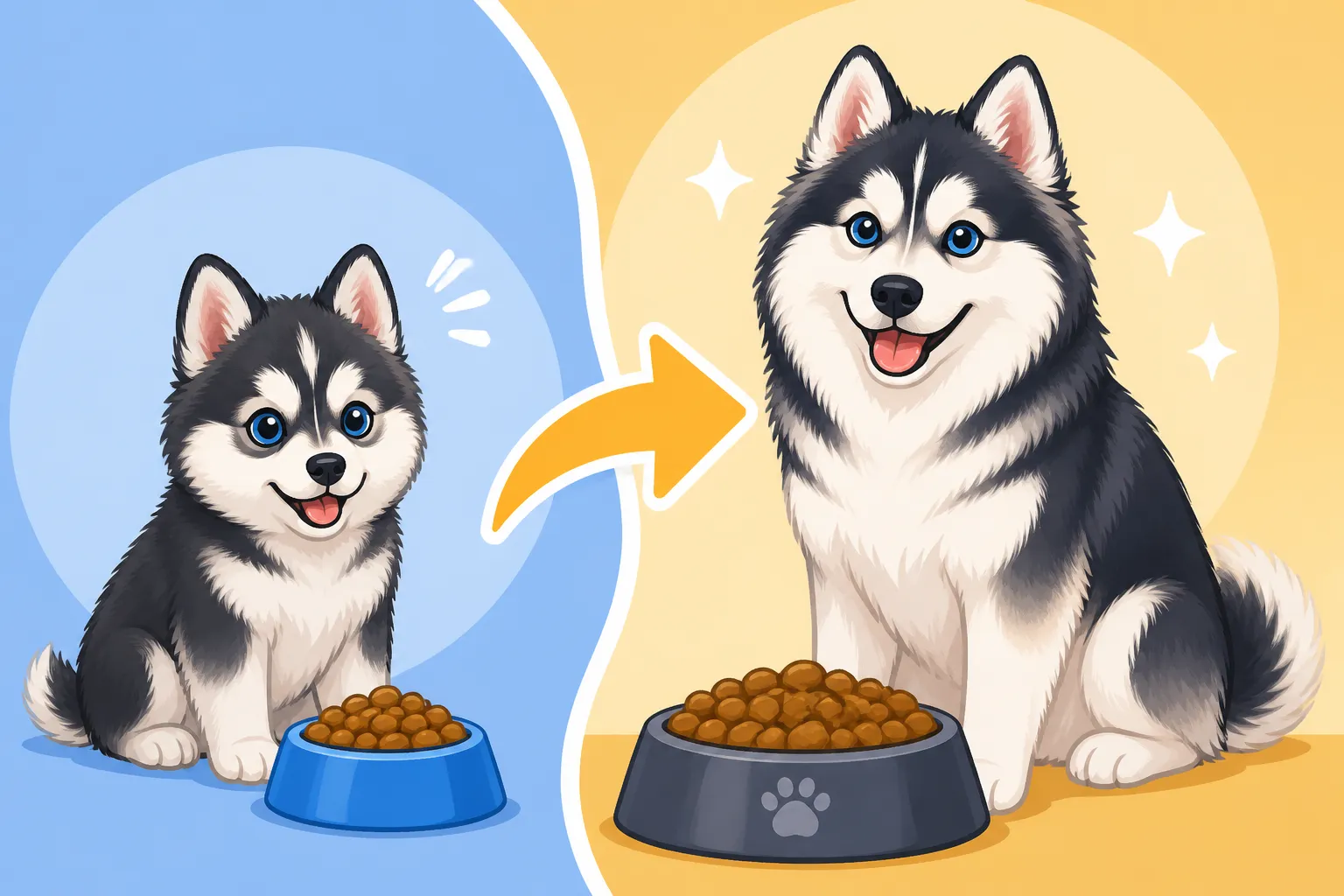
First and foremost, the general rule of thumb for most dog breeds is to transition to adult food when they reach around 80-90% of their adult size. For small to medium breeds, this typically falls between 9 to 12 months of age. Given that most Pomskies range from 10 to 35 pounds, they usually fall into this "small to medium" category. Your Pomsky, despite potentially having the boundless energy of a Husky, often matures physically closer to the Pomeranian end of the spectrum, just a bit slower.
However, it's not just about age. It’s about physical maturity. A Pomsky puppy is growing rapidly, needing higher levels of protein, fat, and specific vitamins and minerals to support bone and muscle development. Once that intense growth phase starts to slow down, usually as they approach their first birthday, their caloric and nutritional needs shift. Continuing to feed a high-calorie puppy food beyond this point can lead to excessive weight gain, which is something we definitely want to avoid for their joint health and overall well-being. Keeping a Pomsky's weight in range is crucial, as extra pounds can stress their joints, particularly if they have a predisposition to issues like Slipping Kneecaps in a Pomsky.
Reading the Signs of Physical Maturity in Your Pomsky
So, how do you know if your Pomsky is indeed reaching that 80-90% mark? It’s not always as simple as weighing them, though that's a good start. Look for a plateau in their growth. Are they still shooting up in height every month, or have they seemed to fill out more than grow taller? Often, puppies will have a growth spurt around 4-6 months, and then their growth slows down significantly by 8-10 months, with a bit more filling out happening until their first birthday.
Another key indicator is their body condition. While puppy fat is adorable, an overly plump Pomsky puppy is heading towards trouble. You should be able to easily feel their ribs without seeing them protruding, and they should have a visible waist when viewed from above. If your Pomsky is starting to look a bit round or chunky, it's a strong signal that their growth is slowing and their diet might need adjusting. If you're unsure, a quick chat with your vet during a routine check-up can give you a professional assessment of their body condition score.
Finally, consider their energy levels in relation to their activity. While Pomskies are known for being active dogs, an adult Pomsky's metabolism isn't quite as furnace-like as a young puppy's. If they're maintaining a healthy weight and showing no signs of lethargy on their current food, but are approaching their first birthday, it's usually a good time to start contemplating the switch. Remember, What a Pomsky Actually Weighs Full Grown can vary greatly, so always consider your individual dog's size and build.
Why the Right Timing Matters for Your Pomsky's Lifelong Health
The decision of when to switch your Pomsky to adult food isn't just about saving money on puppy kibble; it's a critical factor in their long-term health and development. Puppy food is formulated specifically for the intense growth phase, providing extra calories, higher protein, and a specific balance of calcium and phosphorus essential for developing bones and muscles. Adult food, on the other hand, is designed for maintenance, offering a balanced nutritional profile for a dog that has reached or is nearing its mature size. Getting this timing right is vital to prevent both under-nutrition and over-nutrition, both of which can have significant consequences.
Feeding puppy food for too long can lead to obesity. Those extra calories and higher fat content, when no longer needed for rapid growth, get stored as fat. Obesity in dogs, just like in humans, can lead to a host of health problems, including joint issues like Hip Dysplasia in a Twenty Pound Pomsky or aggravating existing conditions like a collapsing trachea if your Pomsky is prone to The Collapsing Trachea a Pomsky Gets From the Pomeranian. It can also contribute to other chronic diseases, reducing their quality of life and potentially shortening The Twelve to Fifteen Years a Pomsky Lives.
Conversely, switching to adult food too early can deprive your growing Pomsky of essential nutrients needed for proper development. If your Pomsky is still undergoing significant growth, an adult formula might not provide enough protein or the correct mineral balance, potentially impacting bone density and overall development. This is why paying attention to their individual growth trajectory and not just a calendar date is so important.
The Nutritional Differences Between Puppy and Adult Formulas
Let's delve a little deeper into why these dietary distinctions exist. Puppy food is basically growth fuel. It has a higher calorie count per serving to support rapid growth and high energy expenditure. It also typically contains more protein, crucial for building muscle, and often higher fat content to provide concentrated energy. Beyond macronutrients, the mineral balance is specifically tailored: puppy foods often have a higher calcium-to-phosphorus ratio, which is vital for proper bone development in growing pups.
Adult dog food, conversely, aims for maintenance. It has a lower caloric density, which helps prevent obesity in dogs whose growth has slowed down or stopped. The protein and fat levels are typically moderate, designed to maintain muscle mass and provide energy for daily activities without promoting excess weight. The mineral content is also adjusted for maintenance, not rapid growth. For a Pomsky that thrives on varied nutrition, exploring options like those offered by Ollie for fresh, balanced meals could be beneficial as they transition to adulthood. You can also find high-quality kibble from trusted brands on platforms like Chewy, offering a vast selection tailored to different needs and budgets.
Understanding these differences helps you appreciate why the timing of the switch is so important. It's about providing the right fuel for the right stage of life. It’s a delicate balance, and getting it wrong can lead to health challenges down the road. This isn't to say an accidental week or two of the wrong food will cause irreparable harm, but consistent feeding of an inappropriate diet over many months can certainly have an impact.
Making the Switch: A Step-by-Step Guide to Transitioning Your Pomsky's Diet
Once you've determined that your Pomsky is ready for adult food, the actual transition needs to be handled gradually. A sudden change in diet can upset your dog's digestive system, leading to issues like diarrhea, vomiting, or a decreased appetite. Pomskies, like many dogs, can have sensitive stomachs, so a slow, patient approach is always best. This isn't a race; it's a careful adjustment to ensure their comfort and continued health.
The golden rule for any diet change in dogs is gradual introduction. You want to mix the new adult food with their old puppy food, slowly increasing the proportion of the new food over a period of about 7 to 10 days. This gives their digestive system time to adjust to the new ingredients, fiber content, and nutrient profile. Think of it like acclimating yourself to a new climate – you don't just jump straight in; you ease into it.
Here's a simple, day-by-day schedule you can follow:
| Day | Old Puppy Food (%) | New Adult Food (%) | Notes |
|---|---|---|---|
| Day 1-2 | 75% | 25% | Monitor for any digestive upset (soft stool, gas). |
| Day 3-4 | 50% | 50% | Observe appetite and energy levels. |
| Day 5-6 | 25% | 75% | Your Pomsky should be well-adjusted by now. |
| Day 7-10 | 0% | 100% | Full transition to adult food. Continue monitoring. |
If at any point your Pomsky shows signs of digestive upset, slow down the transition. Go back to the previous ratio for a few extra days until their system settles, then try advancing again. Every dog is different, and some may need a bit more time to adapt. Don't rush it; your Pomsky's comfort is paramount.
What to Look for During the Transition and Beyond
During this transition period, keep a close eye on a few key things. Firstly, monitor their stool. It should remain firm and well-formed. Any signs of prolonged diarrhea or excessive gas mean you need to pause and reassess. Secondly, watch their appetite. Are they eating enthusiastically, or are they picking at the new food? Sometimes a new texture or flavor can be off-putting, so make sure the new food is palatable. If you notice a drastic change in appetite, consult your vet.
Also, observe their energy levels and overall demeanor. They should continue to be active and playful. A sudden drop in energy or a change in their usual zest for life could indicate that something isn't quite right with the new diet or the transition process.
Once fully on adult food, the monitoring doesn't stop. Continue to assess their body condition regularly. Are they maintaining a healthy weight? You should still be able to feel their ribs easily without them being visible, and they should have a discernible waist. Remember that How Much a Twenty Pound Pomsky Eats will vary based on their activity level and metabolism, so adjust portions as needed. If your Pomsky seems to be constantly hungry or losing weight, you might need to increase their portion slightly, or if they're gaining too much, decrease it. For Pomsky puppies, How Many Meals a Pomsky Puppy Needs will gradually decrease as they get older, often switching to two meals a day around the time you transition to adult food. You can learn more about this by reading When a Pomsky Drops to Two Meals.
Lastly, remember that water intake is always important. Ensure they have access to fresh, clean water at all times. If you're using a slow feeder to prevent them from eating too fast, ensure it's still accessible and easy to clean. You can find a variety of slow feeders and water bowls on Amazon.
Choosing the Best Adult Food for Your Grown Pomsky
Selecting the perfect adult food for your Pomsky can feel like navigating a maze with endless options, but it doesn't have to be overwhelming. The goal is to find a high-quality, nutritionally complete and balanced food that suits their individual needs, energy levels, and any specific sensitivities they might have. Since Pomskies are a mixed breed, their dietary needs often sit somewhere between their two parent breeds, making a general high-quality adult formula a good starting point.
When you're browsing the aisles (or virtual pages of Chewy), look for foods that list a high-quality animal protein as the first ingredient, such as chicken, beef, lamb, or fish. Avoid foods with vague ingredients like "meat meal" without specifying the source. Grains are generally fine unless your Pomsky has a specific sensitivity, in which case grain-free options are available, but always discuss with your vet before going grain-free as it's not necessary for all dogs.
Consider the size of the kibble. While Pomskies aren't giant breeds, their mouths are not as tiny as a purebred Pomeranian. A standard adult kibble size is usually appropriate, but if you have a particularly small Pomsky or one who struggles to chew, you might consider formulas designed for small to medium breeds. You might also wonder Whether a Pomsky Needs Small Breed Kibble; generally, a high-quality all-life-stages or medium-breed adult formula is suitable, as long as the kibble size is manageable.
Tailoring Diet to Your Pomsky's Unique Needs
Even after transitioning to adult food, your Pomsky’s dietary journey isn't a static one. Their needs can evolve over time based on factors like activity level, age, and any emerging health conditions. For instance, a highly active Pomsky who regularly joins you for long hikes might need a slightly higher calorie or protein content than a more sedentary house dog. Pay attention to their coat quality – a shiny, healthy coat often indicates good nutrition, while dullness or excessive shedding (outside of seasonal blowouts) could be a sign of dietary inadequacy.
As your Pomsky ages, their metabolism will slow down, and their activity levels might decrease. This is when you might need to consider a senior formula, which typically has fewer calories and sometimes added joint support. Regular vet check-ups will help you stay ahead of these changes, and your vet can offer personalized recommendations. For example, if your Pomsky is developing issues like Arthritis in a Pomsky at Ten, a food with glucosamine and chondroitin could be beneficial.
Remember that treats should be given in moderation and factored into their overall caloric intake to prevent unwanted weight gain. Healthy treats like plain cooked chicken, carrots, or green beans can be great options. If you're considering fresh food options, companies like Ollie offer pre-portioned, human-grade meals that can be a fantastic way to provide balanced nutrition, though they typically come at a higher cost. Ultimately, the best adult food for your Pomsky is one that keeps them at a healthy weight, provides consistent energy, and supports their vibrant life for many years to come. Don't be afraid to experiment with a few different high-quality brands until you find what truly makes your Pomsky thrive.
Disclaimer
This article is for general informational purposes only and does not constitute professional advice. Laws, prices and regulations vary by location and change over time. Consult a qualified professional for guidance on your specific situation.