Whether a Pomsky Mats at All
One of the biggest worries new Pomsky parents have is whether their fluffy companion will turn into a matted mess. It’s a completely valid concern, especially when you see that gorgeous, dense double coat! Many owners feel overwhelmed by the sheer volume of fur and wonder if they're fighting a losing battle against knots and tangles. This guide is here to shed some light on the Pomsky coat, explain why matting can be such a persistent issue, and equip you with the knowledge and tools to keep your beloved Pomsky's fur healthy, tangle-free, and beautiful.
Understanding the Pomsky Coat and Why Matting is a Concern
The Pomsky is a relatively new breed, and one of its most defining features — and often, one of its biggest challenges for owners — is its coat. Combining the dense double coat of a Siberian Husky with the sometimes even more voluminous and fluffy coat of a Pomeranian means you're almost guaranteed a dog with a significant amount of fur. This beautiful coat is what draws many people to the breed, but it also comes with specific grooming requirements that, if not met, can quickly lead to painful matting.
The Double Coat Dilemma
Both parent breeds, the Siberian Husky and the Pomeranian, boast luxurious double coats, and the Pomsky inherits this trait. A double coat consists of two distinct layers: a soft, dense undercoat that provides insulation, and longer, coarser guard hairs that protect against the elements. This combination is fantastic for keeping your Pomsky warm in winter and helping regulate their body temperature in cooler weather, but it's also a prime candidate for matting.
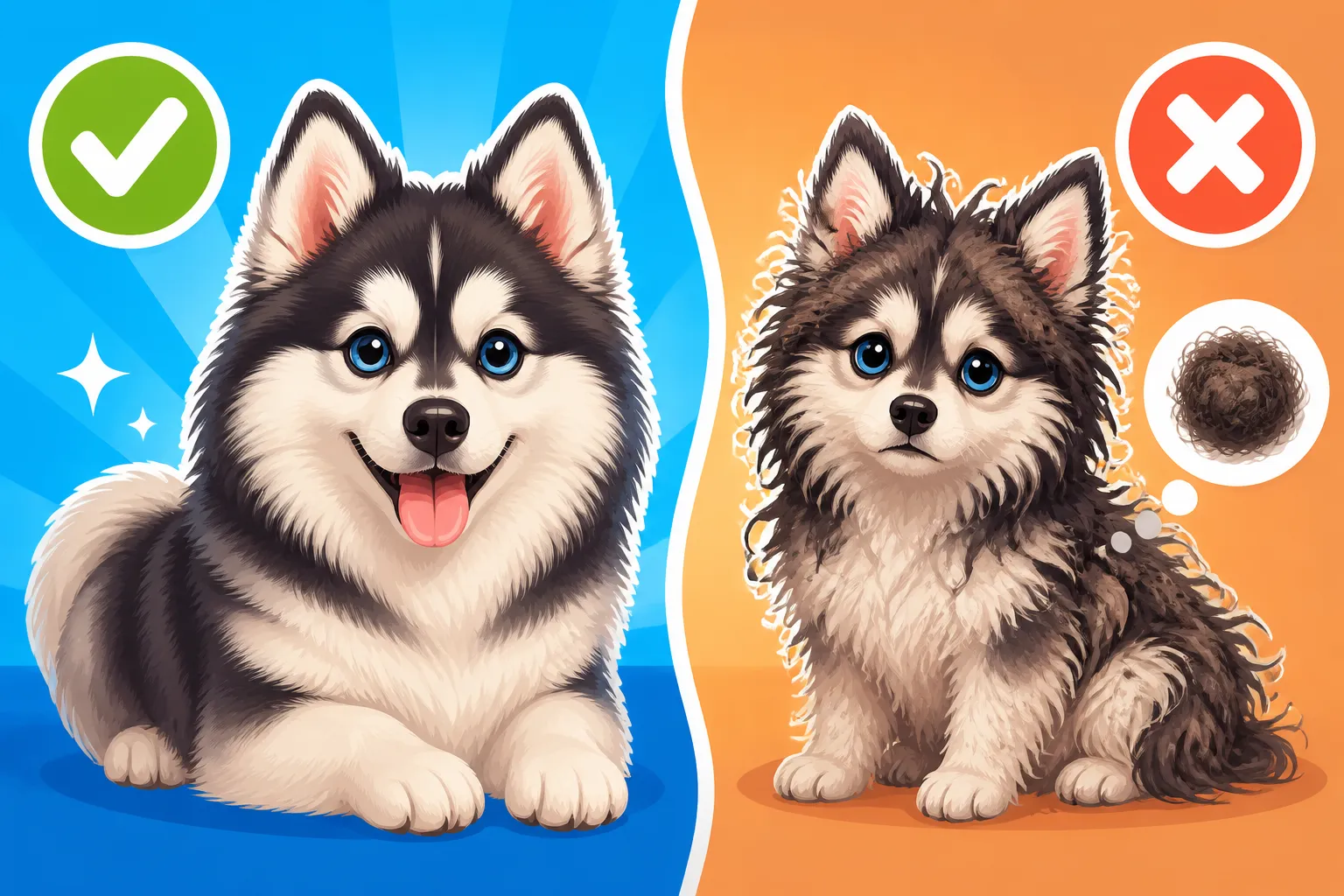
The problem arises when loose undercoat hairs get trapped beneath the guard hairs instead of shedding out naturally. This trapped fur, often combined with dirt, moisture, or friction, begins to twist and knot together, forming mats. These mats start small, but if left unattended, they can grow into large, painful clumps that pull on the skin and can even restrict movement. Understanding that your Pomsky has this dual-layer coat is the first step in appreciating the grooming commitment required. You can learn more about this in The Pomsky That Carries a Husky Coat at Twenty Pounds.
The density of the undercoat varies among Pomskies, but generally, it's quite substantial. Imagine trying to untangle a ball of fine wool that's been sat on and then trying to do that all over your dog's body. That's essentially what you're up against if you let the undercoat accumulate. Regular grooming isn't just about aesthetics; it's crucial for your Pomsky's comfort and skin health. Without proper care, the risk of developing painful mats is incredibly high, leading to skin irritation and potential infections hidden beneath the matted fur.
Pomeranian vs. Husky Influence on Coat Texture
While all Pomskies have a double coat, the exact texture and volume can vary significantly depending on which parent breed's genes are more dominant in the mix. Some Pomskies might lean more towards the sleek, medium-length guard hairs of a Husky, while others might inherit the profuse, stand-off coat of a Pomeranian. Then there are those "wooly" coats, which are exceptionally soft and dense, almost like a fluffy cloud. Each of these The Three Pomsky Coat Types presents its own challenges when it comes to preventing mats.
A Pomsky with a more "Husky-like" coat might have guard hairs that are relatively straight and resistant to tangling, but their dense undercoat can still pack down and mat if not regularly brushed. On the other hand, a Pomsky with a more "Pomeranian-like" or "wooly" coat can be a matting magnet. These coats often have finer, softer fur that tangles more easily, and the sheer volume can make it difficult to reach the skin with a brush. What a Wooly Pomsky Looks Like and Whether a Pomsky's Undercoat Is Husky Dense are key to understanding these differences. The texture can feel like a cloud of cotton, which sounds lovely, but functionally, it means every movement, every rub against furniture, every piece of debris, can initiate a tangle.
It's important to remember that even within the same litter, coat types can differ. This means that your specific Pomsky's grooming needs might be unique, and you can't assume what worked for another Pomsky will work perfectly for yours. You might have to experiment with different brushes and techniques until you find what effectively manages your dog's particular coat texture. This adaptability is key to successful Pomsky grooming, especially in preventing severe matting before it takes hold.
What Makes a Mat Form Anyway?
Mats form when loose, shed hair gets caught in the active coat and begins to twist and felt together. Think of it like a clump of hair that falls out of your own brush – now imagine that clump staying in your hair, getting wet, drying, and then repeatedly rubbing against your clothing. That's essentially what happens to your Pomsky's fur. This process is exacerbated by several factors that we, as owners, need to be aware of and actively manage.
Friction is a major culprit. Areas where the coat rubs together or against collars, harnesses, or furniture are prone to matting. Water also plays a significant role; if a Pomsky's double coat gets wet and isn't thoroughly dried and brushed out, the undercoat can shrink and felt as it dries, forming tight, hard mats that are incredibly difficult to remove. Dirt and debris, such as burrs or twigs, can also get caught in the fur, creating starting points for mats. Even static electricity can cause individual hairs to cling together, leading to tangles that, if ignored, quickly become full-blown mats.
| Coat Type | Guard Hair Texture | Undercoat Density | Matting Risk Level |
|---|---|---|---|
| Husky-like | Straighter, coarser | Dense | Moderate |
| Pomeranian-like | Softer, more voluminous | Very Dense, fluffy | High |
| Wooly | Fine, soft, often wavy | Extremely dense, cottony | Very High |
| Short Coated (rare) | Shorter, less dense | Moderate | Low to Moderate |
This table provides a general overview, but individual variations are common. The key takeaway is that any Pomsky, regardless of coat type, is susceptible to matting if not groomed regularly. It's not a question of if a mat could form, but when and where if you're not diligent.
Common Matting Hotspots and Scenarios in a Pomsky
Matting isn't a random event; it tends to occur in specific areas and during certain periods that are predictable for Pomsky owners. Knowing these hotspots and triggers can help you focus your grooming efforts and catch mats before they become severe. It’s like knowing where the leaky pipes are in your house – you check those areas more often, right? The same goes for your Pomsky’s coat.
Behind the Ears, Under the Legs, and Other Trouble Zones
There are several "matting magnets" on a Pomsky that require extra attention. The areas behind the ears are notorious for developing mats because the fur is often finer there, and it's an area that gets a lot of friction from head movements and often from collar or harness straps. These mats can be particularly painful because the skin behind the ears is delicate. Similarly, the "armpits" (under the front legs) and the "groin" (inside the back legs) are high-friction zones where mats love to hide.
The long feathering on the back of the legs and around the tail can also easily tangle, especially if your Pomsky is active and running through brush or tall grass. Even the collar area, where a harness or collar constantly rubs, can create a tight ring of matted fur if not checked regularly. Imagine a human with long hair constantly wearing a tight ponytail – the hair around the elastic would eventually break and tangle. For a Pomsky, this friction can be constant.
It’s not just about the external areas either. The belly and chest are often overlooked but can quickly mat, especially if your Pomsky likes to roll around on the floor or in the grass. These hidden mats are often the ones that go unnoticed until they're tight against the skin and causing discomfort. Make it a routine to gently part the fur in these areas during every brushing session, feeling for any nascent tangles.
Seasonal Shedding and the Matting Spiral
If there’s one time of year when matting becomes an almost constant battle, it's during your Pomsky’s seasonal "blowout." Like Huskies, Pomskies tend to shed their entire undercoat twice a year, typically in spring and fall, to prepare for warmer or colder weather. This isn't just a little extra shedding; it's a monumental event where huge amounts of dense undercoat are released. You can read more about this in Whether a Pomsky Blows Its Coat Twice a Year.
During a blowout, if the loose undercoat isn’t meticulously removed, it quickly intertwines with the remaining coat and forms massive, dense mats. It’s like trying to get through a forest floor covered in fallen leaves and branches – if you don’t clear them out, they just pile up and become impassable. This is when daily, even twice-daily, thorough brushing becomes absolutely non-negotiable. Missing even a day can lead to a significant setback. How Much Undercoat Comes Off a Pomsky during these periods is truly astounding, and if not removed, it directly contributes to matting.
Many owners underestimate the sheer volume of fur that comes off during these periods, and they quickly get behind on grooming. This can lead to a "matting spiral" where the coat becomes so matted that it’s impossible to brush, requiring professional intervention. Proactive and consistent grooming during these times is not just recommended; it’s essential to prevent discomfort for your dog and a much larger, more expensive problem for you.
Lifestyle Factors That Increase Matting Risk
Beyond coat type and shedding seasons, various lifestyle factors can contribute to a Pomsky’s propensity for matting. An active Pomsky who loves to roll in the dirt, swim, or romp through fields will inevitably pick up debris that can lead to tangles. If your Pomsky gets wet frequently, whether from rain, swimming, or baths, and isn’t properly dried and brushed, the risk of matting skyrockets. Remember, water causes the undercoat to felt, turning soft fluff into hard knots.
Using ill-fitting collars or harnesses can also be a significant contributor. A collar that's too loose can rub and chafe, collecting fur and creating mats around the neck. Similarly, harnesses that rub under the armpits or across the chest can cause matting in those sensitive areas. Always ensure your Pomsky's gear fits correctly and check those contact points daily. Even something as simple as sleeping in certain positions or rubbing against carpets or dog beds can generate enough friction to start a mat.
Moreover, if your Pomsky has dry skin, which can sometimes occur with certain dietary deficiencies or environmental factors, their coat might be more prone to breakage and static, both of which increase the likelihood of tangles. Consider whether the environment your Pomsky lives in – dusty, dry, or humid – could be contributing to their coat condition. Even simply being indoors with heating can dry out a coat, making it more prone to static and tangles.
Preventing and Dealing with Pomsky Mats
The good news is that with consistent effort and the right tools, you can absolutely prevent severe matting in your Pomsky. It's all about routine, vigilance, and knowing when to ask for help. Think of it as preventative maintenance for their beautiful coat, just like you’d regularly check your car’s oil or tire pressure.
The Power of Proactive Brushing and Grooming Tools
Regular, thorough brushing is the cornerstone of mat prevention for any double-coated breed, especially a Pomsky. For most Pomskies, this means brushing at least 3-4 times a week, and daily during shedding season. You need to invest in the right tools to penetrate the dense undercoat. An undercoat rake is essential for getting down to the skin and pulling out loose fur without damaging the guard hairs. The Undercoat Rake a Pomsky Owner Lives With is a fantastic resource on this. A good slicker brush can then smooth out the guard hairs and tackle smaller tangles. Finally, a metal comb with both wide and narrow teeth is crucial for checking your work and meticulously removing any tiny knots you might have missed.
The technique is just as important as the tools. You need to "line brush," which means parting the fur in small sections and brushing from the skin outwards, layer by layer. This ensures you're reaching all the way down to the base of the hair follicles, where mats truly begin. If you only brush the top layer, you're effectively creating a "felted" underlayer that will become a solid mat right against their skin. Making grooming a positive experience from a young age is also crucial; treats and praise go a long way. If your Pomsky resists, check out Getting a Pomsky Used to the Undercoat Rake. Many owners find that setting up a dedicated grooming station with a non-slip mat makes the process easier for both dog and owner.
Remember to be gentle, especially when you encounter a tangle. Yanking through a knot can be painful for your Pomsky and make them associate grooming with a negative experience. Instead, use a detangling spray and carefully work the mat apart with your fingers or the wide teeth of a comb, holding the hair at the base near the skin to prevent pulling. Patience is truly a virtue when it comes to Pomsky grooming. Brands like Chewy and Amazon offer a vast selection of these grooming tools, making it easy to find what you need.
Bathing Best Practices to Avoid Matting Mayhem
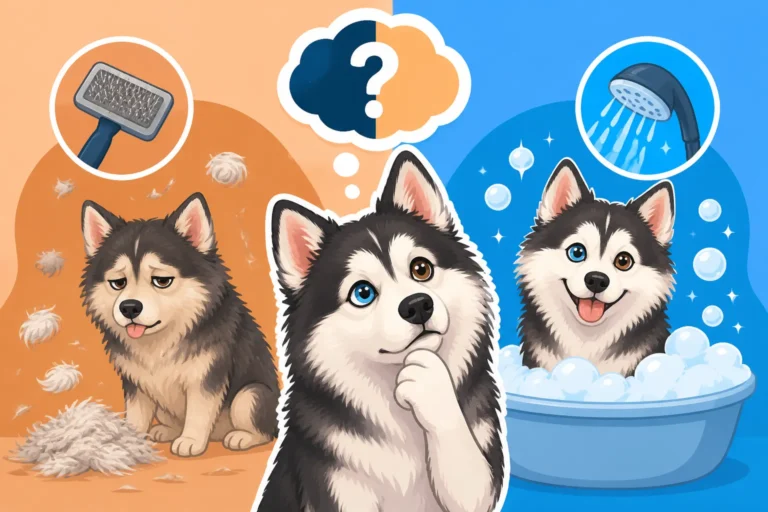
Bathing a Pomsky is not a simple quick wash. Improper bathing can actually cause matting, especially if the coat isn't thoroughly brushed out beforehand and dried properly afterward. Always, always brush your Pomsky completely free of tangles before bathing. Water tightens mats, making them nearly impossible to remove once wet. So, take your time with that pre-bath brush-out. For insights on how often your fluffy friend needs a wash, check out How Often a Pomsky Should Be Bathed.
When bathing, use a good quality dog shampoo and conditioner. Apply shampoo carefully, working it into the coat gently rather than scrubbing vigorously, which can create tangles. Rinse thoroughly, ensuring no residue is left behind, as this can irritate the skin and also contribute to matting. The drying process is paramount. Many Pomsky owners find a high-velocity force dryer to be an absolute game-changer. This tool literally blows water out of the dense undercoat, helping to separate hairs and prevent felting as it dries. Whether a Force Dryer Is Essential for a Pomsky provides more detail on this.
If you don't have a force dryer, towel dry as much as possible, then use a human hairdryer on a cool or low heat setting, continually brushing the coat as it dries. You need to dry down to the skin, which can take a surprising amount of time for a double-coated breed. Once dry, brush again thoroughly with an undercoat rake and comb to ensure no mats have formed during the process. This meticulous drying and brushing after a bath is just as important, if not more so, than the wash itself.
When Professional Help is the Only Option
Despite your best efforts, sometimes mats happen, or you might find yourself in a situation where the matting is simply too severe for you to handle at home. This is where professional groomers come in. A skilled groomer has specialized tools and experience with double-coated breeds like Pomskies. They can often demat troublesome areas that would be painful or impossible for an owner to tackle. However, be prepared that severe matting often requires shaving.
It’s crucial to understand that if mats are tight against the skin, shaving is often the kindest and safest option. Trying to brush out severe mats can be incredibly painful for your dog and can even cause skin damage. A professional groomer will assess the situation and recommend the best course of action. While Whether Shaving a Pomsky Damages the Coat is a legitimate concern, sometimes it's medically necessary to relieve your dog's discomfort and prevent skin infections. Never attempt to shave a severely matted Pomsky yourself, as it's very easy to cut the skin hidden beneath the tight mats.
Don't feel ashamed if you need to take your Pomsky to a professional for matting. It's a common issue with double-coated breeds, and groomers are there to help. Regular professional grooming appointments, even just for a deshedding treatment and bath, can significantly reduce your workload and keep your Pomsky's coat in top condition. Discuss your Pomsky's coat type and your at-home grooming routine with the groomer so they can offer tailored advice and support. Regular check-ins with a professional can be a lifeline for busy Pomsky parents.
Disclaimer
This article is for general informational purposes only and does not constitute professional advice. Laws, prices and regulations vary by location and change over time. Consult a qualified professional for guidance on your specific situation.