Whether the Pomsky Has a Size Standard
One of the biggest questions and, let's be honest, often sources of confusion and sometimes heartbreak for prospective Pomsky owners is around their adult size. You fall in love with photos of adorable, tiny, husky-marked puppies, imagining a compact companion, only to realize that predicting a Pomsky's exact adult size is far more complicated and less standardized than many people hope. This guide will walk you through why there isn't a universally recognized size standard for Pomskies and what that truly means for you as an owner.
The Unofficial Nature of the Pomsky Size Range
When you hear people talk about dog breeds, they often refer to a "breed standard" set by organizations like the American Kennel Club. These standards detail everything from ear set and coat color to, yes, a very specific weight and height range for mature dogs. This is where the Pomsky story takes a different turn, creating a unique set of expectations and realities for owners.
Why "Standard" Doesn't Quite Fit This Hybrid
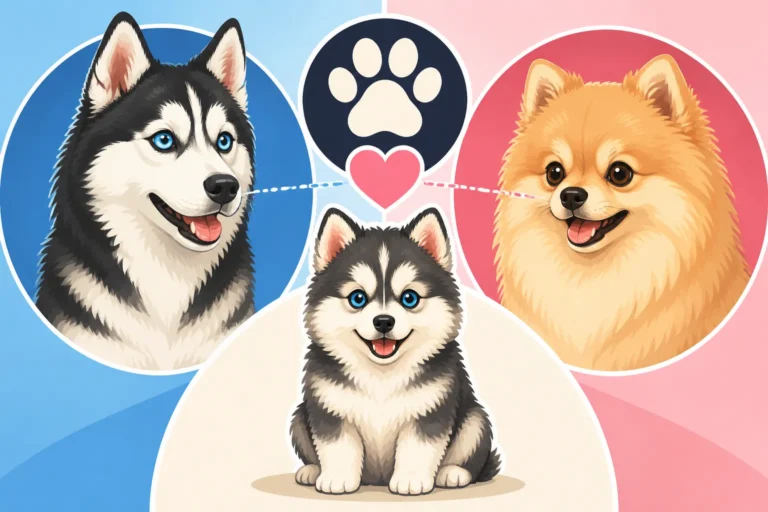
The fundamental reason a Pomsky doesn't have a rigid, official size standard is that it's a hybrid, or a "designer cross," not a recognized purebred dog. The Siberian Husky and the Pomeranian are two distinct breeds with vastly different physical characteristics and, crucially, wildly different size expectations. A Husky can weigh anywhere from 35 to 60 pounds and stand 20 to 23.5 inches tall, while a Pomeranian typically weighs a mere 3 to 7 pounds and stands 6 to 7 inches tall. The Pomsky exists somewhere in the middle, but exactly where in that middle is the million-dollar question.
Because there's no overarching kennel club dictating what a Pomsky must be, there's no official document outlining an ideal height or weight. While associations like the International Pomsky Association exist to provide guidelines and advocate for responsible breeding, they don't hold the same power as traditional kennel clubs to enforce a strict physical standard. Instead, these groups often work to establish ethical breeding practices and collect data to help guide future generations towards more predictability, but it's a work in progress, not a fixed rule. This lack of a formal "standard" means breeders are working with a broad genetic canvas, and the results can be quite varied.
The Dream of a Predictable Miniature Husky
Let's be honest, the initial viral photos that really kickstarted the Pomsky craze often showcased dogs that looked like perfect miniature Huskies, complete with striking blue eyes and iconic markings, but in a much smaller package. This created a strong demand for a specific "look" and "size" that breeders then tried to achieve. Many prospective owners come into the process dreaming of a dog that is, say, 15-20 pounds and perfectly resembles a tiny Husky. This dream is absolutely understandable given the initial buzz and marketing around the breed.
However, the reality of genetics is far less precise. While breeders strive for this "mini Husky" appearance and a moderate size, the genetic lottery can throw curveballs. It's tough to consistently produce dogs within a narrow size range when your foundation breeds are so different. You might find a breeder advertising "toy" or "mini" Pomskies, but these labels are often more marketing terms than a guarantee of adult size, as there's no universally agreed-upon definition for these classifications within the Pomsky world. The desire for a miniature Husky is powerful, but it's important to approach it with a realistic understanding of genetic variability. You might end up with a dog that looks more like a fluffy, larger Pomeranian, or one that's closer to a small Husky. It's a delightful surprise, but a surprise nonetheless.
Factors That Really Determine a Pomsky's Adult Size
Without a strict breed standard, what does dictate how big your Pomsky will get? It all comes down to a combination of genetics from their parents and grandparents, as well as the specific generation of Pomsky you're looking at.
The Influence of the Parent Breeds
The size of a Pomsky is, at its most basic, a mix of its Siberian Husky and Pomeranian heritage. Typically, the mother is always the larger Siberian Husky, primarily for safety reasons during gestation and birth. A tiny Pomeranian mother would simply not be able to carry or deliver Husky-sized puppies. The father is the Pomeranian. So, right from the start, you have a large mother and a small father.
The genetic contribution from each parent is not always a perfect 50/50 split in terms of physical traits. Some puppies will lean more heavily towards the Husky in terms of build, bone structure, and overall size, while others will favor the more delicate frame and smaller stature of the Pomeranian. It's not uncommon for a single litter to have puppies that mature to vastly different sizes. You might have one puppy that tops out at 30 pounds, while its littermate stays a petite 15 pounds. This is why What a Pomsky Actually Weighs can be such a broad range. The genetic soup is rich and varied, making it a delightful, albeit sometimes unpredictable, adventure.
Generation Matters: F1, F2, and Beyond
The generation of your Pomsky also plays a significant role in its potential size range and predictability. This is a crucial concept to understand when choosing a puppy.
- F1 Pomskies: An F1 Pomsky is a first-generation cross, meaning it has one purebred Siberian Husky parent and one purebred Pomeranian parent. These dogs tend to have the widest range of size and appearance. You're essentially flipping a coin on which parent's traits will be more dominant. Some F1s can be quite large, approaching small Husky size, while others might be small enough to be mistaken for a Pomeranian mix. The variability can be exciting, but it means predicting the adult size of an F1 puppy is exceptionally challenging. What F1 Means on a Pomsky highlights this genetic blend.
- F2 Pomskies: An F2 Pomsky is the result of breeding two F1 Pomskies together. Here, the hope is for more consistency, but again, genetics aren't always straightforward. While F2s can be more predictable in terms of size and appearance than F1s, they still carry a wide genetic pool from their F1 parents. Think of it like a second generation of lottery tickets – you might start to see more patterns, but individual results can still surprise you. Why Pomsky Breeders Prefer F2 and Beyond often relates to this desire for greater consistency.
- Multigen Pomskies: As breeders continue to breed Pomsky to Pomsky (F3, F4, etc.) or backcross to a specific breed to refine certain traits, they aim for even greater predictability. The goal of a "Multigen" Pomsky is to stabilize the breed's characteristics, including size. With each successive generation, responsible breeders carefully select dogs that meet their desired size and temperament goals, leading to a narrower range of outcomes. Whether a Multigen Pomsky Is More Predictable is something breeders actively work towards. However, even with multiple generations, Mother Nature still holds some cards, and perfect predictability remains elusive.
Genetics: The Wildcard in Puppy Size
Even when breeders meticulously choose parent dogs, individual genetics can still throw a curveball. Just like in human families, where a child might be much taller or shorter than both parents, puppies can surprise everyone. There are specific genes that influence growth and size, and how these genes combine from the Husky and Pomeranian lines can create unexpected outcomes. A breeder might breed two 20-pound F2 Pomskies, expecting puppies to fall within a similar range, only to have one or two pups mature to 30 or even 35 pounds.
This is a common frustration for both breeders and new owners. It's one of the reasons why reputable breeders are so transparent about the potential for size variation. While they can give you estimates based on parentage and past litters, a true guarantee of an exact adult weight or height is virtually impossible. This genetic lottery is part of the charm and challenge of owning a hybrid breed. It means your Pomsky is truly unique, even if it wasn't the exact size you envisioned.
Understanding the Variability in Pomsky Sizes
Given the genetic melting pot that creates a Pomsky, it's not surprising that their adult sizes can vary quite a bit. It’s a far cry from the predictable weight range you might find for a purebred Labrador or Poodle.
From "Toy" to Larger Than Expected
When you're looking for a Pomsky, you'll often encounter terms like "Toy," "Mini," or "Standard" Pomsky. It's important to understand these are not officially defined categories with agreed-upon weight or height ranges. They are generally descriptive terms used by individual breeders to help differentiate the expected size of their puppies.
- "Toy" Pomsky: This usually implies an adult weight of 8-15 pounds. These dogs typically have a higher percentage of Pomeranian genetics in their immediate lineage or come from smaller Pomsky parents. Achieving this consistently is a significant challenge.
- "Mini" or "Standard" Pomsky: This range is often 15-25 pounds, though some breeders consider up to 30 pounds still "mini." This is perhaps the most common size range targeted by many breeders, aiming for that ideal "miniature Husky" look without being too tiny or too large.
- Larger Pomsky: It's absolutely possible for a Pomsky to mature into the 25-35 pound range, or even slightly higher, especially with F1 generations or if the Husky parent was on the larger side. These dogs are still Pomskies, but they might not fit the "tiny" expectation some owners have. It's important to be prepared for this possibility. This unpredictability can lead to situations like What Happens When a Pomsky Grows Bigger Than Sold, which highlights the importance of clear communication with your breeder.
Here's a simplified look at the general size expectations for Pomskies, keeping in mind these are approximations:
| Pomsky Type (Breeder Term) | Typical Adult Weight Range | General Appearance Tendency |
|---|---|---|
| "Toy" Pomsky | 8 – 15 pounds | More Pomeranian-like, delicate |
| "Mini" / "Standard" Pomsky | 15 – 25 pounds | Balanced mix, "mini Husky" look |
| Larger Pomsky | 25 – 35+ pounds | More Husky-like, sturdier |
Remember, these are not hard and fast rules, but rather common ranges you might see marketed. Always discuss specific parent sizes and previous litter outcomes with your breeder.
What to Ask a Breeder About Size
Since there's no formal standard, your best resource for predicting your future Pomsky's size is your breeder. A good breeder will be transparent and honest about the potential variability. Here are some crucial questions to ask:
- "What are the weights and heights of the parent dogs?" Knowing the parents' sizes gives you the most direct indication of what to expect. If the parents are both on the smaller end of the Pomsky spectrum, there's a higher chance their puppies will follow suit. Pay attention to Parent Weights Predict a Pomsky's Size for valuable insights.
- "What generation is this litter (F1, F2, Multigen)?" As discussed, later generations (F2, Multigen) often offer more predictability, though F1s can still yield fantastic dogs if you're prepared for the wider size range.
- "What have previous litters from these parents or similar pairings grown to?" This is incredibly valuable data. A reputable breeder will track the adult sizes of the puppies they've produced, offering real-world examples.
- "Can you provide pictures of adult siblings from previous litters?" Seeing is believing! Visuals of fully grown relatives can give you a much better sense of the potential size and appearance.
- "What is your estimation for this specific puppy's adult weight/height, and how confident are you in that estimate?" Understand that even experienced breeders are making an educated guess, especially with younger puppies. They can typically give a range, but won't offer an absolute guarantee.
- "What is your policy if the puppy greatly exceeds the estimated size?" This is a tough but important question to ask upfront. It's about managing expectations and understanding if there's any recourse if the dog grows far beyond what was discussed.
A breeder who is cagey or makes unrealistic promises about size should raise a red flag. Responsible breeders will emphasize the inherent unpredictability of hybrid breeds, even when striving for consistency.
Living with an Unpredictable Pomsky Size
Embracing the potential for size variation is key to a happy life with a Pomsky. Whether your pup ends up being a petite lap dog or a sturdy medium-sized companion, they will bring immense joy.
Adjusting Expectations and Space Needs
If you went into Pomsky ownership expecting a tiny 10-pound dog and your pup ends up being a robust 30-pounder, it can feel like a surprise. However, the most important thing is to adjust your expectations and love the dog you have. A larger Pomsky means you might need slightly larger versions of everything – a bigger dog bed, a more spacious crate, and perhaps a bit more room in your car or home.
Consider your living situation carefully before bringing a Pomsky home. While even larger Pomskies can adapt to apartment living if given ample exercise, a bigger dog naturally takes up more space and might feel cramped in a very small dwelling. For example, a larger Pomsky might chew through toys meant for smaller breeds, so stocking up on durable items from places like Chewy will be a smart move. Regardless of size, Pomskies are active and intelligent dogs who need mental and physical stimulation. Whether a Pomsky Suits an Apartment ultimately depends on how committed you are to meeting their exercise needs, not just their physical footprint.
Equipment and Care Considerations for All Sizes
The care requirements for a Pomsky don't drastically change with size, but the scale of those requirements certainly can.
- Food: A larger Pomsky will naturally eat more than a smaller one. This impacts your monthly budget for kibble or fresh food. You'll need to monitor their weight carefully to ensure they're not overeating, regardless of their size. Checking out the variety of food options on Chewy can help you manage different dietary needs and portion sizes effectively.
- Grooming: While all Pomskies have a double coat and will shed—often significantly, especially during seasonal "blowouts"—a larger Pomsky means more coat to groom. This translates to more time brushing, more hair in your home, and potentially higher costs for professional grooming sessions. The Grooming Bill on a Double Coated Pomsky can be considerable, and it scales with size.
- Exercise: A 30-pound Pomsky might have a higher energy output and require more strenuous exercise than an 8-pound Pomsky, although individual personalities vary greatly. They both need daily walks and playtime, but the bigger dog might need longer hikes or more vigorous games of fetch to stay happy and well-behaved.
- Veterinary Care: While costs like vaccinations and routine check-ups are similar, medication dosages are often weight-dependent, meaning a larger dog might incur higher costs for certain treatments. Procedures like anesthesia are also often priced by weight. Furthermore, some health concerns, like Hip Dysplasia in a Pomsky or Slipping Kneecaps in a Pomsky, can be influenced by size and weight, making preventative care and monitoring important for all Pomskies.
Ultimately, accepting that there isn't a hard and fast size standard for the Pomsky means being prepared for a range of possibilities. It means focusing on their wonderful personality, their charming quirks, and the unique bond you'll share, rather than fixating on a specific number on the scale. When you approach Pomsky ownership with an open mind about size, you're setting yourself up for a truly fulfilling experience, no matter how big or small your furry friend becomes.
Disclaimer
This article is for general informational purposes only and does not constitute professional advice. Laws, prices and regulations vary by location and change over time. Consult a qualified professional for guidance on your specific situation.