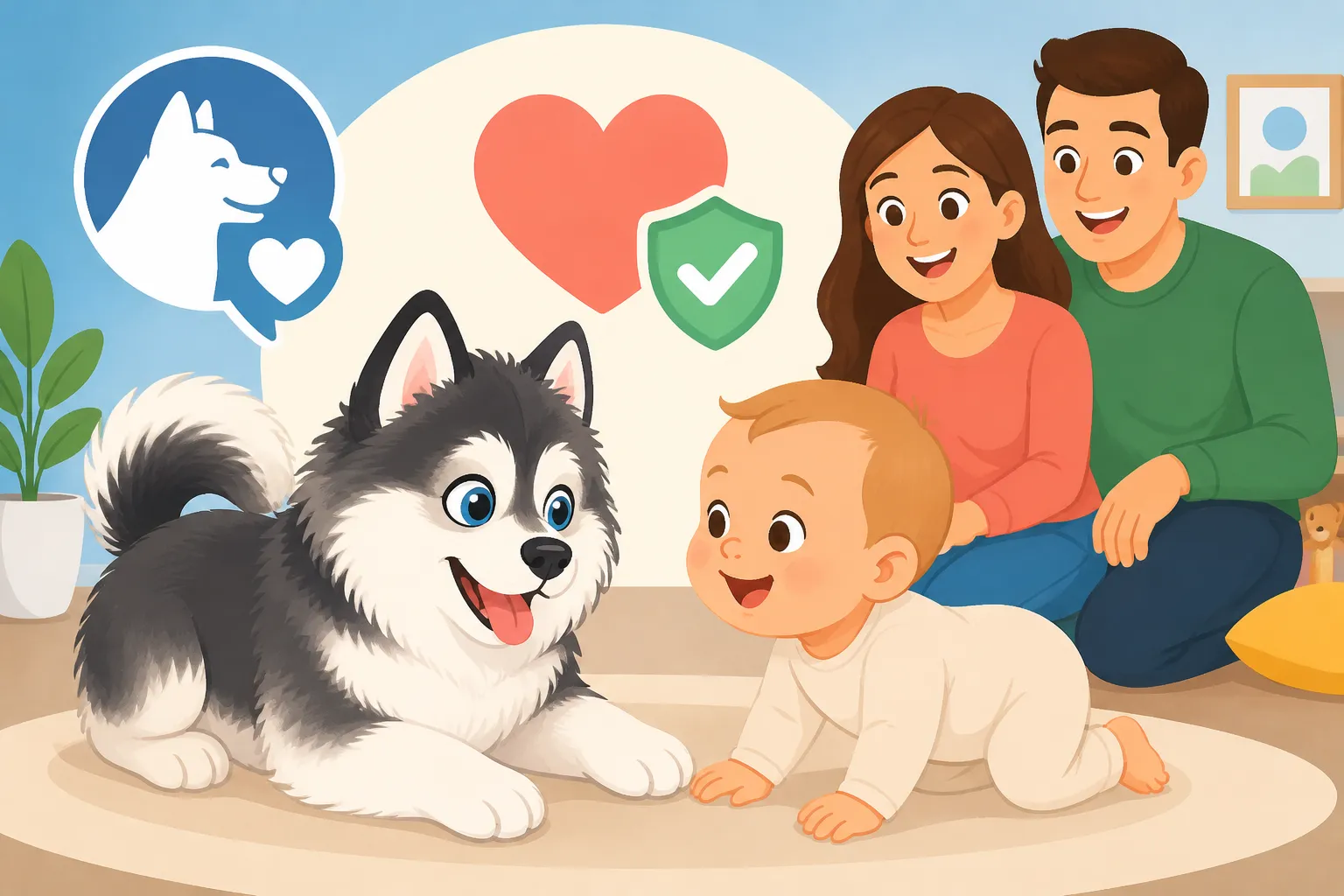
Whether a Pomsky Suits a Family With a Baby
A Pomsky may be affectionate and playful, but bringing one home while caring for a baby can make ordinary routines—feeding, naps, diaper changes, and floor time—more complicated. The right question isn’t simply whether Pomskies are “good with babies.” It’s whether your household can keep both baby and dog safe, give the dog enough attention, and manage their needs as your child grows.
Can a Pomsky live safely with a baby
Breed traits are only part of the picture
Pomskies are a cross between Pomeranians and Siberian Huskies, so their size, energy, temperament, and behavior can vary. One may be small and cuddly; another may be more active, vocal, or independent. Even puppies from the same litter can develop differently. A breed label can’t promise that an individual dog will be calm around an infant.
A Pomsky’s curiosity and intelligence can be enjoyable, but they can also mean a dog wants to investigate every new sound, smell, and movement. A crying baby, a moving stroller, or a toy that squeaks may grab a dog’s attention. That interest isn’t automatically aggression, but a baby is fragile and cannot move away or communicate boundaries. Calm behavior around an infant needs to be built and managed rather than assumed.
Think about the individual dog’s history. Has it calmly encountered children before? Does it startle easily, guard food or toys, jump up when excited, or struggle to settle? If you’re considering a puppy, remember that you’re choosing a dog whose adult temperament is still developing. For more on what can vary between dogs, read Whether a Pomsky Is Good With Children and What Nobody Warns a Pomsky Buyer About.
Supervision is essential even with a gentle dog
A friendly dog should never be left alone with a baby. This rule applies whether the baby is sleeping in a bassinet, lying on a play mat, or being held by an adult who is distracted. A dog might bump into a baby while turning around, jump toward a sound, or step onto a blanket without understanding the risk. The baby, meanwhile, cannot reliably move away or protect themselves.
Supervision means an adult is close, attentive, and able to intervene—not merely somewhere in the house. If you need to answer the door, take a shower, or focus on feeding the baby, use a secure barrier or separate room so the dog and infant are apart. A crate can be one option if the dog is already comfortable using it, but it should be a calm, safe resting place rather than a punishment.
As children grow, the safety plan still matters. Toddlers may pull fur, grab a tail, approach a dog while it eats, or stumble into its bed. Those actions are developmentally normal for a young child, but they can frighten or irritate a dog. Adults need to manage the environment and teach gentle behavior; a baby or toddler cannot be responsible for keeping the dog comfortable. See Whether a Pomsky Copes With a Newborn and Whether a Pomsky Is Safe With Toddlers for related considerations.
Plan for the whole household, not just the first weeks
A Pomsky can suit a family with a baby if the adults have enough time, support, and space to manage the dog’s daily needs. The reality is that newborn care can be unpredictable. A dog still needs bathroom breaks, exercise, training, grooming, and company even after a night of interrupted sleep. If those needs are likely to become a source of stress, waiting may be kinder to everyone.
Be honest about what help is available. Could another adult take the dog for a walk when the baby has had a difficult night? Is there a trusted person who can care for the dog during medical appointments or family emergencies? Can you afford and arrange help if the dog’s behavior becomes difficult to manage? A thoughtful plan is more useful than hoping the dog will simply adapt.
If you already have a Pomsky, a baby’s arrival doesn’t mean the relationship cannot work. It does mean preparing early, keeping routines as predictable as possible, and arranging safe separation before you need it. If you are still choosing a dog, consider whether the demands of puppyhood are realistic alongside infant care. Raising a Pomsky Puppy explains why a young dog needs consistent attention and training.
How to introduce a Pomsky to a new baby
Prepare before the baby comes home
Start adjusting routines before the arrival, not on the day the household changes. If the dog’s sleeping area, feeding location, or access to certain rooms will change, make those adjustments gradually. Give the Pomsky time to learn the new setup while life is still relatively calm. Sudden changes can make an already exciting transition harder to understand.
Practise the cues and routines you’ll rely on. A dog that can move to a mat, wait behind a gate, settle in a crate, and respond to its name is easier to manage around baby equipment. Keep training short and reward-based. The goal isn’t to make the dog obey perfectly; it’s to give you practical ways to guide the dog away from a situation before it becomes crowded or stressful.
Let the Pomsky investigate baby items at a distance and under supervision. Strollers, bassinets, toys, and new smells may be unfamiliar. Reward quiet curiosity and give the dog room to retreat. Don’t force an approach or place the baby near the dog to “get them used to each other.” A dog should be able to choose distance, and the baby should remain in an adult’s arms or a secure space.
Keep first contact brief and controlled
For an initial introduction, have one adult manage the dog while another holds the baby. Choose a quiet moment rather than a time when the dog is hungry, overtired, highly excited, or surrounded by visitors. The Pomsky can observe from a comfortable distance. If the dog remains relaxed, reward calm behavior; if the dog becomes unsettled, increase distance and try again later.
Avoid pushing the dog’s face toward the baby or encouraging licking. Even a well-meaning dog can move suddenly, and a baby’s face is especially vulnerable. Keep the interaction short, let the dog disengage, and end on a calm note. There is no need to rush toward a photograph or a dramatic “meeting” moment. A gradual, uneventful introduction is a good outcome.
Watch the dog’s whole body rather than looking only for growling. Turning away, repeatedly trying to leave, becoming stiff, freezing, or showing unusual agitation can signal discomfort. A growl is a warning that the dog needs space; scolding it can suppress the warning without changing the underlying feeling. Separate the dog and baby calmly, then seek help from a qualified, reward-based trainer or veterinary behavior professional if concerning behavior continues.
Use barriers to make safe choices easier
Baby gates, closed doors, playpens, and a comfortable dog-only resting area can help create predictable boundaries. A barrier lets the dog see household activity without having direct access to the baby. It also gives adults a reliable way to keep the dog separate when they are busy, tired, or unable to supervise closely.
Make sure the dog’s resting place is somewhere the child will not be allowed to disturb it. As the baby becomes mobile, this matters even more: a crawling child may head toward a dog’s bed, food bowl, or chew toy before an adult can react. Feed the Pomsky in a protected area, and keep toys, treats, and other items that might prompt guarding out of the baby’s reach.
Prepare your home in practical steps. A shopping list might include gates, a secure crate if appropriate, a washable dog bed, and a safe storage spot for pet food. Retailers such as Chewy may carry some of these supplies, but choose equipment that fits your home and your dog rather than buying a product just because it is marketed for pets. For related planning, see Whether a Pomsky Needs a Crate at Night.
Common challenges for a Pomsky and a baby
Energy and exercise still need attention
A Pomsky may need more than a quick bathroom break to feel settled. Exercise and mental engagement vary with age, health, and individual temperament, but a dog with unused energy may find it harder to relax during a quiet feeding or nap. That doesn’t mean you need elaborate outings every day. Short walks, sniffing games, food puzzles, and brief training sessions can help fit enrichment into a busy routine.
Plan these activities around the baby rather than assuming they will happen spontaneously. A stroller walk may suit some dogs and families, but it is not automatically a safe or relaxing way to exercise a Pomsky. The dog may pull, weave, or react to other dogs while the adult is handling the stroller. Practise walking skills separately and use another adult’s help until the routine feels manageable. For a deeper look at activity needs, read The Exercise a Pomsky Needs Every Day.
If you can’t reliably meet the dog’s needs during the newborn stage, arrange support in advance. A trusted dog walker, family member, or suitable daycare may help, depending on the dog’s comfort and the provider’s practices. Don’t wait until the dog is restless and the adults are exhausted to work out a backup plan.
Noise and interrupted sleep can be difficult
Some Pomskies are vocal, and a baby’s crying may prompt barking, howling, or restless behavior. A dog may also react to visitors, delivery sounds, or changed household routines. If you live in an apartment or share walls, that noise can add pressure when everyone is already tired. Temperament differs, so don’t assume every Pomsky will be loud—but don’t assume your dog will stay quiet either.
Build a calm routine before the baby arrives. Reward the dog for settling on a bed, provide a comfortable place away from busy rooms, and use ordinary household sounds at a low level while pairing them with calm experiences. Avoid turning a baby’s cries into a training test by playing loud recordings or forcing the dog to remain nearby. If the dog becomes distressed, create distance and work at a gentler pace.
A dog who is barking or howling should not automatically be punished. The noise may reflect excitement, frustration, fear, or difficulty settling, and each calls for a different response. A qualified trainer can help identify patterns and develop a plan. You can also read Whether a Pomsky Is Loud and Whether a Pomsky Can Be Left Alone if noise or separation is likely to affect your household.
Attention and grooming can compete with baby care
Pomskies have coats that need regular upkeep, and brushing can take time. If grooming becomes rushed, mats may form in areas such as behind the ears or where a harness sits. Start with small, positive grooming sessions and keep tools out of the baby’s reach. A dog that is already comfortable with handling is easier to care for when family life gets busier.
Set aside a realistic amount of time for the dog’s routine, including feeding, bathroom breaks, brushing, and training. A baby’s schedule may shift from day to day, so it helps to have a flexible routine rather than one that depends on everything happening at an exact time. If possible, decide in advance which adult is responsible for the dog’s basics during the busiest parts of the day.
The dog also needs pleasant attention that is not always connected to the baby. A short one-on-one walk or a quiet game can help preserve the dog’s familiar relationship with its people. That attention doesn’t need to be long or elaborate; the important part is making it predictable enough that the Pomsky isn’t routinely pushed aside whenever the baby is awake.
Is a Pomsky the right choice for your family
Consider the timing and the dog’s temperament
There is no universal rule that families with babies should or should not have a Pomsky. The better question is whether the particular dog and household are a good fit. A settled adult dog with a known history around children may present different practical demands from a young puppy whose energy, size, and behavior are still developing. Even then, individual assessment and careful management matter.
If you are choosing a puppy, ask how the breeder evaluates temperament and what is known about the parents. Ask about health, early socialization, and the puppy’s behavior when handled or exposed to ordinary household sounds. Be cautious of anyone who guarantees that a puppy will be perfectly safe with a baby based only on breed or appearance. No puppy can be guaranteed to behave a certain way in every situation.
You can also compare timing. If a baby is expected soon and the adults already feel stretched, delaying puppy ownership may make the transition easier. If a Pomsky is already part of the family, focus on preparation and support rather than assuming the situation is hopeless. Introducing a Pomsky to the Dog You Already Have covers another kind of household transition where careful introductions and management make a difference.
Use a practical readiness check
Before making a decision, talk through these questions with everyone who will share responsibility for the dog:
| Question | What to consider |
|---|---|
| Can an adult supervise every interaction? | Plan barriers and separate spaces for moments when close attention isn’t possible. |
| Who handles the dog’s daily care? | Identify the person responsible for walks, feeding, grooming, training, and bathroom breaks. |
| Does the dog have a safe retreat? | Make sure the baby cannot reach the dog’s bed, food, or resting area. |
| How does the dog respond to change? | Consider noise, visitors, new equipment, and disrupted routines. |
| What support is available? | Arrange help for tiring days, appointments, and unexpected schedule changes. |
| Can the household manage training needs? | Be prepared to seek qualified support if the dog shows fear, guarding, or difficulty settling. |
If you are already caring for a baby and researching supplies, retailers such as Chewy can be one place to look for routine pet items, but buying equipment is only a small part of readiness. A gate or crate can support a safety plan; it cannot replace supervision, training, or a realistic assessment of the dog’s behavior.
If you are unsure about a specific dog, speak with the dog’s veterinarian and a qualified trainer who can observe its behavior and discuss your home setup. When a dog has shown aggression, guarding, or intense fear, seek professional guidance before allowing contact with the baby. For ordinary supplies such as food storage or grooming tools, Chewy may be among the retailers you compare; base choices on your dog’s needs and advice from your veterinarian, not on convenience alone.
A balanced decision, not a perfect-family test
A Pomsky can live in a home with a baby when adults actively manage safety, meet the dog’s needs, and respond to the individual dog rather than relying on breed stereotypes. That takes planning, time, and attention—resources that may feel scarce during the newborn months. It’s reasonable to decide that this isn’t the right season to add a puppy, and it’s also possible to make an existing dog-and-baby household work with thoughtful routines and support.
The most important standard is not whether the dog looks relaxed in a photo beside the baby. It is whether the adults can consistently prevent unsafe access, notice when the dog needs space, and give both child and dog a calm, secure environment. When those conditions are in place, the household has a much stronger foundation for a safe relationship as the baby grows.
Disclaimer
This article is for general informational purposes only and does not constitute professional advice. Laws, prices and regulations vary by location and change over time. Consult a qualified professional for guidance on your specific situation.