Whether Stairs Damage a Pomsky’s Knees
It's a common worry for Pomsky parents: those tiny legs, that eager bounce, and then there are the stairs. You look at your energetic furball navigating a full flight of steps and can't help but wonder if each thump and jump is subtly, or not so subtly, damaging their delicate knee joints. This guide is here to unravel that concern, exploring the real impact of stairs on your Pomsky's knees, understanding their vulnerabilities, and giving you actionable steps to protect them throughout their lives.
Understanding Your Pomsky's Knee Vulnerabilities
Pomskies are a delightful mix, combining the robust athleticism of the Siberian Husky with the spirited, often dainty, stature of the Pomeranian. This unique genetic blend brings with it a fascinating set of physical characteristics, but also a predisposition to certain health issues, particularly concerning their joints. When it comes to knees, the Pomeranian side of their family tree often brings a heightened risk of a condition known as patellar luxation.
The Genetic Predisposition to Patellar Luxation
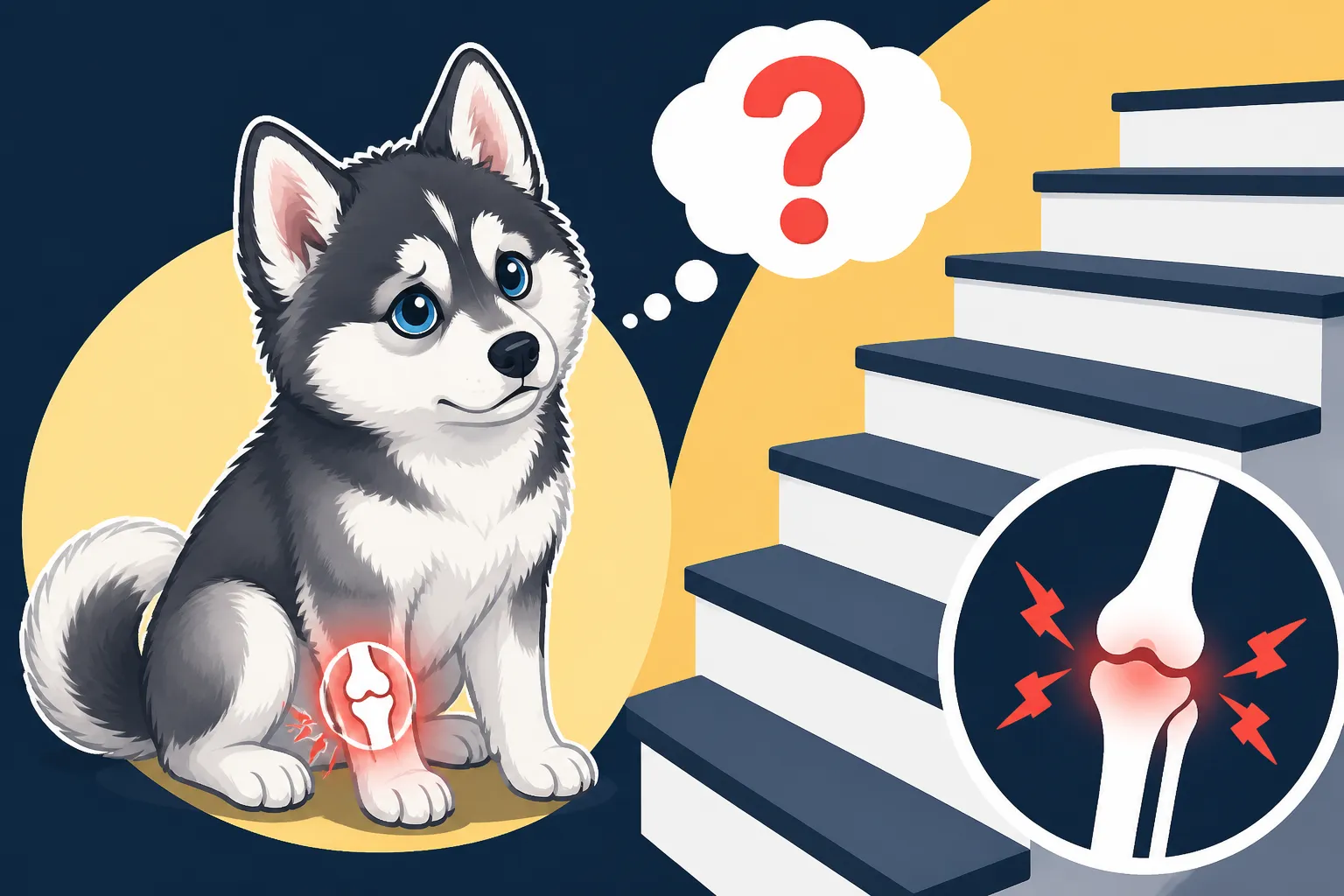
Patellar luxation, often referred to as a "slipping kneecap," is a condition where the patella (kneecap) dislocates or moves out of its normal groove in the thigh bone (femur). While it can happen in any dog, it's notably common in smaller breeds, and given the Pomeranian's influence, Pomskies are certainly on the radar for this issue. This isn't just a minor inconvenience; repeated luxation can lead to pain, arthritis, and even more severe orthopedic problems down the line. It's a structural issue, often hereditary, meaning it's something they can be born with, even if it doesn't show up until later in life.
If you’re noticing your Pomsky occasionally hops or skips a step, almost like they’re trying to stretch out a leg, that could be a tell-tale sign of The Skip That Means a Pomsky's Knee Has Gone. This momentary lift often indicates the kneecap has popped out and then back into place. Understanding the specific Patellar Luxation Grades in a Pomsky can help you and your vet determine the severity and the best course of action. It ranges from a mild Grade 1, where the kneecap easily slips back into place, to a severe Grade 4, where it's permanently dislocated.
How Age Influences Knee Health and Stair Impact
A Pomsky's age plays a significant role in how stairs might affect their knees. Puppies, with their still-developing bones and growth plates, are particularly vulnerable. Excessive or strenuous stair climbing during their formative months can put undue stress on these soft tissues, potentially leading to developmental issues or exacerbating any existing predispositions. Their coordination is still developing, too, making them more prone to missteps or falls on stairs.
As they mature into adults, their skeletal system is more robust, but if they have an underlying condition like patellar luxation, or if they are prone to being a little clumsy, constant high-impact activity like racing up and down stairs can certainly accelerate wear and tear. Then we have our senior Pomskies. Just like in humans, older dogs are susceptible to Arthritis in a Pomsky at Ten and other degenerative joint diseases. Their muscles might weaken, their vision might dim slightly, and their balance might not be what it once was. For these wise old souls, stairs can become a painful obstacle, putting strain on already compromised joints and increasing the risk of falls. Protecting your Pomsky's knees is a lifelong commitment, adapting as they move through different stages of life.
The Mechanics of Stair Climbing and Its Impact
When we talk about stairs and their potential impact on your Pomsky's knees, it's not just about one wrong step. It's about the cumulative forces and the specific mechanics involved in ascending and descending. Each motion places different types of stress on the joints, ligaments, and muscles.
The Stress of Going Up and Down
Think about your own body when you go up and down stairs. Going up requires pushing off with significant force from the hind legs. This engages the quadriceps and places compressive forces through the stifle (knee) joint. For a Pomsky, especially one with shorter legs, the angle of their knees and hips becomes quite acute, pushing the patella more firmly into its groove, or, if it's prone to luxating, potentially grinding against the edges of the groove.
Going down stairs, however, is often considered more problematic. It involves a controlled descent, with the hind legs absorbing impact and decelerating the body. This creates an eccentric load on the muscles (meaning they lengthen under tension), and the impact force through the joints can be considerable, especially if your Pomsky tends to bound down quickly rather than carefully. For a dog with even a minor patellar luxation, this downward motion can cause the kneecap to shift out of place more easily, leading to discomfort or injury. The repeated pounding can also contribute to inflammation and cartilage wear over time. This is why many vets suggest avoiding stairs as much as possible, especially for puppies or dogs with known joint issues, emphasizing that gravity and impact are not their friends in this scenario.
The Role of Body Weight and Breed Structure
A Pomsky's weight and unique build are significant factors in how stairs affect their knees. Even a slight amount of extra weight can dramatically increase the load on their joints. For every pound of excess weight, there's several pounds of pressure on their knees and hips, especially during high-impact activities like jumping or descending stairs quickly. This added strain can exacerbate conditions like patellar luxation or accelerate the onset of arthritis. Keeping your Pomsky at their ideal weight is one of the single most impactful things you can do for their joint health.
Furthermore, the Pomsky's specific breed structure, a blend of a larger, long-legged Husky and a smaller, more compact Pomeranian, means there's a wide range of sizes and leg lengths within the breed. A Pomsky with shorter legs and a more stocky build might find each stair step a much greater effort, requiring more acute joint angles and placing greater stress on their knees compared to a longer-legged counterpart. The conformation of their hind legs, whether they are very straight or have good angulation, also plays a critical role in how well they can absorb shock and distribute forces across their joints. This structural variability means that what might be a minor challenge for one Pomsky could be a significant risk for another.
Proactive Steps to Protect Your Pomsky's Knees
While you can't always completely eliminate stairs from your Pomsky's life, there's a lot you can do to minimize risk and promote lifelong knee health. Thinking proactively about their environment and daily routines can make a huge difference.
Environmental Modifications for Safer Navigation
The easiest way to protect your Pomsky's knees from stair-related stress is to reduce their need to use them. Baby gates are your best friends here. Placing sturdy gates at the top and bottom of staircases can effectively block access, especially when you're not there to supervise. For unavoidable stairs, consider alternatives. Pet ramps or dog stairs can be a fantastic solution, particularly for smaller Pomskies, puppies, or seniors. These provide a gentler incline or smaller steps, reducing the impact and strain on their joints. You might even use smaller, portable ramps for getting them onto furniture, helping them avoid repetitive jumping off couches or beds, which can be just as hard on their knees as descending stairs. Remember, preventing them from doing things like Whether a Pomsky Should Jump Off Furniture is vital for long-term joint health.
Here's a quick comparison:
| Feature | Stairs for Pomskies | Ramps for Pomskies |
|---|---|---|
| Impact on Knees | High, especially when descending. Can exacerbate patellar luxation. | Low, provides a smooth, gradual incline. |
| Muscle Use | Short, powerful bursts (ascending); eccentric loading (descending). | Continuous, controlled movement. Builds sustained strength. |
| Safety | Risk of falls, missteps, particularly for puppies or seniors. | Reduced risk of falls; stable surface. |
| Portability | Fixed structure. | Many models are foldable and portable. |
| Cost | No direct cost for existing stairs. | Initial investment for a quality ramp. |
| Training | Requires careful training to descend slowly. | Easier to train for, especially with treats. |
Training and Controlled Exercise
Training your Pomsky to navigate stairs safely is paramount. Instead of letting them bound up and down with wild abandon, teach them a controlled pace. Use positive reinforcement to encourage them to go one step at a time, slowly, especially on the way down. You can start by guiding them on a leash, rewarding them for each deliberate step. This isn't just about protecting their knees; it's also about preventing falls.
Beyond stairs, incorporating controlled, low-impact exercise into their routine can help strengthen the muscles surrounding their knee joints. Think about activities like swimming, gentle walks, or specific exercises recommended by a canine physical therapist. These can build core strength and hind leg muscle mass without the harsh impact. Avoid activities that involve a lot of twisting, sudden stops, or high jumps, as these can put extra stress on vulnerable knees. If you're wondering Exercise for an Old Pomsky, gentler activities become even more crucial to manage existing arthritis or joint pain.
Nutritional Support and Supplements
What goes into your Pomsky's bowl plays a crucial role in their joint health. A balanced, high-quality diet that supports a healthy weight is fundamental. Look for foods rich in omega-3 fatty acids, which have anti-inflammatory properties, and ensure their diet isn't lacking essential nutrients for bone and cartilage development.
Beyond their regular food, certain joint supplements can offer additional support, especially as your Pomsky ages or if they have a known predisposition to knee issues. Glucosamine and chondroitin are popular choices, known for helping maintain cartilage health and joint lubrication. MSM (methylsulfonylmethane) is another ingredient often found in joint supplements, prized for its anti-inflammatory effects. Your vet might also recommend specific formulations or even prescribe supplements like Dasuquin, Cosequin, or Zesty Paws, tailored to your Pomsky's individual needs. If you're considering them, you might want to read more about Whether Joint Supplements Help a Pomsky. Always consult with your veterinarian before adding any supplements to your dog's diet, as they can advise on the correct dosage and ensure there are no contraindications with other medications or conditions. Investing in preventative care now can save a lot of heartache (and vet bills) down the road.
Recognizing and Addressing Knee Issues
Despite your best efforts, sometimes knee problems can still arise in Pomskies. Knowing what to look for and when to seek professional help is vital for early intervention and effective management.
Signs of Patellar Luxation or Pain
Your Pomsky can't tell you in words that their knee hurts, so it's up to you to be a keen observer of their behavior and movement. One of the most classic signs of patellar luxation is a sudden skip, hop, or limp in their gait, where they might hold one hind leg up for a few steps before putting it back down as if nothing happened. This often indicates the kneecap has momentarily slipped out and then back into place. You might also notice a general reluctance to jump, run, or climb stairs, or a noticeable decrease in their activity levels.
Other signs of knee pain or discomfort can include:
- Lameness: A consistent limp in one or both hind legs.
- Stiffness: Especially after resting or first waking up.
- Swelling: Around the knee joint.
- Pain on touch: Your Pomsky might react negatively if you try to touch or manipulate their knee.
- Unusual sitting posture: They might sit with one leg extended out to the side rather than tucked underneath them.
- Muscle atrophy: Over time, if they're not using a leg properly, the muscles in that leg might begin to thin.
If you observe any of these symptoms, even if they seem minor or intermittent, it's crucial to act promptly.
When to Consult Your Veterinarian
Don't wait until your Pomsky is in obvious distress before seeking veterinary advice. If you notice any of the signs mentioned above, or if you simply have a gut feeling that something isn't quite right with their mobility, schedule an appointment with your vet. Early diagnosis is key to managing patellar luxation and other joint issues effectively.
Your veterinarian will perform a thorough physical examination, manipulating the knee joint to check for patellar movement, stability, and signs of pain. They might also recommend X-rays to assess the bone structure, look for signs of arthritis, or rule out other orthopedic conditions like Hip Dysplasia in a Twenty Pound Pomsky which can also affect hind leg gait. Discussing your Pomsky's history, activity levels, and any observed changes in behavior will help your vet form an accurate diagnosis. It's a team effort between you and your vet to ensure your Pomsky receives the best possible care.
Management and Treatment Options
Once a knee issue, like patellar luxation, is diagnosed, your vet will discuss the available management and treatment options. These can range from conservative approaches to surgical intervention, depending on the severity of the condition and your Pomsky's overall health.
Conservative Management: For milder cases (typically Grade 1 or sometimes Grade 2 luxation), conservative management might be recommended. This focuses on pain relief, reducing inflammation, and strengthening the surrounding muscles. It often includes:
- Anti-inflammatory medications: Non-steroidal anti-inflammatory drugs (NSAIDs) can help manage pain and inflammation.
- Weight management: Maintaining an ideal body weight is crucial to reduce stress on the joints.
- Controlled exercise: Gentle, low-impact activities to strengthen muscles without excessive strain.
- Physical therapy: Exercises and techniques to improve joint stability and muscle strength.
- Joint supplements: As discussed earlier, glucosamine, chondroitin, and MSM can support cartilage health.
Surgical Intervention: For more severe cases (Grade 2, 3, or 4 luxation), especially if your Pomsky is experiencing consistent lameness or pain, surgery might be the best option. The goal of surgery is to realign the kneecap and deepen the groove in the femur so it stays in place. This can involve several techniques, such as trochlear wedge recession (deepening the groove), tibial tuberosity transposition (moving where the patellar tendon attaches), or lateral imbrication (tightening the joint capsule). If your vet suggests surgery, you'll want to understand Which Patella Grade Needs Surgery in a Pomsky and what the recovery process entails. It's a significant decision, and one that can come with a considerable financial burden. This is where having pet insurance like Healthy Paws can truly make a difference, helping to cover a substantial portion of the veterinary costs, including specialist consultations, diagnostics, and the surgery itself.
Long-Term Knee Health and a Happy Life
Taking a holistic approach to your Pomsky's well-being is the best way to ensure their knees, and indeed their entire body, remain as healthy and functional as possible throughout their lives. It's about more than just avoiding stairs; it's about a lifestyle of preventative care.
Maintaining Ideal Weight for Joint Health
We touched on it earlier, but it bears repeating: keeping your Pomsky at their ideal weight is perhaps the single most impactful thing you can do for their long-term joint health. Every extra pound your Pomsky carries adds undue stress to their knees, hips, and spine. This constant strain can accelerate the degeneration of cartilage, worsen conditions like patellar luxation, and hasten the onset of arthritis. It can also make movement more difficult and painful, reducing their quality of life.
Work closely with your veterinarian to determine your Pomsky's ideal weight range. This isn't a one-size-fits-all number, as Pomskies can vary significantly in size and build. Once you have a target, stick to a healthy diet plan and ensure they get appropriate exercise. This means measured meals, limiting treats, and resisting those pleading puppy dog eyes when they beg for scraps. It's an act of love to keep them trim and active, ensuring they can zoom and play without unnecessary strain on their precious joints.
Regular Veterinary Check-ups and Proactive Screening
Think of your Pomsky's annual vet visit not just as a vaccination stop, but as a comprehensive wellness check. Regular veterinary check-ups are fundamental for proactive health management, especially concerning joint health. Your vet can monitor your Pomsky's weight, assess their gait, palpate their joints, and pick up on subtle changes that you might miss. They can also screen for genetic predispositions. For instance, if you have a puppy, your vet might check for signs of The Age a Pomsky's Kneecap First Slips or other early indicators of patellar luxation.
Beyond general check-ups, consider discussing specific orthopedic screenings if your Pomsky shows any signs of concern or if you know their parent breeds had a history of joint issues. While the Pomsky is a relatively new crossbreed, understanding the health screening recommendations for both Siberian Huskies and Pomeranians can provide valuable insight. Early detection of conditions allows for earlier intervention, which can often lead to better outcomes and a higher quality of life for your furry friend.
The Role of Comprehensive Pet Insurance
Let's be realistic: veterinary care, especially for chronic or surgical conditions, can be incredibly expensive. A diagnosis of patellar luxation requiring surgery, or even ongoing management of arthritis, can quickly run into thousands of dollars. This is where having comprehensive pet insurance can be a game-changer. Companies like Healthy Paws offer policies that can cover a significant portion of unexpected veterinary bills, including diagnostics, specialist consultations, medications, physical therapy, and even surgery for conditions like patellar luxation.
Imagine facing a $4,000 surgical bill for your beloved Pomsky's knee and knowing that your pet insurance will reimburse you 80-90% of that cost after your deductible. It provides immense peace of mind, allowing you to make medical decisions based on what's best for your Pomsky's health, rather than solely on your financial limitations. When choosing a policy, it's wise to look into coverage specifics and consider plans that offer robust support for hereditary and chronic conditions, which are particularly relevant for Pomskies. Understanding Insuring a Pomsky Against Two Parent Breeds can help you navigate the options and choose the best plan for your unique companion.
Disclaimer
The information provided in this guide is for general informational purposes only and does not constitute veterinary advice. Always consult with a qualified veterinarian for any health concerns or before making any decisions related to your Pomsky's health and treatment.