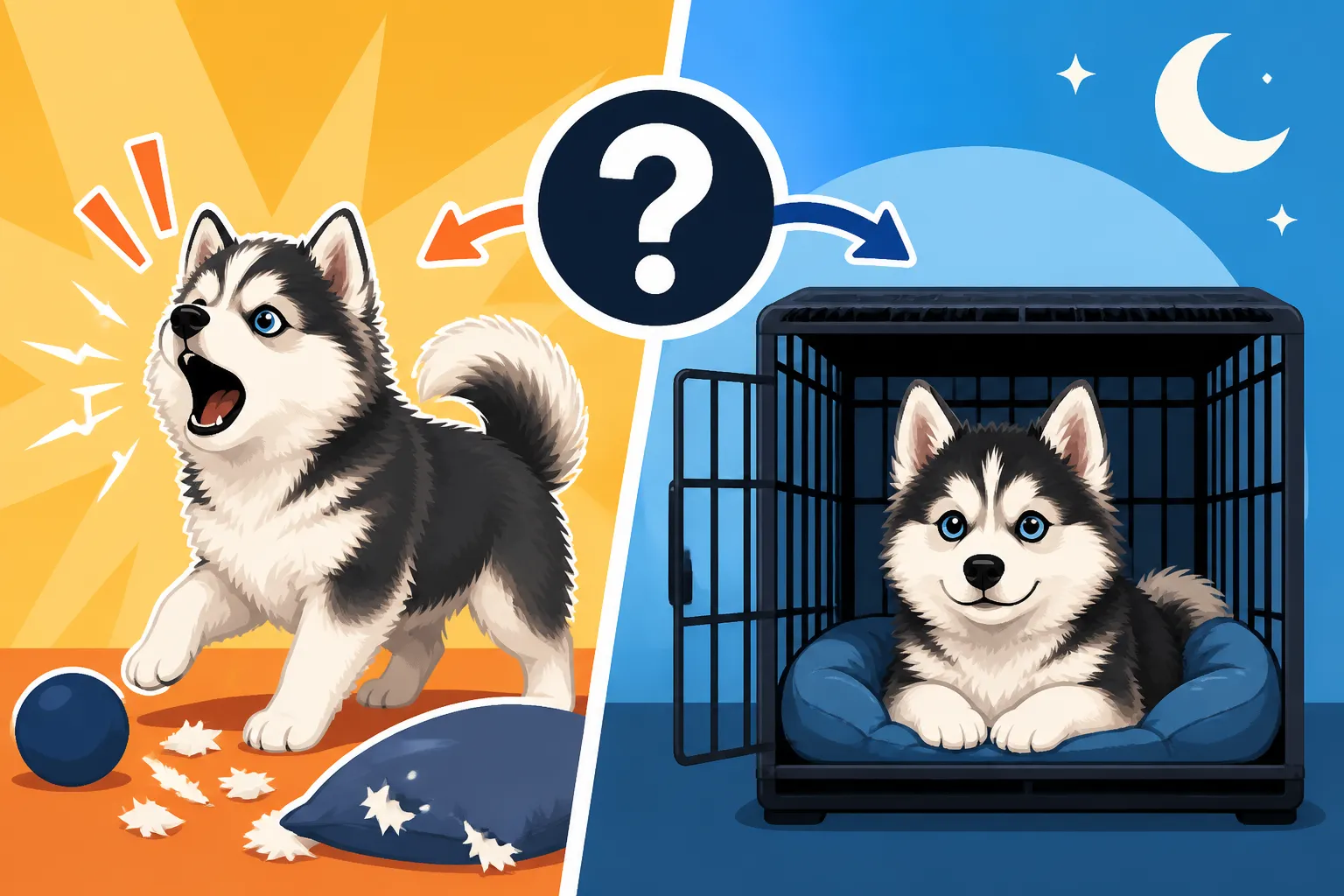
Whether Crate Time Quiets a Pomsky
It can be incredibly frustrating when your adorable Pomsky’s charming "woofs" turn into incessant barking or howling, especially when you're just trying to get some peace and quiet, or worse, keep the neighbors happy. Many Pomsky owners wonder if crate time, often touted as a training solution, can actually help quiet their vocal companions. This guide will explore how crate training impacts a Pomsky's vocalizations and provide actionable steps to use it effectively, along with other essential strategies.
Understanding Your Pomsky's Vocal Tendencies
Before we dive into crate training, it’s crucial to understand why your Pomsky might be so vocal in the first place. These little powerhouses inherit traits from two very talkative breeds, the Siberian Husky and the Pomeranian, so noise is often baked right into their DNA.
The Husky Howl and Pomeranian Bark Blend
Think about the ancestral roots of your Pomsky. Huskies are known for their distinctive "talking," howling, and mournful vocalizations, often communicating in ways that sound less like a bark and more like a conversation or a song. They use these sounds to express joy, frustration, boredom, or simply to acknowledge their presence. Then you have the Pomeranian, a breed famous for its spirited, often sharp, and sometimes persistent barking. They're excellent little alarm systems, quick to alert their owners to anything from a leaf blowing past the window to the mail carrier's distant footsteps.
When you mix these two, you get a Pomsky: a dog that can inherit a wide range of vocal expressions. Some Pomskies will have that iconic The Husky Howl in a Pomsky, a beautiful, melodic sound. Others might lean more into the high-pitched, frequent alert barking of the Pomeranian. And many will be a delightful, or sometimes challenging, combination of both. It's not usually malicious; it's just how they're built to communicate.
Common Reasons for Pomsky Noise
Their heritage aside, there are several practical reasons why your Pomsky might be turning up the volume. Recognizing these triggers is the first step in addressing the behavior.
- Boredom and Lack of Mental Stimulation: A bored Pomsky is a noisy Pomsky. These intelligent dogs need engagement. If they're not getting enough physical exercise or mental puzzles, they'll find ways to entertain themselves, and vocalizing is a common strategy. This could manifest as repetitive barking at nothing in particular or a persistent whine for attention.
- Separation Anxiety and Loneliness: Many Pomskies develop strong bonds with their families. If left alone for extended periods without proper training, they can experience genuine distress. This anxiety often translates into howling, barking, or whining, particularly when you leave the house. You might come home to complaints from neighbors about noise, or even damage to your home, all stemming from deep-seated fear and loneliness. You can learn more about this by reading Whether a Pomsky Howls When Left or Whether a Pomsky Suffers Separation Anxiety.
- Attention-Seeking: Pomskies are smart, and they quickly learn what gets your attention. If they bark or whine and you immediately respond, even if it's to tell them to be quiet, they've achieved their goal: they got your attention. This can quickly become a self-reinforcing cycle, leading to more vocal demands from your furry friend.
- Excitement and Frustration: Think about when you get home after a long day, or when they see a squirrel out the window. That rush of excitement can unleash a torrent of barks, whines, or excited "woo-woos." Similarly, if they're frustrated because they can't reach a toy, or they're denied access to something they want, vocalization can be their way of expressing that displeasure.
How Crate Training Can Influence Vocalization
So, can a crate really help quiet your Pomsky? The answer is often yes, but it’s not a magic bullet. Crate training, when done correctly, is a powerful tool that addresses several of the underlying reasons for excessive vocalization.
Creating a Safe and Quiet Den
For a dog, a crate shouldn't feel like a jail cell. Instead, it should be their personal sanctuary, a cozy den where they feel safe, secure, and relaxed. When introduced positively, a crate provides a sense of security that can dramatically reduce anxiety-driven vocalizations. Imagine a thunderstorm raging outside – many dogs will instinctively seek out a small, enclosed space, like under a bed or in a closet. A properly trained crate serves this same psychological purpose, offering a retreat from overwhelming stimuli.
By giving your Pomsky their own dedicated, quiet space, you're not just containing them; you're offering them a sense of control and comfort. This can be particularly effective for younger puppies learning to manage their emotions or for adult Pomskies who feel overwhelmed in open spaces. The crate becomes a place where they choose to be quiet because they feel good there.
Teaching Independent Calmness
One of the most valuable lessons a crate can teach a Pomsky is how to be calmly independent. Many Pomskies are people-oriented and can struggle with being alone. If they constantly rely on your presence for comfort and entertainment, they might vocalize when you're not there or not paying attention. The crate provides a structured environment where they learn to settle down by themselves.
This involves training sessions where your Pomsky spends short periods in the crate while you're still in the room, gradually increasing the duration and distance. They learn that being alone in their den is okay, even pleasant. This skill of independent calmness, once learned in the crate, can then generalize to other situations, leading to a quieter, more well-adjusted dog overall. It’s about building confidence, not just enforcing silence.
Managing Separation Anxiety and Frustration
For Pomskies prone to separation anxiety, the crate can be a game-changer. When a dog experiences true separation anxiety, they aren't just being naughty; they're genuinely distressed. Crate training helps by providing a consistent, predictable routine and a secure space. Instead of being free to roam the house and potentially destroy things or injure themselves in a panic, they are safely contained in their familiar den.
The key here is proper desensitization and counter-conditioning, gradually teaching them that your departures are not something to fear. The crate provides the ideal environment for this type of training, as it limits their ability to practice anxious behaviors like pacing, chewing, or excessive vocalizing. For frustration-based vocalizations, the crate can also serve as a "reset" button. If your Pomsky is overly excited and barking at guests or other dogs, a short, calm period in their crate can help them settle and regain control.
Best Practices for Crate Training a Vocal Pomsky
Crate training isn't just about putting your dog in a box. For it to be effective, especially for reducing vocalizations, you need a thoughtful, patient approach.
Gradual Introduction and Positive Association
Never, ever force your Pomsky into a crate. The goal is for them to love their crate. Start by making the crate a positive place. Leave the door open and place high-value treats, favorite toys, or a cozy blanket inside. Let them explore it on their own terms. Feed meals near the crate, then just inside, and eventually with the door briefly closed.
Use a happy, encouraging tone. When they go in, reward them. When they're calm inside, reward them. Short, positive sessions are far more effective than long, stressful ones. Gradually increase the time they spend in the crate. This positive association builds trust and makes the crate a desirable place to be. For puppies, starting early can make a huge difference in their ability to cope with alone time and reduce future vocal habits. You can find more comprehensive guidance in articles like Raising a Pomsky Puppy.
The Importance of Exercise Before Crate Time
A tired Pomsky is a quiet Pomsky. It's a simple truth that applies to almost all dogs, especially those with the energy levels of a Husky-Pomeranian mix. Before you expect your Pomsky to settle quietly in their crate, they need to have their physical and mental needs met. This isn't just about a quick potty break; it's about a proper workout.
Take them for a long walk, engage them in a vigorous game of fetch, or let them have a good sniff-a-thon in the park. Mental exercise is just as crucial – short training sessions, puzzle toys, or scent games can burn off mental energy. A good rule of thumb is to aim for at least 60-90 minutes of dedicated activity each day, broken into sessions. If your Pomsky still has pent-up energy, they're much more likely to vocalize their boredom or frustration from within the crate. Consider how much The Exercise a Pomsky Needs Every Day they truly need.
Appropriate Crate Placement and Accessories
The right crate and its setup are vital for success. Choose a crate that's appropriately sized: large enough for your Pomsky to stand up, turn around, and lie down comfortably, but not so large that they can use one end as a potty area. For puppies, a divider can adjust the size as they grow.
- Placement: Initially, place the crate in a common area where your Pomsky can still feel part of the family, like the living room or bedroom. As they get more comfortable, you might move it to a quieter spot if silence is the primary goal. Many owners choose to have their Pomsky Whether a Pomsky Should Sleep in a Crate in their bedroom at night, which can prevent nocturnal vocalizations stemming from loneliness.
- Comfort: Line the crate with a soft, washable bed or blanket. Some dogs prefer a thinner mat, others love a plush cushion. Ensure it’s something they won’t chew destructively.
- Security: A secure latch is non-negotiable. For escape artists, look for crates with double latches or extra security features.
- Enrichment: Add safe chew toys or puzzle toys filled with treats to keep them occupied. A favorite comfort item, like a t-shirt with your scent, can also provide reassurance. You can find a wide variety of durable crates, comfy beds, and engaging puzzle toys on Amazon to set up the perfect den for your Pomsky.
What Not to Do When Crate Training for Quiet
Mistakes in crate training can actually exacerbate vocalization. Avoid these common pitfalls:
- Using the crate as punishment: This is the quickest way to make your Pomsky hate their crate. It should never be associated with negative experiences. If they misbehave, use time-outs in a neutral zone, not their crate.
- Letting them out when they're vocalizing: This is the big one. If your Pomsky barks, whines, or howls in their crate and you immediately let them out, you've just taught them that making noise is the way to get what they want. Wait for a moment of quiet, even if it's just a few seconds, before you open the door. This teaches them that calm behavior is rewarded.
- Leaving them too long too soon: Building up crate duration takes time. Start with 10-15 minutes and gradually increase. Leaving a young puppy or an untrained adult in for hours right away is a recipe for distress and vocalization. Learn How Many Hours a Pomsky Can Be Left based on their age and training level.
- Making a big fuss when you leave or return: Keep departures and arrivals low-key. A dramatic goodbye or an overly enthusiastic reunion can heighten anxiety around being alone. Calm greetings reinforce that coming and going is a normal, non-alarming part of life.
When Crate Time Isn't Enough: Broader Strategies for a Noisy Pomsky
While crate training is incredibly beneficial, it's often just one piece of the puzzle. For persistent vocalization, you need a holistic approach that addresses all aspects of your Pomsky's well-being.
Addressing Underlying Causes of Vocalization
If your Pomsky continues to be noisy even with good crate training, it's time to dig deeper into other factors.
- Diet and Routine: Believe it or not, a consistent feeding schedule and a balanced diet can impact behavior. Erratic mealtimes or a diet lacking proper nutrition can contribute to anxiety or energy spikes that lead to vocalizations. Ensure they are getting high-quality food and a predictable routine.
- Environmental Enrichment: Beyond exercise, mental stimulation is paramount. Invest in puzzle toys, snuffle mats, or interactive feeders. Rotate toys to keep them novel and exciting. Engage them in short, fun training sessions throughout the day. A bored Pomsky is far more likely to vocalize out of sheer ennui, or to begin to Whether a Pomsky Destroys Furniture When Bored.
- Health Check: Sometimes, excessive vocalization can be a sign of discomfort, pain, or an underlying medical condition. If your Pomsky suddenly becomes more vocal, or if their vocalizations seem distressed or unusual, a trip to the vet is always a good idea to rule out any health issues.
Incorporating Training Beyond the Crate
Crate training provides a foundation, but a well-behaved, quiet Pomsky benefits from broader obedience training and impulse control.
- "Quiet" Command: Teach your Pomsky a "quiet" command. The best way to do this is often to teach them to bark on command first (say "speak"), then reward them when they stop barking on a "quiet" cue. This gives them an outlet for their vocalizations while also giving you a way to control it. Consistency is key here. You can find excellent resources on teaching specific cues like Teaching a Pomsky a Quiet Cue.
- Impulse Control: Work on basic obedience commands like "sit," "stay," and "leave it." These commands help your Pomsky learn self-control and can be invaluable in managing moments of excitement or frustration that trigger barking. For instance, if they bark at the doorbell, have them "sit" or "stay" in a designated spot until they are calm. Online training platforms, like those offered by BAXTER & Bella, provide structured courses and live support that can guide you through these types of training challenges, offering step-by-step instructions for impulse control and quiet commands.
- Socialization: Proper socialization from a young age can reduce reactivity and fear-based vocalizations. Expose your Pomsky to a variety of sights, sounds, people, and other well-behaved dogs in a positive and controlled manner.
Seeking Professional Guidance
If you've tried everything and your Pomsky's vocalizations are still problematic – perhaps causing significant stress for you, your dog, or your neighbors – it's time to consult a professional.
- Certified Professional Dog Trainer (CPDT): A good trainer can assess your Pomsky's behavior, identify specific triggers, and develop a customized training plan. They can provide hands-on guidance and troubleshoot challenges you might be facing. For advice on when to consider this, you might look at Whether a Pomsky Needs a Professional Trainer.
- Veterinary Behaviorist: For severe cases, especially those involving genuine separation anxiety or other complex behavioral issues, a veterinary behaviorist (a DVM with specialized training in animal behavior) can be invaluable. They can diagnose underlying medical or psychological components and may prescribe medication in conjunction with behavior modification techniques.
Crate time can indeed be a powerful tool for quieting a noisy Pomsky, but it's most effective when integrated into a comprehensive approach that includes understanding their natural tendencies, providing ample exercise and mental stimulation, consistent positive training, and addressing any underlying issues. With patience, consistency, and the right strategies, you can help your Pomsky become a calmer, happier companion.
Disclaimer
This article is for general informational purposes only and does not constitute professional advice. Laws, prices and regulations vary by location and change over time. Consult a qualified professional for guidance on your specific situation.