Why a Pomsky Must Never Be Shaved
You've just brought home that fluffy Pomsky puppy, or perhaps you've been living with one for a while, battling the perpetual fluff tornadoes that grace your floors. Summer rolls around, the temperatures climb, and you start to wonder, "Wouldn't it just be kinder to shave them? Get all that heavy fur off?" It's a natural thought, especially when you see other breeds sporting short, breezy haircuts. But for a Pomsky, with their glorious, dense double coat, shaving is one of the most detrimental things you can do, sabotaging their natural defenses and potentially causing long-term damage. This guide will meticulously break down exactly why your beloved Pomsky must never be shaved, exploring the crucial role of their unique coat and the serious consequences of stripping it away.
Understanding Your Pomsky's Incredible Double Coat
The Pomsky is a magnificent blend of the Siberian Husky and the Pomeranian, and both parent breeds contribute to its defining characteristic: the double coat. This isn't just a lot of fur; it's a marvel of natural engineering, designed to keep your dog comfortable in a wide range of climates. Thinking about shaving it off is like tearing down a perfectly insulated house because you think it looks too warm.
The Layers That Work Together
Your Pomsky's coat isn't a single entity; it’s composed of two distinct layers, each with its own vital function. First, you have the guard hairs – these are the longer, coarser, and often straighter hairs that form the outermost layer. Think of them as the roof tiles on a house, providing protection from external elements. They repel water, shield against UV rays, and offer a first line of defense against dirt, debris, and even insect bites. They’re the shiny, structured part of the coat that gives your Pomsky its distinct look and color.
Beneath these impressive guard hairs lies the second layer: the undercoat. This is where the real insulation magic happens. The undercoat is soft, dense, and fluffy, almost like fine wool or cotton. It grows in a much tighter arrangement than the guard hairs and is designed to trap air. This trapped air creates a thermal barrier, much like the insulation in your home's walls. This system allows your Pomsky to thrive in cold temperatures, keeping them warm and cozy even when snow is falling. The Pomsky That Carries a Husky Coat at Twenty Pounds is a prime example of this incredible natural design.
How This Coat Protects and Regulates
The dual-layer system of the Pomsky's coat isn't just about keeping them warm in winter. It’s a sophisticated climate control system that works year-round. In the colder months, the dense undercoat traps warm air close to the body, preventing heat loss. But here's the crucial part: in the warmer months, this same system acts as an insulator against heat. The guard hairs reflect sunlight, while the undercoat still traps air, but this time it's cooler air circulating near the skin. This creates a natural cooling effect, preventing the external heat from reaching your dog's body.
Imagine wearing a thick, but breathable, linen shirt in the desert. It might seem counterintuitive, but it protects you from the sun's scorching rays and helps regulate your body temperature. Your Pomsky's double coat functions similarly, allowing air to circulate and preventing their skin from directly absorbing the sun's heat. When a Pomsky "blows their coat" in spring and fall, they're naturally shedding the denser parts of the undercoat to adjust to seasonal changes, making way for a lighter or thicker layer as needed. Whether a Pomsky Blows Its Coat Twice a Year explains this natural process. This meticulous shedding and regrowth process is nature's way of perfectly tailoring their insulation system.
The Myth of Shaving for Heat Relief
It’s completely understandable why a well-meaning owner might think shaving their Pomsky is the best way to help them cope with summer heat. After all, we humans strip down to lighter clothing, and a dog covered in thick fur looks undeniably hot. But what seems logical to us can actually be deeply counterproductive and even dangerous for a double-coated breed like a Pomsky.
Why a Double Coat Isn't a Furry Sweater
The common misconception is that a double coat is like a heavy winter sweater that just needs to be taken off in summer. This couldn't be further from the truth. As we discussed, the double coat isn't just for warmth; it's an intelligent climate control system. When you shave off those layers, you're not just removing "excess" fur; you're dismantling their natural air conditioning unit. The guard hairs that provide UV protection are gone, and the insulating undercoat, which helps circulate air, is also removed.
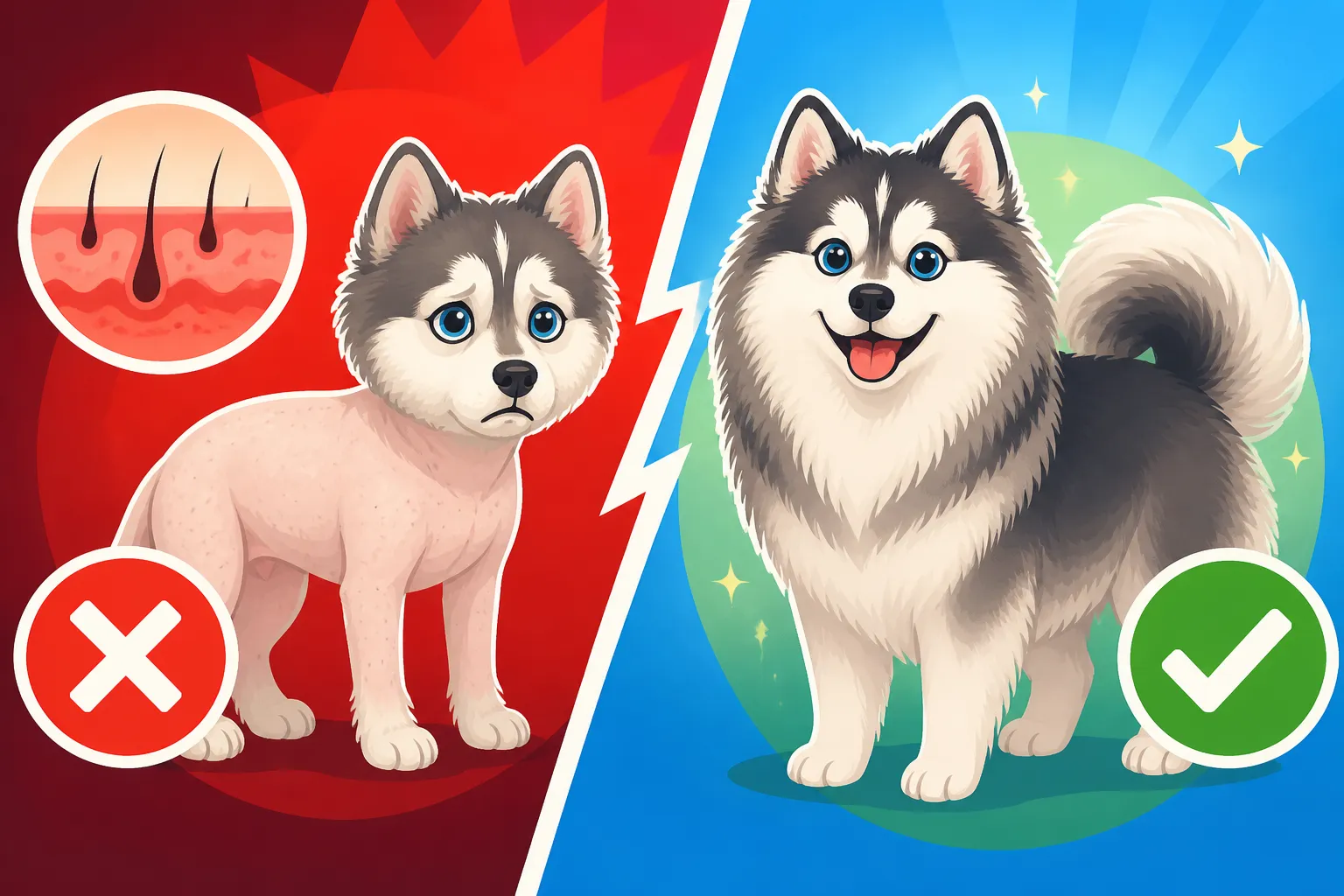
This leaves the dog's delicate skin exposed directly to the elements. Without the natural barrier, their skin is immediately vulnerable to sunburn, insect bites, and environmental irritants. Furthermore, the act of shaving can disrupt the natural growth cycle of the hair follicles, leading to serious issues with regrowth later on. You might think you're helping them cool down, but you're actually leaving them without their most effective, built-in defense against overheating.
The Dangerous Illusion of Coolness
When you shave a Pomsky, they might feel an initial, superficial coolness as the warm hair is removed, but this is fleeting and deceptive. What you've actually done is exposed their skin to direct sunlight, which will absorb heat much faster than their natural coat would. Imagine walking outside on a scorching day: would you rather have a lightweight, breathable layer covering your skin or expose it directly to the sun? Your natural coat offers that crucial barrier.
Without the natural insulation, their body has to work harder to regulate its temperature. This can lead to increased panting, a clear sign that they're struggling to cool down. In extreme cases, it dramatically increases their risk of heatstroke, a life-threatening condition for any dog, but especially those with active metabolisms. So, while it might look like they'd be cooler shaved, the reality is that you've just removed their most effective tool for staying safe and comfortable in the heat. Whether a Pomsky Overheats in Summer explores the specific risks of heat and how to keep your Pomsky safe without resorting to shaving.
Destroying the Natural Defense: What Shaving Really Does
The impact of shaving a Pomsky goes far beyond just removing hair. It fundamentally disrupts the intricate design of their coat, stripping away years of evolutionary adaptation and leaving them vulnerable. This isn't just about aesthetics; it's about compromising their primary defense mechanism against the elements.
Disrupting the Guard Hairs
The guard hairs are often the first casualty when a Pomsky is shaved, and their loss has profound implications. These hairs are tough, resilient, and designed to protect. They act as a physical barrier, deflecting UV radiation, water, and dirt. Think of them as the robust outer layer of a weatherproof jacket. When they're shorn, your Pomsky's skin is left vulnerable. It's like taking off that jacket and standing naked in the rain or sun.
The guard hairs are also responsible for the texture and appearance of your Pomsky's coat. They give it that sleek, somewhat coarse feel and vibrant color. Once shaved, these hairs often don't grow back the same way. They can become brittle, break easily, or even fail to grow back at all, leaving patchy areas. This change in texture and integrity means they can no longer perform their protective duties effectively, making your dog more susceptible to skin irritation, sunburn, and even minor scrapes or insect bites that their natural coat would have prevented.
Damaging the Undercoat's Structure
While the guard hairs are crucial for protection, the undercoat is the heart of the double coat's insulating power. When you shave, you not only remove this dense, fluffy layer but also potentially damage the follicles from which it grows. The undercoat's fine, soft hairs are designed to grow in a specific cycle and density, trapping air to create that thermal barrier.
Once shaved, the undercoat often grows back with a vengeance – but not necessarily in a healthy way. It can become thicker, denser, and sometimes even coarser than before, leading to a condition known as "coat blow-out" where the hair becomes dull and lifeless. Worse still, it can grow back unevenly, with some areas becoming matted more easily because the guard hairs are no longer there to protect it and keep it from tangling. This means that instead of a functional, self-regulating coat, your Pomsky might end up with a coat that actually traps heat more effectively, mats more quickly, and is far more difficult to maintain than before. This is the opposite of the desired effect for comfort and ease of care.
The Uphill Battle of Coat Regrowth
One of the most disheartening aspects of shaving a Pomsky is witnessing the aftermath when the coat attempts to grow back. It's rarely a return to its former glory and can often be a long, frustrating, and ultimately disappointing process for both dog and owner. The damage done to the delicate hair follicles and the disruption of the natural growth cycle can lead to lasting changes.
Patchy, Uneven, and Coarser Texture
After a Pomsky is shaved, the regrowth is often far from uniform. You might notice areas where the fur comes back in thick, unruly clumps, while other patches remain thin and sparse, almost bald. This uneven regrowth, sometimes referred to as "clipper alopecia," happens because the guard hairs and undercoat grow at different rates and can be damaged differently by the clippers. The fine, soft undercoat often grows back much faster and denser, essentially smothering the regrowth of the slower-growing, coarser guard hairs.
The texture also changes dramatically. Instead of the natural, weather-resistant outer coat, you might find the new growth feels cottony, dull, and much rougher to the touch. This altered texture is not only less aesthetically pleasing but also far less functional. It loses its ability to repel water and dirt effectively, and it can become more prone to matting and tangling, creating a cycle of grooming frustrations that simply didn't exist before the shave. Owners often report that the coat feels more like a tangled mess than the sleek, beautiful fur they once knew.
The Risk of Post-Clipping Alopecia
Post-clipping alopecia, or PNA, is a distressing condition sometimes seen in double-coated breeds after they've been shaved. While not every shaved Pomsky will develop PNA, the risk is significant, and the consequences can be severe. In cases of PNA, the shaved areas simply do not regrow hair, or the regrowth is incredibly slow, patchy, and never fully recovers its original density or quality. This can leave large areas of your Pomsky's body with very short, sparse hair, or even entirely bald patches.
The exact mechanisms behind PNA are still being studied, but it's believed to be related to trauma to the hair follicles, disruption of the normal hair growth cycle, or even underlying hormonal imbalances triggered or exacerbated by the clipping. The frustration for owners is immense, as they are left with a dog whose coat is permanently altered, potentially making them uncomfortable and self-conscious if they were a human. It's a gamble that simply isn't worth taking for the momentary illusion of coolness. For a deeper dive into similar coat issues, you might find What Alopecia X Does to a Pomsky's Coat insightful, although PNA is distinct, the principles of coat health are related.
Beyond Aesthetics: Serious Health Risks of Shaving
The decision to shave a Pomsky isn't just about how they'll look or whether their coat grows back properly. It's a decision that carries significant health implications, fundamentally altering their ability to interact safely with their environment. The natural protective layers are there for a reason, and removing them leaves your Pomsky exposed to dangers they are not equipped to handle.
Increased Vulnerability to Sunburn and Skin Issues
One of the most immediate and critical risks of shaving a Pomsky is the sudden and complete exposure of their skin to harmful ultraviolet (UV) radiation. Just like humans, dogs can get sunburned, and the consequences range from uncomfortable redness and peeling to severe pain, blistering, and even an increased risk of skin cancer over time. Your Pomsky’s skin, normally shielded by a thick layer of guard hairs, is suddenly bare and unprepared for direct sun exposure. Even on cloudy days, UV rays can penetrate and cause damage.
Beyond sunburn, a shaved coat leaves the skin far more susceptible to various irritations and infections. Without the protective barrier, allergens, pollutants, harsh chemicals (like those found in lawn treatments), and even simple dirt and debris can easily reach and irritate the skin. This can lead to itching, rashes, hot spots, and secondary bacterial or fungal infections. What started as an attempt to "help" your dog could quickly escalate into a series of painful and expensive veterinary visits, all due to a compromised skin barrier.
Compromised Temperature Regulation and Heatstroke Risk
This is arguably the most critical health risk associated with shaving a double-coated Pomsky. As previously explained, their coat is a natural insulation system that works both ways – keeping them warm in winter and helping them stay cool in summer. When you remove this system, you strip them of their ability to regulate their body temperature effectively.
In hot weather, a shaved Pomsky's skin directly absorbs heat from the sun and the environment. Without the insulating undercoat to trap a layer of cooler air and the guard hairs to reflect solar radiation, their body temperature can rise rapidly and dangerously. This significantly increases their risk of heatstroke, a potentially fatal condition that can lead to organ damage, neurological issues, and even death. Signs of heatstroke include excessive panting, drooling, lethargy, vomiting, diarrhea, staggering, and collapse. It’s a terrifying experience for any owner, and it can happen far more quickly than you might imagine when a dog’s natural defenses are removed. Preventing heatstroke is paramount, and preserving their coat is a key part of that prevention. Whether a Pomsky Tolerates Heat Worse Than a Husky offers more context on heat tolerance.
When Matting Seems Unsolvable: Why Shaving is Still a Last Resort
Sometimes, a Pomsky’s coat can become severely matted, making an owner desperate for a solution. While it's true that severe matting can be painful and lead to skin issues, jumping straight to shaving is still not the first or best answer. There are often other avenues to explore, and even in extreme matting cases, the approach needs to be carefully considered.
Addressing Mats Safely and Effectively
Matting occurs when the undercoat sheds but gets tangled within the remaining hair, forming dense clumps that can pull at the skin and restrict movement. It's often a sign that the dog isn't getting enough regular brushing or that a "blowout" season is in full swing. If you find your Pomsky with mats, your first instinct should be to try to work them out.
Start with a good quality slicker brush and an undercoat rake. The Undercoat Rake a Pomsky Owner Lives With is an indispensable tool for this. Work in small sections, always brushing away from the skin. For tighter mats, a mat splitter or a dematting comb can be invaluable. Use a detangling spray or a light conditioner to help lubricate the hair and prevent breakage. The key is patience and gentleness, as pulling too hard will be painful for your dog. If the mats are very tight and close to the skin, you might need to carefully use blunt-nosed scissors to cut into the mat (never across, as you risk cutting the skin), then work it out with a comb. This process can be time-consuming, but it preserves the integrity of the coat.
The Groomer's Role in Extreme Cases
If you’ve tried everything and the mats are simply too extensive, too tight, or too painful for your Pomsky to tolerate home dematting, it’s time to call in a professional groomer. A skilled groomer specializing in double-coated breeds will have the tools, expertise, and patience to assess the situation. They can often work magic with difficult mats, using specialized techniques and products to loosen and remove them without resorting to a full shave. They understand the importance of preserving the double coat and will prioritize its health.
However, in extremely severe cases, where the matting is so extensive that it forms a solid pelt against the skin, shaving might be the only humane option to relieve the dog from pain and potential skin infections festering beneath the mats. But even then, a professional groomer will typically perform a "strip shave" or "medical shave," carefully using clippers underneath the mats, close to the skin, rather than completely stripping the dog bare if possible. They will explain the process and the potential for uneven regrowth. It's important to view this as a last-resort medical procedure for the dog's well-being, not a routine grooming choice. A good groomer will also provide advice on how to prevent such matting in the future, often recommending more frequent deshedding services. What a Deshedding Treatment Costs on a Pomsky offers insight into professional care options.
Healthy Alternatives to the Clipper Blades
So, if shaving is off the table, what can you do to keep your Pomsky comfortable, clean, and looking their best, especially during shedding seasons or in warmer weather? The answer lies in consistent, proper grooming and understanding the specific needs of their double coat. It's a commitment, but one that ensures your dog's health and happiness.
Regular Brushing and Deshedding Routines
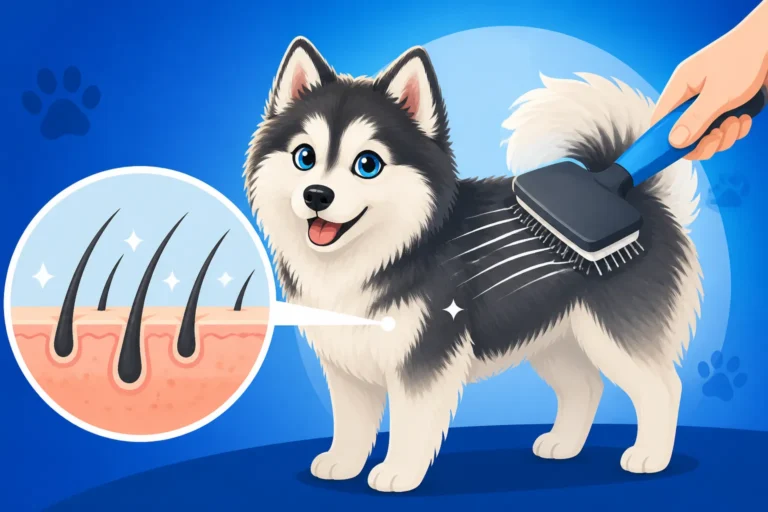
The single most effective way to manage a Pomsky's double coat and keep them comfortable is a consistent brushing and deshedding routine. This isn't just a quick once-over; it requires dedication, especially during their "blowout" periods. Aim for at least 2-3 times a week, and daily during heavy shedding seasons (usually spring and fall).
Here's what you need:
- Undercoat Rake: This tool is your best friend for a Pomsky. It's designed to reach deep into the undercoat and pull out loose, dead hair before it has a chance to mat. Use it carefully, ensuring you're not scratching the skin.
- Slicker Brush: Great for removing loose topcoat hairs and for fluffing up the coat.
- Metal Comb: Essential for checking your work and ensuring there are no hidden tangles, especially behind the ears, in the armpits, and around the tail.
- Deshedding Tool (like a Furminator-style brush): Use these sparingly, as over-use can damage the guard hairs. They are excellent for specific sessions during heavy shedding, but shouldn't be used for everyday brushing.
The goal of brushing is to remove dead undercoat, allowing air to circulate close to the skin and preventing mats. It also distributes natural oils, keeping the coat healthy and shiny. Establishing a routine early on will make grooming a positive experience for your Pomsky. How Often a Pomsky Needs Raking During a Blowout gives more specifics on managing shedding. You can find many of these grooming tools on platforms like Chewy or Amazon, making them easily accessible.
Professional Grooming for Double-Coated Breeds
Even with diligent home grooming, a professional groomer can be an invaluable asset for a Pomsky owner. They have specialized tools, techniques, and training specifically for double-coated breeds. A professional deshedding service typically involves:
- Specialized Bathing: Using deshedding shampoos and conditioners that help release the undercoat. Shampoos That Suit a Pomsky's Double Coat can provide more detail on suitable products.
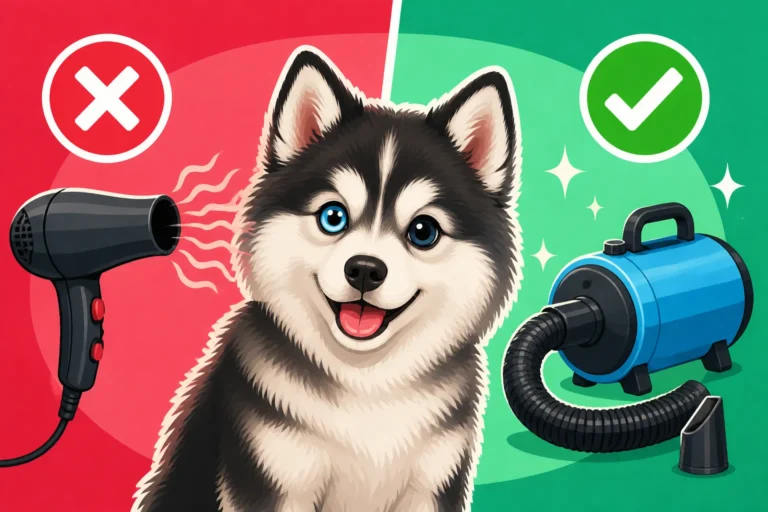
- High-Velocity Dryer: This powerful dryer isn't just for drying; it physically blows out loose undercoat, a process that can't be replicated with a regular hairdryer. What a Force Dryer Costs for a Pomsky highlights the effectiveness of these tools. This is often the most effective step in removing vast amounts of shedding undercoat, dramatically reducing what you'll find around your house.
- Thorough Brushing and Raking: Groomers will use their full arsenal of tools to meticulously brush out any remaining loose hair and ensure the coat is free of tangles and mats.
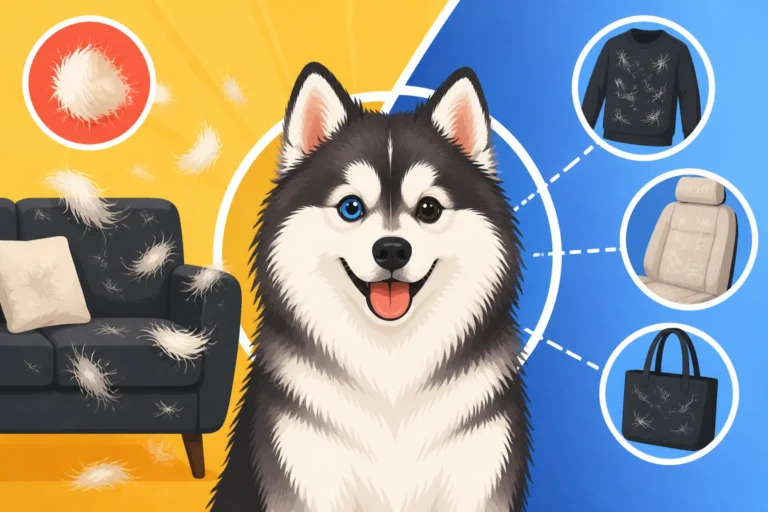
Booking a professional deshedding treatment a few times a year, particularly before and during heavy shedding seasons, can make a huge difference. Not only does it keep your Pomsky more comfortable, but it also reduces the amount of hair floating around your home, which is a common complaint among double-coat owners.
Supporting Coat Health from the Inside Out
Beyond external grooming, your Pomsky's coat health is also a reflection of their internal well-being. A high-quality diet and appropriate supplements can contribute significantly to a healthy, strong coat that sheds appropriately and resists matting.
Look for dog foods that list real meat as the first ingredient and are rich in omega-3 and omega-6 fatty acids. These essential fatty acids are crucial for skin and coat health, promoting a shiny coat and reducing dryness that can lead to excessive shedding or brittle hair. Brands like Ollie, which offer fresh, high-quality ingredients, or premium kibble brands found on Chewy, often focus on providing these vital nutrients.
Some owners also choose to supplement their Pomsky's diet with fish oil or a specialized skin and coat supplement. Always consult with your veterinarian before adding any supplements to your dog's diet to ensure they are appropriate and correctly dosed. A healthy diet and targeted nutrition can go a long way in ensuring your Pomsky's magnificent double coat stays in optimal condition, performing its natural functions without the need for drastic and damaging measures like shaving.
Disclaimer
This article is for general informational purposes only and does not constitute professional advice. Laws, prices and regulations vary by location and change over time. Consult a qualified professional for guidance on your specific situation.