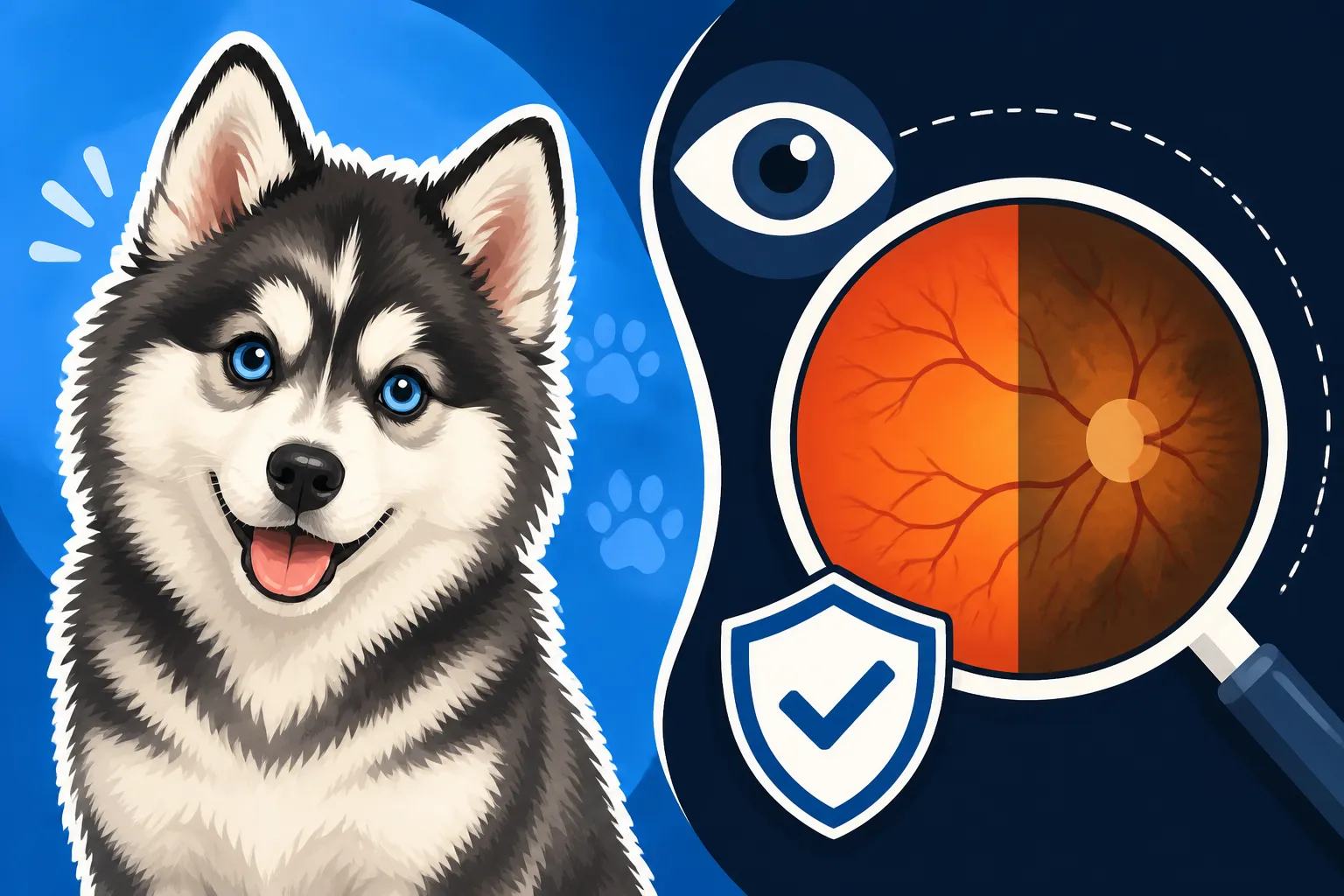
Whether a Pomsky Gets Progressive Retinal Atrophy
One of the most heart-wrenching concerns for any Pomsky parent is the thought of their beloved companion losing their sight. It's truly a scary prospect, envisioning your energetic, curious Pomsky navigating a world they can no longer fully see. This comprehensive guide will delve deep into Progressive Retinal Atrophy (PRA) in Pomskies, exploring what it is, how it's inherited, the signs to watch for, and how you can best support your furry family member if they're affected.
What Exactly is Progressive Retinal Atrophy in Dogs?
Progressive Retinal Atrophy, often shortened to PRA, isn't just one single disease; it's actually a blanket term for a group of genetic disorders that cause the cells in the retina of a dog's eye to degenerate over time. Think of the retina as the "film" in a camera – it's responsible for capturing light and sending those images to the brain. When these specialized cells, called photoreceptors (rods and cones), start to break down, it directly impacts your dog's ability to see.
The primary frustration with PRA is its insidious nature. It's not a sudden injury or a quick infection. Instead, it's a gradual, relentless decline in vision that can be incredibly difficult to spot in its early stages. Many dogs are masters at compensating for vision loss, especially in familiar environments, making it a challenge for even the most observant owner to notice something is amiss until the disease has progressed significantly. It preys on the love and trust you have in your dog, as you might blame their occasional clumsiness on age or simple absentmindedness, not realizing it's a symptom of a much deeper issue.
The Mechanism of Retinal Degeneration
At a cellular level, PRA targets the photoreceptor cells in the retina. There are two main types: rods, which are crucial for vision in low light and detecting motion, and cones, which are responsible for daytime vision and color perception. In most forms of PRA, the rod cells are affected first, which means the initial symptom often presents as night blindness. Your Pomsky might become hesitant to go outside after dusk or start bumping into furniture in dimly lit rooms long before you notice any issues during the day.
As the disease progresses, the cone cells also begin to degenerate, leading to a more generalized vision loss that affects daytime sight. This dual impact means that eventually, a dog with PRA will become completely blind. It’s a progressive condition, meaning it gets worse over time, and sadly, there is no cure or way to reverse the damage once it has occurred. The speed of progression can vary wildly between individual dogs and different genetic forms of PRA, with some dogs losing sight rapidly and others experiencing a much slower decline over several years.
Different Forms of PRA
While PRA is a general term, it encompasses several distinct genetic mutations, each with its own pattern of inheritance and progression. Some forms of PRA manifest early in a dog's life, even in puppyhood, known as "early-onset PRA" or "retinal dysplasia," where the photoreceptors don't develop correctly from the start. Other forms, often called "late-onset PRA," only become apparent in middle-aged or senior dogs, sometimes not showing symptoms until they are 5, 6, or even 8 years old.
The specific genetic mutation responsible can dictate not only when the symptoms appear but also how quickly the blindness progresses. For Pomskies, understanding the genetic predispositions from both the Siberian Husky and Pomeranian parent breeds is crucial. Both parent breeds have known, documented forms of PRA within their lines, which means a Pomsky can potentially inherit these predispositions, making it essential for responsible breeders to conduct thorough genetic testing.
The Genetic Link: Do Pomskies Inherit PRA?
The question of whether a Pomsky can inherit Progressive Retinal Atrophy is a resounding "yes." As a hybrid breed, Pomskies are susceptible to health conditions found in both of their parent breeds: the Siberian Husky and the Pomeranian. Unfortunately, both of these breeds have known genetic predispositions to certain forms of PRA, which means there's a real risk for their offspring. This is a common worry among owners, especially when considering the potential for inheriting eye issues from the Husky side, a concern detailed in articles like The Eyes a Pomsky Gets From the Husky.
The frustration here lies in the unpredictability. While responsible breeding practices aim to mitigate these risks, the genetic lottery can still throw a curveball. You might do everything right, choose a reputable breeder who health tests, and still face a diagnosis down the line. It's a reminder that even the most careful planning can't eliminate all possibilities when dealing with complex genetics. This is where insurance like Healthy Paws can be a real lifesaver, helping to cover unexpected veterinary costs for conditions like PRA.
PRA from the Siberian Husky Line
Siberian Huskies are known carriers of several eye conditions, including a form of PRA often referred to as X-linked Progressive Retinal Atrophy (XLPRA). This particular form is inherited in an X-linked recessive manner, meaning males are more commonly and severely affected than females. Females can be carriers without showing symptoms, but they can pass the gene on to their offspring. There are also autosomal recessive forms of PRA that can affect Huskies, which means a dog must inherit two copies of the faulty gene (one from each parent) to develop the disease.
For a Pomsky, inheriting a PRA gene from the Husky parent is a very real possibility. A Pomsky puppy might inherit one copy from a carrier Husky dam, making them a carrier, or if the Pomeranian parent also carries a compatible PRA gene (or is affected), the Pomsky could develop the condition. This complex interplay of genetics from two different breeds means that breeders must be diligent in testing both parent animals to minimize the risk.
PRA from the Pomeranian Line
Pomeranians, while small, are not immune to genetic eye diseases either. They are known to carry forms of PRA, typically autosomal recessive types. This means that if a Pomeranian parent carries one copy of the recessive gene and a Siberian Husky parent also carries a compatible recessive gene, their Pomsky offspring could inherit two copies and subsequently develop PRA.
The challenge for Pomsky breeders is understanding the specific PRA mutations present in both parent lines. Genetic testing is not a one-size-fits-all solution; there are multiple genes responsible for different types of PRA, and a comprehensive panel is necessary to screen for all relevant risks. Without thorough genetic screening of both parent breeds for all known PRA mutations, there's always a chance that a Pomsky puppy could be at risk, even if the individual parents appear healthy themselves.
The Importance of Genetic Testing and Health Clearances
For anyone considering bringing a Pomsky into their home, asking about genetic health clearances for both parent breeds is non-negotiable. Reputable breeders should be able to provide documentation of eye examinations by a board-certified veterinary ophthalmologist (OFA Eye Certification or similar), as well as specific DNA test results for known PRA mutations in Siberian Huskies and Pomeranians. Organizations like the Orthopedic Foundation for Animals (OFA) maintain a public database of these clearances, allowing prospective owners to verify the health status of a puppy's parents.
Choosing a breeder who prioritizes these screenings significantly reduces the risk of your Pomsky developing PRA. While no breeder can guarantee a perfectly healthy dog, responsible practices minimize the likelihood of inheriting debilitating genetic conditions. This commitment to health testing is part of what contributes to the higher cost of a well-bred Pomsky, but it's an investment in your future dog's well-being and your peace of mind.
Recognizing the Signs: How to Spot PRA in Your Pomsky
Spotting the early signs of Progressive Retinal Atrophy in your Pomsky can be incredibly challenging, and it's a frustration many owners face. Dogs are incredibly adaptive, and they often compensate for gradual vision loss, especially in environments they know well. You might find yourself questioning if you're overreacting or if your Pomsky is just being a bit clumsy or stubborn. This self-doubt is natural when dealing with a slowly progressing condition that doesn't always have obvious, immediate symptoms.
The key is to pay close attention to subtle behavioral changes, particularly those related to their vision in different lighting conditions. Early intervention, or at least early awareness, can help you prepare and make necessary adjustments to their living environment, even if there's no cure.
Early Subtle Indicators
One of the earliest and most common signs of PRA is night blindness (nyctalopia). Because rod cells, which handle low-light vision, are often affected first, your Pomsky might start to struggle after dusk. This could manifest as:
- Hesitation in dimly lit areas: They might be reluctant to enter dark rooms or go outside into the yard at night, even if they used to love it.
- Bumping into familiar objects at night: In a well-known home, they might start to trip or collide with furniture they normally navigate effortlessly when the lights are low.
- Difficulty catching treats or toys in low light: Their coordination might seem off when trying to track moving objects without bright light.
- Increased startle response at night: They might seem more easily startled by unexpected sounds or movements because they can't see as well.
Another subtle sign might be a dilated pupil that doesn't constrict normally in bright light, giving their eyes a slightly "shiny" or reflective appearance, especially in photos with a flash. This is because their eyes are trying to let in as much light as possible to compensate for the degenerating retina. You might also notice their eyes appearing more reflective at night due to increased tapetal reflectivity, which is the reflective layer behind the retina.
Advanced Stages and Complete Blindness
As PRA progresses, the vision loss becomes more generalized, impacting daylight vision as well. This is when the signs become much more obvious and distressing for both you and your Pomsky. These later symptoms include:
- Clumsiness in all lighting conditions: They will start bumping into things during the day, struggling to navigate new environments, and might appear hesitant on walks.
- Anxiety or fear in unfamiliar places: Losing sight can be very disorienting, leading to increased anxiety, clinging behavior, or even aggression born out of fear in new surroundings.
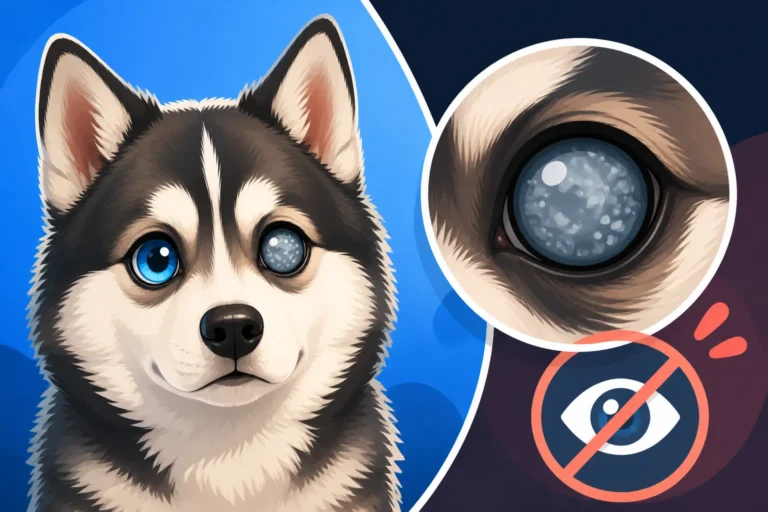
- Changes in eye appearance: Beyond dilated pupils, their eyes might develop a milky or cloudy appearance over time due to secondary cataracts, which are a common complication of PRA. This further diminishes any remaining vision. Articles like The Juvenile Cataracts a Pomsky Gets From the Husky delve into specific cataract concerns that can overlap with PRA symptoms.
- Reluctance to jump or climb: They might stop jumping onto furniture or going up and down stairs as their depth perception diminishes, making these actions feel risky.
- More reliance on other senses: You'll notice your Pomsky using their nose and ears much more to navigate, sniff out paths, and recognize people or objects. They might also become more vocal.
It's crucial to consult your veterinarian as soon as you notice any changes in your Pomsky's vision or behavior, even if they seem minor. An early diagnosis allows you to plan for their future care and make adjustments to ensure their safety and quality of life.
Diagnosis and Management of PRA in Pomskies
Receiving a diagnosis of Progressive Retinal Atrophy for your Pomsky can feel like a punch to the gut. The initial shock and sadness are entirely normal, and it’s okay to feel overwhelmed by the thought of your dog losing their sight. The frustrating part is knowing there's no "fix" for PRA, but understanding the diagnosis process and available management strategies can empower you to provide the best possible care for your furry friend.
This journey often begins with your regular vet, but a definitive diagnosis typically requires the expertise of a veterinary ophthalmologist. They have specialized equipment and knowledge to accurately assess your Pomsky's eye health and distinguish PRA from other conditions that might cause similar symptoms.
Veterinary Examination and Specialized Tests
The diagnostic process usually starts with a comprehensive eye exam performed by a veterinary ophthalmologist. This isn't just a quick look; it involves several steps:
- Ophthalmoscopy: Using an ophthalmoscope, the specialist can look directly into the back of your Pomsky's eye to examine the retina. In dogs with PRA, characteristic changes like tapetal hyper-reflectivity (the reflective layer behind the retina becomes brighter) and narrowing of the retinal blood vessels can often be observed.
- Electroretinography (ERG): This is the gold standard for diagnosing PRA. An ERG measures the electrical activity of the retinal cells in response to flashes of light. Even if your Pomsky is showing no outward signs, an ERG can detect abnormal retinal function long before visible changes or clinical blindness occur. It's a non-invasive test, usually performed under light sedation, and can determine if the photoreceptors are degenerating.
- Genetic Testing: If not already performed by the breeder, genetic testing can confirm the specific PRA mutation present, if a test is available for that particular form. This can be very helpful for prognosis and to understand the inheritance pattern. A simple cheek swab or blood sample is usually all that's needed.
It's important to rule out other conditions that might mimic PRA, such as cataracts (though often secondary to PRA), glaucoma, or other causes of sudden acquired retinal degeneration (SARD). The ophthalmologist will conduct a thorough examination to ensure an accurate diagnosis. This detailed diagnostic process underscores why having good pet insurance, like a policy from Healthy Paws, can really alleviate the financial stress of managing your Pomsky's long-term health.
Coping Strategies and Supportive Care
While there's no cure for PRA, there's a lot you can do to support your Pomsky and maintain their quality of life as their vision declines. The goal is to help them adapt and thrive in their environment.
- Maintain Consistency: Keep furniture, food and water bowls, and other essential items in consistent locations. Avoid rearranging the house, as a predictable environment is crucial for a blind or visually impaired dog.
- Verbal Cues and Sound: Use consistent verbal cues and sounds to guide your Pomsky. Call their name, use words like "step up," "watch out," or "this way." A gentle jingle on your shoes or a clap can help them locate you.
- Scent Markers: Some owners use essential oils (safely diluted and non-toxic) or different textures of rugs to mark important areas like doorways or stairs, providing olfactory or tactile cues.
- Safety First: Block off stairs or dangerous areas with baby gates. Pad sharp corners on furniture. Supervise outdoor excursions closely, especially if your yard isn't fully fenced or they are prone to escaping, a topic often discussed when considering Whether a Pomsky Can Ever Be Off Leash.
- Enrichment: Don't let vision loss stop your Pomsky from enjoying life. Engage their other senses with scent games, puzzle toys that dispense treats, and textured chew toys. Continue with walks in familiar, safe areas, letting them sniff to their heart's content.
- Socialization: Continue to socialize your Pomsky, letting them interact with calm, well-behaved dogs and people who understand their condition. This helps prevent isolation and fear.
It's natural to feel protective, but try not to over-coddle them. Allow them to explore and figure things out at their own pace, offering gentle guidance and reassurance. Dogs are incredibly resilient, and with your patience and support, many Pomskies adjust remarkably well to living with vision loss.
Living with a Pomsky with PRA: Adapting Your Home and Lifestyle
Discovering your Pomsky has Progressive Retinal Atrophy is tough. It leads to a lot of questions about how your daily life will change and how you can best support your furry friend. The biggest frustration often comes from feeling helpless, wishing you could reverse the condition. But you’re not helpless! There’s so much you can do to make their world safe, navigable, and full of joy, even without perfect sight. Adapting your home and lifestyle is a continuous, evolving process that demonstrates your deep love and commitment.
Your Pomsky relies on you more than ever, and creating a predictable, stimulating, and secure environment is paramount. This isn't about pity; it's about empowerment – for both of you.
Home Modifications for a Visually Impaired Pomsky
Transforming your home into a safe haven for a visually impaired Pomsky doesn't have to mean a complete overhaul, but rather thoughtful adjustments to maximize their comfort and independence.
- Consistency is King: The absolute golden rule for a blind dog is consistency. Once you find a spot for furniture, water bowls, dog beds, and toys, keep them there. Your Pomsky will create a mental map of their environment using their remaining senses, and sudden changes can be disorienting and stressful. If you absolutely must move something, guide them around the new layout several times, offering praise and treats.
- Pathways and Barriers: Create clear pathways free of clutter. Consider using baby gates to block off stairs, open doorways to rooms you don't want them in, or areas that could be dangerous (like the kitchen during cooking). Padded bumpers on sharp furniture corners can prevent painful bumps. Some owners use textured mats or rugs to indicate transitions, like approaching a doorway or the edge of a step.
- Sensory Cues: Beyond consistency, engage their other powerful senses. Use different scents near their food bowl, bed, or outside door. For example, a drop of dog-safe essential oil (like lavender or cedarwood, always diluted and used sparingly) on a cloth near their bed can help them locate it. Consider tactile markers, like a specific type of rug at the base of stairs, to signal a change in elevation. You could also explore using a "halo" device, such as a Muffin's Halo, which is a lightweight ring that attaches to a vest and acts as a bumper to protect their head from collisions.
- Outdoor Safety: A securely fenced yard is non-negotiable for a visually impaired Pomsky. Regularly check for gaps or weaknesses in the fence. Supervise them closely, even in a fenced yard, as their reduced vision can make them more prone to getting lost or disoriented. Always use a leash or a long line when outside of a fenced area, even in places you used to trust them off-leash, a topic often discussed in depth within resources like Whether a Pomsky Can Ever Be Off Leash.
These modifications aren't just for safety; they're for boosting your Pomsky's confidence. When they can move around their home without fear of injury, they'll be happier and more relaxed.
Daily Routine Adjustments and Enrichment
While their eyes may fail, your Pomsky’s spirit and desire for interaction don’t. Adapting their daily routine is crucial to keeping them mentally stimulated and physically active.
- Verbal Communication: Your voice becomes their guiding light. Use clear, consistent verbal cues for everything: "step up," "wait," "left," "right," "danger," "toy," "treat." Always speak to them before touching them so you don't startle them. Praise and gentle reassurance are more important than ever.
- Scent Work and Puzzle Toys: This is where a Pomsky with PRA can truly shine. Their sense of smell is incredibly powerful. Hide treats around the house for them to sniff out, use snuffle mats, or invest in puzzle toys that require them to use their nose and paws to get rewards. These activities provide immense mental enrichment and help them feel competent and engaged.
- Safe Exercise: Continue to provide regular exercise, but adapt it to their vision. Leashed walks in familiar, quiet areas are excellent. If you have a large, safe, enclosed area, you can use a long line for more freedom, always calling out obstacles. Be their eyes, describing the environment as you go, and always be aware of potential hazards like other dogs, people, or uneven terrain. Remember that just like people, dogs need a good balance of physical and mental stimulation, as covered in The Exercise a Pomsky Needs Every Day.
- Social Interaction: Don't isolate your Pomsky. Continue to introduce them to calm, gentle people and dogs who are aware of their vision impairment. This helps prevent them from becoming fearful or aggressive out of insecurity. Supervise interactions closely to ensure positive experiences.
- Grooming Routine: Continue with regular grooming, as described in The Grooming Bill on a Double Coated Pomsky. This provides a predictable routine, tactile stimulation, and helps you bond. Be gentle and use a consistent touch so they know what to expect.
Living with a Pomsky with PRA requires patience, creativity, and a deep well of empathy. It's a journey, but watching your resilient companion navigate their world with joy, despite their challenge, is one of the most rewarding experiences you can have as a pet parent.
Preventative Measures and Responsible Breeding
When it comes to a condition like Progressive Retinal Atrophy, where there is no cure, the emphasis shifts heavily to prevention. For prospective Pomsky owners, this means doing your homework on breeders. For current owners, it means understanding the risks and being proactive with regular veterinary care. The frustration often stems from the prevalence of less-than-reputable breeders who may cut corners on health testing, leading to heartbreak down the line for unsuspecting families.
A truly responsible approach to breeding aims to reduce the incidence of genetic diseases like PRA. This isn't just about selling puppies; it's about the long-term health and well-being of the breed and individual dogs.
Screening Practices for Breeders
Responsible Pomsky breeders are meticulous about the health of their breeding stock. They understand that their choices impact not just one litter, but the future generations of the breed.
- OFA Eye Exams: Reputable breeders will have both the Siberian Husky dam and the Pomeranian sire undergo annual eye examinations by a board-certified veterinary ophthalmologist. These examinations are submitted to the Orthopedic Foundation for Animals (OFA) or a similar reputable health registry, which then issues an Eye Certification Registry (CAER) number. This certification indicates that at the time of the exam, the dog was free from observable, inherited eye diseases. This is a crucial step to check for, as discussed in Whether a Pomsky Needs a Yearly Eye Exam.
- Genetic DNA Testing: Beyond physical exams, DNA tests are vital. Breeders should specifically test for the known forms of PRA prevalent in both Siberian Huskies and Pomeranians. Many commercial genetic testing companies, such as Embark or Wisdom Panel, offer comprehensive panels that include various PRA mutations. Breeders should be able to provide clear documentation of these results, showing that their breeding dogs are "clear" (do not carry the gene) or "carriers" (carry one copy but are not affected). Pairing a carrier with a clear dog can produce carriers, but never affected offspring, minimizing the risk. Breeding two carriers together, however, has a 25% chance of producing affected puppies, which is why responsible breeders avoid such pairings.
- Transparency and Education: A good breeder is transparent about their health testing protocols and willing to educate prospective buyers. They won't shy away from questions about genetic diseases and will proactively discuss the health history of their lines. They understand that a well-informed buyer is a happy owner. If a breeder seems secretive or dismisses concerns about genetic health, that's a significant red flag.
By choosing a breeder who adheres to these rigorous screening practices, you dramatically decrease the likelihood of bringing home a Pomsky puppy who will develop PRA.
Broader Implications for the Pomsky Breed
The concerted effort of responsible breeders to screen for PRA and other genetic conditions has a broader impact on the Pomsky breed as a whole. By carefully selecting breeding pairs, they are gradually reducing the prevalence of these undesirable genes in the gene pool.
- Improving Breed Health: Over time, consistent health testing helps to identify and remove affected and carrier dogs from breeding programs (or responsibly breed carriers to clear dogs only), thereby improving the overall health of the Pomsky population. This is a vital aspect of developing any emerging breed and preventing the concentration of genetic faults, a concern often brought up when people ask Whether an F1 Pomsky Is Healthier Than an F2.
- Informed Decisions for Owners: When prospective owners understand the importance of health testing, they can make more informed decisions, supporting ethical breeders and discouraging those who do not prioritize health. This consumer demand for health-tested puppies helps drive the industry toward better practices.
- Support for Affected Dogs: Even with the best breeding practices, genetic mutations can sometimes arise or pass through undetected lines. For dogs that do develop PRA, the knowledge gained from genetic research and responsible breeding helps to better understand the disease, leading to improved diagnostic tools and supportive care strategies. This collective knowledge benefits all Pomsky owners.
Ultimately, preventing PRA in Pomskies is a shared responsibility. It starts with dedicated breeders and continues with informed owners who advocate for comprehensive health testing and responsible pet ownership.
Table: Key Differences Between Early and Advanced PRA Symptoms
Understanding the progression of PRA can help you identify symptoms sooner and prepare for future care. Here's a table summarizing the key differences you might observe in your Pomsky.
| Symptom Category | Early PRA (Rods Affected First) | Advanced PRA (Rods and Cones Affected) |
|---|---|---|
| Vision Impact | Night blindness, difficulty in dim light. | Complete or near-complete blindness in all light. |
| Behavior at Night | Hesitation, bumping into familiar objects, increased caution. | Extreme disorientation, anxiety, complete immobility without guidance. |
| Behavior in Day | Normal daytime vision, may be slightly slower to track fast objects. | Bumping into objects, hesitation, fear in new environments, difficulty with stairs/heights. |
| Pupil Appearance | Slightly dilated pupils, increased eye shine (tapetal reflectivity). | Significantly dilated, fixed pupils, cloudy/milky lens (secondary cataracts common). |
| Navigation Style | Relies on visual cues in daylight, cautious at night. | Heavy reliance on smell, hearing, and memory; hesitant movements. |
| Response to Touch | Normal. | May startle easily if approached without verbal warning. |
| Complications | None usually, if only early PRA. | Secondary cataracts, increased anxiety, potential for injury due to disorientation. |
Disclaimer
The information provided in this article is for general informational purposes only and is not intended as a substitute for professional veterinary advice. Always seek the advice of your veterinarian or other qualified animal health provider with any questions you may have regarding a medical condition or the health and welfare of your Pomsky.