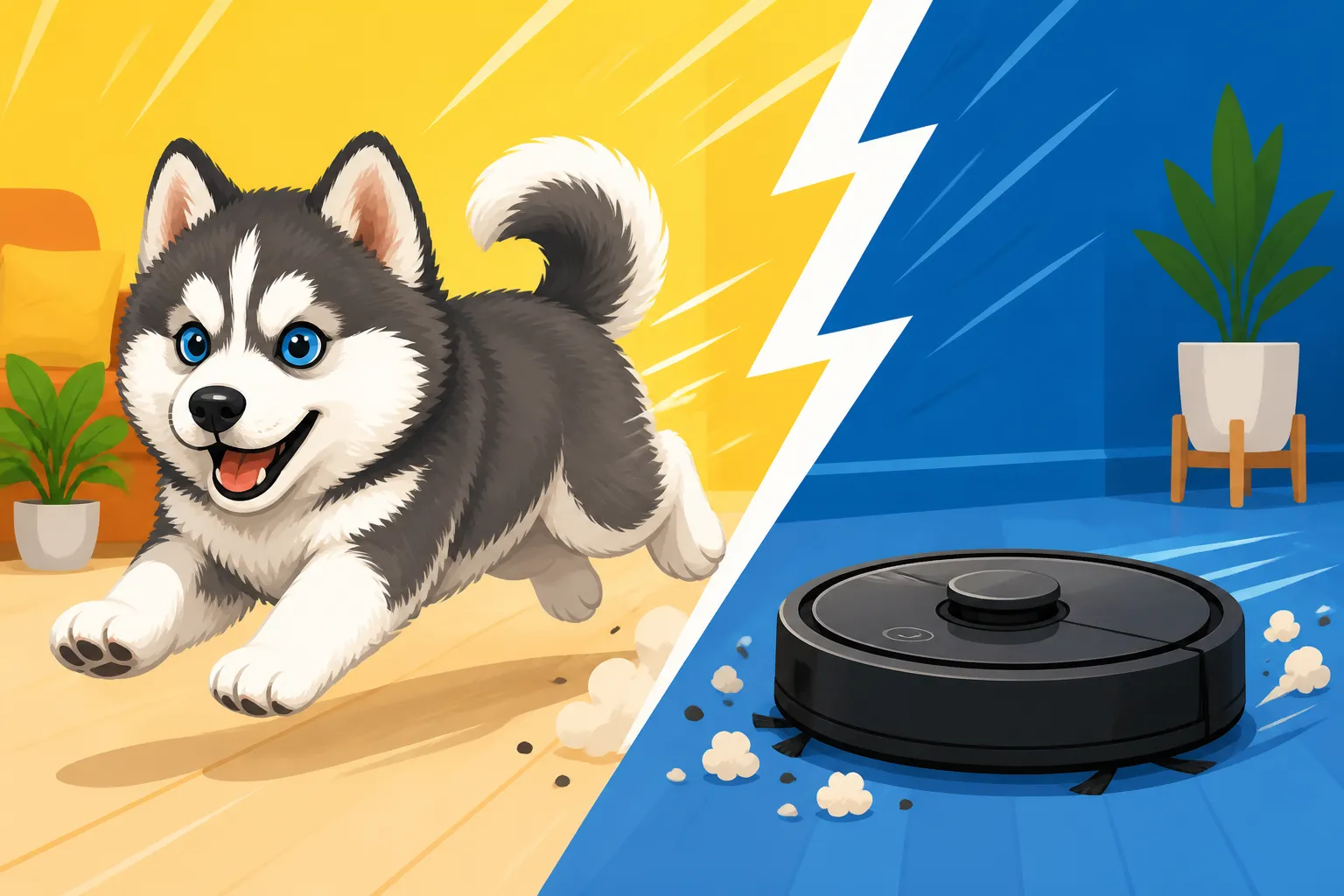
Whether a Robot Vacuum Keeps Up With a Pomsky
If you're a Pomsky owner, you know the struggle is real: that beautiful, fluffy double coat, while undeniably gorgeous, comes with a constant, never-ending supply of shedding hair that seems to get absolutely everywhere. You might be dreaming of a magical device that handles the daily deluge of fur, and a robot vacuum seems like a tantalizing possibility. But can these clever gadgets genuinely keep up with a Pomsky, or are they just another piece of tech that promises much and delivers little when faced with the sheer volume of a Pomsky blowout? This guide will dive deep into what you can realistically expect.
The Epic Battle Against Pomsky Fur: Understanding the Challenge
Let's be honest, living with a Pomsky means living with fur. It's a fact of life, a furry badge of honor, but it's also a constant housekeeping chore. Before we even think about a robot vacuum, it's crucial to understand just what we're asking it to contend with. This isn't just a few stray hairs; this is a full-scale operation.
The Double Coat Phenomenon
Pomskies inherit their magnificent double coat from both the Siberian Husky and the Pomeranian, and it's a marvel of canine engineering built for insulation. This coat consists of two distinct layers: a soft, dense undercoat that provides warmth and a coarser, longer outer coat (or guard hairs) that protects against moisture and dirt. While beautiful, it's also a prodigious shedder. The undercoat is particularly prone to shedding, especially during seasonal changes. You'll find yourself wrestling with How Much Undercoat Comes Off a Pomsky and wondering if your dog is secretly trying to recreate itself from pure fluff.
During seasonal "blowouts"—typically twice a year, in spring and fall—the amount of hair can escalate dramatically. It’s not just a bit of extra fluff; it's like a snowstorm of fur, accumulating in drifts in corners, clinging to furniture, and weaving itself into carpets with astonishing speed. Even outside of these major shedding events, Pomskies shed continuously, a daily contribution to your home's ecosystem. This means a robot vacuum isn't just dealing with occasional crumbs; it's on constant fur patrol.
The Spread and Persistence of Pomsky Hair
Pomsky hair has an almost magnetic quality. It doesn't just fall; it disperses. It floats through the air, settling on surfaces you just cleaned, and seems to defy gravity by somehow ending up on top of bookshelves. It gets embedded in carpets, forms tumbleweeds across hardwood floors, and clings stubbornly to upholstery. It also has a way of working itself into nooks and crannies that conventional vacuums might struggle to reach, let alone a robot navigating on its own.
Beyond the sheer volume, the type of hair also matters. The fine, dense undercoat can easily clog filters, while the longer guard hairs can tangle around brushes. This persistence means that any cleaning solution needs to be robust, consistent, and willing to work as hard as you do to maintain a reasonably fur-free environment. It’s an uphill battle, and we all know the frustration of vacuuming one day only to find another layer of fur the next.
What to Look for in a Robot Vacuum for Pomsky Hair
So, with the formidable challenge laid out, what specific features should you prioritize when looking for a robot vacuum that stands a chance against your Pomsky's shedding prowess? Not all robot vacuums are created equal, especially when it comes to pet hair.
Suction Power and Brush Roll Design
This is perhaps the most critical factor. For Pomsky hair, you need powerful suction, plain and simple. Look for models that boast high Pascal (Pa) ratings, indicating strong suction force. This is essential for lifting embedded hairs from carpets and effectively pulling them from hard floors. Many entry-level robot vacuums might do a decent job on dust, but they'll buckle under the fluffy weight of Pomsky fur.
Equally important is the brush roll design. Traditional bristle brushes are notorious for getting tangled with long pet hair, turning into a matted mess that requires frequent manual cleaning. This is where rubber or silicone brush rolls shine. They're designed to resist tangles and are much easier to clean, often allowing hair to slide off more readily into the dustbin. Some advanced models even feature self-cleaning brush rolls, which can be a godsend for multi-dog households or during a Pomsky's intense When a Pomsky Blows Its Coat phase. When browsing options on a platform like Amazon, pay close attention to user reviews specifically mentioning pet hair performance.
Dustbin Capacity and Filtration System
Given the volume of hair a Pomsky can produce, a larger dustbin capacity is non-negotiable. Smaller bins will fill up incredibly quickly, requiring you to empty them multiple times a day if you want continuous cleaning. Some premium models even come with auto-empty docks, where the robot automatically empties its bin into a larger disposal bag in the base station. This feature, while an investment, can significantly reduce the frequency of manual intervention, letting you go days or even weeks without touching the fur.
A robust filtration system is also vital, particularly a High-Efficiency Particulate Air (HEPA) filter. Pomsky fur often comes with dander, which can be an allergen for some family members. A good HEPA filter traps these fine particles, improving air quality and preventing them from being recirculated back into your home. Remember that these filters need regular cleaning or replacement, and you can often find compatible filters and brushes on sites like Chewy or Amazon.
Navigation, Mapping, and Scheduling Features
Modern robot vacuums are much smarter than their predecessors. Look for advanced navigation systems, such as Lidar or vSLAM technology, which allow the robot to map your home accurately. This mapping capability enables more efficient cleaning paths, avoids repetitive cleaning of the same areas, and allows you to set "no-go zones" to protect pet bowls, delicate furniture, or areas where your Pomsky might nap.
The ability to schedule cleanings is a game-changer for Pomsky owners. You can set the vacuum to run daily, or even twice a day, when you're not home, ensuring that the fur doesn't have a chance to accumulate. Imagine coming home to noticeably cleaner floors every day, even during peak shedding season! Some apps even allow for multi-floor mapping if you have a multi-story home, further streamlining your cleaning routine. This automation is key to staying ahead of the fur without constantly wielding a manual vacuum.
Real-World Expectations and Limitations
While a robot vacuum can be a valuable ally, it's important to approach its capabilities with realistic expectations. It's a tool, not a magic wand, and it comes with its own set of quirks and limitations.
A Supplement, Not a Replacement
The most important thing to understand is that a robot vacuum, no matter how powerful, is generally a supplement to, not a complete replacement for, a traditional upright or canister vacuum. Think of it as your daily maintenance crew, handling the surface-level accumulation of fur and dust. It’s fantastic for preventing the overwhelming build-up of hair that happens between deeper cleans.
However, you will still need to perform regular, thorough vacuuming with a full-sized machine, especially on carpets where Pomsky hair can become deeply embedded. Robot vacuums often struggle with deep pile carpets or getting into tight corners and crevices as effectively as a handheld attachment. So, while your robot diligently patrols the main floor, you might still be doing a weekly or bi-weekly deep dive with your trusty upright to truly get all the stubborn fur out. This combination often proves to be the most effective strategy for managing Whether a Pomsky Sheds More Than a Husky Per Pound.
Common Hurdles and Annoyances
Robot vacuums, bless their little automated hearts, are not without their frustrations. One of the most common issues is getting stuck. Stray dog toys, charging cables, socks, or even loose rugs can become obstacles that halt your robot's progress, leaving it stranded and your floors half-cleaned. For Pomsky owners, this also includes larger clumps of fur or particularly long guard hairs that can sometimes clog entryways or jam wheels.
Another limitation is the battery life versus cleaning area. While many robots can clean for an hour or more, a large home with significant fur might require multiple charging cycles to cover all areas thoroughly. This is where advanced mapping comes in handy, as it allows the robot to efficiently return to its dock, recharge, and resume cleaning exactly where it left off. Still, it adds time to the overall cleaning process.
Then there’s the maintenance aspect. Even with tangle-resistant brushes and auto-empty bins, you’ll still need to regularly check and clean the brush rolls, empty the dustbin (if not auto-emptying), and replace filters. Ignoring this maintenance will significantly reduce the vacuum's effectiveness and longevity. It’s a bit like caring for your Pomsky; even if you get their food delivered by a service like Ollie, you still need to ensure they eat it, and their bowl gets cleaned!
Maximizing Your Robot Vacuum's Effectiveness
So, you've invested in a robot vacuum, and you're ready to tackle the fur frontier. Here are some practical tips to ensure your new electronic helper performs at its best against your Pomsky's shedding.
Preparing Your Home for Optimal Runs
Before you let your robot vacuum loose, a little preparation goes a long way. "Puppy-proof" your floors by picking up small objects like toys, charging cables, and anything else that could tangle in the brushes or cause the robot to get stuck. If you have throw rugs with tassels, consider tucking them away or securing them. Raising pet food and water bowls off the floor, or using "no-go zones" in your app, can prevent accidental spills or the robot dragging kibble across the house.
Consider decluttering frequently. The fewer obstacles your robot has to navigate, the more efficiently and thoroughly it can clean. This isn't just about the robot; a less cluttered home is generally easier to keep clean for everyone involved, especially when dealing with the pervasive nature of Pomsky fur. Think of it as creating a clear runway for your robot to do its best work.
Regularity and Routine are Key
Consistency is paramount when fighting Pomsky fur. Don't wait until you see visible fur tumbleweeds. Schedule your robot vacuum to run daily, or even twice a day, especially during peak shedding periods like a seasonal The Months a Pomsky Blows Its Coat. Frequent, shorter cleaning cycles are far more effective at managing pet hair than infrequent, longer ones. This prevents the hair from accumulating and embedding itself too deeply into carpets.
Running the vacuum while you're out of the house is often ideal, as it avoids any potential stress for your Pomsky (some dogs are wary of robot vacuums) and allows the machine to work uninterrupted. Many modern robot vacuums can be controlled via an app on your phone, making it easy to start a cleaning cycle even if you forget to schedule one before you leave.
Combining with Other Grooming and Cleaning Tools
A robot vacuum is a piece of your overall fur-management arsenal. To truly conquer Pomsky shedding, you need a multi-pronged approach. Regular brushing is your first line of defense. Investing in a good undercoat rake and slicker brush – and actually using them daily or every other day – will remove a significant amount of loose hair before it hits your floors. Brushing is particularly vital during those seasonal blowouts; you’d be amazed at how much fur you can remove with The Undercoat Rake a Pomsky Owner Lives With.
Consider using a high-velocity force dryer during baths, or even just for regular blowouts outside, to push loose undercoat out of the coat. This can dramatically reduce the amount of hair shed indoors. For furniture and upholstery, a lint roller or a handheld pet hair remover can be incredibly effective. Finally, for that deeper clean, don't retire your traditional vacuum. Use it weekly for a thorough pass, especially on carpets and in areas the robot might miss. By combining smart technology with consistent grooming and manual effort, you can absolutely keep up with a Pomsky's fur.
The Verdict: Can a Robot Vacuum Keep Up?
So, back to the big question: can a robot vacuum keep up with a Pomsky? The most honest answer is: it depends, and it needs your help. It's not a magical cure-all, but it can be an incredibly effective tool in your daily fight against fur. For continuous maintenance and preventing overwhelming build-up, especially on hard floors, a powerful robot vacuum with good brush design and ample bin capacity is a fantastic investment.
It alleviates a huge portion of the daily chore, allowing you to spend less time vacuuming and more time enjoying your fluffy companion. While you'll still need to do deeper cleans and consistent grooming, a robot vacuum can drastically improve your home's cleanliness and your sanity. It truly shines when integrated into a comprehensive cleaning and grooming routine, turning the tide in the epic battle against Pomsky fur from a losing fight to a manageable skirmish.
| Feature | Ideal for Pomsky Hair | Why it Matters |
|---|---|---|
| Suction Power | High Pa rating (e.g., 2000 Pa+) | Lifts embedded fur from carpets and effectively picks up from hard floors. |
| Brush Roll | Rubber/Silicone (tangle-resistant) | Prevents long Pomsky hairs from wrapping and jamming, easier to clean. |
| Dustbin Capacity | Large (e.g., 0.6L+) or Self-Emptying Dock | Minimizes frequency of emptying, crucial for high-shedding dogs. |
| Filtration | HEPA filter | Traps fine dander and allergens, improving air quality. |
| Navigation/Mapping | Lidar or vSLAM with "no-go zones" | Efficient cleaning paths, avoids obstacles, protects pet areas. |
| Scheduling | Daily/Multiple times a day | Prevents fur build-up; keeps floors consistently cleaner without manual effort. |
| App Control | Remote start, mapping, zone control | Convenience for on-the-go management, adapting to shedding cycles. |
Disclaimer
This article is for general informational purposes only and does not constitute professional advice. Laws, prices and regulations vary by location and change over time. Consult a qualified professional for guidance on your specific situation.