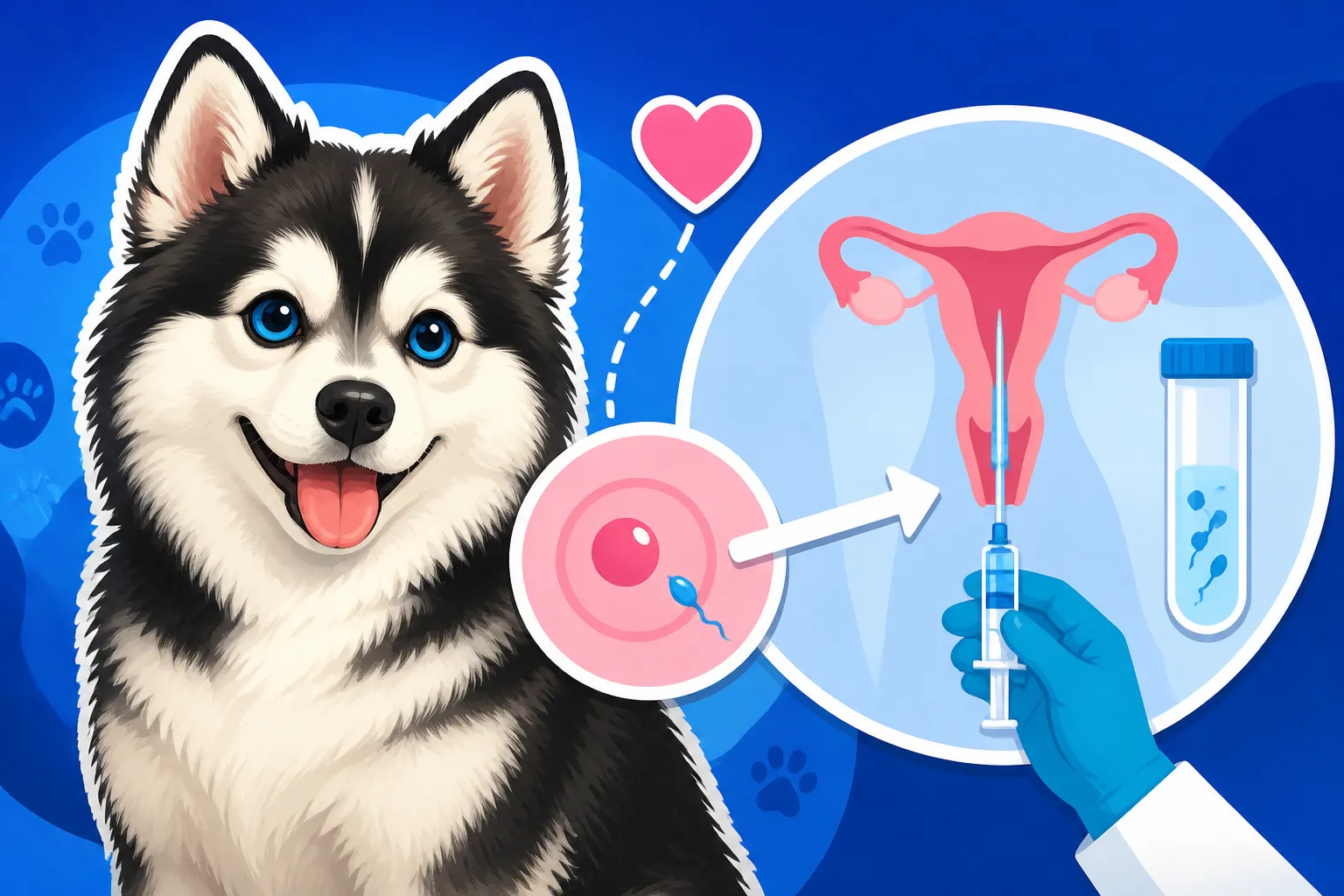
Why a Pomsky Requires Artificial Insemination
Many aspiring Pomsky owners dream of that perfect miniature Husky look, but few truly understand the incredible effort and specialized science that goes into bringing these adorable dogs into the world. The reality is, creating a Pomsky isn't as simple as letting two dogs, a Siberian Husky and a Pomeranian, naturally mate. This guide will meticulously unpack the compelling reasons why artificial insemination isn't just a preference, but an absolute necessity for Pomsky breeding, driven primarily by the vast size differences between the parent breeds.
The Fundamental Size Disparity Between Parent Breeds
When you picture a Pomsky, you likely see a charming, fluff-ball dog that bridges the gap between its two distinct parent breeds. But before that puppy even exists, breeders face a monumental challenge: the sheer physical difference between a Siberian Husky and a Pomeranian. It's not just a matter of a few pounds or inches; it's a difference that makes natural procreation not only impossible but also incredibly dangerous. This foundational size disparity dictates every aspect of how a Pomsky must be bred.
The Husky's Role as the Dam
For any successful Pomsky breeding, the female dog, known as the dam, must always be the Siberian Husky. This isn't a choice based on preference or aesthetics; it's a non-negotiable biological requirement dictated by the laws of nature and canine anatomy. Think about it: a Husky can weigh anywhere from 35 to 60 pounds, sometimes more, and stands significantly taller than a Pomeranian. Her reproductive system is designed to carry and deliver puppies that will be of a certain size, proportionate to her own body.
If, hypothetically, a Pomeranian female were to attempt to carry a litter fathered by a Husky, the risks would be catastrophic. Her small uterus simply isn't equipped to house larger puppies, and her birth canal would be far too narrow for natural delivery. The puppies would likely be too large, leading to severe complications during gestation, premature birth, or requiring an emergency Cesarean section, putting both the mother and the entire litter in grave danger. It's why any reputable breeder will firmly state Why a Pomsky's Dam Must Be the Husky and why this pairing is paramount for the health and safety of everyone involved.
The Pomeranian's Role as the Sire
Conversely, the male dog, or sire, in a Pomsky breeding program is always the Pomeranian. These delightful little dogs typically weigh between 3 and 7 pounds, making them incredibly small, even when fully grown. Now, imagine a Pomeranian, no bigger than a housecat in many cases, attempting to naturally mate with a Siberian Husky. The image alone highlights the absurdity of the situation. The height difference is immense, the weight difference staggering, and the overall physical incompatibility is glaringly obvious.
The Pomeranian simply cannot physically mount a Husky to achieve natural penetration. Their legs are too short, their bodies too small, and the anatomical alignment required for a successful "tie" – that crucial period where dogs are locked together during breeding – is impossible to achieve. This isn't just an inconvenience; it's a physical barrier that nature itself has put in place. This is the primary, undeniable reason Why a Pomsky Cannot Be Conceived Naturally. Any claim otherwise suggests a fundamental misunderstanding of basic canine biology and the specific demands of this particular crossbreed.
Understanding the Mechanics of Canine Breeding
To truly grasp why artificial insemination is indispensable for Pomsky breeding, it's essential to understand the basic mechanics of how dogs reproduce naturally. When two dogs of compatible size and anatomy mate, a very specific sequence of events occurs. This natural process is entirely circumvented in Pomsky creation, and for very good reason.
The Challenges of Natural Tie
In natural canine breeding, the male dog mounts the female, and during copulation, a critical event known as the "tie" occurs. This involves the male's bulbus glandis (a swelling at the base of the penis) enlarging significantly after penetration, effectively "locking" the male and female together for a period of several minutes to sometimes almost an hour. This tie is crucial for ensuring that sperm is deposited correctly and has the best chance of reaching the eggs. It's a natural mechanism designed to maximize the chances of conception.
Now, let's overlay this understanding onto our Husky dam and Pomeranian sire scenario. Even if by some impossible contortion the Pomeranian could reach the Husky, the physical act of achieving and maintaining a tie would be completely out of the question. The anatomical structures simply do not align. The Pomeranian's small size means his body would not be able to create the necessary angle and pressure, and the crucial bulbus glandis, while present, would be entirely disproportionate to the Husky's internal anatomy to create any kind of lock. Any forced attempt would not only be futile but would undoubtedly cause severe distress, pain, and potentially serious injury to both dogs. The phrase Why the Size Gap Makes a Pomsky Breeding Dangerous isn't an exaggeration; it's a stark reality.
Reproductive Anatomy and Incompatibility
Beyond the act of the tie itself, the very reproductive anatomy of a Husky and a Pomeranian presents insurmountable obstacles for natural breeding. The Husky's vagina and cervix are structured to accommodate a male of comparable size – a large breed dog. The Pomeranian's reproductive organs are, by contrast, tiny. There is a vast difference in the length and girth of the male organ needed to reach the cervix and deposit semen effectively.
Imagine trying to fit a tiny key into a large lock; it simply won't engage. The Pomeranian's anatomy, while perfectly suited for breeding with another Pomeranian, is woefully inadequate for successfully breeding with a Husky. This anatomical incompatibility means that even if the physical mounting were somehow overcome, the biological mechanics of sperm transfer would still be severely compromised. The semen would not be delivered to the correct depth or proximity to the cervix to initiate pregnancy. This fundamental biological mismatch cements artificial insemination as the only viable path.
The Process of Artificial Insemination (AI)
Given the unequivocal physical and anatomical barriers, artificial insemination (AI) steps in as the scientific solution, allowing for the creation of Pomskies in a safe and controlled manner. This isn't a casual undertaking; it's a sophisticated veterinary procedure that requires meticulous planning, precision, and expertise. It highlights the dedication of responsible breeders who understand these complexities.
Timing is Everything: Progesterone Testing
One of the most critical elements of successful artificial insemination in any breed, but particularly when dealing with the significant investment in a Pomsky litter, is pinpointing the exact moment the female is most fertile. This isn't a guessing game; it's a science. Breeders rely heavily on progesterone testing of the Husky dam's blood. This involves a series of blood draws and analyses, often over several days, to track the rising progesterone levels in her system. The progesterone hormone surge indicates that ovulation is imminent or has just occurred, signifying the optimal window for insemination.
Without precise timing, the chances of a successful pregnancy plummet dramatically. Inseminating too early or too late means the sperm will not meet viable eggs, rendering the entire, expensive procedure fruitless. Each progesterone test adds to the overall cost and effort, but it's an absolutely non-negotiable step for maximizing the likelihood of conception. This careful monitoring ensures that the breeder isn't just throwing darts in the dark, but strategically approaching the breeding process. Understanding What Progesterone Testing Adds to a Pomsky Litter truly emphasizes the commitment involved.
Semen Collection and Insemination Methods
Once the Husky dam's optimal breeding window has been identified through diligent progesterone testing, the next step involves collecting semen from the Pomeranian sire. This is typically done manually by an experienced veterinarian or trained handler. The collected semen is then carefully prepared for insemination.
There are several methods for artificial insemination, each with varying success rates and invasiveness. For Pomsky breeding, due to the value of the litter and the desire to maximize success, more advanced methods are often employed:
- Vaginal Insemination: This is the simplest method, where semen is deposited into the vagina using a pipette. While less invasive, it may have a lower success rate compared to other methods, especially when breeding across such distinct size differences in the parent breeds.
- Transcervical Insemination (TCI): This method involves using an endoscope or specialized catheter to guide the semen directly through the cervix and into the uterus. This bypasses many of the anatomical challenges presented by the Husky's larger vaginal canal and ensures more direct placement of the semen. It's a common and highly effective method for Pomskies, requiring specialized equipment and veterinary skill.
- Surgical Insemination: This is the most invasive method, where the dam is anesthetized, and a small incision is made to directly inject semen into the uterus. While offering the highest success rate, it also carries the risks associated with surgery and anesthesia. Given the effort and cost already invested, some breeders opt for this to leave nothing to chance.
No matter the method chosen, the involvement of a skilled veterinarian is paramount. They ensure the safety of both parent dogs and the highest possible chance of a successful pregnancy. The services of such professionals come at a cost, reflecting their expertise and the specialized nature of the procedure, which is a major factor in What a Vet Charges to Inseminate a Pomsky Litter. Sourcing specialized equipment or even finding quality supplements for the dam can sometimes lead breeders to outlets like Chewy, ensuring they have access to the best possible care products.
The Costs and Ethical Considerations of AI Breeding
The intricate process of artificial insemination is not only scientifically demanding but also financially significant, directly impacting the final cost of a Pomsky puppy. Beyond the monetary aspect, there are crucial ethical considerations that responsible breeders must address to ensure the welfare of their animals.
Financial Investment in AI
Let's not sugarcoat it: breeding Pomskies through artificial insemination is an expensive endeavor. It's a far cry from the minimal costs associated with two compatible dogs mating naturally in a backyard. The financial investment begins long before any puppies are even conceived and continues through the entire gestation and whelping process.
Consider the cumulative expenses:
- Veterinary Consultations and Expertise: Multiple visits to a reproductive veterinarian are necessary for planning, timing, and performing the AI. Their specialized knowledge and time are significant line items.
- Progesterone Testing: As discussed, a series of blood tests are required to accurately time ovulation. Each test has a cost, and these can quickly add up over several days of monitoring.
- Semen Collection and Handling: The process of collecting semen from the Pomeranian sire and preparing it for insemination incurs fees. If fresh-chilled or frozen semen is used (which might happen if the sire is not locally available), there are additional costs for processing, storage, and shipping.
- Insemination Procedures: Whether it's vaginal, transcervical, or surgical AI, each procedure carries a distinct professional fee. The more advanced and invasive the method, the higher the cost.
- Potential Repeat Attempts: Sometimes, despite the best efforts, the first AI attempt may not result in a pregnancy. This can mean repeating the entire cycle of progesterone testing and insemination, doubling or even tripling the initial veterinary expenses.
- Post-Insemination Care: Monitoring the Husky dam after insemination, including ultrasound confirmations of pregnancy, also adds to the bill.
All these factors directly contribute to What Artificial Insemination Costs a Pomsky Breeder. These substantial upfront costs are a primary reason why Pomsky puppies typically command a higher price point compared to many other breeds. It's not just about the cute puppy; it's about the significant investment made in scientific breeding to bring that puppy into existence safely and ethically. Breeders also incur costs for high-quality food, whelping supplies, and initial puppy items, often purchasing from trusted retailers like Chewy to ensure they have everything needed for a healthy litter.
Health and Welfare of the Breeding Dogs
Responsible breeding extends far beyond just achieving a pregnancy; it's fundamentally about the health and welfare of the parent dogs. When engaging in artificial insemination for Pomskies, ethical breeders take numerous steps to ensure both the Husky dam and Pomeranian sire are in peak condition. This means comprehensive health screenings before breeding even begins.
For the Husky dam, this includes checks for conditions common to the breed, such as The Eyes a Pomsky Gets From the Husky (like hereditary cataracts or progressive retinal atrophy), hip and elbow evaluations, and thyroid function tests. For the Pomeranian sire, checks for patellar luxation (Slipping Kneecaps in a Pomsky) and tracheal issues (The Collapsing Trachea a Pomsky Gets From the Pomeranian) are crucial. These tests are expensive but vital to prevent passing on genetic predispositions to the puppies. An ethical breeder will be transparent about these health clearances. Choosing to cut corners on health testing not only risks the well-being of the parent dogs but also jeopardizes the future health of the entire litter, raising the question of Whether an Untested Pomsky Litter Is Worth Buying. A responsible breeder will prioritize the health of their dogs, ensuring the Husky dam receives a specially formulated diet during pregnancy and lactation, potentially opting for veterinary-approved options found on platforms like Chewy to support her and her growing pups.
Furthermore, the process of AI itself, while scientific, requires careful handling of the animals. Stress to either the dam or the sire can impact success rates. A good breeder ensures a calm, comfortable environment and works with a vet who prioritizes the animal's well-being above all else. This meticulous attention to detail underscores the ethical commitment required when creating designer breeds like the Pomsky.
| Aspect of Breeding | Natural Breeding (Comparable Sizes) | Artificial Insemination (Pomsky Breeding) |
|---|---|---|
| Parent Breed Size Match | Essential for success | Not required, overcomes disparity |
| Physical Contact | Direct physical tie required | No physical tie possible or required |
| Injury Risk | Low if sizes are compatible | Minimal, managed by veterinary professionals |
| Sperm Delivery | Natural ejaculation into canal | Direct placement into uterus/cervix |
| Timing Accuracy | Relies on natural heat signals | Precisely timed with progesterone testing |
| Veterinary Costs | Typically low to none | Substantial (tests, procedures, expertise) |
| Ethical Concerns | Generally low if responsible | Higher initial concerns due to manipulation; mitigated by responsible, ethical practices |
Why AI is the Only Way for Pomsky Creation
After delving into the anatomical realities and the precise scientific procedures, it becomes abundantly clear that artificial insemination isn't just a preferred method for Pomsky breeders; it is the only method. This fact is fundamental to understanding the breed and dispelling common misconceptions.
Dispelling Myths of Accidental Breedings
A pervasive myth that sometimes circulates, particularly among those new to the Pomsky world, is the idea of an "accidental" Pomsky breeding. Some might imagine a tiny Pomeranian somehow managing to get tangled up with a large Husky, and nine weeks later, a litter of Pomskies appears. The reality, as we've explored, makes such an event virtually impossible. The size disparity is simply too great for natural copulation to occur, let alone for a successful "tie" to be achieved.
Therefore, if you ever hear of an "accidental Pomsky" litter that supposedly occurred naturally, it should immediately raise a red flag. It's far more likely that such a litter is either a result of undisclosed artificial insemination or, more commonly, that the puppies are not true Pomskies at all but rather a different, often unknown, mixed breed. Unfortunately, some unscrupulous individuals might misrepresent the parentage of a mixed-breed puppy to capitalize on the demand for Pomskies. Trustworthy breeders are always transparent about their breeding methods because they have nothing to hide. This is why the question Whether a Pomsky Litter Is Ever Accidental can be definitively answered with a resounding "no" under natural circumstances.
The Breeder's Commitment and Expertise
The necessity of artificial insemination means that responsible Pomsky breeders aren't just dog enthusiasts; they are often deeply invested in veterinary science and possess a significant degree of expertise in canine reproduction. They forge strong relationships with reproductive veterinarians, understanding the nuances of progesterone curves, semen viability, and insemination techniques. This isn't a hobby for the faint of heart or the shallow of pocket.
The fact that AI is required underscores a breeder's commitment to the breed's safe and ethical propagation. They are choosing to invest considerable time, effort, and money into a process that ensures the well-being of their breeding dogs and the health of the resulting puppies. It's a testament to their dedication when they navigate these complexities, rather than seeking shortcuts or attempting dangerous natural breedings. This level of commitment is what differentiates a responsible, reputable Pomsky breeder from a backyard operation. It helps answer the question Whether Pomsky Breeding Is Profitable, as the initial outlay is so substantial, meaning breeders must be wise with their finances and dedicated to the long-term health of their lines. They aren't just selling puppies; they're offering the result of careful, scientific planning and unwavering ethical practice.
Disclaimer
This article is for general informational purposes only and does not constitute professional advice. Laws, prices and regulations vary by location and change over time. Consult a qualified professional for guidance on your specific situation.