Whether a Reverse Pomsky Exists
As someone who's spent years navigating the wonderful, sometimes perplexing, world of Pomskies, I often hear people asking about all sorts of variations, trying to understand what makes these fascinating dogs tick. One question that comes up with a fair bit of regularity, especially from folks new to the breed's origins, is whether a "reverse Pomsky" exists. It's a natural thought to have when you're thinking about parent breeds, but the reality behind Pomsky breeding makes this concept not just unlikely, but practically impossible and incredibly dangerous. This guide will dive deep into why the idea of a "reverse Pomsky" isn't feasible and what it means for responsible breeding.
Defining the "Reverse Pomsky" Concept
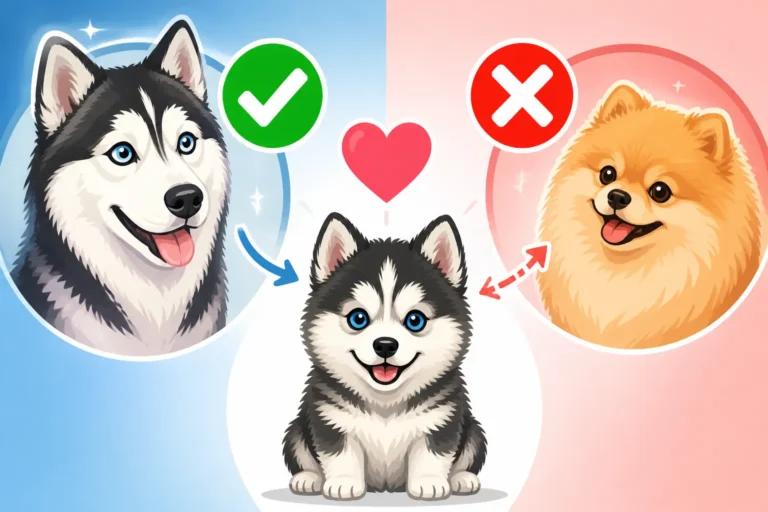
When people ask if a "reverse Pomsky" exists, they're typically wondering if the roles of the parent breeds can be switched in the breeding process. In the standard Pomsky creation, the mother (dam) is always a Siberian Husky, and the father (sire) is a Pomeranian. This specific pairing is crucial for a host of biological and safety reasons that we’ll explore in detail. So, a "reverse Pomsky" would, by definition, imply a Pomeranian mother bred with a Siberian Husky father. It sounds simple enough on paper, right? Just swap the parents! But canine genetics and physiology are far more complex than that.
The Standard Pomsky Breeding Method
To understand why the "reverse" concept is problematic, we first need to understand the standard practice. The Pomsky is a designer dog, a deliberate crossbreed between a female Siberian Husky and a male Pomeranian. This specific combination isn't just a preference; it's a necessity dictated by the significant size difference between the two breeds. A female Husky, being the larger dog, is able to safely carry and birth puppies sired by a much smaller Pomeranian. These litters are almost exclusively conceived through artificial insemination, as natural breeding between such disparate sizes would be difficult and potentially harmful to both dogs.
Breeders carefully select healthy, temperamentally sound parent dogs and rely on veterinary expertise for the artificial insemination process. This method helps ensure the safety of the Husky dam and the health of the resulting puppies. The goal is to produce a healthy, happy companion dog that ideally embodies some of the best traits of both parent breeds.
Why the Question Arises
It's completely understandable why someone might ask about a "reverse Pomsky." In many crossbreeds, the male and female roles can be interchangeable, or the size difference isn't so stark that it dictates the dam's breed. For example, you might have a Labrador-Poodle mix where either parent could be the mother. People often assume that if you can breed a Husky-Pomeranian, you can also breed a Pomeranian-Husky. It’s a logical assumption if you're not aware of the intricate biological challenges involved.
The desire might also stem from a curiosity about how different the puppies would look or behave if the mother were the smaller breed. Perhaps someone imagines an even smaller Pomsky, or one with more pronounced Pomeranian features, without fully grasping the physical dangers this would entail for the mother dog. This question highlights a fundamental misunderstanding, not of the concept of crossbreeding, but of the critical physiological constraints that govern responsible breeding practices, especially when dealing with widely different-sized breeds.
The Biological Impossibility and Critical Risks
Now, let's get down to brass tacks: why a "reverse Pomsky" as described – a Pomeranian mother carrying Husky-sired puppies – is not a viable or humane breeding practice. The answer boils down to basic biology, specifically the laws of canine reproduction and the profound difference in size between a Pomeranian and a Siberian Husky. This isn't just about difficulty; it's about extreme risk to the life of the mother and her potential offspring.
The Unsafe Size Discrepancy
Imagine trying to carry a baby that is significantly larger than your own body structure is designed for. That's essentially what we're asking a Pomeranian to do if she were to carry puppies from a Husky father. A full-grown female Pomeranian typically weighs between 3 to 7 pounds, sometimes a little more, while a Siberian Husky male can weigh anywhere from 45 to 60 pounds, or even more. The puppies, even in the early stages of development, would grow to be far too large for a Pomeranian's small uterus and birth canal.
This immense size disparity makes conception incredibly dangerous, even with artificial insemination. If, by some miracle, conception were to occur, the pregnancy itself would be fraught with peril. The sheer physical strain on the Pomeranian's internal organs would be immense, leading to a very high risk of uterine rupture, internal bleeding, and other catastrophic complications long before full term. This is why when people ask Why a Pomsky's Dam Must Be the Husky, the answer is unequivocally about safety. The Husky female is robust enough to handle the pregnancy, even with smaller-sired pups.
Risks During Pregnancy and Whelping
Assuming, against all odds, that a Pomeranian could become pregnant with Husky-sired puppies, the risks during gestation would be astronomical. The developing puppies would grow rapidly, placing unbearable stress on the mother's tiny body. This would likely lead to:
- Premature Labor: The mother's body might try to expel the puppies long before they are viable, leading to loss of the entire litter.
- Malnutrition for the Mother: The puppies' demands for nutrients would likely overwhelm the mother's ability to sustain herself and the pups, severely compromising her health.
- Organ Damage: The sheer weight and size of the growing fetuses could cause irreparable damage to the Pomeranian's spine, hips, and internal organs.
Then comes the whelping (birthing) process, which would almost certainly be fatal for both the mother and the puppies. A Pomeranian’s birth canal is simply too narrow to accommodate even one Pomsky-sized puppy, let alone an entire litter. This scenario would invariably require an emergency Cesarean section, and even then, the puppies would likely be too large to pass safely, and the surgery itself would be incredibly high-risk for such a tiny mother. This is directly related to Why the Size Gap Makes a Pomsky Breeding Dangerous.
The Role of Artificial Insemination
Even with artificial insemination, which is routinely used in standard Pomsky breeding to ensure the male Pomeranian can successfully impregnate the female Husky without physical harm, it doesn't solve the "reverse Pomsky" problem. Artificial insemination helps overcome the physical challenges of two dogs of vastly different sizes mating, but it does nothing to alter the biological capacity of the female dog to carry and birth puppies.
You might be able to artificially inseminate a Pomeranian with Husky semen, but the fundamental issue of the size of the developing fetuses relative to the mother's body remains. The pregnancy itself is the danger, not just the act of conception. The concept of Whether a Pomeranian Could Carry a Pomsky Litter is a question rooted in genuine concern, and the biological answer is a resounding no.
Ethical Concerns and Responsible Breeding
Beyond the stark biological realities, there are profound ethical considerations that responsible breeders adhere to. The well-being of the parent animals, especially the dam, is paramount. Deliberately attempting to breed a "reverse Pomsky" would be a severe breach of ethical animal husbandry and would rightly be condemned by anyone who prioritizes animal welfare.
Animal Welfare and Breeder Responsibility
A responsible breeder's first priority is always the health and safety of their dogs. This means making breeding decisions that minimize risk and maximize the chances of a healthy outcome for both mother and puppies. Attempting to breed a Pomeranian with a Siberian Husky male would be an act of extreme negligence. It would knowingly put the Pomeranian's life in grave danger for what would amount to a vanity project or a misguided experiment.
Such a practice goes against every tenet of ethical breeding, which includes:
- Prioritizing Health: Ensuring both parents are healthy and free from genetic conditions that could be passed on.
- Safe Breeding Practices: Using methods that do not endanger the animals involved.
- Temperament: Ensuring parents have stable, suitable temperaments.
- Breed Standards (even for crosses): Striving for predictable outcomes within safe parameters.
The very notion of intentionally putting a small dog through such a dangerous pregnancy simply contradicts these core principles. The discussions around Whether the Pomsky Raised Welfare Questions are often focused on the correct way to breed them, highlighting the care and expertise required even in standard Pomsky breeding.
The Problem with "Accidental" Crosses
Sometimes, people wonder if a "reverse Pomsky" could happen by accident. In the vast majority of cases, it's virtually impossible for a male Husky to naturally breed with a female Pomeranian due to the sheer size difference. Even if a small male Husky and a large female Pomeranian somehow managed to mate, the pregnancy risks would be the same. The natural act is highly improbable, and any resulting pregnancy would still be life-threatening.
There are countless stories of dogs of different sizes trying to interact, but successful breeding is a different matter entirely, especially when the size difference is this extreme. This is why Why a Pomsky Cannot Be Conceived Naturally is a common topic – the breeding is almost always planned and vet-assisted for safety.
Consequences for Unethical Breeding
Any breeder who would attempt such a dangerous cross would be operating entirely outside of ethical guidelines and would face severe criticism and potential repercussions. They would not be recognized by reputable associations, and their practices would be viewed as irresponsible and cruel. The focus for any dog breeder, whether purebred or crossbreed, must always be on preserving and improving the health of their lines and ensuring the welfare of every animal in their care. The idea of deliberately endangering a female dog for a "reverse" cross is antithetical to this commitment.
What People Are Really Looking For and What Alternatives Exist
Often, when someone asks about a "reverse Pomsky," they're not necessarily aware of the biological impossibilities. Instead, they might be envisioning a dog with certain traits – perhaps a smaller size than an F1 Pomsky, a different mix of features, or a dog that leans more heavily towards the Pomeranian side in appearance but with a Husky-like coat or eye color. It's about a particular aesthetic or size expectation.
The Desire for a Smaller Husky Look
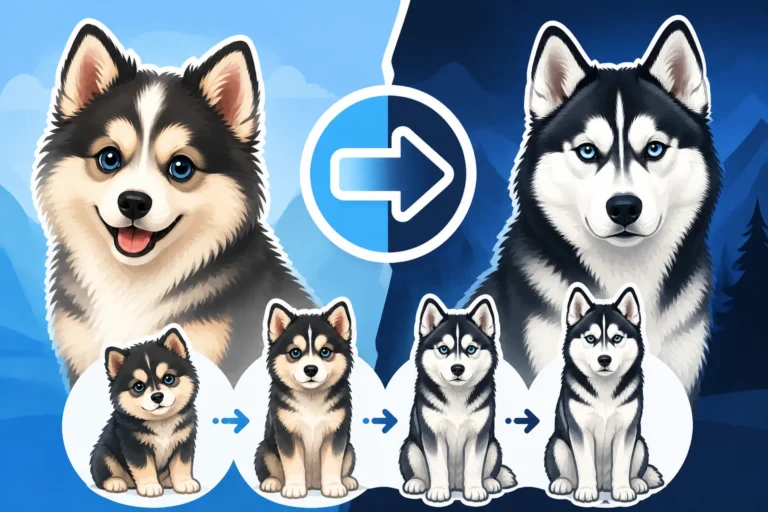
The initial viral photos that sparked the Pomsky craze often depicted dogs that looked like miniature Huskies. Many prospective owners are looking for that "mini Husky" aesthetic in a smaller, more manageable package. While standard Pomskies can achieve this look, their size can still vary significantly, and some might end up looking more like larger Pomeranians. When someone asks about a "reverse Pomsky," they might be unconsciously hoping for a way to guarantee a smaller stature or a specific blend of traits that they associate with their ideal "mini Husky."
However, the size of a Pomsky is already incredibly variable, even with the correct parent pairing. An F1 Pomsky (first generation Husky mother x Pomeranian father) can range widely in size and appearance. What a Pomsky Actually Weighs Full Grown covers this variability, showing that adult Pomskies can be anywhere from 10 to 35 pounds or more. There's no genetic switch to reliably make a dog smaller by flipping the parent breeds, especially not when the female parent is the limiting factor.
Other Small Husky-Like Breeds
If the desire is for a dog with a strong Husky-like appearance but in a smaller package, without the extreme risks of a hypothetical "reverse Pomsky," there are existing breeds that fit the bill.
One excellent alternative is the Alaskan Klee Kai. This breed was specifically developed to resemble a smaller version of the Alaskan Husky. They come in three sizes (toy, miniature, and standard) and possess many of the Husky's striking features, including the double coat, masked face, and often blue eyes, but in a much more compact form. They are known for their intelligence, energy, and sometimes aloof nature, similar to Huskies. For those who want the Husky look without the size, the Klee Kai is a responsibly bred, established option. You can read more about The Pomsky Against the Alaskan Klee Kai to understand the differences.
Another consideration, though less "Husky-like," might be some of the smaller Spitz breeds or even certain Pomeranian lines that have a slightly more robust build while still being small. However, for a true miniature Husky aesthetic, the Alaskan Klee Kai is the closest and safest option.
Understanding Realistic Pomsky Outcomes
For those still interested in a Pomsky, it's crucial to understand that even with responsible breeding, there's a spectrum of outcomes. Pomskies inherit a mix of traits from both parents, and while a breeder can aim for a certain look or size, there are no guarantees. Some Pomskies will have more Husky traits, others more Pomeranian, and many will be a delightful blend. Whether a Pomsky Looks Like a Miniature Husky and Whether Most Pomskies Look Like Big Pomeranians are common discussions precisely because of this genetic lottery.
The emphasis should always be on acquiring a puppy from a reputable breeder who prioritizes health, temperament, and ethical practices. They will transparently discuss the genetic background, potential size range, and health screenings of their breeding dogs. This ensures you're getting a healthy, well-socialized puppy from parents bred safely, rather than chasing a mythical "reverse" option that poses significant risks.
| Aspect | Standard Pomsky Breeding (Husky Dam x Pomeranian Sire) | Hypothetical "Reverse Pomsky" Breeding (Pomeranian Dam x Husky Sire) |
|---|---|---|
| Dam (Mother) | Siberian Husky (Large, capable of carrying large litter) | Pomeranian (Small, physically incapable of carrying large litter) |
| Sire (Father) | Pomeranian (Small, contributes genetics) | Siberian Husky (Large, contributes genetics) |
| Conception Method | Almost exclusively Artificial Insemination (AI) | Likely AI, but the act of conception is not the main issue |
| Safety of Dam | High safety with veterinary oversight | Extremely high risk of fatality |
| Safety of Puppies | Generally good, born at appropriate size | Extremely high risk of fatality, too large for dam |
| Ethical Practice | Yes, when done responsibly with vet involvement | No, highly unethical and dangerous |
| Existence | Yes, a well-established crossbreed | No, does not exist for biological and ethical reasons |
| Outcome | Healthy, variable-sized Pomsky puppies | Near certain death for dam and puppies |
Responsible Practices and Breeder Research
Since the "reverse Pomsky" isn't a viable option, it circles back to the importance of finding a responsible Pomsky breeder if this is the crossbreed you're set on. A good breeder will be transparent about their practices, health testing, and the realistic outcomes of their litters.
What to Look for in a Pomsky Breeder
When searching for a Pomsky, it’s vital to do your homework. Look for breeders who:
- Prioritize Health Testing: They should provide proof of health screenings for both parent dogs for conditions common to Huskies and Pomeranians, such as hip and elbow dysplasia, eye conditions, and patellar luxation. This ensures a healthier start for your puppy. For example, knowing about The Eyes a Pomsky Gets From the Husky or Slipping Kneecaps in a Pomsky will inform you about important health checks.
- Use Artificial Insemination: This is a non-negotiable for Pomsky breeding due to the size difference of the parent breeds. They should be open about their vet-supervised breeding process.
- Socialize Puppies: Good breeders ensure their puppies are well-socialized from a young age, exposing them to various sights, sounds, and experiences to prepare them for their new homes.
- Provide a Health Guarantee and Contract: A reputable breeder will offer a health guarantee, outlining what they cover and for how long, and a clear contract.
- Are Knowledgeable and Ask Questions: They should be experts on the Pomsky breed and genuinely interested in finding the right homes for their puppies. They will ask you questions to ensure you're a good fit.
- Don't Claim "Reverse" or "Micro" Pomskies Without Merit: Be wary of breeders who use marketing terms like "micro Pomsky" or claim to have "reverse" bred dogs, as this often indicates irresponsible or deceptive practices.
Remember, a responsible breeder will never put the life of a breeding animal at risk for an unrealistic outcome. They adhere to the biological realities and ethical standards of canine reproduction.
Understanding the Pomsky's Origin and Future
The Pomsky is a relatively new crossbreed, emerging in popularity around 2011-2012. It was born out of a desire for a smaller version of the Siberian Husky, and breeders quickly realized the safest way to achieve this was with a Husky dam and Pomeranian sire. The International Pomsky Association (IPA) was founded to help guide responsible breeding practices and establish standards for this hybrid.
While the Pomsky is not a recognized breed by major kennel clubs like the AKC, responsible breeders are working towards greater predictability and health within their lines. This involves careful selection, health testing, and adhering to safe breeding protocols. The future of the Pomsky as a healthy, well-adjusted companion relies entirely on these responsible practices, and certainly not on dangerous, biologically impossible "reverse" breeding attempts. Understanding the origins helps appreciate the efforts of ethical breeders and why certain questions, like the "reverse Pomsky," are quickly dismissed for the welfare of the dogs involved.
Disclaimer
This article is for general informational purposes only and does not constitute professional advice. Laws, prices and regulations vary by location and change over time. Consult a qualified professional for guidance on your specific situation.