Whether Embark or Wisdom Panel Confirms a Pomsky
You've just brought home your adorable Pomsky, or maybe you've had them for a while, and that nagging question starts to creep in: Is my fluffy companion really a Pomsky, or some other delightful mix? It's a common worry, especially with a designer breed that has such varied appearances. You want to confirm their heritage, not just for curiosity's sake, but also to understand potential health quirks and behaviors. This guide will walk you through how genetic testing companies like Embark and Wisdom Panel can help you unravel your Pomsky's family tree, addressing the common misconceptions and offering a realistic look at what the results will tell you.
The Lure of the "Miniature Husky" and Breed Identification Challenges
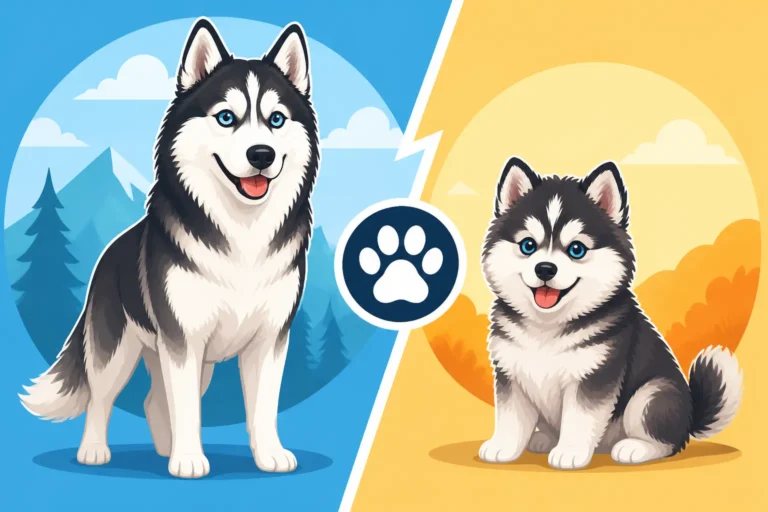
When the Pomsky first exploded onto the internet scene, fueled by captivating photos, many people envisioned a perfect miniature version of the majestic Siberian Husky. The idea of all that Husky charm and beauty packed into a more manageable, apartment-friendly size was incredibly appealing. However, the reality, as many new owners quickly learned, is that the genetic lottery of a first-generation cross (F1) is a wild card.
The Initial Appeal and Reality Check
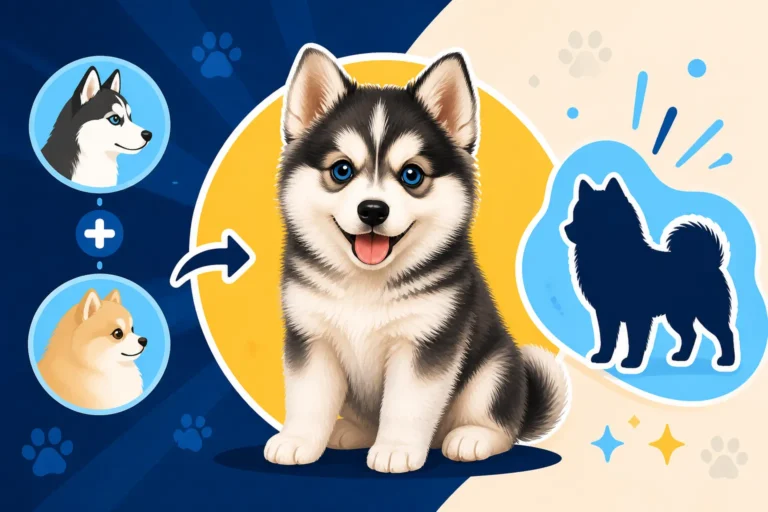
Remember those viral images? They created an almost mythical ideal of the Pomsky. We all saw photos of what appeared to be tiny Huskies, often with piercing blue eyes, and our hearts melted. It led to a surge in demand, as everyone wanted that exact look. But the truth is, a Pomsky puppy is a mix of a Siberian Husky and a Pomeranian, two breeds with very distinct characteristics, and those characteristics don't always blend in a predictable "miniature Husky" fashion. In fact, many F1 Pomskies end up looking more like large Pomeranians or simply unique mixes, rather than the tiny Husky clone everyone imagined. This can lead to a sense of disappointment if expectations aren't managed, and it highlights why it's so important to understand the realities of The Pomsky the Internet Ordered Before It Existed.
The size, coat, and even ear set can vary wildly within the same litter, let alone across different breeders. One puppy might inherit more of the Husky's leggy build and striking facial markings, while a sibling might get the dense, floofy coat and fox-like face of the Pomeranian. It's truly a genetic toss-up, and that's precisely why trying to confirm a "Pomsky" through a DNA test isn't as straightforward as identifying a purebred Labrador. You're not looking for a single, uniform genetic signature for "Pomsky." Instead, you're looking for the combination of its parent breeds.
Why Purebred DNA Tests Struggle with Designer Dogs
Here's the rub: traditional purebred DNA tests are built upon extensive databases of recognized purebred dogs. When you send in a swab from your purebred Golden Retriever, the test compares its genetic markers against thousands of other Golden Retrievers to confirm its breed. The geneticists have identified specific markers that are consistently present in that breed and absent in others.
For a designer dog like a Pomsky, it's a different ballgame. "Pomsky" isn't a recognized breed by major kennel clubs, which means there isn't a universally accepted, distinct genetic blueprint for it. The International Pomsky Association (IPA) and similar organizations are working towards standardization, but it takes many generations of selective breeding for a cross to truly "breed true" and develop its own consistent genetic profile. So, when you submit your Pomsky's DNA, the test isn't looking for "Pomsky DNA." It's looking for the components: Siberian Husky and Pomeranian DNA. It’s an important distinction that often catches people off guard.
The tests are fantastic at identifying the purebred parents, which is incredibly useful for validating a mix. They can tell you, with a high degree of confidence, that your dog has a Siberian Husky parent and a Pomeranian parent, or a mixed-breed parent that was itself a Husky/Pomeranian cross. But they won't simply stamp "Pomsky" on the results because it's still a hybrid, not yet a distinct breed in the scientific sense. This is also why discussions around concepts like Whether Hybrid Vigor Is Real in a Pomsky come into play, as the genetic diversity of a crossbreed can sometimes lead to different health outcomes compared to highly inbred purebreds.
How Genetic Testing Identifies a Pomsky's Ancestry
So, if these tests don't just say "Pomsky," what do they tell you? They provide a fascinating breakdown of the breeds that make up your dog's genetic code. For a Pomsky, this means identifying the presence of Siberian Husky and Pomeranian in varying percentages, depending on the generation.
Understanding Embark's Approach
Embark has established itself as a leader in canine genetic testing, and for good reason. They boast a very extensive database of over 350 breeds, types, and varieties, which allows them to offer highly accurate breed identification. When you send in your Pomsky's cheek swab, Embark analyzes hundreds of thousands of genetic markers. What they look for are specific sequences of DNA that are characteristic of the Siberian Husky and the Pomeranian.
For an F1 Pomsky, meaning a direct cross between a purebred Siberian Husky and a purebred Pomeranian, Embark's results will typically show a near 50% Siberian Husky and 50% Pomeranian breakdown. This is exactly what you'd expect from a first-generation cross. If your dog is an F2 (Pomsky bred to Pomsky) or a later generation, the percentages might fluctuate a bit, but the two primary breeds should still be clearly identified. Embark is excellent at distinguishing between these foundation breeds. They’re essentially saying, "Your dog has the genetic signature of a Husky and the genetic signature of a Pomeranian," which is the most definitive confirmation you can get for a Pomsky's parentage. This kind of detailed genetic verification is often crucial for breeders to ensure Whether a Pomsky Without Papers Is Real, and it helps buyers avoid being duped into purchasing a dog that is actually another breed, like Whether an Alaskan Klee Kai Is Sold as a Pomsky.
Beyond just breed percentages, Embark provides a comprehensive look at your dog's genetic makeup, including traits and a vast panel of genetic health screenings. This information can be incredibly valuable for understanding your individual dog's predispositions, rather than just relying on general breed information.
Exploring Wisdom Panel's Capabilities
Wisdom Panel is another highly respected name in the world of canine DNA testing. Like Embark, they utilize a large and growing database of breeds to identify the genetic origins of your dog. Their process also involves analyzing DNA markers to determine which breeds contribute to your dog's unique genetic profile. For a Pomsky, Wisdom Panel will also clearly identify Siberian Husky and Pomeranian as the primary, if not sole, components of your dog's breed makeup.
Their reports are typically very clear, breaking down the percentages of each breed found. So, if you have an F1 Pomsky, you would expect to see roughly 50% Siberian Husky and 50% Pomeranian. For later generations, the percentages might be slightly different as the genetic lines get further from the purebred parents, but the presence of both foundation breeds would be undeniable. Wisdom Panel’s strength lies in its ability to pinpoint these core breeds, giving you a strong confirmation of the parentage that makes a Pomsky. It's a fantastic tool for shedding light on a dog's background, especially when you're dealing with a breed whose appearance can vary so much, or if you suspect you might have a different mix entirely. Both Embark and Wisdom Panel kits are widely available, including from online retailers like Chewy, making them accessible to any curious dog parent.
These tests are designed to provide transparency and certainty in a market where misrepresentation can unfortunately occur. They don't just confirm your dog's roots; they empower you with knowledge about their unique heritage.
Limitations and Nuances for Designer Breeds
While these tests are incredibly powerful, it's important to understand their limitations when it comes to designer breeds. As mentioned, neither Embark nor Wisdom Panel will explicitly state "Pomsky" as a breed in their results. Instead, they provide the breakdown of Siberian Husky and Pomeranian. For an F1 Pomsky, this is usually a clear 50/50 split, which is as definitive a confirmation as you can get for a designer cross.
However, things can get a little more nuanced with F2, F3, or multi-generational Pomskies. In these cases, the percentages might not be a clean 50/50. You might see, for example, 60% Husky and 40% Pomeranian, or vice versa, depending on the specific lineage. This is normal and reflects the continued mixing of genes across generations. The crucial takeaway is the consistent presence of both parent breeds.
A potential "red flag" in a Pomsky DNA test would be the detection of breeds other than Siberian Husky and Pomeranian. If your report comes back with a significant percentage of, say, Alaskan Klee Kai, American Eskimo Dog, or even a smaller terrier breed, it would indicate that your dog is not a pure Pomsky. While still a wonderful dog, it wouldn't be the specific cross you might have been led to believe. This is a common concern for people who worry about Whether a Cheap Pomsky Is Really a Pomsky, as sometimes less scrupulous breeders might cut corners or misrepresent their puppies' parentage. These genetic tests offer an objective way to verify the claims made about your dog's background and ensure you understand exactly what mix you have.
Interpreting Your Pomsky's DNA Results
Getting those results back can be an exciting moment! It's like opening a genetic treasure chest. But what do all those percentages and breed names truly mean for your Pomsky?
What a "Pomsky" Result Actually Looks Like
When you receive your DNA test results for what you believe is a Pomsky, the key is to look for the clear identification of Siberian Husky and Pomeranian. For an F1 Pomsky (first generation, direct cross of purebred parents), you should see a very strong representation of both, typically around 50% each. This is the gold standard for confirming an F1 Pomsky. It means one parent was a Husky and the other was a Pomeranian.
If your Pomsky is an F2 or later generation, meaning both parents were Pomskies themselves, the percentages might vary. You might see something like 55% Husky and 45% Pomeranian, or 60% Husky and 40% Pomeranian. These variations are perfectly normal in multi-generational mixes, as genes are shuffled and expressed differently with each breeding. The important thing is that both breeds are present and are the dominant contributors to your dog's genetic makeup. If you see very small percentages of other breeds (e.g., less than 5%), it could indicate a distant ancestor or a very minor impurity in the line, but it wouldn't typically negate the primary Pomsky identity. However, if a significant chunk of a completely different breed shows up, it's a clear indicator that your dog's lineage isn't what was advertised, which can be a valuable piece of information for any owner, especially if they have questions about their dog's true origins.
Beyond Breed Identification: Health and Traits
The true power of these comprehensive DNA tests extends far beyond simply confirming breed percentages. Both Embark and Wisdom Panel offer extensive health screenings that can identify genetic predispositions to a wide array of diseases common in both Siberian Huskies and Pomeranians. This is invaluable for proactive care and can help you work with your vet to monitor for specific conditions throughout your Pomsky's life.
For example, Huskies are known for certain eye conditions, so knowing your Pomsky carries genes for The Eyes a Pomsky Gets From the Husky like juvenile cataracts or progressive retinal atrophy can prompt earlier screenings. Pomeranians, on the other hand, are prone to issues like Slipping Kneecaps in a Pomsky (patellar luxation) and The Collapsing Trachea a Pomsky Gets From the Pomeranian. If your Pomsky shows a genetic marker for these, you can be more vigilant about signs, manage their weight, consider joint supplements, and discuss preventative measures with your veterinarian. This kind of insight allows you to be a much more informed and proactive pet parent, potentially saving you stress and significant vet bills down the line.
The tests also provide fascinating insights into physical traits. You might learn about the specific genes your Pomsky carries for coat length, color, ear set, and even their likelihood of having blue eyes. This can be especially interesting for Pomskies, given the variety in their appearance. Knowing if your dog carries the "wooly" gene, for instance, can help you prepare for the grooming demands of The Three Pomsky Coat Types. Understanding their genetic predispositions to certain traits and health conditions empowers you to tailor their care and give them the best possible life.
Choosing the Right DNA Test
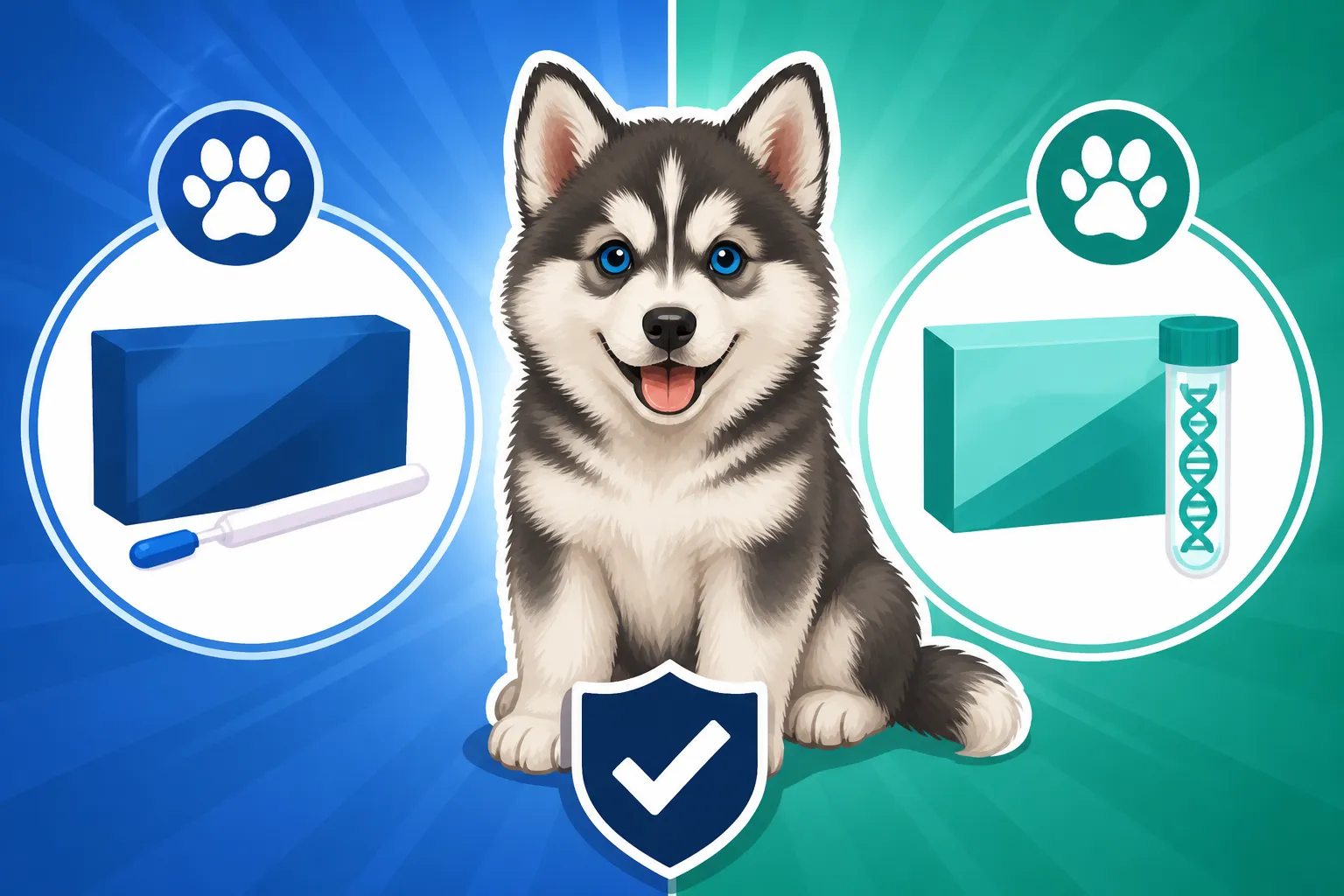
When it comes to picking a DNA test for your Pomsky, both Embark and Wisdom Panel are excellent choices. They both offer robust breed identification and health screening, but they do have some differences that might sway your decision.
Here's a quick comparison to help you weigh your options:
| Feature | Embark | Wisdom Panel |
|---|---|---|
| Breed Identification | Highly detailed, extensive database (350+ breeds/types). Pinpoints specific parent breeds. | Comprehensive, large database. Identifies primary breed components and percentages. |
| Health Screening | Offers the most extensive genetic health panel (250+ genetic conditions). | Screens for a significant number of genetic health conditions (200+). |
| Trait Information | Very detailed trait analysis (coat color, length, shedding, weight prediction, etc.). | Provides information on various physical traits. |
| Genetic Diversity Score | Includes a measure of genetic diversity, useful for breeders or general curiosity. | Does not typically provide a specific genetic diversity score. |
| Research Contributions | Strong emphasis on canine health research, allowing users to contribute data. | Also contributes to canine genetic research. |
| Cost Shape | Generally on the higher end due to depth of health reporting. | Often a slightly more affordable option, especially for just breed identification. |
If your primary goal is the most comprehensive health screening available, along with detailed trait information and genetic diversity data, Embark might be your preferred choice. If you're looking for accurate breed identification and a solid health screening panel at a slightly lower price point, Wisdom Panel is a fantastic option. Both are readily available at major pet retailers and online stores, including Chewy, making it easy to get started. Ultimately, either test will provide you with valuable insights into your beloved Pomsky's unique genetic heritage, confirming the presence of their Husky and Pomeranian roots and helping you better understand their potential health needs and physical attributes, far beyond just What a Pomsky Actually Weighs. This knowledge empowers you as an owner, enabling you to appreciate your dog's individuality, whether they look more like Whether a Pomsky Looks Like a Miniature Husky or lean more towards their Pomeranian side.
These tests don't just confirm ancestry; they deepen your understanding and connection with your furry family member. You’ll be able to tell your dog’s story with confidence, knowing the science behind their charm. And remember, regardless of the precise genetic breakdown, the love and companionship your Pomsky offers are truly priceless.
Disclaimer
This article is for general informational purposes only and does not constitute professional advice. Laws, prices and regulations vary by location and change over time. Consult a qualified professional for guidance on your specific situation.