Whether an Alaskan Klee Kai Is Sold as a Pomsky
It's incredibly frustrating, isn't it? You spend hours researching, dreaming of a specific dog, and then you hear whispers or see something online that makes you wonder if the puppy you brought home, or are about to bring home, is truly what it was advertised to be. The world of "designer dogs" can be murky, and one of the most common questions and anxieties revolves around whether an Alaskan Klee Kai might be deceptively sold as a Pomsky. This guide is here to shed light on this confusion, explain why it happens, and equip you with the knowledge to discern the differences, ensuring you know exactly what kind of furry friend you're welcoming into your life.
The Dream of the Miniature Husky: Fueling Confusion
The allure of the Pomsky began with a viral sensation – images circulating online of what appeared to be tiny Huskies, sparking an immediate and massive demand. People fell in love with the idea of a Siberian Husky's striking looks, particularly those piercing blue eyes and wolf-like mask, scaled down into a more manageable, smaller package. This visual promise, even if sometimes based on images that were not actually Pomskies, created a powerful market force.
The "Mini Husky" Image That Captured Hearts
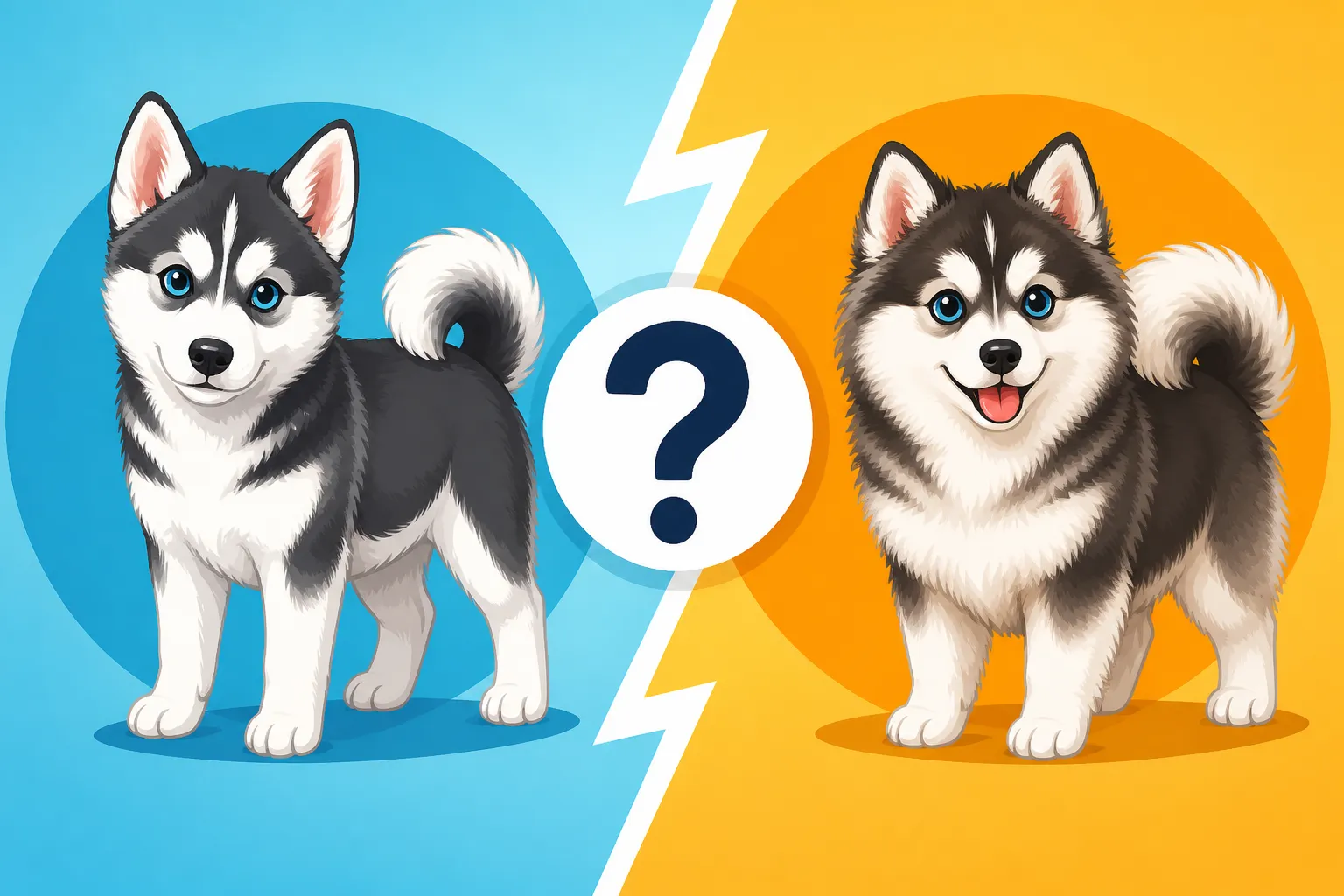
When most people first hear "Pomsky," their minds immediately jump to that iconic image: a perfectly proportioned miniature Siberian Husky. They envision those bright, often blue or bi-colored eyes, the upright triangular ears, the thick double coat, and the signature curled tail carried proudly over the back. This ideal image is what drives many prospective owners to seek out the breed, hoping for a dog that embodies all the majesty of a Husky but without the full size and intense exercise requirements. It's a powerful fantasy, and breeders, both reputable and less so, quickly understood this intense desire. The demand became so high that it outpaced the consistent ability to produce puppies that fit this exact mold, leading to varied results and sometimes, opportunistic mislabeling. In fact, many people remember that the initial viral images that sparked so much interest were not Pomskies at all, as discussed in The 2011 Photos That Were Not Pomskies.
The Reality: Pomsky Appearance Can Be a Mixed Bag
Here's where the real-world truth often diverges from the dream. The Pomsky is a crossbreed, typically between a Siberian Husky mother and a Pomeranian father. Because it's a mix of two very different breeds, the genetic lottery can result in a wide spectrum of appearances. You might get a Pomsky that leans heavily towards the Husky side, inheriting many of those coveted traits, but just as often, you'll find a Pomsky that looks distinctly more like a large Pomeranian, or an unpredictable blend of both.
Some Pomskies have the short, foxy snout and fluffy "stand-off" coat of a Pomeranian, perhaps with Husky coloring. Others might have longer legs and a leaner build, but still lack the full Husky facial structure. Their ears might be floppy, semi-erect, or fully upright, and their tails can range from a loose curl to a straight plume. The sheer variability means that the "mini Husky" look is far from a guarantee, and this inconsistency is precisely why some individuals might look for other breeds that offer a more predictable Husky-like appearance in a smaller size, even if that means misrepresenting them. For a deeper dive into common appearances, you might be interested in Why Most Pomskies Look Like Large Pomeranians.
Understanding the Alaskan Klee Kai: A Purebred Contender
Before we can truly understand why a Klee Kai might be passed off as a Pomsky, it's essential to understand what an Alaskan Klee Kai actually is. This is a distinct, purebred dog with a fascinating history and a consistent appearance that often mirrors the ideal "mini Husky" image people expect from a Pomsky.
A Recognized Breed with Husky Heritage
The Alaskan Klee Kai, often shortened to Klee Kai, is a relatively new breed, developed in Alaska in the 1970s and 80s to be a companion-sized version of the Alaskan Husky. Unlike the Pomsky, which is a hybrid or crossbreed, the Klee Kai is a recognized purebred dog with an established breed standard. This means that, generation after generation, Klee Kai tend to "breed true," producing offspring that consistently resemble their parents and fit within predictable size and appearance parameters.
They come in three size varieties: Toy (up to 13 inches), Miniature (13 to 15 inches), and Standard (15 to 17 inches). Their weight ranges from roughly 6 to 25 pounds. This size range directly overlaps with, and often perfectly matches, the desired size range for a Pomsky, which typically falls between 15 to 30 pounds, though some can be larger. You can learn more about adult sizes in What a Pomsky Actually Weighs. This inherent consistency and predictable smaller size make them highly appealing to those seeking that miniature Husky aesthetic.
Key Distinguishing Features of an Alaskan Klee Kai
While superficially similar to a Husky, the Alaskan Klee Kai has specific traits that set it apart, and these are crucial when trying to differentiate it from a Pomsky.
- Appearance Consistency: Klee Kai exhibit a much more consistent "Husky look" than Pomskies. Their facial mask, upright ears, and tail curl are typically well-defined and present in most individuals.
- Tail: Klee Kai almost invariably have a distinctly curled tail that rests over their back, a highly desired Husky trait.
- Ears: Their ears are typically erect and pointed from a young age, unlike some Pomskies whose ears might take longer to stand or remain floppy.
- Build: They are finely boned and well-proportioned, appearing as a truly scaled-down version of a Husky, rather than a mix with Pomeranian characteristics.
- Temperament: Klee Kai are often described as intelligent, agile, and alert. They can be quite reserved with strangers but devoted to their families, sometimes exhibiting a "cat-like" independence. They are less prone to the boisterous, outgoing nature of some Huskies, and may be less vocal than a Husky, although they can still "talk." When it comes to vocalizations, you might be surprised to learn about The Husky Howl in a Pomsky.
The Deception: Why a Klee Kai Might Be Marketed as a Pomsky
Now that we understand both breeds, it becomes clearer why the line can be blurred, sometimes intentionally. The primary reason an Alaskan Klee Kai might be sold as a Pomsky, or vice-versa, often boils down to market demand, price differences, and a lack of transparency.
Fulfilling the "Mini Husky" Fantasy (with a Catch)
As established, many people looking for a Pomsky are specifically seeking that striking miniature Husky look. Because true Klee Kai consistently deliver this aesthetic, an unscrupulous breeder or seller might pass off a Klee Kai (or a Klee Kai mix that looks similar) as a Pomsky. They capitalize on the intense demand for the "mini Husky" without having to navigate the complexities and inconsistencies of breeding actual Pomskies.
Imagine a scenario: a buyer comes in, showing photos of tiny Huskies, saying "I want a Pomsky just like this!" If a breeder has Klee Kai puppies, which often perfectly match that ideal, it’s a tempting shortcut. They might present the Klee Kai puppies as "exceptional examples" of Pomskies, knowing the buyer is focused on the appearance rather than the actual parentage. This is especially prevalent in situations where the seller knows the buyer isn't well-versed in the nuances of either breed.
The Financial Incentive: Price Gaps and Exploitation
The price difference between the two breeds can also be a significant motivator for misrepresentation. Historically, purebred Alaskan Klee Kai puppies often commanded a higher price due to their rarity, purebred status, and consistent appearance. Pomskies, while also expensive (see The Fifteen Hundred to Five Thousand a Pomsky Costs), sometimes had a slightly lower floor price depending on generation and appearance.
However, the market is dynamic. Sometimes, an unethical seller might acquire a Klee Kai mix or a Klee Kai with less-than-perfect pedigree for a lower cost, and then market it as a high-end Pomsky to fetch a premium, exploiting the current popularity of the "designer dog." Conversely, if a Klee Kai breeder has pups that don't quite meet their stringent breed standards, they might try to sell them as Pomskies for a lower price than a purebred Klee Kai, but still high for a crossbreed. It's a tricky dance driven by perceived value and demand.
The Role of Breeder Transparency and Buyer Due Diligence
Ultimately, the most significant factor enabling this kind of misidentification is a lack of transparency from the seller and insufficient due diligence from the buyer. Backyard breeders or puppy mills are less likely to provide full health records, allow visits to see the parents, or offer guarantees. They might use vague language like "Husky mix" or "miniature Husky type" without explicitly stating Pomsky or Klee Kai.
Responsible breeders, whether of Klee Kai or Pomskies, are usually eager to share information about their lines, show both parent dogs, and discuss the specific traits of their puppies. They understand the importance of matching the right dog to the right family. When this transparency is missing, it should be a major red flag. This brings us back to critical questions like Whether an Untested Pomsky Litter Is Worth Buying.
Unmasking the Truth: How to Differentiate Between a Klee Kai and a Pomsky
If you suspect you might have an Alaskan Klee Kai disguised as a Pomsky, or you want to be absolutely sure before making a commitment, there are several key areas to investigate. It requires a keen eye and a willingness to ask tough questions.
Physical Markers and Breed Consistency
One of the most telling indicators is the overall consistency of appearance within a litter and across a breeder's lines.
- Consistency is Key: With Alaskan Klee Kai, you expect a high degree of consistency. Pups from the same litter will generally look very similar, all exhibiting clear Husky-like masks, upright ears, and curled tails. If you see a breeder advertising "Pomskies" but all their puppies look identical to a Klee Kai standard, it's worth investigating.
- Ear Set: Klee Kai typically have erect ears that stand up from a very young age. While many Pomskies develop upright ears, some may have floppy or semi-erect ears, especially when young, and some never fully stand. If the ears are consistently erect and pointed on all puppies, it leans towards Klee Kai.
- Tail Curl: A Klee Kai almost always has a distinct, upward-curling tail that rests over its back. While many Pomskies have this trait, it's not as universally consistent as in the Klee Kai.
- Facial Structure: Klee Kai tend to have a slightly more refined, foxy face, consistently displaying the Husky-like mask. Pomskies can have a wider variety of facial structures, sometimes with a rounder face or a shorter muzzle reminiscent of the Pomeranian.
- Coat Type: Both breeds have a double coat, but the texture and density can vary. Klee Kai tend to have a plush double coat. Pomsky coats can range from short-coated to wooly, depending on which parent's genetics are more dominant, as detailed in The Three Pomsky Coat Types.
Here’s a helpful table summarizing key differences:
| Feature | Alaskan Klee Kai | Pomsky |
|---|---|---|
| Breed Status | Purebred, recognized | Hybrid (crossbreed) |
| Origin | Developed in Alaska (1970s-80s) | Cross of Siberian Husky and Pomeranian (2010s) |
| Appearance | Highly consistent "mini Husky" look | Wide variation, can lean Husky or Pomeranian |
| Ear Set | Typically erect and pointed from young age | Can be erect, semi-erect, or floppy; variable |
| Tail | Distinct, high-set curl over the back | Often curled, but can be looser or straighter; variable |
| Facial Mask | Very common and well-defined | Common, but can be less defined or absent; variable |
| Temperament | Often reserved with strangers, loyal to family | Can be outgoing or reserved, prone to Husky independence/Pomeranian sass |
| Predictability | High predictability in size and appearance | Lower predictability in size and appearance |
Temperament and Behavioral Clues
While not foolproof, observing temperament can sometimes offer hints.
- Vocalization: Both breeds can be vocal, but Klee Kai are often described as having a more reserved nature, though they can still "talk." Pomskies often inherit the Husky's tendency to howl or "talk back" and the Pomeranian's propensity for barking.
- Stranger Acceptance: Klee Kai tend to be more wary or reserved around strangers, requiring careful socialization. Pomskies can vary widely, from being outgoing and friendly to being more aloof, depending on their genetic inheritance and early experiences.
- Independence vs. Affection: Both breeds exhibit intelligence and can be independent thinkers. However, Klee Kai are sometimes described as almost cat-like in their independence, while Pomskies often have a strong desire for human companionship but may express it with a stubborn streak.
Verifying Pedigree and Health Testing
This is arguably the most crucial step. A responsible breeder will always be transparent about parentage and health.
- Ask for Parentage Documentation: For a Pomsky, this means proof of a Siberian Husky mother and a Pomeranian father. For a Klee Kai, this means official pedigree papers from a recognized registry for the breed (e.g., UKC, AKC Foundation Stock Service). If a "Pomsky" breeder claims their dogs are purebred Klee Kai without papers, or cannot provide proof of Pomsky parentage, be very wary.
- Demand Health Clearances: Both breeds are susceptible to certain genetic conditions. Reputable breeders will perform health testing on the parent dogs for issues like eye conditions (e.g., The Juvenile Cataracts a Pomsky Gets From the Husky), patellar luxation, and hip dysplasia (see Slipping Kneecaps in a Pomsky and Hip Dysplasia in a Twenty Pound Pomsky). Ask to see these certifications. For Klee Kai, breeders often adhere to specific testing recommendations from the breed club. For Pomskies, responsible breeders follow recommendations from organizations like the International Pomsky Association (IPA), which sets standards and ethical guidelines.
- DNA Testing: If you have doubts about your dog's breed, a commercially available DNA test kit can be incredibly revealing. Products available through retailers like Chewy or specific direct-to-consumer brands can analyze your dog's genetic markers and provide a detailed breakdown of their breed makeup. This is a definitive way to confirm whether your dog is indeed a Pomsky, an Alaskan Klee Kai, a mix of both, or something else entirely. Learn more about this at Whether a DNA Test Confirms a Pomsky.
The Importance of Due Diligence and Responsible Sourcing
Navigating the world of designer breeds means taking extra precautions. Whether you end up with a genuine Pomsky or a lovely Alaskan Klee Kai, the key is knowing what you're getting and who you're getting it from.
Seeking Reputable Breeders and Associations
For genuine Pomskies, look for breeders who are registered with organizations like the International Pomsky Association (IPA). While the IPA is not a traditional kennel club like the AKC, it strives to establish ethical breeding practices, a breed standard, and breeder accountability. You can explore The International Pomsky Association and What It Sets for more information. A reputable Pomsky breeder will openly discuss generations (F1, F2, etc.) and the variability this entails.
For Alaskan Klee Kai, seek out breeders registered with recognized kennel clubs such as the United Kennel Club (UKC) or participating in the AKC's Foundation Stock Service. These breeders adhere to strict breed standards and typically have robust health testing protocols. In both cases, a good breeder will:
- Allow you to visit their facility and meet the parent dogs.
- Provide verifiable health clearances for the parents.
- Offer a health guarantee for their puppies.
- Ask you as many questions as you ask them, demonstrating a commitment to finding good homes.
- Be transparent about pricing and any potential genetic predispositions.
Genetic Testing, Health Guarantees, and Pet Insurance
Beyond asking questions, proactive steps are essential.
- Genetic Health Testing: Insist on seeing documented proof of genetic health testing for both parent dogs. This is vital for mitigating risks of inherited diseases. For instance, Whether a Pomsky Needs a CAER Exam highlights the importance of eye screenings for both parent breeds.
- Health Guarantees: A responsible breeder will provide a written health guarantee, outlining their responsibilities if a serious genetic health issue arises within a certain timeframe after purchase.
- Pet Insurance: Regardless of breed, pet insurance is a wise investment. Companies like Healthy Paws offer coverage for unexpected illnesses and accidents, providing peace of mind. Knowing your dog's true breed can sometimes impact policy details, so accurate information is always best. It's smart to consider Insuring a Pomsky Against Two Parent Breeds to understand how different parentage might affect your options. High-quality food options, such as those offered by Ollie, can also contribute to your dog's overall health and well-being, potentially reducing vet visits over their lifespan.
In conclusion, while the thought of a Klee Kai being passed off as a Pomsky can be unsettling, equipping yourself with knowledge is your best defense. Both breeds are incredible companions, each with unique traits and needs. By understanding their differences and committing to thorough due diligence, you can confidently welcome the right dog into your family, knowing their true heritage and being prepared for their specific care requirements.
Disclaimer
This article is for general informational purposes only and does not constitute professional advice. Laws, prices and regulations vary by location and change over time. Consult a qualified professional for guidance on your specific situation.