Whether Breeders Prefer Pomsky to Pomsky Crosses
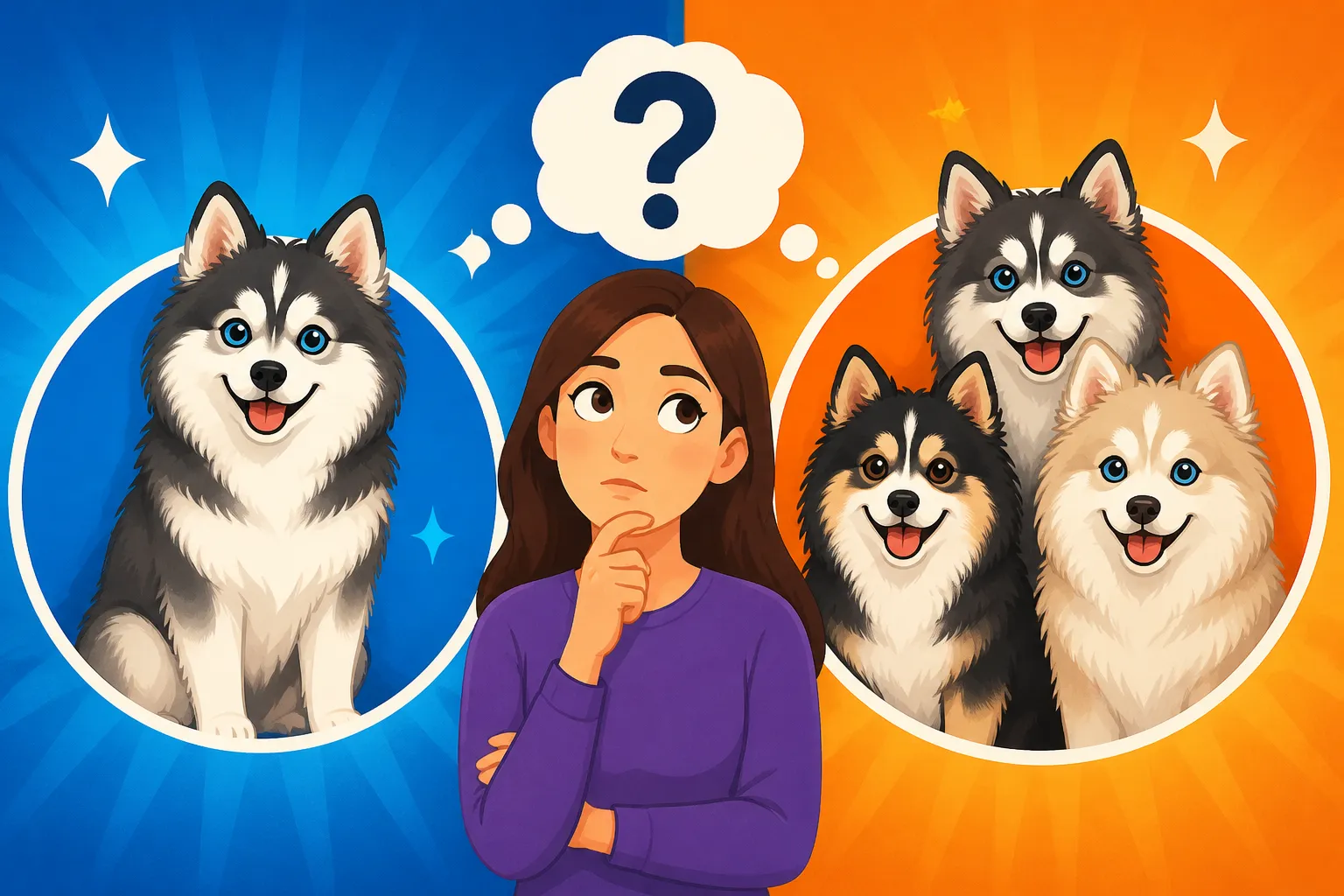
It’s a truly fascinating time to be a Pomsky enthusiast, isn't it? When you start looking into getting one of these adorable pups, you quickly realize it's not as simple as picking a purebred. There's a whole world of F1, F2, and multi-generational Pomskies, and it can leave you wondering what breeders are even trying to achieve. This guide will unpack why most dedicated Pomsky breeders are now focusing on breeding Pomsky to Pomsky, rather than constantly reintroducing parent breeds or, worse, completely new ones, aiming for a more predictable and healthy future for the breed.
The Journey of Defining a Pomsky: From Hybrid to Breed-in-Progress
When the idea of a "Pomsky" first captured hearts online, it was often based on some pretty fantastical images that weren't always genuine. But from those early viral moments, real breeders stepped up to create this miniature husky-like companion. This wasn't just about mixing two dogs; it was about beginning a journey towards a new, recognizable breed. It's a complex process that moves through distinct phases, each with its own challenges and goals.
The Foundation: F1 Pomskies and Their Variation
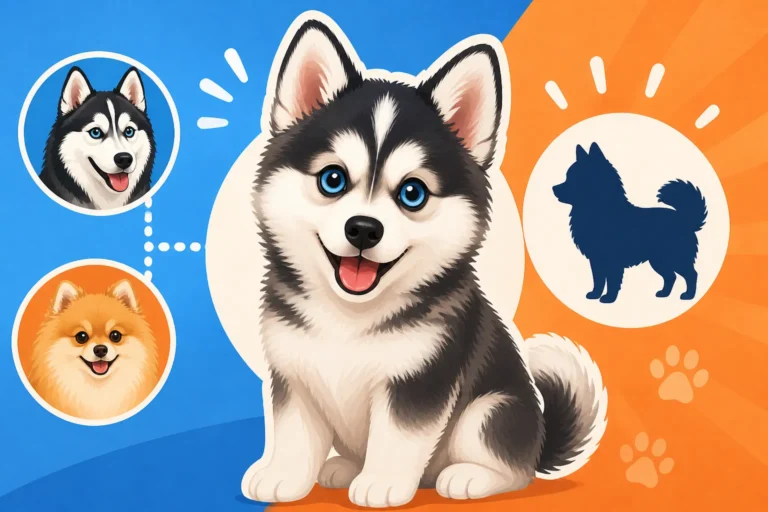
The very first Pomskies, known as F1s, are a direct cross between a Siberian Husky mother and a Pomeranian father. This initial pairing is foundational, but it comes with a significant amount of genetic lottery. Think about it: you’re mixing two breeds with wildly different sizes, temperaments, and physical characteristics. While you get adorable puppies, the range of traits even within a single litter can be astonishing.
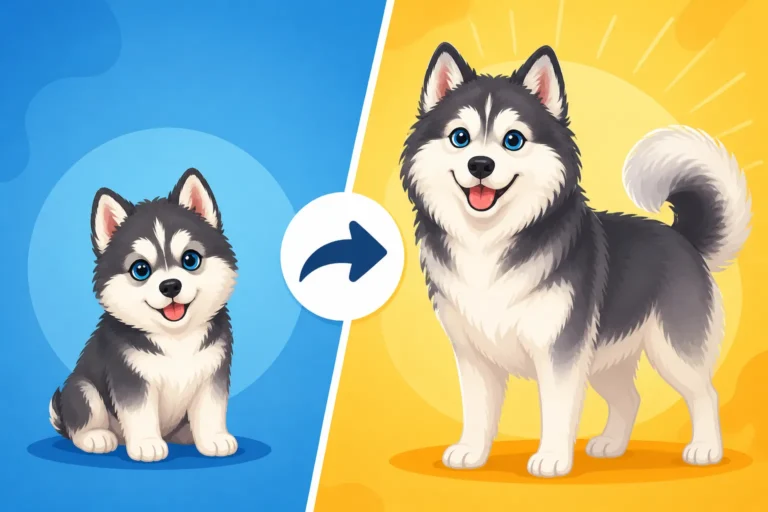
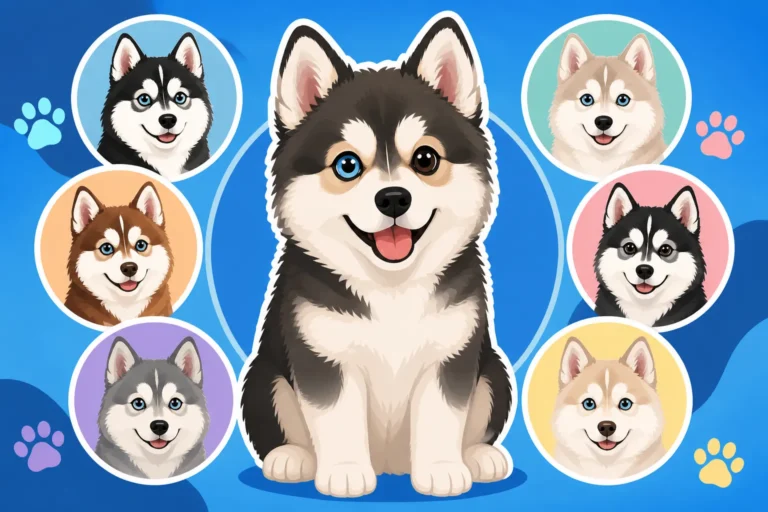
One puppy might look like a tiny Husky with piercing blue eyes, while its sibling might be a fluffier version closer in appearance to a Pomeranian, perhaps with a curled tail that hugs its back like a question mark. Their sizes can vary dramatically, too, from a compact 10-15 pounds to a much larger 30-35 pounds, making it hard for prospective owners to predict what they'll get. This unpredictability in F1s, from coat type to adult size, is a big reason why breeders don't usually stop there. You can read more about Why an F1 Pomsky Varies So Much.
The Quest for Consistency: F2 and Multi-Generational Pomskies
Once F1 Pomskies exist, dedicated breeders move into the next phase: breeding Pomsky to Pomsky. This is where the F2 (F1 Pomsky x F1 Pomsky), F3 (F2 Pomsky x F2 Pomsky), and subsequent "multi-generational" (often shortened to "multigen") Pomskies come into play. The goal here is consistency. Imagine trying to bake a cake for the first time by mixing two completely different recipes – the result might be delicious, but it's hard to replicate. Now, imagine refining that mix over several batches until you have a consistently perfect cake. That's essentially what F2 and multigen breeding aims to do.
By carefully selecting F1 Pomskies with desirable traits (health, temperament, appearance, and size that aligns with the emerging Pomsky "standard"), breeders hope to produce F2 offspring that are more uniform. And when F2s are bred to F2s, or F2s to F3s, the predictability continues to increase. This process is crucial for establishing a distinct breed type that consistently produces puppies resembling the ideal Pomsky. It's a painstaking endeavor, but it's essential if the Pomsky is ever to be recognized as a standalone breed rather than just a designer hybrid. Why Pomsky Breeders Prefer F2 and Beyond delves deeper into this.
Why Stability Matters to Breeders
For a responsible breeder, stability isn't just about looks; it's about making informed decisions for the future of the breed. When you're dealing with the wide variability of F1s, it's difficult to predict much about the puppies. Will they be prone to the knee issues of Pomeranians or the hip problems of Huskies? Will their coats be easy to manage or prone to matting like a wooly Pomsky? Will they have the bold independence of a Husky or the alert nature of a Pomeranian?
Breeders who are serious about the Pomsky's future want to minimize health risks and ensure good temperaments. By breeding Pomsky to Pomsky, they can study several generations, track genetic health clearances, and select for traits that actively improve the breed's overall health and behavior. It's a commitment to moving beyond just "cute puppies" to creating healthy, happy, and predictable companions. This long-term vision is a far cry from the impulsive mixing that sometimes characterizes early "designer dog" trends.
Why Breeding Pomsky-to-Pomsky Becomes the Preferred Path
So, why do breeders gravitate so strongly toward breeding Pomsky to Pomsky? It boils down to a fundamental desire for predictability, refinement, and progress toward establishing the Pomsky as a true breed. It’s a deliberate effort to sculpt a consistent dog that meets certain ideals, rather than rolling the dice every time.
Achieving a Predictable Pomsky "Look" and Size
The initial appeal of the Pomsky was largely its miniature Husky appearance. However, as we discussed, F1 Pomskies can be all over the map. When breeders cross an F1 Pomsky with another F1 Pomsky, or subsequent generations, they are working to "set" the desired physical traits. This means more puppies consistently exhibiting the erect ears, curled tail, Husky-like markings (like the distinctive mask), and compact yet sturdy build that people envision when they think of a Pomsky.
They're aiming for that sweet spot in size – not too tiny like a pure Pomeranian, nor as large as a Husky. This helps ensure that buyers get a dog closer to what they expect, reducing the disappointment that can occur when an F1 grows much bigger or looks less "Husky" than anticipated. This focus helps create a consistent "brand" for the Pomsky, making it easier for potential owners to understand what to expect. Finding breed-specific food and toys on sites like Chewy also becomes easier when size and build are more consistent.
Consolidating Desired Temperament Traits
Temperament is just as crucial as appearance, if not more so, for a dog to be a good companion. Huskies are known for their independent, sometimes stubborn nature and high energy, while Pomeranians can be feisty and vocal. Breeding Pomsky to Pomsky allows breeders to select for a balanced temperament – often aiming for the Husky's playful affection without its extreme wanderlust, and the Pomeranian's alertness without excessive yappiness or suspicion.
Through careful observation of parent dogs and their offspring over generations, breeders can make informed choices. They'll look for dogs that are sociable, intelligent, trainable, and adaptable, ideally striking a balance between the two parent breeds. The goal is a dog that's active and fun-loving but also capable of settling down in a home environment, and less prone to the extreme prey drive that can be a hallmark of the Husky.
Mitigating Health Concerns Through Selective Breeding
This is perhaps the most critical reason for preferring Pomsky-to-Pomsky crosses. All breeds, purebred or hybrid, have potential health concerns. Huskies are predisposed to The Eyes a Pomsky Gets From the Husky, like juvenile cataracts, and Hip Dysplasia in a Twenty Pound Pomsky. Pomeranians can suffer from Slipping Kneecaps in a Pomsky and The Collapsing Trachea a Pomsky Gets From the Pomeranian. When you breed an F1 to an F1, you combine these two lists of potential issues.
However, by breeding Pomsky to Pomsky, responsible breeders can meticulously track health clearances. They perform genetic testing and screening for conditions relevant to both parent breeds. The idea is to select breeding pairs that are genetically clear of known issues or have excellent scores, thereby reducing the likelihood of passing on inherited diseases to future generations. This diligent approach is essential for producing healthier dogs and mitigating inherited conditions. It's about taking The Two Opposite Disease Lists a Pomsky Inherits and working to avoid the worst combinations, improving overall health as the breed progresses.
Navigating the Labyrinth of "Other" Pomsky Crosses
While Pomsky-to-Pomsky breeding is generally the preferred path for establishing a consistent breed, you might encounter other types of crosses. These can be confusing for prospective owners and raise questions about the long-term goals of the breeding program. It’s important to understand why these alternative crosses are usually not favored by breeders striving for true breed development.
Backcrossing to a Parent Breed: Advantages and Disadvantages
Sometimes, a breeder might choose to "backcross" a Pomsky to one of its original parent breeds. For example, breeding an F1 Pomsky back to a purebred Husky (producing an F1b Pomsky) or to a purebred Pomeranian. Why would they do this? A breeder might opt for a backcross to reintroduce specific traits that they feel are being lost or are underdeveloped in their Pomsky lines. For instance, if their Pomskies are becoming too heavy-boned, they might backcross to a Pomeranian to refine the build, or if they want more Husky traits, they might go back to a Husky.
However, backcrossing reintroduces a greater degree of genetic variability. While it can bring in desired traits, it also risks bringing back undesirable traits from the parent breed in a strong, unpredictable way. An F1b Pomsky bred back to a Husky might end up being much larger than a standard Pomsky, or exhibit a higher prey drive. Conversely, one bred back to a Pomeranian might be too small and delicate. This makes the predictability of subsequent generations much harder to achieve, which is usually counter to the goal of breed establishment.
The Ethical Minefield of Unrecognized Outcrosses
A more concerning "other" cross is when breeders introduce entirely different breeds into the Pomsky lineage, sometimes without transparency. You might hear claims of "miniature Huskies" that are actually mixed with Alaskan Klee Kai, or other small Spitz breeds. While some of these outcrosses might be well-intentioned attempts to address genetic diversity or certain physical traits, when not openly disclosed, they become misleading.
Reputable breeders committed to the Pomsky generally avoid these unrecognized outcrosses because they dilute the very essence of what a Pomsky is meant to be – a cross specifically of Husky and Pomeranian. Introducing other breeds makes it impossible to establish a true "breed standard" and often complicates health tracking, as you're now dealing with the potential genetic issues of three or more breeds. It's a practice that undermines the integrity of the breed development process and can lead to unhealthy or unpredictable outcomes for unsuspecting buyers. If you're told a Pomsky has another breed mixed in, it's wise to ask for Whether a DNA Test Proves a Pomsky's Parentage and proceed with caution. Furthermore, you won't find specific recommendations for these mixed-mixed breeds on sites like Chewy.
Genetic Diversity vs. Breed Type
The tension between maintaining genetic diversity and establishing a consistent breed type is a delicate balance. A healthy breed needs a broad genetic pool to avoid inbreeding depression and the concentration of specific genetic health problems. This is why some might argue for occasional outcrossing or backcrossing. However, constant outcrossing prevents the stabilization of traits necessary for breed recognition.
Reputable Pomsky organizations, like the IPA, often advocate for careful Pomsky-to-Pomsky breeding within a diverse foundation of F1 lines. Their aim is to create a viable gene pool from the existing Pomsky population, rather than constantly introducing new blood. This ensures enough genetic variety while still progressing towards a defined "Pomsky" dog. They believe in building the breed from within, using the established Pomsky lines. What the International Pomsky Association Does highlights these efforts.
| Cross Type | Genetic Diversity | Predictability of Traits | Breeder Preference for Breed Establishment |
|---|---|---|---|
| F1 (Husky x Pom) | High (first cross) | Low | Foundation, but not the long-term goal |
| F2 (F1 Pomsky x F1 Pomsky) | Moderate to High | Moderate | Preferred for consistency and breed type |
| Multigen (F2, F3+) | Moderate | High | Highly preferred for stability and future |
| Backcross (Pomsky x Parent Breed) | Varies | Low to Moderate | Situational, often to reintroduce traits |
| Outcross (Pomsky x Other Breed) | High (new genes) | Very Low | Not preferred for breed establishment |
The Future of the Pomsky: Consistency, Health, and Breed Recognition
For those of us who adore the Pomsky, understanding the breeding journey is key to appreciating where the breed is headed. It’s not just about creating cute puppies; it's about a long-term vision that balances beauty, health, and temperament. The choices breeders make today will shape the Pomsky of tomorrow.
Market Demand and Buyer Expectations
Let's be honest, a significant part of the Pomsky's appeal comes from the idea of a mini Husky. Buyers are drawn to that distinct look – the piercing eyes, the stand-up ears, the fluffy double coat. When F1 Pomskies inevitably produced a wide spectrum of appearances, some buyers were left wanting. This is where the preference for Pomsky-to-Pomsky breeding truly shines. By producing F2s and multigens, breeders are better able to consistently meet those expectations, delivering puppies that fit the idealized image more reliably.
This consistency also simplifies things for owners. Knowing the general size and coat type of their Pomsky allows for better preparation, from selecting the right-sized crate to knowing what grooming tools to purchase from a supplier like Chewy. It helps align buyer expectations with the reality of owning a Pomsky, leading to happier owners and fewer surrendered dogs.
The Role of Registries and Associations
As with any emerging breed, a consistent breeding strategy is vital for recognition. Organizations like the International Pomsky Association (IPA) are working hard to establish standards, ethical guidelines, and registration processes. These organizations play a crucial role in encouraging responsible breeding practices, which heavily lean towards Pomsky-to-Pomsky crosses. Their goal is to ensure that future generations are not only beautiful but also healthy and temperamentally sound.
By adhering to a consistent breeding plan, these breeders hope to one day achieve recognition from larger kennel clubs. This process requires many generations of predictable offspring, with documented pedigrees and health clearances. Whether a Multigen Pomsky Is More Predictable is a direct result of these efforts, laying the groundwork for official recognition. Without a clear direction from breeders, such formal recognition would be impossible.
Long-Term Vision for the Pomsky
Ultimately, the preference for breeding Pomsky to Pomsky comes from a long-term vision: to transition the Pomsky from a trendy hybrid to a respected, recognized breed. This isn't a quick process; it takes dedication, scientific understanding, and a deep love for dogs. Breeders are meticulously tracking health data, documenting lineages, and making difficult decisions to refine the breed.
This includes carefully managing genetic diversity within the existing Pomsky lines, rather than continually backcrossing to parent breeds or introducing new ones which can undermine years of progress. It's a commitment to a future where every Pomsky puppy born is a healthy, predictable, and beloved companion, carrying the best traits of its unique heritage. It's about ensuring the Pomsky doesn't remain a fleeting fad but becomes a cherished part of the canine world for generations to come.
Disclaimer
This article is for general informational purposes only and does not constitute professional advice. Laws, prices and regulations vary by location and change over time. Consult a qualified professional for guidance on your specific situation.