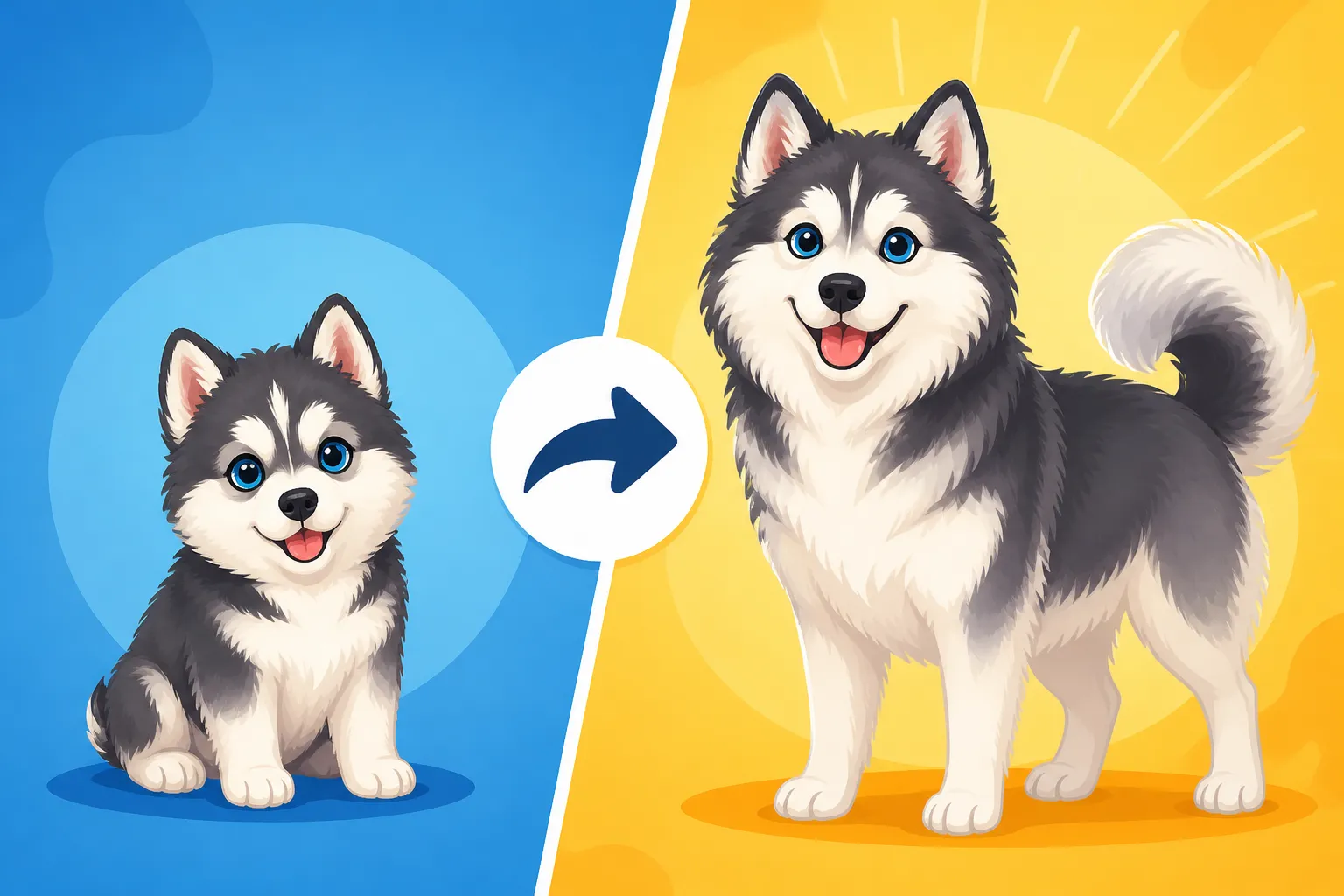
Whether a Pomsky Grows After a Year
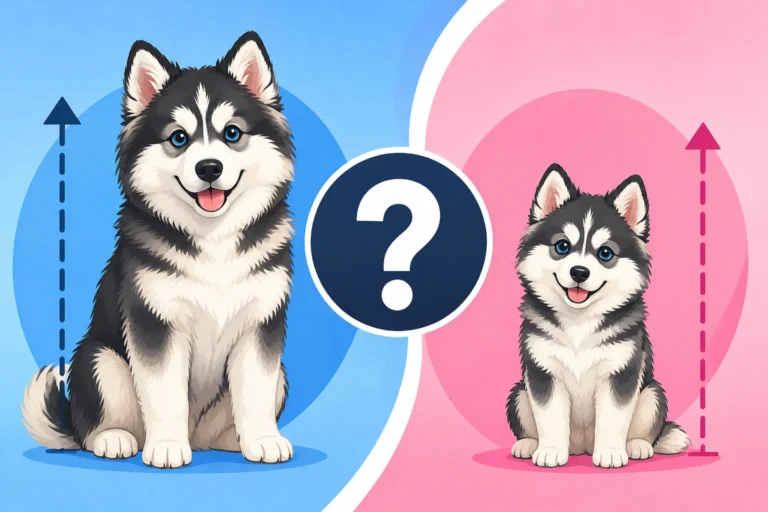
A Pomsky may still gain weight after its first birthday, but that does not always mean it is still getting taller. Many are close to their adult height by a year, while their bodies continue to fill out for a while longer. Because Pomskies vary widely in size, this guide explains what late growth can look like and how to tell normal development from unwanted weight gain.
What growth after a year usually looks like
Height often settles before a Pomsky fills out
By around a year old, many Pomskies are near their adult height. That can make later growth easy to misread: a dog may look broader through the chest, develop more muscle, or carry a slightly different outline without getting much taller. A young dog’s proportions can also change as it loses its lanky, adolescent look.
The timing is not identical for every Pomsky. A smaller dog may look mature earlier, while a larger or more slowly developing dog can take longer to finish filling out. Since Pomskies are a cross between breeds with very different sizes, there is no single birthday that marks the end of growth for every dog. For background on the range, see How Big a Pomsky Gets.
It helps to distinguish growth in size from weight gain. If your Pomsky’s height and body length seem steady but the number on the scale keeps climbing, the change may be body fat rather than normal development. A body-condition check and a conversation with your veterinarian can help make that distinction.
Some Pomskies continue developing beyond their first birthday
A Pomsky may add a little height or length after turning one, though noticeable changes are not guaranteed. The most obvious later change is often a gradual increase in body mass as the dog matures. This can happen even when the dog is eating the same food and following the same routine, so it is worth keeping an eye on condition rather than assuming that every extra pound is part of puppy growth.
A useful way to think about the first year is as a major growth period, not a universal finish line. Your dog may be almost adult-sized at twelve months, or may still look somewhat adolescent. A veterinarian who knows your dog’s history can help interpret its growth pattern. The general age range is also discussed in The Age a Pomsky Reaches Full Size.
| What you notice after a year | What it may mean | What to check |
|---|---|---|
| Height appears unchanged, but the body looks less lanky | Normal maturation or filling out | Body condition, muscle tone, and steady weight |
| The scale rises while the waist becomes less visible | Possible excess weight | Portions, treats, activity, and veterinary advice |
| A small, gradual increase with normal energy and appetite | Continued development may be occurring | Track the trend and mention it at the next checkup |
| Sudden weight change or a change in appetite or energy | May need medical attention | Contact your veterinarian rather than waiting for a growth phase |
The family tree makes predictions uncertain
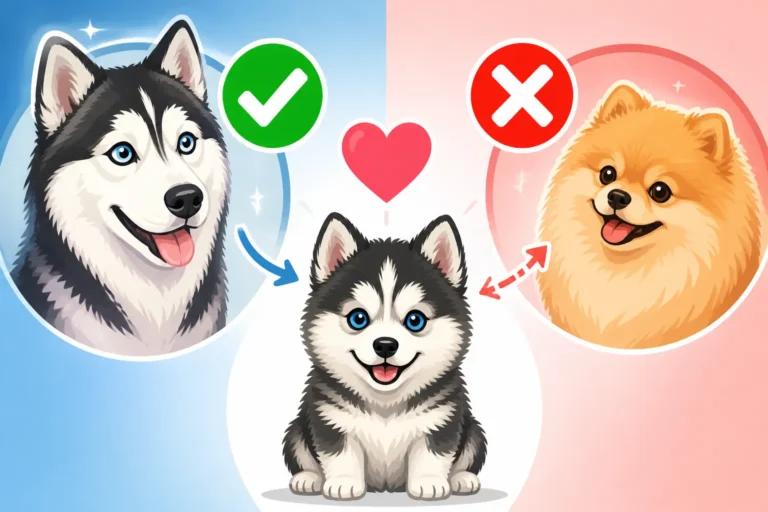
Pomsky puppies can vary considerably, including puppies from the same litter. Their adult size depends on inherited traits, and a puppy may take after one side of its family more strongly than the other. Parent weights can offer clues, but they do not provide a guarantee. That is why two Pomskies of the same age may reach maturity at different times and end up with different builds.
If you are comparing your dog with photos online, remember that a fluffy coat can make the body look larger or hide the waist. A compact-looking Pomsky may weigh more than expected under its coat, while a lean dog may appear bigger because of its fur. For more on why early estimates can be unreliable, read Whether a Pomsky Puppy's Size Can Be Predicted and Whether Parent Weights Predict a Pomsky's Size.
How to tell whether your Pomsky is still growing
Track a trend instead of reacting to one weigh-in
A single measurement tells you very little. A dog may weigh a bit more after a meal, after drinking, or simply because a different scale was used. Instead, note weight periodically under similar conditions and look at the pattern over time. If you have a small household scale that can safely accommodate your dog, use it consistently; otherwise, ask the veterinary clinic to help you track weights.
Keep a simple record of the date, weight, and any noticeable changes in your Pomsky’s shape or activity. A monthly note can be more useful than checking every day, which can make normal fluctuations feel alarming. For a young dog, you can also record a standing height measurement at the shoulder, but try to measure in the same way each time. A wriggly dog and a hurried tape measure are not a reliable measuring system.
The goal is not to make your Pomsky match a chart or a social-media photo. It is to understand your individual dog’s trend. If the numbers rise gradually and your veterinarian is happy with your dog’s body condition, the change may be ordinary maturation. If the rise is steady and the dog is losing its waist, it is sensible to review food portions and daily activity.
Check body shape as well as the scale
A Pomsky’s coat can make body-condition checks less straightforward, but your hands can tell you things your eyes may miss. In a dog at a healthy condition, you should generally be able to feel the ribs without pressing hard, while the ribs should not be sharply visible. Viewed from above, there is usually some narrowing behind the ribs; from the side, the abdomen often rises slightly toward the hind legs.
Use a gentle touch, especially if your Pomsky is sensitive about handling. Run your hands along the ribcage rather than squeezing, and check the waist beneath the coat. If you are uncertain, ask your veterinarian to show you what a healthy body condition looks and feels like for your dog. That practical demonstration is more useful than guessing based on breed labels alone.
A Pomsky that is getting heavier is not automatically overweight, and a naturally broad dog is not automatically unhealthy. But changes in shape matter. If you notice the waist disappearing, the ribs becoming harder to feel, or your dog tiring sooner on familiar walks, bring it up with your veterinarian. Keeping a Pomsky's Weight in Range offers related guidance on monitoring condition.
Consider the whole picture, not just age
Growth is only one possible reason for a changing weight. Activity may have dropped after puppyhood, treats may have become more frequent, or portions may have stayed at puppy levels as the dog’s needs changed. Neutering can also coincide with shifts in appetite or energy, so it is useful to reassess feeding and activity rather than assuming that a weight change is inevitable. See Whether a Neutered Pomsky Gains Weight for more on that issue.
If you order food from Chewy, check the feeding guide on the specific product and compare it with your veterinarian’s advice. The package directions are a starting point, not a personalized assessment; they may not account for your dog’s age, activity, body condition, or health needs. If you switch food, make changes gradually unless your veterinarian advises otherwise, and watch how your Pomsky responds.
Supporting healthy development after the first birthday
Adjust food to your dog, not the calendar alone
Many dogs transition from puppy food to adult food around the period when growth is slowing, but the right timing can depend on the individual dog and the food. Don’t make the switch solely because a birthday has passed. Ask your veterinarian whether your Pomsky’s growth pattern and body condition suggest it is time. The practical considerations are covered in When a Pomsky Moves to Adult Food.
Portion size deserves a fresh look as your dog matures. A puppy that was once racing around all day may become less active as an adult, while its appetite stays enthusiastic. Measure meals instead of estimating by eye, and include training treats, chews, and table scraps in the overall picture. Small extras can add up, especially for a small dog.
If Chewy is part of your regular food routine, setting a reminder to review portions when you reorder can make the check-in easier. The useful habit is the review itself: confirm the food is still appropriate, the serving amount makes sense for your dog, and the scale trend is not creeping upward. Avoid cutting food sharply without guidance, particularly if your Pomsky is still growing or has a health concern.
Keep exercise age-appropriate and consistent
A maturing Pomsky still benefits from daily movement, but exercise should fit the dog rather than become a test of endurance. Regular walks, sniffing time, short play sessions, and simple training games can provide a balanced routine. If your dog is still developing, avoid suddenly increasing the intensity or duration of activity just to burn off weight.
Pay attention to how your Pomsky moves. A dog that is reluctant to jump, slowing down, limping, or seeming uncomfortable should not be pushed through an exercise plan. A veterinarian can help you choose safe activity and assess whether discomfort, rather than low fitness, is changing your dog’s behavior. For additional health context, see Whether a Pomsky Should Jump Off Furniture.
Consistency is usually more helpful than occasional strenuous outings. For example, a predictable walk and a few minutes of indoor scent games may fit better into everyday life than a long weekend adventure followed by several inactive days. Adjust for weather, your dog’s stamina, and any advice from your veterinary team.
Know when a change deserves a veterinary check
A gradual change in shape can be part of maturation, but sudden or unexplained weight change should not be written off as “still growing.” Book a veterinary appointment if your Pomsky gains or loses weight quickly, has a marked change in appetite or thirst, becomes unusually tired, or shows other changes in normal behavior. A physical exam can help determine whether the issue is diet, activity, development, or something that needs medical attention.
It is also worth asking for help when you cannot tell whether your dog is lean, muscular, or carrying extra fat under a thick coat. Your veterinarian can assess body condition, review the growth record, and suggest a feeding plan that suits your Pomsky rather than a generic size estimate. If you want to prepare for that visit, bring recent weights and details about meals, treats, exercise, and any recent food changes.
Chewy can be convenient for keeping food and routine supplies in one place, but a retailer’s feeding information cannot replace an individual health assessment. Use product guidance as a reference, then rely on your veterinarian to interpret your Pomsky’s growth and body condition. That balance helps you avoid both common worries: assuming every extra pound is healthy growth, and restricting food when your dog still needs appropriate nutrition.
Common questions about Pomsky growth after one year
Can a Pomsky grow taller after turning one?
Yes, some may continue to develop after their first birthday, but many are already close to adult height by then. The amount and timing vary. If you think your Pomsky is still getting taller, take occasional measurements consistently and discuss the pattern at a veterinary checkup rather than relying on a single comparison.
Is weight gain after one year always normal?
No. Some weight gain may reflect maturation, but it can also come from excess calories or reduced activity. Look at body shape, how easily you can feel the ribs, and whether the waist is still visible under the coat. If weight is rising and your dog’s shape is changing, ask your veterinarian to assess body condition.
Will a Pomsky definitely stay below a particular weight?
No. Pomskies do not all mature to the same size, and an adult weight cannot be promised from age alone. A dog’s parentage may give helpful clues, but it does not settle the question. For context on size variation, see Whether a Pomsky Stays Under Twenty Pounds and Whether a Pomsky Can Reach Thirty Five Pounds.
Should I feed more if my Pomsky seems to be growing?
Not automatically. A changing body does not always mean your dog needs a larger portion. Check the food’s feeding directions, measure the serving, account for treats, and ask your veterinarian whether the amount suits your Pomsky’s age and condition. If you are unsure whether a puppy or adult formula is appropriate, discuss the transition before changing the diet.
Disclaimer
This article is for general informational purposes only and does not constitute professional advice. Laws, prices and regulations vary by location and change over time. Consult a qualified professional for guidance on your specific situation.