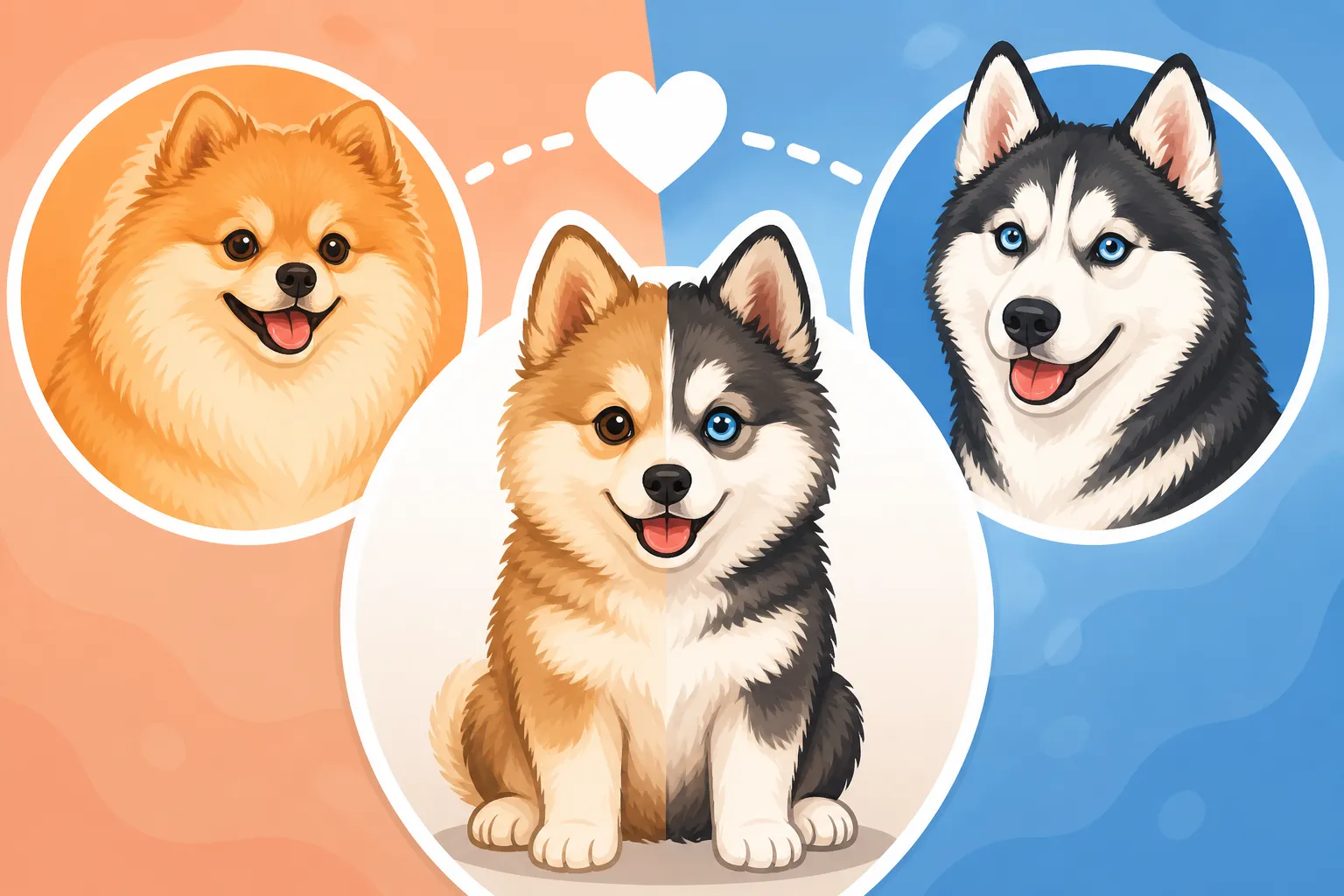
Whether a Pomsky’s Coat Comes Out Pomeranian or Husky
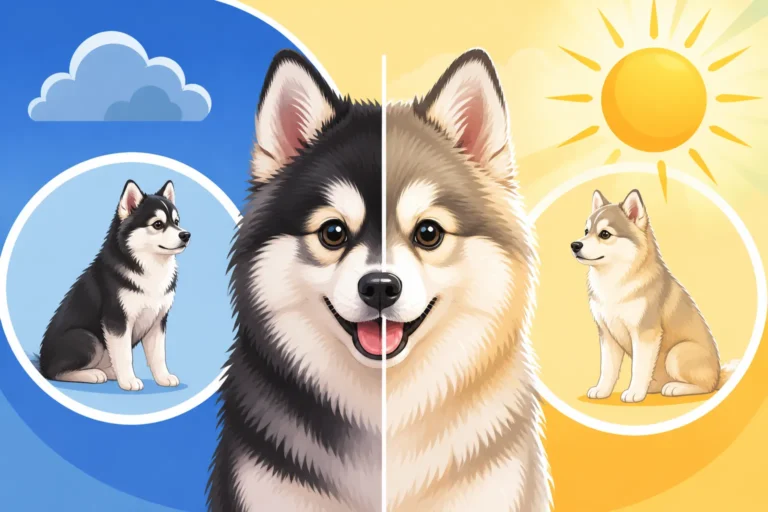
One of the most exciting, and sometimes frustrating, aspects of bringing a Pomsky into your life is the sheer anticipation of what their coat will be like. Will they be a fluffy cloud reminiscent of their Pomeranian parent, or will they sport the sleek, dense double coat of a Siberian Husky? It's a question many prospective owners grapple with, often fueled by images of "mini Huskies" that don't always reflect reality. The truth is, predicting a Pomsky's coat can be a bit of a genetic lottery, leading to a wide range of appearances that can surprise even experienced owners. This guide will explore the nuances of Pomsky coats, helping you understand the genetic influences, common coat types, and how to best care for whatever beautiful fluff your Pomsky brings home.
The Genetic Blend Behind a Pomsky's Coat
When you cross two distinct breeds like the Siberian Husky and the Pomeranian, you're not just getting a cute face; you're blending generations of genetic traits, especially when it comes to their fur. The parents contribute their unique coat characteristics, and how these genes express themselves in a Pomsky puppy is where the real mystery and beauty lie.
Understanding the Parent Breeds' Coats
To understand a Pomsky's potential coat, we first need to appreciate the distinct features of its parent breeds. Each brings its own signature look and feel to the genetic table, and the blend can be truly fascinating.
Pomeranian Coat Characteristics
The Pomeranian is renowned for its magnificent, luxurious double coat. The outer coat consists of long, straight, coarse guard hairs that stand off the body, giving the Pomeranian its characteristic fluffy, round appearance. Beneath this, there's a soft, dense undercoat that provides insulation. This combination creates a voluminous look, almost like a walking puffball. Their coats come in a dizzying array of colors and patterns, but the texture and density are consistently fluffy and profuse. Owners often find themselves battling tangles if not brushed regularly, and that stand-off coat can be quite deceiving in terms of how much hair is actually there!
Siberian Husky Coat Characteristics
In stark contrast, the Siberian Husky’s coat is built for endurance in harsh, cold climates. It’s also a double coat, but very different in texture and appearance. The guard hairs are medium in length, straight, and lie smoothly over the body, giving a somewhat sleek and well-groomed look. The undercoat is incredibly soft, dense, and thick, providing superb insulation. While a Husky's coat is undeniably thick and sheds profusely during seasonal "blows," it doesn't have the same "fluffy" or "stand-off" quality as a Pomeranian's. Instead, it's designed for functionality, repelling water and trapping air for warmth. The colors and markings are iconic, from classic black and white to striking reds and sables with distinctive facial masks.
The F1 vs. F2 vs. Multigen Factor
The generation of your Pomsky plays a significant role in the predictability of their coat, though it's never a guarantee. Understanding these generational differences helps set realistic expectations for what kind of fur you might end up with.
F1 Pomsky Coat Variability
An F1 Pomsky is a first-generation cross, meaning one parent is a purebred Siberian Husky and the other is a purebred Pomeranian. This generation is often the most unpredictable when it comes to coat type, as the genes from both parents have a 50/50 chance of being expressed. You might see a puppy in an F1 litter that looks very much like a miniature Husky, with a shorter, sleeker coat, while a sibling could be a fluffy, dense Pomeranian look-alike. I've known people who adopted F1 Pomskies from the same litter, and one ended up with a distinctly Husky-like coat, meaning less matting but still heavy shedding, while the other had a full-blown "wooly" coat that required daily vigilance against tangles. It's truly a genetic lottery in that first generation, making it exciting but also challenging for those with specific aesthetic hopes.
F2 and Multigen Pomsky Coat Predictability
F2 Pomskies are the result of breeding two F1 Pomskies together, and multigen Pomskies come from breeding F2s or later generations. The goal of breeding F2 and subsequent generations is often to achieve greater consistency in terms of size, temperament, and yes, coat type. Breeders aim to selectively breed for desired traits, like the "mini Husky" look that many people initially desire. However, even in F2 and multigen litters, variability can still exist. You might get a Pomsky with a wonderfully balanced, medium-length double coat that is the best of both worlds, but there's still a chance for an outlier with a very Pomeranian-dominant or Husky-dominant coat. It’s a process of trying to stabilize traits, but nature always has a way of throwing in surprises. Many aspiring owners are still hoping for that perfect miniature Siberian Husky appearance, and while breeders work towards it, it's not a guarantee even in later generations.
Common Pomsky Coat Types and Their Appearance
Despite the genetic variability, most Pomsky coats can generally be categorized into a few main types, each with its own look, feel, and grooming requirements. Understanding these categories can help you prepare for what your Pomsky might eventually develop. You might be surprised to learn there are The Three Pomsky Coat Types that are most commonly seen.
The Husky-Dominant Coat
This coat type leans heavily towards the Siberian Husky parentage in terms of appearance and texture. If your Pomsky develops a Husky-dominant coat, you'll likely notice several key characteristics.
Description: Shorter, Denser, More Sleek Guard Hairs
A Pomsky with a Husky-dominant coat will typically have shorter guard hairs that lie flatter against the body, similar to a purebred Husky. The overall look is usually sleeker and less "fluffy" than what you might imagine if you're picturing a Pomeranian-esque dog. The double coat will still be very dense, especially the undercoat, which is vital for insulation. These Pomskies often have the classic Husky markings, like distinct facial masks or saddle patterns, which are more visible due to the shorter, less voluminous fur. Their fur feels thick and plush, but not necessarily soft and cottony. I've seen some Pomskies like this in warmer climates, and while they still need protection from the heat, their coat seems slightly less overwhelming than a super wooly type.
Grooming Implications: Still a Double Coat, Requires Deshedding
Even with a Husky-dominant coat, your Pomsky is still rocking a double coat, which means shedding is going to be a reality. They will still "blow their coat" seasonally, often twice a year, where large amounts of undercoat are shed to make way for new growth. This requires consistent brushing, especially with a good undercoat rake, to remove dead hair and prevent mats. However, this type of coat is generally less prone to severe matting compared to a wooly coat because the guard hairs are shorter and less prone to tangling with the dense undercoat. You'll still need a solid grooming routine, but it might involve less daily maintenance than a more Pomeranian-like coat. Regular bathing and thorough drying are still essential to keep the skin healthy and prevent issues like hot spots, especially during shedding season.
The Pomeranian-Dominant (Wooly) Coat
On the other end of the spectrum is the Pomeranian-dominant, or "wooly," coat. This is often what people mean when they envision a "fluffy Pomsky," resembling a teddy bear or a small, cloud-like creature.
Description: Longer, Softer, More Profuse Guard Hairs
A Pomsky with a wooly coat will have significantly longer, softer, and much more profuse guard hairs, reminiscent of the Pomeranian's signature fluff. The undercoat is also extremely dense, sometimes feeling almost like cotton wool. This combination gives the dog a very full, round, and often adorable "bear cub" appearance. What a Wooly Pomsky Looks Like is exactly what many people imagine when they think of a designer Pomsky. While undeniably cute, this type of coat can be a high-maintenance affair for owners. The sheer volume and softness of the fur mean it’s much more prone to matting and tangling, especially in areas like behind the ears, armpits, and around the tail. Imagine trying to brush through a thick, fine wool blanket that constantly wants to clump together. That's a bit what it's like.
Grooming Implications: High Maintenance, Daily Brushing Recommended
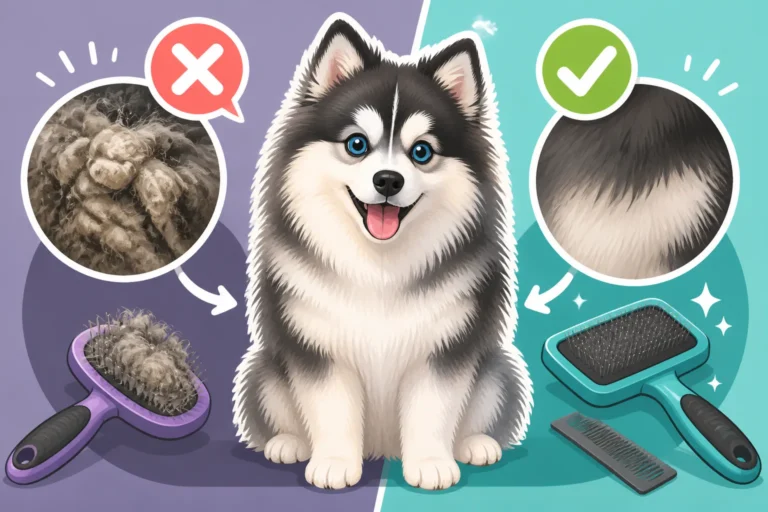
If your Pomsky has a wooly coat, be prepared for a serious grooming commitment. Daily brushing is often necessary to prevent mats from forming, which can quickly become painful and require professional intervention. You'll need specific tools, such as a sturdy undercoat rake to reach deep into the dense undercoat and a good slicker brush for the topcoat. Many owners find a high-velocity force dryer invaluable for thoroughly drying the coat after baths, as dampness can lead to skin issues and matting. You can find excellent grooming supplies like these on Amazon or Chewy. Professional grooming every 4-8 weeks might become a necessity, not just a luxury, to ensure the coat stays healthy and tangle-free. It's a labor of love, but the results are undeniably stunning.
The "Standard" or Balanced Coat
Many Pomsky owners hope for a happy medium, and that's exactly what the "standard" or "balanced" coat offers. It's often considered the ideal, blending the best attributes of both parent breeds.
Description: A True Blend, Medium Length, Well-Balanced
This coat type strikes a wonderful balance between the two extremes. It typically features guard hairs that are medium in length, not as short and sleek as a Husky-dominant coat, nor as long and profuse as a wooly coat. The undercoat is dense and soft, providing excellent insulation, but it doesn't overwhelm the guard hairs. The overall appearance is a well-proportioned double coat that gives the Pomsky a distinct look—clearly a Pomsky, rather than just a miniature version of either parent. It has enough body to show off markings and colors beautifully but isn't so excessive that it becomes a grooming nightmare. This is often the coat type that most closely matches the "mini Husky" vision people have, with a touch more fluff.
Grooming Implications: Regular Maintenance, Less Extreme Than Wooly
While still a double-coated breed that sheds, a Pomsky with a standard coat generally requires less intense daily grooming than a wooly-coated sibling. Regular brushing, perhaps 3-4 times a week, is usually sufficient to keep the coat healthy and prevent mats, especially during seasonal shedding periods. You'll still want to invest in quality tools like The Undercoat Rake a Pomsky Owner Lives With and a good slicker brush. The density of the double coat means that thorough bathing and drying are crucial to prevent skin issues. While professional grooming isn't always a strict requirement, many owners opt for occasional deshedding treatments or tidy-ups to manage the coat and reduce shedding in the home. It’s a manageable coat that still requires dedication but offers a good balance of beauty and practicality.
Factors Influencing Coat Development and Maintenance
Beyond genetics, several other factors play a crucial role in how a Pomsky's coat develops, looks, and how much effort it requires to maintain. From the surprising changes in a puppy's fluff to the impact of their diet, understanding these elements is key to a happy, healthy coat.
Age and Coat Changes
It's a common misconception that a puppy's coat is a perfect predictor of its adult fur. Just like human babies, Pomsky puppies go through significant changes as they grow.
Puppy Fluff vs. Adult Coat
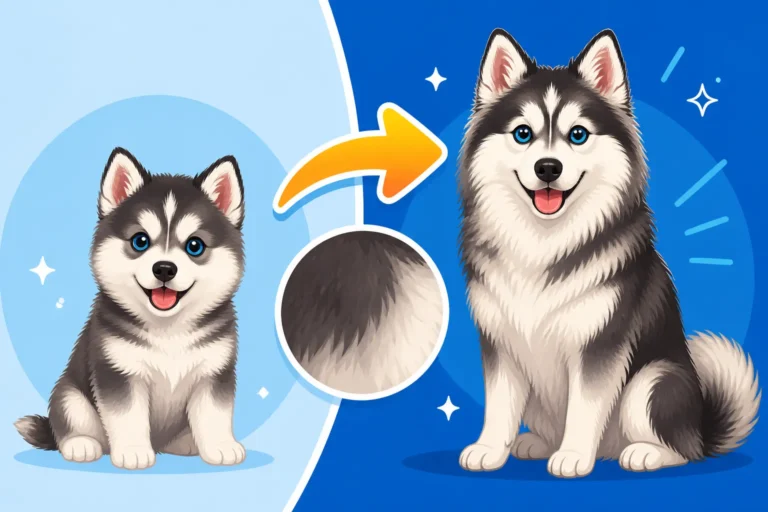
When you bring home a fluffy Pomsky puppy, it's easy to assume that soft, downy fur is what you'll have for life. However, much like human children losing their baby teeth, puppies undergo a "coat change" as they mature. This transition usually begins around 4-6 months of age and can continue for several months. The soft, wispy puppy fur starts to be replaced by the coarser, denser adult double coat. This period can be a bit messy, as the puppy sheds their old coat and the new one grows in. It's a phase where matting can be particularly prevalent, as the old puppy fluff can easily tangle with the emerging adult hairs. Many owners wonder Whether a Pomsky Puppy's Fluff Predicts the Adult Coat, and while it can offer clues, it’s not an exact science. Be prepared for your cute, fluffy puppy to temporarily look a bit scraggly or patchy as their adult coat comes in.
Seasonal Shedding (Blowing Coat)
Regardless of whether your Pomsky has a Husky-dominant, Pomeranian-dominant, or standard coat, one thing is almost guaranteed: they will shed. Both parent breeds are notorious for their double coats and the associated shedding, particularly during seasonal "blowouts." Pomskies typically blow their coats twice a year, usually in spring to prepare for warmer weather and in fall for winter insulation. This isn't just regular shedding; it's an event where they lose large clumps of undercoat. Imagine handfuls of fluffy white or grey clouds coming off your dog daily. It's truly a sight to behold, and requires consistent, even daily, brushing to manage. During these times, your vacuum cleaner will become your best friend. Knowing When a Pomsky Blows Its Coat allows you to prepare for this intensive grooming period, which can last for several weeks.
Nutrition and Coat Health
What you feed your Pomsky directly impacts the health and appearance of their skin and coat. A shiny, healthy coat starts from within.
The Role of Diet
A high-quality diet is fundamental for maintaining a healthy, vibrant coat on your Pomsky. Look for dog foods that list real meat as the first ingredient and contain a balanced blend of essential nutrients. Protein is crucial for hair growth, and healthy fats, particularly omega-3 and omega-6 fatty acids, are vital for skin hydration and coat luster. A diet lacking in these can lead to a dull, dry, brittle coat, and even skin issues like dandruff or excessive shedding. Some owners opt for fresh food diets, like those offered by Ollie, which can be beneficial for coat health due to their high-quality, minimally processed ingredients. Others choose premium kibble brands found on Chewy that are specifically formulated for skin and coat health.
Supplements: Fish Oil, Biotin, etc.
While a good diet is the cornerstone, sometimes supplements can provide an extra boost for coat health. Fish oil, rich in omega-3 fatty acids, is a popular choice for improving skin and coat condition, reducing inflammation, and adding shine. Biotin and zinc are other common supplements that play roles in skin and hair integrity. However, it's always best to consult with your veterinarian before adding any supplements to your Pomsky's diet. They can help determine if there's a specific deficiency or if a supplement is genuinely needed, ensuring you're not over-supplementing, which can sometimes cause more harm than good. These can be particularly helpful if your Pomsky shows signs of dry skin or a dull coat.
Grooming Practices and Their Impact
Proper grooming isn't just about aesthetics; it's crucial for your Pomsky's health and comfort, especially with a dense double coat. The right tools and techniques can make all the difference.
Brushing Frequency and Tools
The frequency of brushing depends heavily on your Pomsky's specific coat type, but generally, regular brushing is non-negotiable for a double-coated breed. For wooly or standard coats, 3-4 times a week, or even daily during shedding season, is ideal. Husky-dominant coats might get by with slightly less, but still need consistent attention. The right tools are essential. An undercoat rake is a must-have for reaching the dense inner layer and removing loose hair, preventing mats. A slicker brush helps smooth the topcoat and removes surface debris. A metal comb can be useful for checking for tangles, especially behind the ears and in the "feathering" areas. Without these tools, grooming becomes a battle rather than a bonding experience.
Bathing: How Often, Proper Drying Techniques
Bathing a Pomsky should generally be done every 4-8 weeks, or as needed if they get particularly dirty. Over-bathing can strip natural oils from their skin and coat, leading to dryness and irritation. However, when you do bathe them, proper drying is paramount. Because of their dense double coat, a Pomsky can take a very long time to air dry, and remaining dampness close to the skin can lead to uncomfortable and potentially serious skin infections like hot spots. A high-velocity force dryer is incredibly useful, not just for speeding up drying but also for "blowing out" loose undercoat. It’s important to ensure your Pomsky is completely dry down to the skin. If you’re not drying them thoroughly, you might accidentally be causing more problems than you solve. For more on this, check out Drying a Pomsky to the Skin.
The Dangers of Shaving
This is perhaps the most critical grooming point for any double-coated breed, including Pomskies: never shave them unless absolutely medically necessary, under veterinary advice. It might seem like a good idea to shave a fluffy Pomsky in summer to keep them cool, but it actually does the opposite. Their double coat acts as a natural insulator, keeping them warm in winter and cool in summer by trapping air and reflecting heat. Shaving can permanently damage the guard hairs, leading to improper regrowth where the undercoat grows back thicker and softer, disrupting the coat's natural function. This can lead to issues like alopecia, sunburn, and an inability to regulate their body temperature properly. The coat may grow back patchy, discolored, or uneven, and some dogs suffer from post-clipping alopecia where the hair simply never grows back correctly. If you're wondering if you should shave your Pomsky, please read Why a Pomsky Must Never Be Shaved before making a decision.
Setting Realistic Coat Expectations
Bringing a Pomsky into your home is an adventure, and part of that adventure is embracing the unique characteristics your dog will develop. When it comes to their coat, letting go of rigid expectations and preparing for proper care will ensure both you and your Pomsky are comfortable and happy.
Predicting Your Pomsky's Future Coat
While genetics are a roll of the dice, there are ways to make a more educated guess about your Pomsky's adult coat. However, it’s vital to remember that a perfect prediction is rarely possible.
Looking at Parents/Littermates
The best indicator of what your Pomsky’s coat might look like is to examine the coats of its parents, if possible, and its littermates. If both parents have a balanced, medium coat, there's a higher likelihood that the puppies will inherit similar traits. Similarly, if you see a wide variety of coat types within a single litter – some very fluffy, some sleek – it suggests a higher degree of genetic variability, meaning your puppy could develop in any direction. Some breeders will even show pictures of previous litters from the same pairing, which can offer valuable insight into the range of coats they typically produce. However, even with this information, nature can surprise you. It's common for one puppy to take on more Husky traits and a sibling to resemble a Pomeranian more strongly.
Breeder Insights
An experienced and reputable Pomsky breeder will often have a good understanding of the coat types their breeding lines tend to produce. They've spent years observing how traits manifest and can offer valuable insights into the likelihood of a certain coat type. They might even be able to give you a general idea of your puppy's potential coat when it's a few weeks old, though even they can't make a 100% guarantee. Ask them about the coats of previous puppies from the same parents, or what they've seen from the grandparents' lines. Their knowledge can be incredibly helpful in managing your expectations, but remember that even the most skilled breeders cannot control every genetic outcome.
Embracing Variability
Ultimately, the most realistic approach to a Pomsky's coat is to embrace the variability. While you might dream of a specific look, your Pomsky's coat will be uniquely theirs. It might be a sleek mini-Husky, a fluffy cloud, or something beautifully in between. The joy of a mixed breed often lies in these unique combinations. Focus on the health and manageability of the coat rather than a specific aesthetic. A healthy coat, regardless of its precise length or fluffiness, is always the most beautiful. Being prepared for any coat type means you'll be ready with the right grooming tools and routines, ensuring your Pomsky is always comfortable and well-cared for.
Managing Grooming Requirements
Understanding and preparing for the grooming needs of a double-coated Pomsky is essential, regardless of which parent’s coat they favor. It’s a commitment that requires time, effort, and sometimes financial investment.
Time Commitment
Grooming a double-coated Pomsky is a significant time commitment. For a wooly coat, you might be looking at daily brushing sessions of 15-30 minutes to prevent mats. Even a Husky-dominant or standard coat will require regular brushing several times a week. During seasonal blowouts, this intensifies, demanding daily, thorough grooming to remove the copious amounts of shedding undercoat. This isn't just a quick brush-over; it means carefully line brushing to get down to the skin. Imagine trying to keep up with the shedding that happens twice a year; it's a major undertaking. This commitment needs to be factored into your daily routine, as neglecting it can quickly lead to painful mats and skin issues for your Pomsky.
Cost of Professional Grooming
If the time commitment for at-home grooming is too much, or if your Pomsky has a particularly challenging coat (like a very dense wooly type), professional grooming can become a necessity. Professional deshedding treatments and regular maintenance appointments can quickly add up. A full groom for a double-coated breed often costs more than for a single-coated dog due to the time and specialized techniques involved. While it can be a significant expense, it's often a worthwhile investment to ensure your Pomsky's coat is healthy and well-maintained, preventing more costly veterinary visits for severe matting or skin infections. Always factor these potential costs into your budget when considering a Pomsky.
The Shedding Reality
Let's be unequivocally clear: Pomskies shed. A lot. Both Siberians and Pomeranians are heavy shredders, and their offspring inherit this trait. You will find dog hair on your clothes, furniture, and likely in your food. During seasonal coat blows, the amount of hair can be astonishing. Even with diligent brushing, you'll still have a furry house. This is not a dog for neat freaks or those with severe allergies. Robotic vacuums, lint rollers, and powerful pet hair vacuums will become indispensable tools in your home. Understanding What a Pomsky's Shedding Does to a House is crucial before committing to this breed. If you're looking for a low-shedding dog, a Pomsky is absolutely not the right choice. Instead, they offer abundant personality, stunning looks, and a constant reminder of their presence through their beautiful, albeit shedding, coats.
Pomsky Coat Type Comparison
To help visualize the differences, here's a quick comparison of the main Pomsky coat types:
| Feature | Husky-Dominant Coat | Standard/Balanced Coat | Pomeranian-Dominant (Wooly) Coat |
|---|---|---|---|
| Guard Hairs | Shorter, sleek, lie flatter | Medium length, balanced, lies well | Long, soft, profuse, stands off body |
| Undercoat | Dense, thick, insulating | Dense, soft, insulating | Extremely dense, fluffy, cottony |
| Overall Look | Sleeker, miniature Husky-like, defined markings | Well-proportioned, distinct Pomsky look, balanced fluff | Very fluffy, "bear cub" appearance, rounded silhouette |
| Matting Risk | Low to moderate | Moderate | High |
| Grooming Needs | Regular brushing, seasonal deshedding | Consistent brushing (3-4x/week), seasonal deshedding | Daily brushing, professional grooming often needed |
| Insulation | Excellent (hot/cold) | Excellent (hot/cold) | Excellent (hot/cold) |
Disclaimer
This article is for general informational purposes only and does not constitute professional advice. Laws, prices and regulations vary by location and change over time. Consult a qualified professional for guidance on your specific situation.