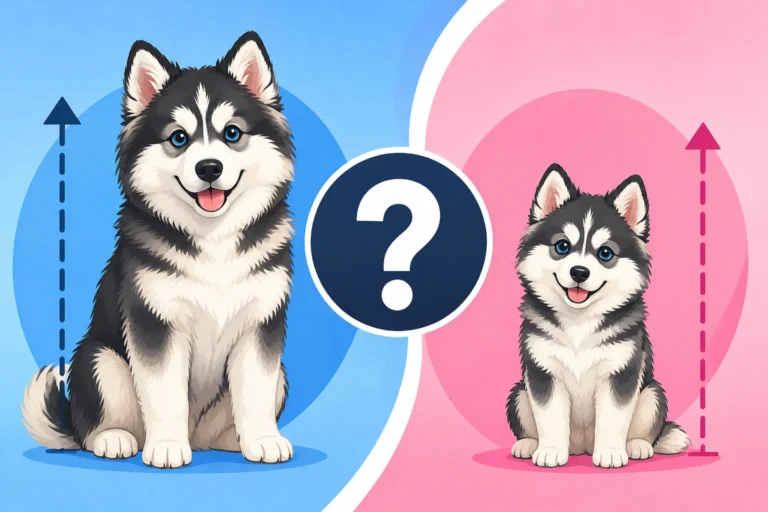
Whether a Pomeranian Could Carry a Pomsky Litter
It's a common thought, especially when you picture the adorable, fluffy results of a Pomsky pairing: could a tiny Pomeranian possibly be the mother to these captivating pups? The simple, emphatic answer is no, and understanding why is crucial for anyone interested in this amazing designer breed. This guide will delve into the biological realities and ethical considerations that dictate the Siberian Husky must always be the dam in a Pomsky litter.
The Biological Impossibility of a Pomeranian Dam
The very essence of creating a Pomsky lies in careful, intentional breeding, and at the heart of that process is the critical decision of which parent takes on the role of the dam, or mother. For a Pomsky, it's unequivocally the Siberian Husky. The idea of a Pomeranian carrying a litter sired by a Husky, or even another Pomsky, presents insurmountable biological hurdles and severe risks to the tiny mother. It’s not just a matter of preference; it’s a matter of life and death.
Size Disparity and Physical Risks
Imagine the sheer difference in size between a mature female Pomeranian, typically weighing between 3 to 7 pounds, and a male Siberian Husky, which can easily tip the scales at 45 to 60 pounds, or even more. This isn't just a weight difference; it's a fundamental disparity in skeletal structure, uterine capacity, and overall physical robustness. A Pomeranian's uterus is simply not designed to accommodate puppies that are even half the size of a full-grown Pomsky, let alone a hybrid that draws considerable genetic material from a much larger breed. The puppies, even in the early stages of development, would quickly outgrow the internal space available, leading to devastating complications.
The risks associated with a Pomeranian attempting to carry such a pregnancy are catastrophic. We're talking about extreme difficulty during labor, known as dystocia, where the puppies are simply too large to pass through the birth canal. This would necessitate an emergency Cesarean section, a major abdominal surgery that carries significant risks for any dog, let alone a tiny Pomeranian under immense physical strain. Beyond the immediate act of birth, the sheer weight and size of the growing puppies within the mother's womb could cause severe internal damage, including uterine rupture or profound physiological stress that could compromise the mother's health long before labor even begins. Such a scenario is not only medically unsound but also incredibly cruel and irresponsible.
The Mechanics of Artificial Insemination
Some people might think, "Well, if natural breeding isn't possible, couldn't artificial insemination (AI) solve the problem?" It’s true that artificial insemination is the standard and necessary method for breeding Pomskies, primarily because of the vast size difference between the male Pomeranian and the female Husky. A male Pomeranian cannot physically mount a female Husky to breed naturally. So, semen is collected from the male Pomeranian and then artificially introduced into the female Husky. However, AI only bypasses the act of mating; it doesn't magically alter the fundamental biological constraints of gestation and birth.
The crucial point here is that even with AI, the dam must still physically carry and birth the puppies. The size of the puppies inside the mother is determined by the genetics of both parents, not just the sire. Therefore, implanting Husky-Pomeranian hybrid embryos into a Pomeranian dam would not make the puppies any smaller or the pregnancy safer. The developing fetuses would still inherit significant growth potential from their Husky lineage, quickly overwhelming the Pomeranian's delicate reproductive system. This is why Why a Pomsky Cannot Be Bred Naturally is so critical to understand; it's about the entire process, not just conception.
Historical Context of Pomsky Breeding
When Pomskies first gained popularity, largely fueled by viral internet images, responsible breeders quickly identified the biological necessity for the Husky to be the mother. The initial curiosity around this crossbreed was driven by the desire for a "miniature Husky," and breeders committed to the health and welfare of their dogs had to establish strict protocols. They understood that the creation of this new hybrid breed had to prioritize the safety of the breeding animals above all else.
The International Pomsky Association (IPA) and other breed clubs or associations have been instrumental in establishing ethical guidelines for Pomsky breeding. These guidelines universally stipulate that the dam must be a Siberian Husky and the sire a Pomeranian. This isn't an arbitrary rule; it's born from biological necessity, veterinary science, and a deep commitment to animal welfare. Any breeder suggesting a Pomeranian dam is either misinformed or engaging in highly unethical, dangerous practices. Understanding What the International Pomsky Association Does helps clarify why these standards are in place.
Why the Husky is Always the Dam
It might seem counterintuitive to some that the larger breed must be the mother, especially when the goal is a smaller offspring. But when you look closer at canine biology and responsible breeding practices, it becomes incredibly clear why the Siberian Husky is the only safe and viable choice for the dam in a Pomsky litter. This isn't just about avoiding a problem; it's about ensuring a healthy start for the puppies and the well-being of the mother.
Safety for the Dam and Puppies
The primary reason for always using a Siberian Husky as the dam is the safety of both the mother and her puppies. A female Husky possesses the physical infrastructure — a robust skeletal frame, a spacious uterus, and the overall physiological capacity — to safely carry and deliver a litter of Pomsky puppies. While Pomsky puppies will be smaller than purebred Husky puppies, they will still be considerably larger than what a Pomeranian's body could ever safely manage. The Husky's larger birth canal significantly reduces the risk of complications during natural labor, although C-sections are still common in Pomsky breeding due to the artificial insemination process itself and the unpredictable size of the hybrid pups.
Consider the journey of pregnancy: from implantation, through rapid fetal growth, to the strenuous act of birth, the dam's body undergoes immense changes. A Husky is equipped to handle this stress. Her larger size provides ample room for multiple fetuses to develop without crowding, and her stronger muscular structure is better suited for the contractions of labor. Without this foundational safety, the very concept of a Pomsky as a healthy, viable breed would be impossible. This is directly related to Why a Pomsky's Dam Must Be the Husky.
The Genetics of Litter Size and Puppy Size
The genetic contribution of both parents plays a role in the size of the puppies. While the Pomeranian sire contributes genes for smaller stature, the Husky dam provides the uterine environment and a genetic predisposition for a certain range of puppy size and litter size. If the dam were a Pomeranian, even with a smaller sire, the relative size of the developing Pomsky puppies compared to her tiny body would be dangerously large.
A Husky litter typically consists of 4 to 8 puppies, sometimes more. A Pomeranian litter is much smaller, usually 2 to 5 puppies. When you cross these breeds, the litter size can vary, but the individual puppy size within that litter will always be influenced by the Husky's genetic potential. This means even a single Pomsky puppy could present an impossible challenge for a Pomeranian mother. It's a fundamental biological principle, making it clear Why the Size Gap Makes a Pomsky Breeding Dangerous. Reputable breeders prioritize ensuring the health of their breeding stock, and putting a Pomeranian at such risk would be a blatant disregard for animal welfare.
Ethical Breeding Practices
Ethical breeding is about more than just producing cute puppies; it's about ensuring the health, welfare, and longevity of the breed and its parent stock. For Pomskies, this means adhering to specific practices that mitigate risks inherent in a crossbreed of such disparate sizes. Requiring a Husky dam is a cornerstone of this ethical framework. It ensures that the mother is physically capable of the rigorous demands of pregnancy and birth, reducing the likelihood of pain, suffering, and costly, life-threatening veterinary emergencies.
Breeders who truly care will invest in all necessary precautions, including proper health testing of both parents (like those mentioned in The Health Tests a Pomsky Breeder Should Show), regular veterinary check-ups throughout the pregnancy, and often, planned C-sections to ensure a safe delivery, especially in F1 litters where predictability is lower. These steps, and the financial commitment they represent (as detailed in What Artificial Insemination Costs a Pomsky Breeder), are all part of the responsible approach to bringing healthy Pomsky puppies into the world. Any deviation from the Husky-as-dam rule signals an unethical operation.
Misconceptions and the "Reverse Pomsky"
The allure of a tiny dog with striking Husky features is powerful, leading many prospective owners to ponder various breeding scenarios. However, some of these ideas are rooted in misunderstandings of canine biology and responsible breeding. One such misconception is the notion of a "reverse Pomsky," which, while an interesting thought experiment, is completely unfeasible and would be medically irresponsible to attempt.
What is a "Reverse Pomsky" and Does It Exist?
A "reverse Pomsky" would hypothetically involve a Pomeranian female as the dam and a Siberian Husky male as the sire. As we've thoroughly discussed, this scenario is biologically impossible without endangering the Pomeranian mother's life. The sheer size difference between a tiny Pomeranian and a large Husky would prevent natural mating entirely. Even if artificial insemination were attempted, a Pomeranian's uterus and birth canal are simply too small to carry and deliver puppies that would inherit significant size traits from a Husky father. The puppies would likely be too large to develop safely, resulting in severe complications for the mother, including uterine rupture, extreme dystocia, and likely death for both mother and pups.
Therefore, a "reverse Pomsky" does not exist in practice within ethical breeding circles. Any breeder claiming to produce such a litter would be engaging in highly dangerous and unethical practices. It's crucial for anyone seeking a Pomsky to understand these fundamental limitations to avoid supporting irresponsible operations. When you see a Pomsky, it is a Pomeranian sire (father) and a Siberian Husky dam (mother), always.
Why the Idea Persists
The persistent idea of a "reverse Pomsky" or a Pomeranian dam often stems from a few understandable desires and assumptions. Firstly, people are often drawn to the idea of a truly miniature Husky. They might logically assume that using the smaller breed as the mother would result in even smaller puppies. This overlooks the physical limitations of the mother's body and the genetic contribution of the larger father to puppy size. People crave smaller versions of beloved breeds, and the thought that a Pomeranian could miniaturize the entire process is appealing.
Secondly, there can be a general lack of understanding about canine reproduction, especially when it comes to designer breeds requiring artificial insemination. It's easy to think that if AI can overcome the mating hurdle, it can overcome all physical hurdles of pregnancy and birth. Education is key here, to help prospective owners grasp the complexities involved. The reality is that the dam's physical capacity is non-negotiable, regardless of how conception occurs.
The Importance of Breeder Transparency
When you're looking for a Pomsky puppy, understanding the breeding process and the roles of the parent dogs is paramount. This is where breeder transparency becomes incredibly important. A reputable Pomsky breeder will openly discuss their breeding practices, explain why the Husky is always the dam, and provide detailed information about the parent dogs. They should be able to show you the dam and even provide information or pictures of the sire.
Don't hesitate to ask questions about the size and health of the parent dogs. A good breeder will welcome your questions and provide clear, honest answers. They'll also be transparent about the potential range of sizes in a Pomsky litter, as What a Pomsky Actually Weighs can vary greatly even within the same litter. If a breeder is vague, avoids direct answers, or suggests a Pomeranian dam, that's a huge red flag, and it's best to walk away.
Responsible Pomsky Ownership and Support
Once you understand the precise and critical method by which Pomskies are brought into the world, the journey toward responsible ownership really begins. Knowing that the Siberian Husky is always the dam highlights the meticulous care, planning, and ethical considerations involved in bringing these special dogs into existence. This understanding empowers you to make informed decisions, ensuring you support ethical breeders and are fully prepared for the unique needs of your future companion.
Finding a Reputable Breeder
Your first and most crucial step should be to find a breeder who prioritizes the health and well-being of their dogs above all else. A reputable Pomsky breeder will be transparent about their practices, readily share health clearances for both parent dogs, and be clear about the breeding process, emphasizing the Husky dam. They should be registered with an organization like the International Pomsky Association (IPA) or adhere to similar high standards. Don't be shy about asking for proof of health testing, vet records for the dam during pregnancy, and even references from previous puppy owners.
A responsible breeder will also interview you extensively to ensure their puppies are going to suitable homes. They'll want to know about your living situation, your experience with dogs, and your understanding of the commitment a Pomsky requires. They often provide a health guarantee and will have a comprehensive contract in place. Remember, choosing a breeder is not just about finding a puppy; it's about finding a partner in your dog's long-term health and happiness. For more on what to look for, consider The Health Tests a Pomsky Breeder Should Show as a starting point for your conversations.
Understanding the True Pomsky Size and Characteristics
Even with a Siberian Husky dam, Pomsky puppies can vary quite a bit in size, appearance, and temperament, especially in the first (F1) generation. While the goal is often a "miniature Husky," the genetic lottery means you could end up with a dog that leans more heavily towards its Pomeranian heritage in size, or one that's much closer to a small Husky. This variation is a natural part of hybrid breeding. What a Pomsky Actually Weighs Full Grown can range significantly, typically from 10 to 40 pounds, though some can be smaller or larger.
It’s vital to appreciate this genetic diversity and be prepared for a range of possibilities. Don't go into it expecting a guarantee of a specific size or look, as that's simply not possible with a hybrid. A good breeder will help manage your expectations and educate you on the potential outcomes of their specific pairings, and Whether an F1 Pomsky Is Healthier Than an F2 might also be a good read to understand generational differences.
Preparing for Your Pomsky
Once you've connected with a reputable breeder and are awaiting your new Pomsky puppy, it's time to prepare your home. This involves more than just buying a cute bed. You'll need to gather essential supplies, including high-quality food, appropriate grooming tools for a double-coated dog, a secure crate, and plenty of stimulating toys. Brands like Chewy offer a vast selection of these items, from durable toys that stand up to a Pomsky's playful energy to nutritional foods that support their active lifestyle.
Consider enrolling in puppy classes early to start on socialization and basic obedience. Pomskies are intelligent but can be stubborn, inheriting independence from both parent breeds. Early training and consistent positive reinforcement are key to raising a well-adjusted dog. Understanding their needs from puppyhood, as covered in Raising a Pomsky Puppy, will set you up for success. Remember, bringing a Pomsky into your life is a long-term commitment, and proper preparation is the foundation for a happy, healthy fourteen years together.
| Feature / Scenario | Pomeranian Dam Possible? | Siberian Husky Dam Required? | Risks Involved for Dam | Risks Involved for Puppies | Ethical Consideration |
|---|---|---|---|---|---|
| Natural Mating | No | No | Extreme | Extreme | Highly Unethical |
| Artificial Insemination | No | Yes | Extreme | Extreme | Unethical (if Pom dam) |
| Safe Gestation | No | Yes | Uterine rupture | Underdevelopment, death | Paramount welfare |
| Safe Delivery | No | Yes | Dystocia, death | Stuck in birth canal, death | Paramount welfare |
| Breeder Reputation | No (reputable) | Yes (reputable) | Disregarded | Disregarded | Central to integrity |
| Genetic Predictability | No | Yes | Not relevant | Not relevant | Consistent outcomes |
Disclaimer
This article is for general informational purposes only and does not constitute professional advice. Laws, prices and regulations vary by location and change over time. Consult a qualified professional for guidance on your specific situation.