Whether a Multigen Pomsky Breeds True
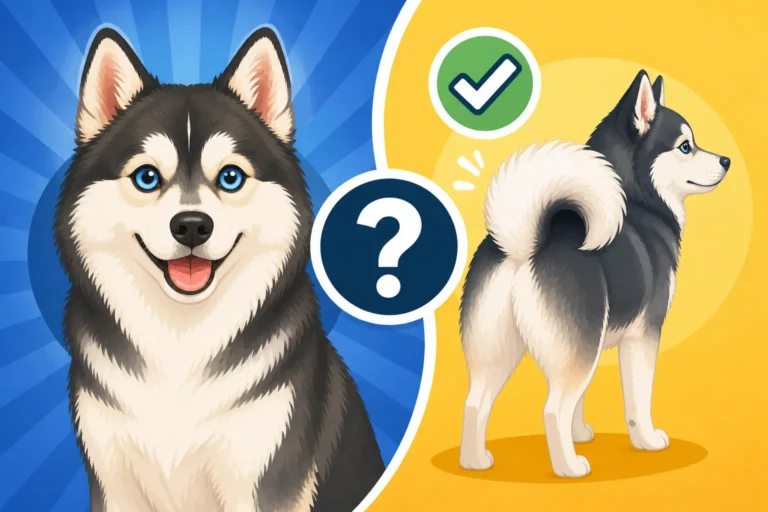
One of the biggest questions I hear from aspiring Pomsky parents is about predictability. You see a picture of a gorgeous, miniature Husky-looking dog, or perhaps one that’s unmistakably a fluffy Pomeranian-Husky mix, and you wonder: will my puppy look exactly like that? This is especially true when we start talking about "multigen" Pomskies, leading many to hope that successive generations will finally solidify the look and temperament. This guide is here to unravel the truth about whether a multigen Pomsky actually "breeds true" and what that means for your expectations.
Understanding "Breeding True" in Dogs
The concept of a dog "breeding true" is a fascinating one, and it's something deeply ingrained in the world of purebred dogs. When we say a dog breeds true, we're essentially talking about its offspring reliably inheriting a consistent set of physical traits, temperament characteristics, and even health predispositions from their parents and ancestors. It means that if you breed two dogs of a particular recognized breed, you have a very high degree of certainty about what their puppies will look like, how big they'll get, and what their general demeanor will be.
The Concept of "True to Type"
"True to type" refers to how closely an individual dog conforms to the written breed standard. For purebred dogs, this standard is a detailed blueprint outlining everything from ear set and tail carriage to coat texture and acceptable colors. When a breed "breeds true," it means that most puppies produced within that breed's lines will consistently express these characteristics. Think about a Labrador Retriever: you know generally what to expect in terms of size, coat, and a friendly, outgoing personality. This consistency is the result of many, many generations of selective breeding, where dogs not fitting the mold were excluded from breeding programs, gradually narrowing the genetic pool to favor specific, desirable traits. It's a long, careful process, not something that happens overnight or even in just a few generations.
How Purebreds Achieved Consistency
Purebred dogs didn't just appear fully formed and consistent. It took centuries of meticulous record-keeping, careful selection, and often harsh culling of individuals that didn't fit the desired type. Breeders would choose dogs not just for their appearance but also for their working ability, temperament, and health. They were looking to create dogs that would consistently perform a specific job, whether it was herding sheep, hunting game, or guarding property. Over time, through controlled breeding and the establishment of closed studbooks, breeds developed distinct genetic profiles that allowed them to reproduce reliably "true to type." This also means that many purebreds have a relatively narrow genetic base, which can, unfortunately, also concentrate certain health issues if not managed carefully. The goal for any developing breed or cross, like the Pomsky, is to try and achieve some level of this consistency.
The Nature of the Multigen Pomsky
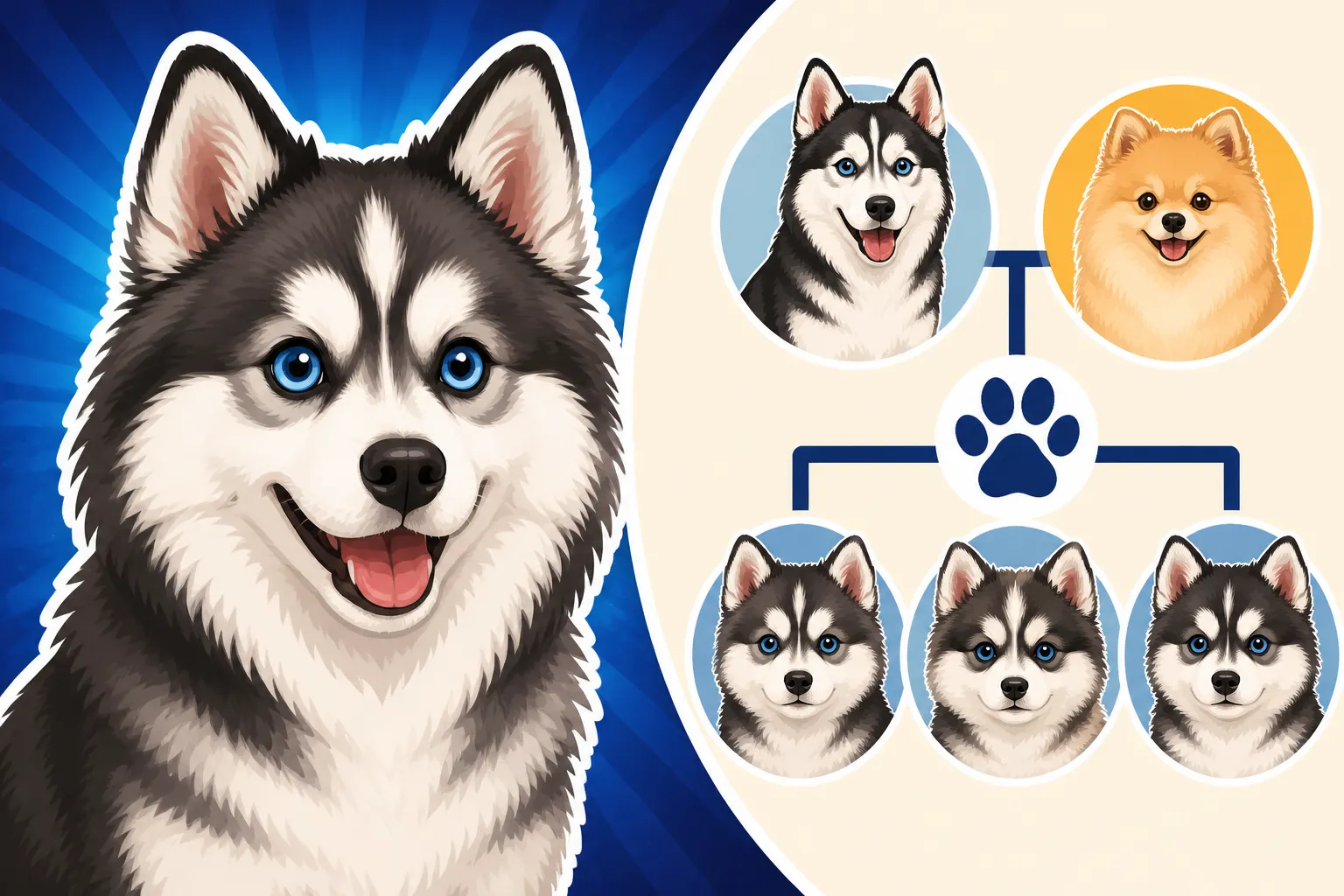
So, what exactly is a multigen Pomsky, and why does its very nature make the "breeding true" question so complex? A multigen Pomsky simply means it's a Pomsky from a generation beyond F1 (first cross, Husky dam x Pomeranian sire) or F2 (Pomsky x Pomsky). We're talking F3, F4, and sometimes even further down the line. The idea behind breeding successive generations of Pomskies is to stabilize their traits, making them more predictable. However, the genetic blueprint inherited from two distinctly different parent breeds—the Siberian Husky and the Pomeranian—is still very much at play, even several generations removed.
What Constitutes a Multigen Pomsky?
An F1 Pomsky is a direct cross between a Siberian Husky mother and a Pomeranian father. An F2 Pomsky is the result of breeding two F1 Pomskies together. A multigen Pomsky, therefore, is typically an F3, F4, or even higher generation, meaning that both parents were themselves Pomskies of previous generations. The hope among breeders is that by continuing to breed Pomsky to Pomsky, they can gradually "set" certain traits, leading to more consistent size, appearance, and temperament within a litter. However, it's not as simple as mixing two colors of paint to get a third consistent color. Genetics are far more intricate, with dominant and recessive genes from both the Husky and Pomeranian still swirling in the gene pool, ready to express themselves in unexpected combinations.
Genetic Diversity and Phenotypic Expression
Even several generations in, Pomskies still carry a wide spectrum of genetic material from their founding breeds. The Siberian Husky contributes traits like athletic build, blue eyes, a distinct vocalization (the famous "talk"!), and a strong prey drive. The Pomeranian brings a smaller stature, a more upright ear set, a specific coat type, and often a more alert, sometimes yappy, personality. When these genes combine, they don't always blend perfectly into an averaged "Pomsky" look. You can still get puppies in a multigen litter that lean heavily towards one parent breed or the other, both in appearance and in behavior. For example, some multigen puppies might end up much larger than anticipated, carrying more of that Husky growth gene, while others might retain the tiny size of a Pomeranian. This wide range of "phenotypic expression" – what the dog actually looks like and behaves like – is what makes the journey of predicting a multigen Pomsky's outcome so challenging and, for some, so frustrating. This is why when you're looking for a Pomsky online, even from a reputable breeder, you'll still see a huge variety in appearance, which means you need to be flexible in your expectations.
Predictability in Multigen Pomskies
So, let's get right to it: does a multigen Pomsky breed true? The honest, realistic answer is not yet, at least not in the same way a long-established purebred dog does. While breeders are making strides in producing more consistent lines, the journey to true type consistency is a marathon, not a sprint.
Challenges in Predicting Traits
The fundamental challenge lies in the sheer genetic distance between the Siberian Husky and the Pomeranian. These are two breeds developed for entirely different purposes over centuries, resulting in very distinct genetic profiles. Even when you breed multigen Pomskies together, there's still a significant amount of genetic variation being shuffled and recombined in each litter. You might have one puppy with the classic Husky markings and piercing blue eyes, while its littermate could be a fluffy, solid-colored dog with brown eyes, much more reminiscent of a Pomeranian. This can make it very difficult for breeders to guarantee specific traits like adult size, coat type (some might still get a Wooly Pomsky Coat and Its Upkeep, while others have a shorter coat), or even temperament, which is crucial for owners looking for a particular "type" of dog. The expectation that a multigen puppy will be a perfect miniature version of a Husky is often met with the reality of this genetic lottery.
Incremental Progress in Consistency
Despite the challenges, many dedicated Pomsky breeders are indeed making incremental progress towards greater consistency. By carefully selecting breeding pairs, they are attempting to concentrate desirable traits and minimize unpredictable ones. This involves extensive health testing, temperament evaluations, and sometimes, even tracking the genetic markers of their breeding dogs. Over several generations, if a breeder consistently selects for specific traits – perhaps dogs that are reliably within a certain weight range, or those that exhibit a particular coat pattern – the probability of those traits appearing in subsequent litters does increase. It's a slow, painstaking process that requires deep understanding of genetics and a long-term vision. This is why it's so important to work with a breeder who has been in the game for a while and can show you not just the parents, but also previous generations and the consistency they've achieved. You might even find some excellent resources on sites like Chewy that discuss responsible breeding practices and what to look for in a breeder.
What Buyers Can Expect from a Multigen
For you, as a potential buyer, what does this mean? It means that while a multigen Pomsky might offer a slightly higher chance of hitting your desired aesthetic or size compared to an F1 or F2, there are still no absolute guarantees. You should expect variation within a litter. A reputable breeder will be transparent about this and show you the range of puppies they've produced, discussing the parents' traits and what they've seen in previous generations.
Here's a quick overview of potential predictability across generations:
| Generation | Predictability of Size | Predictability of Appearance | Predictability of Temperament |
|---|---|---|---|
| F1 (Husky x Pom) | Low | Low | Low |
| F2 (F1 x F1) | Moderate | Moderate | Moderate |
| Multigen (F3+) | Improving, but still variable | Improving, but still variable | Improving, but still variable |
This table illustrates that while multigen Pomskies aim for more predictability, they haven't yet reached the uniformity of established purebreds. If you are looking for a specific look, be prepared for a bit of a gamble, or prepare to wait for a puppy that genuinely matches your vision within a specific litter. Some breeders even specialize in certain "looks," but even then, nature always finds a way to surprise.
Factors Influencing Multigen Pomsky Traits
When we talk about whether a multigen Pomsky breeds true, we really have to dig into the factors that influence the expression of their traits. It's not just about what generation they are; it's about the deep genetic well they're drawing from and the choices breeders make.
The Role of Parentage and Genetic Background
The most significant factor influencing a multigen Pomsky's traits is, unsurprisingly, the genetic background of its parents and their lineage. Even if both parents are F3 Pomskies, their individual genetic makeup still carries a mix of Husky and Pomeranian traits. For example, if both multigen parents happen to carry more recessive genes for larger size or a specific coat texture from their Husky ancestors, then their puppies are more likely to express those traits. Conversely, if a breeder is consistently selecting for smaller, more Pomeranian-like dogs in their multigen lines, then over time, those lines will produce more consistently smaller dogs.
However, the wild card is still present. A particular gene might lay dormant for several generations, only to pop up unexpectedly in a later litter. This is why understanding the entire pedigree, not just the immediate parents, can be incredibly insightful, although such detailed records are still a rarity for a relatively new cross like the Pomsky. This complexity is why you often hear people discussing whether An F1 Pomsky Is Healthier Than an F2 or if Whether Breeding Pomsky to Pomsky Concentrates Faults – it's all part of trying to understand the genetic implications of successive generations.
Importance of Responsible Breeding Practices
This brings us to the absolutely critical role of responsible breeding practices. For multigen Pomskies to ever truly "breed true," it requires a commitment to a rigorous and ethical breeding program. This means:
- Health Testing: Before anything else, parents must undergo comprehensive health screenings for conditions common in both Huskies and Pomeranians, such as Slipping Kneecaps in a Pomsky, Hip Dysplasia in a Twenty Pound Pomsky, and The Eyes a Pomsky Gets From the Husky. Breeding healthy dogs is paramount to improving the overall health of the lineage. Good breeders will make these results transparent and understand that a healthy dog is the foundation of a good pet.
- Temperament Assessment: Both parent dogs should have stable, predictable temperaments. Given the potential for the independent, sometimes aloof nature of the Husky, combined with the bold, sometimes vocal nature of the Pomeranian, temperament can vary wildly. Responsible breeders strive for well-adjusted, friendly dogs that are suitable for family life. A Pomsky that is prone to Whether a Pomsky Bites the Groomer or Whether a Pomsky Snaps at Children is not desirable, and good breeders are working to select against these traits.
- Careful Selection for Type: While not a purebred, breeders are developing their own "vision" for the ideal Pomsky. They meticulously select breeding pairs that possess the traits they want to emphasize, whether it's a particular size range, coat pattern, or ear set. This isn't about simply breeding two Pomskies together; it's about thoughtful, informed decisions based on observed traits and genetic understanding.
- Transparency with Buyers: A truly responsible breeder will be honest about the current state of predictability in multigen Pomskies. They won't promise a "miniature Husky" if their lines don't consistently produce them. They'll show you photos of past puppies, discuss the variation they've seen, and guide you on what to realistically expect from your puppy. They'll also provide a What a Pomsky Health Guarantee Covers. This level of transparency helps manage expectations and ensures you're prepared for the unique dog you're bringing home.
Ultimately, while multigen Pomskies are indeed a step towards greater consistency than their F1 counterparts, the term "breeds true" still carries a different meaning for them than it does for a purebred dog. It's a journey, and dedicated breeders are working hard to refine the breed, but nature still has plenty of surprises in store for those adorable, fluffy bundles. If you’re considering a Pomsky, embrace the delightful variability that comes with this cross, and you’ll find a loyal companion regardless of their exact proportions or exact shade of blue eyes. Many reliable pet supply retailers like Chewy offer fantastic products to support the health and well-being of any Pomsky, regardless of their generation or genetic makeup, from specialized foods for Feeding a Twenty Pound Pomsky to grooming tools for The Undercoat Rake a Pomsky Owner Lives With.
Disclaimer
This article is for general informational purposes only and does not constitute professional advice. Laws, prices and regulations vary by location and change over time. Consult a qualified professional for guidance on your specific situation.