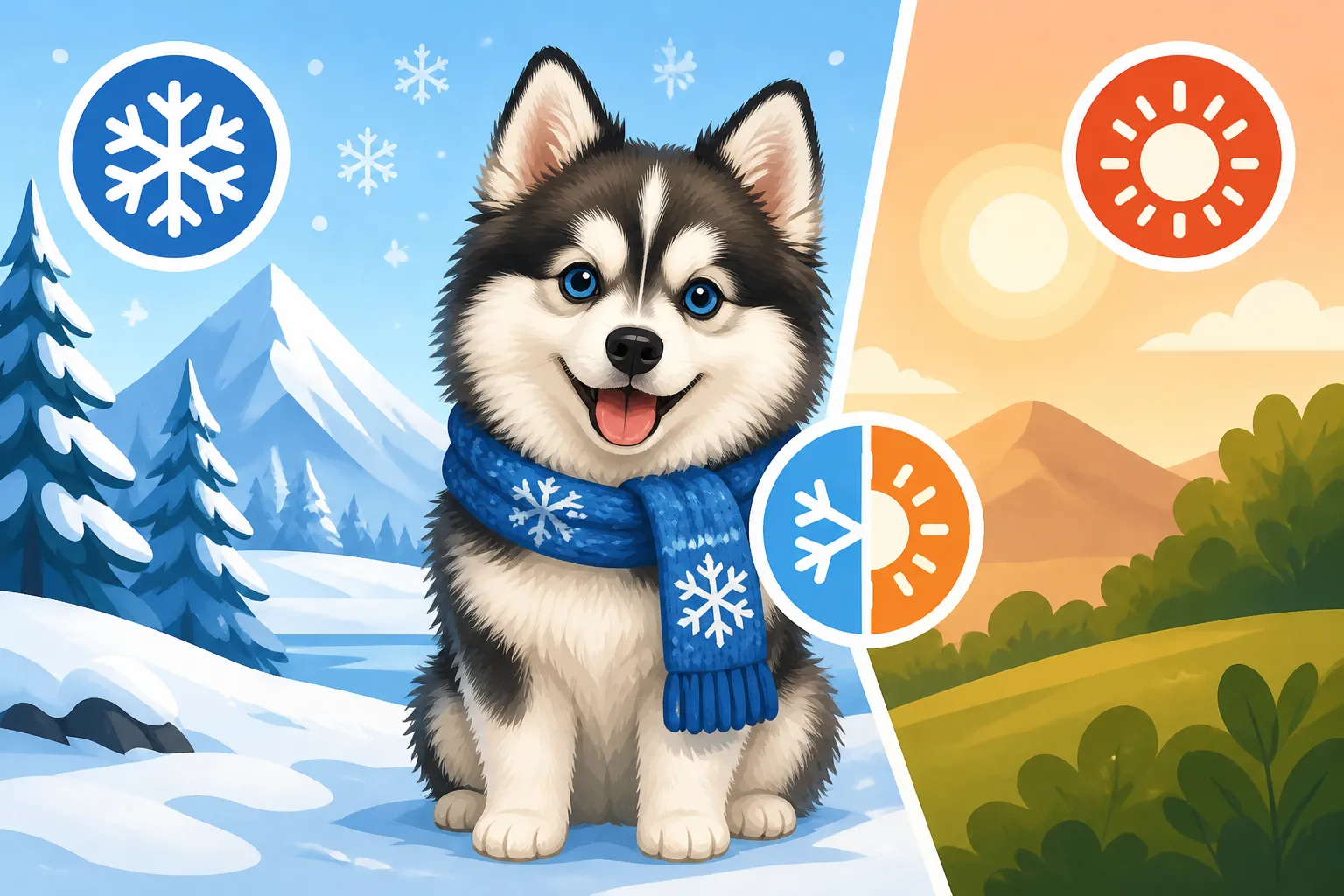
Whether a Pomsky Suits a Cold Climate
A Pomsky may enjoy brisk winter walks, but a thick-looking coat does not make every dog comfortable or safe in cold weather. Size, age, health, coat type, wind, dampness, and time outdoors all matter. This guide explains how to judge your Pomsky’s cold tolerance, prepare for snow and icy sidewalks, and know when it is time to head back inside.
Can a Pomsky Handle a Cold Climate
A Husky influence helps, but it is not a guarantee
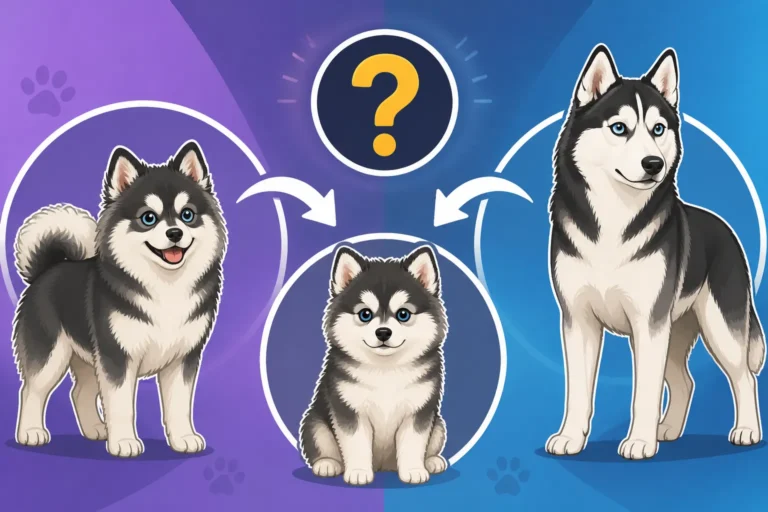
Many Pomskies have a dense double coat, with a soft undercoat beneath longer guard hairs. That coat can provide insulation, and some dogs are perfectly content padding through fresh snow or taking a brisk walk on a chilly day. But Pomskies vary: one may inherit a thick coat, while another has a shorter or less insulating one. You cannot reliably judge cold tolerance from a puppy’s fluff or a Husky-like face alone. Whether a Pomsky Has a Double Coat
A Pomsky is also much smaller than a Siberian Husky, and small bodies can lose heat faster. A dog that looks bundled up may still be chilled by wind, wet snow, or a long wait outside. Puppies, seniors, underweight dogs, and dogs with health concerns may need more protection or shorter outings than a healthy adult. Cold tolerance is individual, not a simple breed-wide rule.
If you live somewhere with long winters, such as Minneapolis, Buffalo, or a snowy part of Maine, your Pomsky may be able to enjoy daily outdoor time—but that does not mean it should live outdoors or spend hours unattended in the cold. Whether a Pomsky Should Live Outdoors A warm indoor resting place, access to water, and the chance to come in when uncomfortable are essential.
Cold, wet, and windy are not the same conditions
A dry, calm day can feel very different from a wet, windy one at the same temperature. Snow or rain that soaks through the outer coat can leave the undercoat damp, reducing its ability to keep your dog warm. Wind can also make an ordinary walk feel much harsher, particularly for a small Pomsky moving at a slower pace.
Consider the difference between a quick neighborhood loop on a dry morning and standing on a windy sidewalk while you wait for a bus. Your Pomsky is close to the ground, where slush, salt, and icy puddles collect. In a damp coastal winter, including parts of the Pacific Northwest, a waterproof layer may be more useful than a heavy sweater. In a dry, snowy climate, keeping the coat clean and free of packed snow may matter more.
Do not use a single temperature as a universal cutoff. Watch the conditions and your dog’s behavior. A Pomsky who eagerly walks down the block may start shivering or lifting its paws after a few minutes in freezing slush. Another may stay comfortable longer but still need a warm, dry place to rest afterward.
Look at the dog in front of you
Your Pomsky’s coat, body condition, age, and health help determine what winter routine makes sense. A dense coat can offer useful insulation, but mats and tangles may trap moisture close to the skin. Regular brushing helps keep the coat in good condition and makes it easier to spot dampness, snow clumps, or skin irritation. The Three Pomsky Coat Types
Notice your dog’s usual behavior indoors and outdoors. Does it head toward the door eagerly, then turn back quickly? Does it slow down, hunch its body, or keep trying to sit near a warm spot after a walk? These details help you adjust outing length and protection. If your Pomsky has a medical condition, is recovering from an illness, or seems unusually sensitive to cold, ask your veterinarian for advice tailored to that dog.
| Situation | What to consider | Practical response |
|---|---|---|
| Dry, calm winter day | Coat type, age, and comfort on walks | Start with a shorter walk and observe your Pomsky |
| Windy or very cold conditions | Wind chill and exposed areas such as paws and ears | Shorten the outing and use a properly fitted layer if needed |
| Wet snow or freezing rain | A damp coat can chill more quickly | Keep the trip brief and dry your dog thoroughly indoors |
| Salted sidewalks | De-icing products can irritate paws or be licked off | Use a safe paw-cleaning routine after the walk |
| A puppy or senior dog | Smaller or less robust dogs may need extra care | Offer frequent indoor breaks and avoid long waits outside |
Keeping Your Pomsky Safe on Snowy Walks
Start with short outings and read the signals
When the season turns cold, avoid assuming your Pomsky will be ready for the same long walk it enjoyed in fall. Begin with a shorter route, then see how your dog responds. If it is comfortable and energetic, you can build up gradually while keeping an eye on changing wind, precipitation, and footing.
Shivering is an obvious sign that your dog may be cold, but it is not the only one. Watch for repeatedly lifting paws, slowing down, stopping, hunching, whining, or trying to turn toward home. A dog that seems unusually quiet or uncoordinated needs to be brought indoors promptly. Once inside, dry it gently and let it warm up in a comfortable room. If symptoms are severe, continue, or your dog is difficult to rouse, contact a veterinarian.
A Pomsky may pull toward the park at the start of a walk and still become uncomfortable later. Check in during the outing rather than deciding based only on the first few minutes. In particular, take extra care on exposed paths, near lakes, and in open areas where wind can pick up. Snow can also hide uneven ground or ice, so keep the pace controlled.
Protect paws from snow, ice, and road salt
Snow can collect between toes and form hard clumps that pull on the hair or make walking uncomfortable. Road salt and other de-icers may irritate paw pads, and dogs can ingest residue when they lick their feet. After a winter walk, check between the toes and around the pads, remove visible ice gently, and wipe or rinse away any grit or salt. Dry the feet well, including between the toes.
Some owners use dog boots for especially icy or heavily salted routes. They should fit securely without pinching, and your Pomsky may need short indoor practice sessions to get used to wearing them. If your dog refuses boots, a paw balm made for dogs may be another option, though it does not replace cleaning off salt and checking for irritation. Chewy can be one place to compare dog boots or paw-care products; check the sizing guidance and ingredient information before choosing anything.
If your Pomsky starts licking its paws persistently, limps, or develops redness or cracking, do not assume winter conditions are the only cause. Rinse away any residue, prevent further licking if practical, and seek veterinary guidance if the irritation does not settle. Whether Road Salt Hurts a Pomsky's Pads
Choose clothing for the conditions, not the photo
A coat or sweater can help some Pomskies, especially those with a thinner coat, smaller body, or lower cold tolerance. It should fit without restricting movement, rubbing under the legs, or bunching around the neck. A garment that is too tight can be uncomfortable; one that is too loose can snag or let cold air in. Check for dampness when you return indoors and remove wet clothing so it does not stay against the skin.
Clothing is not a substitute for watching your dog. A jacket does not make a long wait in freezing weather safe, and it may not protect paws from ice or salt. Some Pomskies feel fine without an extra layer on a brief walk, while others benefit from one in cold wind. Let comfort and conditions guide the choice.
Chewy may also help you compare coat styles and sizes, but measure your dog according to the item’s instructions rather than guessing from weight alone. If your Pomsky is between sizes, has an unusual body shape, or seems uncomfortable in a garment, try a different cut or ask a groomer or veterinarian for practical fitting advice. Whether a Pomsky Needs a Coat in Winter
Winter Grooming and Indoor Comfort
Keep the coat brushed and dry
A Pomsky’s coat needs care in winter, even if it looks like a natural cold-weather jacket. Brushing helps prevent mats, especially behind the ears, under the legs, and around the collar or harness. Mats can hold moisture and make it harder to see whether the skin beneath is dry and healthy. Take care to work gently rather than tugging through knots.
After a walk in wet snow, towel-dry the coat and check the belly, legs, paws, and tail. If the undercoat is damp, allow it to dry fully in a warm indoor space. Avoid leaving your dog to sit in a wet coat or using very hot air close to the skin. A dryer should be used carefully, with a comfortable airflow and temperature, and stopped if your dog becomes stressed.
Do not shave a Pomsky simply to make winter grooming easier. A double coat plays a role in insulation and protection, and shaving can change how the coat grows back. If the coat is badly matted, ask a qualified groomer or veterinarian how to address it safely. Why a Pomsky Must Never Be Shaved
Make a warm indoor retreat
A cold-climate routine should include a comfortable place to rest inside. Put your Pomsky’s bed away from drafts and cold floors, and make sure it can settle somewhere warm without being placed directly beside a heater or fireplace. A dog should be able to move away from a heat source if it becomes too warm. Small dogs may appreciate a bed with raised sides, but comfort and easy access matter more than a particular style.
If your home has chilly floors, a bed or washable blanket can create a more comfortable resting spot. Keep bedding dry, particularly after snowy walks. If your Pomsky is crate-trained, make the crate comfortable and appropriately placed rather than relying on it as a way to leave the dog outside or unattended in a cold area. Whether a Pomsky Needs a Crate at Night
Indoor enrichment matters more when darkness, ice, or severe weather shortens walks. Try scent games, short training sessions, food puzzles, or a gentle indoor play routine. If you are shopping for a puzzle feeder or washable bedding, Chewy is one place to compare options, but check the product dimensions, materials, and cleaning instructions to make sure they suit your dog and home.
Keep winter exercise flexible
Cold weather does not mean your Pomsky should stop moving. It means activity may need to shift indoors or become shorter and more frequent. A few brief outdoor walks, combined with indoor play and training, may be more comfortable than one long outing in freezing rain. Watch for slippery surfaces, and avoid encouraging hard running or jumping on ice.
On a pleasant snow day, your dog may enjoy sniffing and exploring at its own pace. Keep the outing supervised, and do not assume that enthusiasm means it can stay out indefinitely. Snow can hide hazards, and ice can cause falls. When you return, inspect the paws and dry the coat before settling in for the rest of the day. Whether a Pomsky Enjoys Snow
If winter weather regularly disrupts your walking routine, plan a simple indoor alternative in advance. A five-minute training session, a few rounds of hide-and-seek with treats, or a food puzzle can provide mental activity without requiring a long trip outside. Chewy’s selection of dog toys and puzzle feeders can be useful for comparing formats, but introduce new items while supervising your Pomsky and choose a size that is safe for the dog.
Building a Cold-Weather Routine That Fits Your Dog
Use a simple before-and-after checklist
Before leaving home, check the weather conditions, not just the number on a thermometer. Is the wind strong? Is the precipitation wet or icy? Are the sidewalks salted? Choose a route that allows you to turn back easily, and bring a leash that gives you control on slippery ground. A harness can be a comfortable option for many dogs, especially if your Pomsky tends to pull. Why a Pomsky Should Wear a Harness
During the walk, stay alert to changes in pace, posture, and willingness to continue. Do not wait for persistent shivering before shortening the outing. If your dog is lifting its paws or hesitating, return to a warm place and check the feet. Once home, remove wet clothing, clean the paws, and dry the coat thoroughly.
A helpful habit is to make a quick note of what worked. For example, you might find that your Pomsky is comfortable on a dry morning loop but needs booties on a salted evening route. That gives you a more useful guide than trying to follow one rule for every winter day.
Know when professional advice is useful
A veterinarian can help you decide how cold-weather exercise should change for a puppy, senior dog, or Pomsky with a health condition. Seek advice if your dog appears persistently reluctant to go outside, seems unusually cold despite a reasonable outing, or develops paw irritation that does not improve after washing and drying. Sudden weakness, confusion, or severe distress after cold exposure warrants prompt veterinary attention.
Groomers can help with coat maintenance, mat prevention, and safe drying techniques. If you are unsure whether your Pomsky’s coat is dense enough to manage snow or whether a coat is rubbing, a groomer familiar with double-coated dogs may offer practical guidance. Avoid trying to solve a coat or skin problem by adding supplements or changing diet without discussing the concern with a veterinarian.
Decide what “cold climate friendly” means for your household
A Pomsky can be a good companion in a cold climate when it lives indoors, gets appropriate winter care, and has an outdoor routine adjusted to its own comfort. It may enjoy snow and brisk walks, but it is not automatically suited to sleeping outside or spending long periods in freezing, wet, or windy conditions. The individual dog’s build, coat, health, and behavior matter more than the breed label.
Before choosing a Pomsky, think about your actual winter routine. Can you shorten walks during severe weather? Are you prepared to clean paws after salted sidewalks, dry a thick coat, and provide indoor activity when roads are icy? If so, cold weather does not have to rule out the breed. It simply means paying attention and adapting day by day. For related considerations about year-round care, see The Temperature a Pomsky Starts Struggling At and Whether a Pomsky Copes in a Southern Summer.
Disclaimer
This article is for general informational purposes only and does not constitute professional advice. Laws, prices and regulations vary by location and change over time. Consult a qualified professional for guidance on your specific situation.