Whether a Breeder Compensates for an Oversized Pomsky
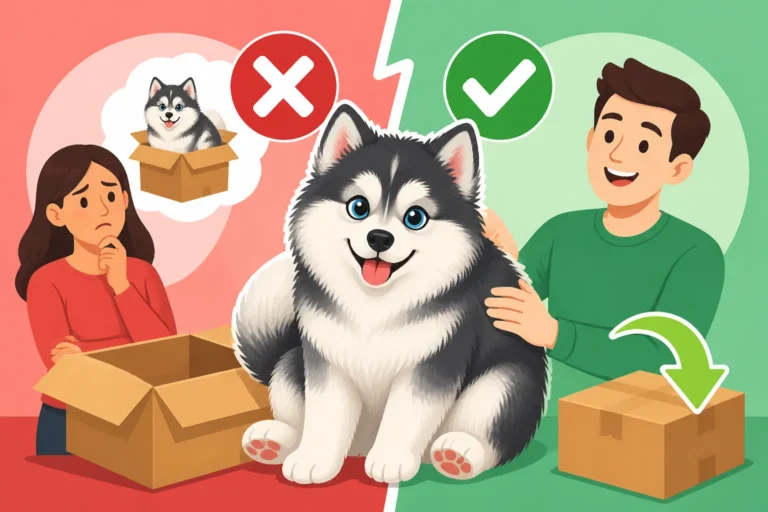
It's incredibly frustrating, isn't it? You fall in love with the idea of a Pomsky – that perfect, miniature Husky look in a compact package – and you envision a certain size for your new family member. Then, as your adorable puppy grows, you start to notice something: they're getting bigger than you anticipated, bigger than the breeder suggested, and certainly bigger than the "toy" or "mini" label you might have heard. This guide is here to shed some light on whether breeders typically offer compensation when a Pomsky grows into a larger dog than originally expected, and what avenues might exist for an owner finding themselves in this situation.
The Unpredictable Nature of Pomsky Size
The truth about Pomsky size is that it's a bit of a genetic roll of the dice, especially in those earlier generations. While breeders strive for consistency, nature often has its own plans. Understanding why this happens can help manage expectations, even if it doesn't solve the frustration of an unexpectedly large pup.
Why Size Guarantees Are Tricky with Hybrids
Pomskies are a relatively new designer crossbreed, a mix of the Siberian Husky and the Pomeranian. These are two breeds with vastly different size ranges, and when you combine their genetics, predicting the outcome isn't an exact science. You're essentially blending a large, athletic working dog with a small, fluffy companion dog. Even when breeders use smaller Huskies or larger Pomeranians, the genes for size can express themselves in surprising ways.
Think of it like baking: you have a recipe, but sometimes the oven temperature is a bit off, or the ingredients have slight variations, and the final cake isn't exactly what you pictured. With an F1 Pomsky (a direct cross between a Husky and a Pomeranian), the genetic variability is at its highest. You might get a dog that leans heavily towards the Husky in size, or one that's much closer to the Pomeranian. As you move into F2 (Pomsky x Pomsky) or multigen crosses, breeders aim for more consistency, trying to narrow down the size range and predictable traits. However, even with more generations, there are no absolute guarantees. The genetic lottery still plays a significant role. This is part of why understanding Why an F1 Pomsky Varies So Much is so important.
The Allure vs. Reality of "Miniature Huskies"
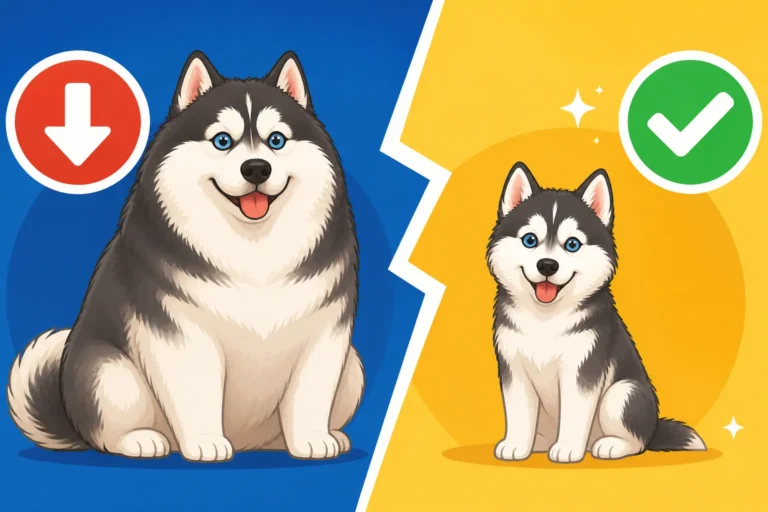
A huge part of the Pomsky's initial explosion in popularity came from those viral internet photos of what looked like tiny, perfect Siberian Huskies. These images, often mislabeled or showing other breeds, created an incredibly strong desire for a "miniature Husky." The reality, however, often doesn't quite match up. Many Pomskies do inherit that stunning Husky look, complete with piercing blue eyes and striking markings, but their size can vary wildly, from a compact 10-15 pounds to a much more substantial 30-40 pounds or even more.
This discrepancy between the idealized "miniature Husky" and the actual size a Pomsky reaches is a common source of disappointment for new owners. They’ve planned for a certain kind of dog, perhaps one suited for apartment living or easier travel, only to find themselves with a much larger canine companion. This isn't to say a larger Pomsky isn't wonderful, but it is different from what was expected and can lead to practical challenges.
Breeder Contracts and Size Discrepancies
When you acquire a purebred dog from a reputable breeder, the contract typically covers health guarantees, return policies, and sometimes even breeding restrictions. With a crossbreed like a Pomsky, these contracts can be even more crucial, but they often approach size guarantees with significant caution.
What to Look for in a Health Guarantee/Contract
A good breeder contract should always prioritize the health and well-being of the puppy. It should outline guarantees against specific congenital or hereditary health conditions, often for a period of one or two years. It might detail responsibilities for veterinary care during that period, and what recourse you have if a covered condition arises – perhaps a partial refund, a replacement puppy, or assistance with vet bills. For more on health, you might want to read about The Two Opposite Disease Lists a Pomsky Inherits.
When it comes to size, however, most breeder contracts are far less specific. You might find language that estimates an adult weight range, but it's rarely a firm guarantee. Some might state that they "expect" the puppy to mature between X and Y pounds, based on the parents' sizes and previous litters. What you're unlikely to see is a clause offering compensation solely because the dog exceeded that estimated range.
Common Exclusions and "As Is" Clauses
Breeders are acutely aware of the genetic unpredictability of hybrid dogs, especially regarding size. To protect themselves, many contracts will include clauses explicitly stating that adult size, coat type, ear set, eye color, and other aesthetic traits are estimates and not guaranteed. They might use phrases like "size is an approximation" or "puppy sold as is regarding adult appearance and size."
This means that if your contract simply gave an estimated weight, and your Pomsky grows beyond that, you likely won't have a contractual basis for demanding compensation. The breeder can easily point to the "estimated" language and claim they fulfilled their part of the agreement. It's a frustrating loophole for owners who might have made their purchase decision heavily based on that size expectation.
The Legal Realities of Pet Contracts
While a signed contract is a legally binding document, enforcing specific clauses – or the lack thereof – can be complex and costly. Laws regarding pet sales vary significantly by state and even by municipality. Most "lemon laws" for pets focus on health issues that make the animal unfit for sale, not on aesthetic or size discrepancies.
Taking a breeder to court over an oversized Pomsky is generally not a practical or financially viable option. The legal costs would almost certainly outweigh any potential "compensation" you might receive, and proving damages due to size alone (without accompanying health problems) can be incredibly challenging. Unless the contract explicitly stated a size guarantee with a clear compensation clause for failure to meet it, your legal avenues are likely very limited.
Types of "Compensation" – When It Might Happen
Given the general lack of contractual obligation for size, actual compensation for an oversized Pomsky is rare. However, there are specific circumstances and types of gestures that a breeder might offer, usually out of goodwill or if size becomes linked to a covered health issue.
Partial Refunds or Future Puppy Credit
It's highly unlikely for a breeder to offer a partial refund or credit towards a future puppy solely because your Pomsky grew larger than anticipated. Breeders understand that size variation is part of the hybrid nature. However, there are exceptions. If a breeder highly misrepresented the parents' sizes, or knowingly sold a puppy from parents that consistently produced much larger offspring while marketing a "mini" size, an ethical breeder might offer some form of goodwill gesture. This isn't a right, but a discretionary act.
For example, imagine a breeder consistently producing Pomskies that mature at 35-40 pounds, but still advertises them as "toy" or "miniature" and implies they'll be under 20 pounds. If enough buyers come back expressing severe disappointment, a conscientious breeder might consider offering a discount on supplies from their own store, or perhaps a small credit towards future purchases, more to preserve their reputation than to meet a contractual obligation. It's a conversation to be had, but don't go in expecting a handout.
No Monetary Compensation for Size Alone
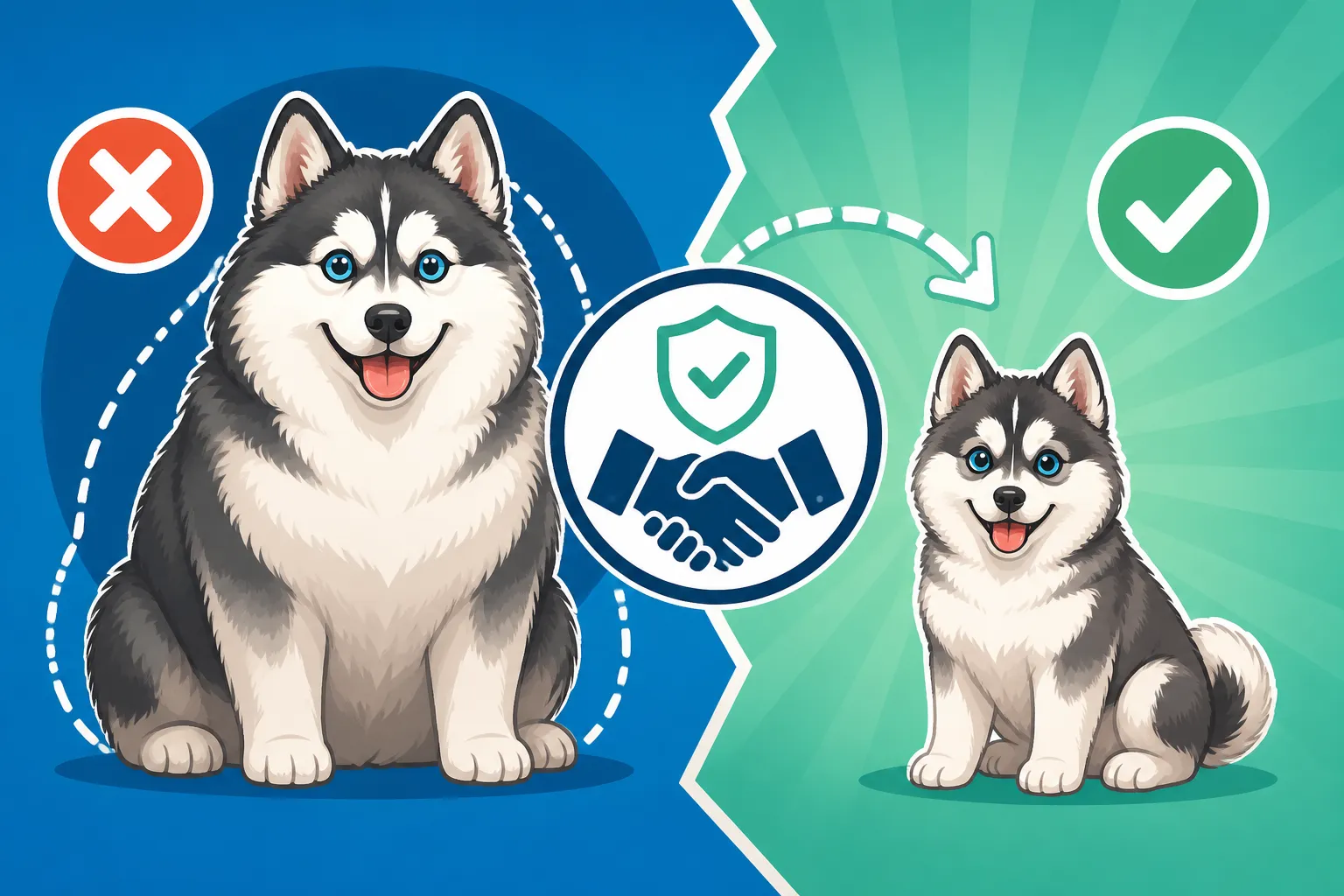
To be blunt, most breeders will not offer monetary compensation for a Pomsky that simply grows bigger than the owner expected or the breeder estimated. The puppy is healthy, happy, and otherwise meets the general description of a Pomsky. The market for crossbreeds often carries this inherent unpredictability, and buyers are generally expected to understand that. Unless you have a very specific, unambiguous clause in your purchase contract guaranteeing a size range with a penalty for deviation, expecting a cash refund for size alone is likely to lead to disappointment.
The focus of most responsible breeders, and the intent behind health guarantees, is to ensure the puppy is sound and free from debilitating genetic health defects. Size, while important to owner preference, isn't usually considered a "defect" in the same way.
When Health Issues Related to Size Trigger Action
Here's where things can get a bit more nuanced. If your Pomsky grows to an unexpectedly large size, and because of that larger size, develops health issues covered by your health guarantee, then you might have a case. For instance, if a Pomsky was predicted to be small but grew to be quite large and then developed severe Hip Dysplasia in a Twenty Pound Pomsky or Slipping Kneecaps in a Pomsky that a veterinarian attributes partly to a larger-than-expected frame, your health guarantee might be activated.
In such a scenario, the compensation wouldn't be for the size itself, but for the health condition. This might involve the breeder contributing to veterinary costs, offering a replacement puppy (often not a practical solution if you've bonded with your dog), or in rare cases, a partial refund. This is why it's so important to have a clear, comprehensive health guarantee in your contract and to keep detailed veterinary records if any health concerns arise. Always prioritize consulting with your veterinarian first about any health issues.
What to Do If Your Pomsky is Larger Than Expected
Discovering your Pomsky is outgrowing its estimated size can be disheartening. It's natural to feel a mix of surprise, frustration, and perhaps even a bit of financial worry. Here’s a pragmatic approach to handling the situation.
Review Your Purchase Contract Carefully
Your first step should always be to pull out that original purchase contract from the breeder and read every single word, especially sections related to guarantees, health, and what constitutes a "defect" or grounds for compensation. Look for any specific language about adult size, weight estimates, or explicit guarantees. Pay close attention to clauses that state what the breeder does not guarantee, as these often include adult size or appearance.
Understanding precisely what was agreed upon in writing is your foundation. If there's no mention of size guarantees, or if it explicitly states size is an estimate, then your options for formal compensation will be limited. If, by some rare chance, there is a clear, measurable size guarantee with a compensation clause, then you have a strong basis for discussion.
Open Communication with the Breeder
Even if your contract doesn't offer a direct path to compensation for size, it's worth having a polite, open conversation with your breeder. Reputable breeders care about the welfare of the dogs they produce and their reputation. While they might not be obligated to offer a refund, they might appreciate the feedback on their litter's growth patterns.
Approach the conversation with a focus on concern, not accusation. You could express something like, "We adore [Pomsky's Name], but we're a bit surprised by their size, which is quite a bit larger than the estimate. We planned for a smaller dog, and we're just wondering if you've seen this in other pups from this line, and if there's any advice or resources you might offer." Sometimes, a breeder might offer a small gesture of goodwill, like a discount on future food purchases if they have a partnership with a brand like Chewy or Ollie, or they might simply offer support and advice based on their experience. It never hurts to ask, but manage your expectations.
Consider the Cost Implications
An oversized Pomsky, while still a cherished companion, does come with different cost implications than a smaller one. A larger dog generally eats more, meaning higher food bills. Brands like Ollie or Chewy offer a range of food options, but the cost naturally scales with the dog's size. Vet bills for medications, anesthesia, or even routine procedures like How Often a Pomsky's Teeth Need Scaling can be higher because dosages are based on weight. Accessories like beds, crates, and harnesses will also need to be larger, potentially costing more. Even grooming for a The Pomsky That Carries a Husky Coat at Twenty Pounds can be more substantial if the dog is on the larger end of the spectrum, necessitating more time and product.
It's a good idea to crunch these numbers. While you might not get compensation, understanding the new financial reality helps you plan. This might also be a good time to consider pet insurance from providers like Healthy Paws, which can help mitigate unexpected veterinary costs, especially for larger dogs that might be more prone to certain orthopedic issues simply due to their mass.
Adjusting Your Expectations and Lifestyle
Ultimately, your Pomsky is a living, breathing family member, regardless of their size. The most important step is to adjust your expectations and adapt your lifestyle to meet their needs. If you planned for a lap dog and now have a dog that prefers to stretch out on the sofa, embrace it. If you expected short walks and now need more vigorous exercise, The Exercise a Pomsky Needs Every Day, then it's time to upgrade your routine.
Love, training, and proper care remain paramount. A larger Pomsky is still capable of bringing immense joy and companionship. Focus on what you do have: a unique, loving dog with all the charm and personality of the breed.
Preventing Future Disappointment
While you can't guarantee a specific size with a Pomsky, there are steps you can take to increase the likelihood of getting a dog closer to your desired size and reduce the chances of disappointment.
Researching Breeder Practices and Parent Lines
Thorough research into your chosen breeder is paramount. Don't just look at cute puppy pictures online. Ask to see the parent dogs in person or via video call. Pay close attention to their sizes. How big are the Husky dam and Pomeranian sire? What sizes have previous litters from those parents reached? A responsible breeder will be transparent about their breeding practices, health testing results, and the typical size range of their puppies.
They should be able to provide clear photos and even weights of adult dogs they have produced from similar pairings. Be wary of breeders who consistently use terms like "teacup" or "micro" Pomsky without concrete evidence or who cannot provide information on the adult size of past puppies. Seeing the parents gives you a much better visual gauge than relying solely on abstract numbers. This kind of transparency helps avoid situations where you feel misled.
Understanding Pomsky Generations and Size
As mentioned earlier, the generation of the Pomsky can impact predictability. F1 Pomskies (first-generation crosses) tend to have the widest size variation because it's the first blend of two very different genetic pools. Some breeders focus on F2, F3, or even multigen Pomskies, meaning they are breeding Pomsky to Pomsky or back to one of the original breeds for specific traits.
Breeders who are working with later generations often have a more established understanding of their lines' typical size ranges. While still not 100% predictable, a multigen Pomsky might offer slightly more consistency in size. Always ask the breeder about the generation of the puppies and what their experience has been with that specific generation's size outcomes. They should be able to explain their breeding goals and how they are trying to achieve a more consistent size range. You can learn more by looking into Whether a Multigen Pomsky Is More Predictable.
Prioritizing Health Over "Miniature" Size
Ultimately, the health and temperament of your Pomsky should be the absolute top priority, far above a specific size. A slightly larger but healthy, well-adjusted dog is always preferable to a "miniature" one plagued by health issues or temperament problems. Over-emphasizing tiny size can sometimes lead to breeders compromising on health or using smaller, less robust breeding stock.
A truly ethical breeder will prioritize genetic health screenings for both parent dogs for conditions common to Huskies and Pomeranians, such as Hip Dysplasia in a Pomsky, Slipping Kneecaps in a Pomsky, and eye conditions like The Juvenile Cataracts a Pomsky Gets From the Husky. They will discuss these health aspects openly. When selecting a puppy, focus on overall health, clear eyes, good energy, and a confident demeanor. A good pet insurance policy, like those offered by Healthy Paws, can be a valuable investment regardless of your Pomsky's final size, ensuring you're prepared for any unexpected health challenges that might arise.
| Aspect | Typical Breeder Contract Language (Size) | Buyer's Hope/Expectation (Size) |
|---|---|---|
| Size Guarantee | "Adult size is estimated to be X-Y lbs based on parents." | "My Pomsky will definitely be X-Y lbs, as advertised." |
| Compensation for Size | Rarely offered for size alone; focuses on health defects. | Expectation of partial refund or credit if size is not met. |
| Primary Focus | Health and temperament. | Specific appearance (including size), often driven by "miniature" imagery. |
| Discrepancy Resolution | Breeder may offer advice, resources, or goodwill gestures. | Demand for direct financial compensation for unmet size. |
| Legal Standing | Generally weak for size alone, unless explicit guarantee in contract. | Belief that any deviation from "estimate" is grounds for compensation. |
Disclaimer
This article is for general informational purposes only and does not constitute professional advice. Laws, prices and regulations vary by location and change over time. Consult a qualified professional for guidance on your specific situation.