Whether an F1 Pomsky Is Healthier Than an F2
It’s a truly exciting moment when you decide to welcome a Pomsky into your home, but often, the sheer amount of information – and sometimes misinformation – out there can feel overwhelming, especially when it comes to their health. Many prospective owners grapple with the question of whether an F1 Pomsky, a direct cross, offers a healthier start than an F2, where two Pomsky parents are bred together. This comprehensive guide will meticulously break down the genetic realities and health implications of both F1 and F2 Pomsky generations, helping you make the most informed decision for your future furry family member.
Understanding Pomsky Generations: What Do F1 and F2 Really Mean?
When you dive into the world of designer breeds like the Pomsky, you quickly encounter terms like F1, F2, F1b, and so on. These aren't just fancy labels; they actually tell you a lot about the genetic makeup of your potential puppy and, consequently, its likely health trajectory. Understanding these generational distinctions is absolutely crucial for any responsible Pomsky owner or aspiring owner. It's not about one being inherently "better," but about understanding the different genetic probabilities at play.
The Basics of F1 Pomskies
An F1 Pomsky is what we call a "first-generation" hybrid. This means it's the direct offspring of two purebred parents of different breeds – in this case, a Siberian Husky and a Pomeranian. Typically, for safety reasons due to the significant size difference, the mother is always the larger Siberian Husky, and the father is the smaller Pomeranian, with breeding almost always done via artificial insemination. This direct cross is often touted for its "hybrid vigor," a concept we'll delve into shortly.
What makes F1 Pomskies so interesting, and sometimes unpredictable, is the sheer genetic melting pot they represent. Each puppy in an F1 litter inherits a 50/50 mix of genes from its Husky parent and its Pomeranian parent. However, this isn't a neat, organized split of physical traits or health predispositions. One F1 puppy might lean heavily towards the Husky in appearance and temperament, while its littermate could be a tiny Pomeranian look-alike with a more reserved personality. This genetic roulette applies equally to their health. While they might benefit from a wider gene pool, reducing the chances of specific recessive diseases from either purebred line taking hold, there's no guarantee. You might get a pup with the strong back of a Husky but the delicate knees of a Pomeranian. The variability is truly the defining characteristic of an F1.
Decoding the F2 Pomsky
Moving on to an F2 Pomsky, we're talking about a "second-generation" cross. This means both parents of the F2 puppy are themselves F1 Pomskies. So, it's a Pomsky bred to a Pomsky. The intention behind breeding F2s is often to try and create more consistency in traits – breeders hope to select F1 parents that embody the desired Pomsky look, size, and temperament, and then pass those stabilized traits down. However, this is where the waters can get a little murky, especially concerning health.
While F2 breeding can lead to more predictable appearances, it also means that the genetic diversity, which was so prominent in the F1 generation, starts to narrow. When you breed two F1 Pomskies, you're essentially doubling up on the potential for any recessive genes that were "hidden" in the F1 parents to express themselves in the F2 offspring. If both F1 parents happen to be carriers for a particular genetic disease, say, one found in Huskies or one common to Pomeranians, then their F2 puppies have a significantly higher chance of inheriting two copies of that recessive gene and actually developing the condition. This is why some argue that the health advantages of hybrid vigor may begin to diminish in F2 generations. It becomes a careful balancing act for breeders to select F1 parents that are not only desirable in appearance but also thoroughly health-tested and clear of genetic predispositions.
Beyond F2: Multigenerational Pomskies
While F1 and F2 are the most commonly discussed generations, the Pomsky world also includes multigenerational Pomskies (F3, F4, and beyond), as well as F1b crosses (an F1 Pomsky bred back to one of the original purebred parents, typically a Pomeranian to reduce size). The drive behind these further generations is generally to achieve even greater consistency and predictability in terms of size, coat type, and temperament, moving closer to a recognized breed standard.
For example, a breeder might aim for a specific small size, so they might breed an F1 Pomsky back to a smaller Pomeranian to create an F1b. Or, they might breed multiple generations of Pomsky to Pomsky (F2 x F2 = F3, and so on) to try and "set" certain traits, hoping that the puppies will consistently resemble a miniature Husky, which was the original allure of the breed. However, this increased consistency often comes at the cost of further reducing genetic diversity. Each successive generation bred from other Pomskies incrementally moves away from the initial hybrid vigor, increasing the probability that recessive health issues present in the Pomsky gene pool (which is a mix of both parent breeds' issues) could become more prevalent. It’s a delicate balance between achieving a desired look and maintaining robust health.
The Concept of Hybrid Vigor in Pomskies
The term "hybrid vigor" is often thrown around when discussing designer breeds, and it's a concept that holds some truth, particularly in the context of F1 Pomskies. However, it's also frequently misunderstood and misapplied, leading to misconceptions about the overall health of mixed-breed dogs. Let's really dig into what it means and how it actually plays out in a Pomsky.
What is Hybrid Vigor?
At its core, hybrid vigor, also known as heterosis or outbreeding enhancement, refers to the increased fitness, robustness, or performance often observed in the offspring of distinctly different genetic lines or breeds. In simpler terms, when you breed two genetically dissimilar individuals, their offspring can sometimes be stronger, healthier, and more resilient than either parent, or than offspring from parents of the same purebred line. The scientific explanation behind this is fairly straightforward: purebred dogs, through generations of selective breeding for specific traits (looks, temperament, working ability), often have reduced genetic diversity. This means they can end up with higher incidences of homozygous recessive genes – two copies of the same recessive gene – which can express themselves as inherited diseases specific to that breed.
When you cross two different purebreds, like a Siberian Husky and a Pomeranian, the offspring (the F1 generation) inherit a much broader range of genes. This increased genetic diversity means that if one parent carries a recessive gene for a particular disease, the other parent's genes are likely to be dominant or different enough to mask that recessive gene. Therefore, the F1 generation might be less prone to single-gene recessive disorders that plague one or both purebred parent lines. It's like having a backup plan; if one side of the family has a genetic flaw, the other side might compensate for it. This isn't a magical cure-all, but a statistical advantage.
How Hybrid Vigor Applies to F1 Pomskies
For F1 Pomskies, this principle of hybrid vigor is most likely to be at its strongest. You're combining the distinct gene pools of a Siberian Husky and a Pomeranian, two breeds that, while both double-coated Spitz types, are quite different in size, structure, and some of their predisposed health conditions. The idea is that by mixing these genes, the F1 Pomsky benefits from a broader genetic palette. For instance, if the Siberian Husky line carries a predisposition for certain eye issues, the Pomeranian genes might offer protection, and vice versa for conditions common in Pomeranians, like patellar luxation or tracheal collapse. This increased genetic buffer means that an F1 Pomsky may theoretically be less likely to express some of the recessive diseases that are concentrated within specific purebred lines.
Many F1 Pomsky owners report incredibly robust, healthy dogs with excellent vitality, attributing this to hybrid vigor. These dogs often present a mosaic of traits from both parents, and their wide genetic foundation helps them avoid some of the pitfalls of highly inbred purebred lines. It's important to note, however, that hybrid vigor doesn't make a dog immune to all health problems. They can still get common canine ailments, injuries, or develop complex genetic conditions influenced by multiple genes that aren't easily masked. Also, a poorly bred F1 Pomsky, where the purebred parents themselves are not health-screened, will still carry significant risks. The genetic advantage is only as good as the health of the founding stock.
The Diminishing Returns of Hybrid Vigor in F2 and Beyond
Here's where the nuance comes in and where the "healthier" claim for later generations often falls short. When you breed two F1 Pomskies to create an F2 litter, you are no longer introducing fresh, distinct genetic material from two entirely separate purebred lines. Instead, you're breeding two dogs that already share a common mixed genetic background. Each F1 parent carries a blend of Husky and Pomeranian genes, and critically, they also carry the same potential recessive genes from both original purebred lines.
This means that if both F1 parents happen to be carriers for the same recessive genetic disorder – whether it originated from their Husky grandparent or their Pomeranian grandparent – there's a 25% chance with each puppy in the F2 litter that it will inherit two copies of that recessive gene and, consequently, develop the condition. The protective effect of hybrid vigor, which largely relies on masking recessive traits with dominant ones from a completely different gene pool, starts to diminish significantly. You're essentially "funneling" the genetic diversity back down, increasing the likelihood of unmasking those hidden recessive issues that were carried silently in the F1 parents. While breeders of F2 and subsequent generations aim for consistency and can selectively breed for certain healthy traits, they must be extremely diligent with health screening of both F1 parents to avoid inadvertently concentrating potential problems. Without this rigorous screening, the F2 generation can actually carry higher risks for specific inherited conditions than a well-bred F1.
Inherited Health Concerns from the Siberian Husky Side
One of the fascinating, and sometimes challenging, aspects of owning a Pomsky is managing the genetic legacy inherited from two very different parent breeds. The Siberian Husky, while generally robust, does have its own set of breed-specific health concerns that can potentially pass down to your Pomsky, regardless of generation. Understanding these is key to proactive care.
Common Husky Health Issues
Siberian Huskies are known for their athleticism and endurance, but they are not without their vulnerabilities. Eye conditions are perhaps the most well-documented. Juvenile cataracts, which can appear in young dogs and progressively worsen, are a concern. Progressive Retinal Atrophy (PRA) is another degenerative eye disease that can lead to blindness. Corneal Dystrophy, a condition affecting the cornea, the clear outer layer of the eye, can also occur. For any Pomsky owner, knowing about these potential issues is vital, and you might want to learn more about The Eyes a Pomsky Gets From the Husky.
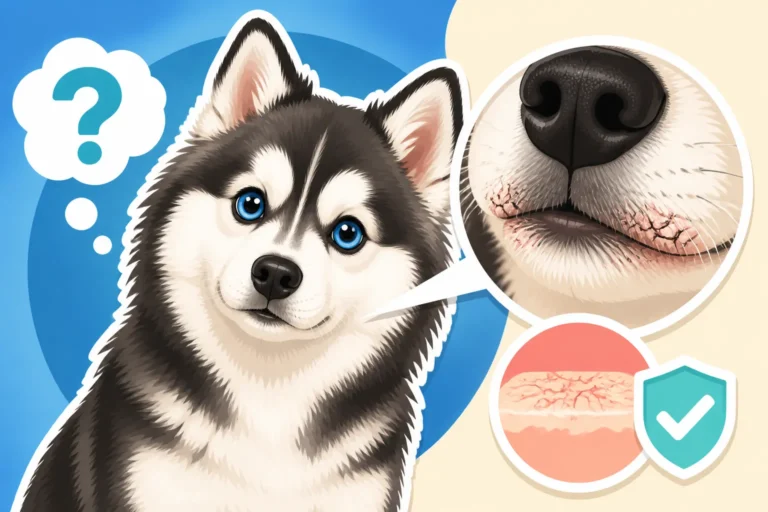
Beyond eye issues, hip dysplasia, a malformation of the hip joint, is a concern in many medium to large breeds, including Huskies. While Pomskies are smaller, especially those leaning towards the Pomeranian side, the Husky genetics still carry this predisposition. Another condition, less common but still notable, is Zinc Responsive Dermatosis. Huskies, and certain other Northern breeds, can have an impaired ability to absorb zinc, leading to skin issues, crusting, and hair loss, particularly around the eyes, mouth, and pressure points. This is why some owners might wonder if Whether a Pomsky Needs Extra Zinc.
How These Manifest in F1 vs. F2 Pomskies
When we talk about how these Husky-derived conditions might appear in F1 versus F2 Pomskies, it largely comes down to the principles of genetic inheritance and the diminishing returns of hybrid vigor.
In F1 Pomskies, because they are a direct cross of a purebred Husky and a purebred Pomeranian, the chances of expressing a recessive Husky-specific genetic disease are statistically lower. Why? Because the Pomeranian parent's diverse genetic makeup acts as a buffer. For a recessive disease to manifest, the F1 puppy would need to inherit two copies of the problematic gene – one from the Husky parent and one from the Pomeranian parent. Since the Pomeranian isn't a Husky, it's less likely to carry the exact same recessive gene for a Husky-specific condition. This is where hybrid vigor offers its strongest protective effect. For instance, if a Husky parent carries a recessive gene for PRA, the F1 Pomsky is highly unlikely to get PRA unless the Pomeranian parent also happens to carry the same very specific, rare recessive gene, which is improbable for a breed-specific Husky disease. However, dominant Husky traits or conditions influenced by multiple genes could still certainly be passed on.
For F2 Pomskies, the situation changes. Remember, F2s come from two F1 Pomsky parents. Each F1 parent carries a blend of Husky and Pomeranian genes, which means they could both be carriers for the same Husky-derived recessive genes. If both F1 parents carry, say, the recessive gene for juvenile cataracts, then there's a 25% chance with each F2 puppy that it will inherit two copies and develop the condition. The protective "masking" effect of hybrid vigor is diluted here because you're now breeding two dogs with a shared, albeit mixed, genetic background. Therefore, the risk of expressing specific Husky-derived recessive conditions can actually be higher in F2s if the F1 parents were not rigorously health-screened to ensure they were clear of these carrier genes. This underscores why demanding transparent health clearances for both F1 parents is paramount when considering an F2 Pomsky. Without knowing the genetic status of the F1 parents, you are taking a much bigger gamble with the F2 generation. If you're concerned about Hip Dysplasia in a Twenty Pound Pomsky, for example, checking the hip scores of both F1 parents is non-negotiable.
Inherited Health Concerns from the Pomeranian Side
Just as with the Husky parent, the Pomeranian side of a Pomsky's lineage brings its own set of potential health predispositions. While small, Pomeranians are known for several specific conditions that can significantly impact a Pomsky's health and well-being. Being aware of these challenges is just as important as understanding the Husky-related issues.
Common Pomeranian Health Issues
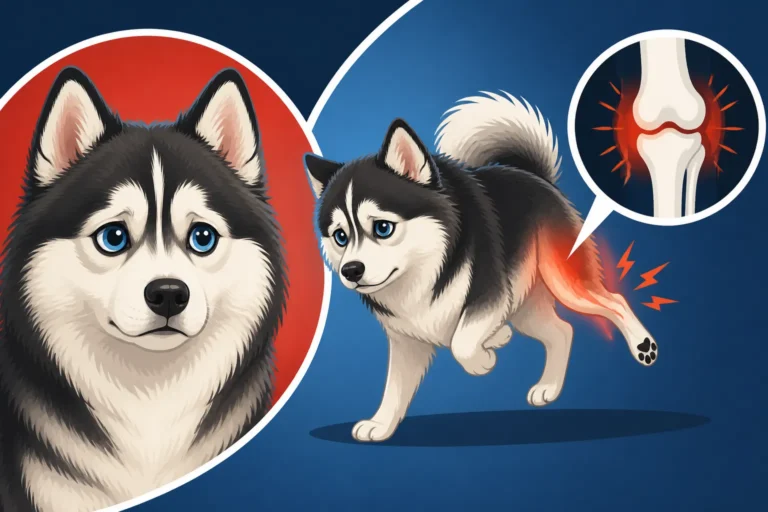
Pomeranians, with their lively personalities and fluffy coats, are adored by many, but their small stature and specific breeding history do come with certain health considerations. Perhaps the most well-known is patellar luxation, or "slipping kneecaps." This condition, common in many small breeds, occurs when the kneecap (patella) moves out of its normal groove. It can range from mild, causing an occasional skip in gait, to severe, leading to lameness and arthritis. If your Pomsky develops this, you might find yourself exploring Slipping Kneecaps in a Pomsky. Another significant concern is tracheal collapse, a progressive condition where the rings of cartilage supporting the windpipe weaken and flatten, making breathing difficult and causing a characteristic honking cough. This is a serious condition, and understanding The Collapsing Trachea a Pomsky Gets From the Pomeranian is vital.
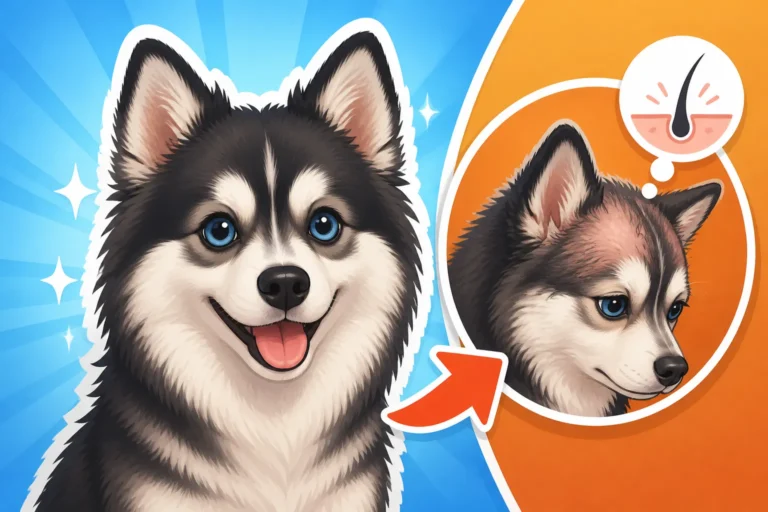
Due to their small mouths, Pomeranians are also very prone to dental crowding and dental disease. Their teeth often don't have enough space, leading to plaque buildup, gum disease, and early tooth loss if not properly cared for. Dental Crowding in a Pomsky's Small Mouth can lead to chronic health issues if ignored. Finally, Alopecia X, also known as Black Skin Disease, is a genetic condition that causes hair loss, typically starting on the flanks or hindquarters, eventually leading to large bald patches and darkened skin. This can be a devastating condition cosmetically and requires careful management, prompting many to research topics like Alopecia X and the Pomsky That Loses Its Coat.
The Impact on F1 and F2 Pomskies
The inheritance pattern of these Pomeranian-specific conditions in F1 versus F2 Pomskies is similar to that of the Husky-derived issues, with critical differences in risk.
For F1 Pomskies, hybrid vigor again offers a degree of protection against recessive Pomeranian conditions. For instance, if a Pomeranian parent carries a recessive gene for Alopecia X, the F1 Pomsky puppy is less likely to develop the condition because the Husky parent's genes are unlikely to carry the same specific recessive gene. The genetic diversity from the Husky helps mask these single recessive genes. However, conditions like patellar luxation are often polygenic (influenced by multiple genes) or can have a strong conformational component that might be passed on even if only one parent carries the predisposition strongly. So, while an F1 Pomsky might not inherit the full severity of a Pomeranian's patellar luxation, the propensity for weaker knee structure could still be present. Similarly, the smaller jaw size contributing to Dental Crowding in a Pomsky's Small Mouth is a physical trait that can be influenced by either parent, and an F1 could inherit a mouth that’s too small for its teeth.
With F2 Pomskies, the risks for expressing these Pomeranian-specific health issues generally increase, especially if the F1 parents were not rigorously screened. If both F1 Pomsky parents carry recessive genes for Alopecia X, for example, the F2 puppies have a higher statistical chance of inheriting two copies and developing the disease. This is because both F1 parents already have a mixed genetic background that includes the Pomeranian genes. The potential for the "unmasking" of these issues becomes more pronounced. Furthermore, if both F1 parents happen to have a milder form of patellar luxation or a conformation that predisposes to tracheal collapse, breeding them together could result in F2 offspring with more severe manifestations of these same problems. Breeders of F2 Pomskies must meticulously select F1 parents that have been cleared of these conditions through appropriate health tests (like OFA certifications for patellas and clear genetic panels for known breed-specific recessive diseases). Without this due diligence, the convenience of breeding Pomsky-to-Pomsky to achieve a "look" can inadvertently concentrate health problems from both ancestral lines, leading to a potentially less healthy F2 generation than a carefully bred F1.
Genetic Diversity and Predicting Health Outcomes
The journey from a purebred Husky and Pomeranian to an F1 Pomsky, and then to an F2, is a fascinating lesson in genetics. The goal for many breeders of later generations is predictability, but achieving this while maintaining robust health is a complex endeavor that hinges on understanding genetic diversity.
The Genetic Lottery of an F1 Pomsky
An F1 Pomsky is truly the product of a genetic lottery, albeit a beautifully random one. Each F1 puppy receives exactly 50% of its DNA from its Siberian Husky parent and 50% from its Pomeranian parent. However, which 50% it gets from each is what creates the incredible variability within a single F1 litter. You can have puppies that look almost entirely Husky, others that are miniature Pomeranians, and some that are a perfect blend. This extends beyond appearance to temperament, energy levels, and, crucially, health.
This high degree of genetic variation is precisely why F1 Pomskies are often cited as having the greatest benefit from hybrid vigor. By mixing two distinct purebred gene pools, the chances of two copies of the same deleterious recessive gene coming together are minimized. It’s like shuffling two very different decks of cards; the odds of drawing the same "bad" card twice are lower than if you were shuffling two identical, or very similar, decks. This means an F1 Pomsky might be less susceptible to specific recessive diseases that are prevalent in either the Husky or Pomeranian purebred populations. However, the downside of this lottery is the unpredictability. You might end up with a dog that inherits a difficult combination of traits, such as the high prey drive of a Husky combined with the delicate bone structure of a Pomeranian, or a less robust immune system due to a complex gene interaction. It's a gamble, but one that statistically favors good health against single-gene recessive disorders.
The Breeding Strategy for F2 and Multigen Pomskies
The motivation behind breeding F2 and subsequent multigenerational Pomskies often stems from a desire to move beyond the F1's inherent unpredictability. Breeders aiming for F2s and beyond typically select F1 parents that display the most desirable traits – not just in terms of appearance (like the coveted miniature Husky look or specific coat colors) and temperament, but also, ideally, in terms of health. The hope is that by breeding two well-matched F1 Pomskies, they can start to "stabilize" these desired characteristics, making the puppies more consistent across litters and generations.
However, this strategy introduces a significant genetic challenge. When you breed two F1 Pomskies, you are breeding two individuals that already share a common, mixed genetic heritage. Any recessive genes for health conditions that were present but masked in the F1 parents now have a higher chance of being paired up and expressed in the F2 offspring. This is the point where the benefits of hybrid vigor begin to wane. While breeders can meticulously health test their F1 parents (OFA clearances for hips and patellas, CAER eye exams for specific eye conditions, genetic panels for known breed-specific diseases), it's a much more complex genetic equation than simply crossing two unrelated purebreds. There's a much larger pool of potential "hidden" recessive genes from both original purebred lines that could come into play. The ethical breeder of F2s aims to narrow down the variability while rigorously screening out genetic faults, but it requires a deep understanding of genetics and extensive testing.
Why Health Screening is Paramount for All Generations
Given the complexities of genetic inheritance in hybrid breeds, one truth remains constant: rigorous health screening of the parent dogs is absolutely paramount, regardless of whether you're looking at an F1 or an F2 Pomsky. No generation is inherently "healthier" without this critical step. A poorly bred F1 from untested parents can be just as prone to health issues as a poorly bred F2. Conversely, a thoughtfully bred F2 from extensively health-tested F1 parents can be very healthy.
Reputable breeders, whether producing F1s or F2s, will invest heavily in health clearances. This includes:
- Orthopedic Foundation for Animals (OFA) certifications: For hips (to check for Hip Dysplasia in a Twenty Pound Pomsky) and patellas (to check for Slipping Kneecaps in a Pomsky).
- Canine Eye Registry Foundation (CAER) exams (formerly CERF): Yearly eye exams performed by a board-certified veterinary ophthalmologist to screen for hereditary eye conditions like juvenile cataracts or progressive retinal atrophy, topics like The Juvenile Cataracts a Pomsky Gets From the Husky are serious.
- Genetic testing panels: For breed-specific diseases common in Huskies (e.g., specific forms of PRA) and Pomeranians (e.g., Alopecia X, heart conditions, thyroid issues). Many labs like Embark or Wisdom Panel offer comprehensive panels.
- Vet examinations: Including general health checks and potentially cardiac screenings. For instance, The Screening a Pomsky Should Have Yearly should be a lifelong commitment.
When researching a breeder, always ask to see verifiable health clearances for both parent dogs, not just a vet check-up certificate. These clearances should be registered with national databases where possible. An ethical breeder will be transparent and proud to share these results, demonstrating their commitment to the health of their lines. Without comprehensive health testing, you're essentially buying a puppy sight unseen when it comes to potential genetic time bombs, and that's a risk no amount of hybrid vigor can truly negate.
| Feature / Consideration | F1 Pomsky | F2 Pomsky |
|---|---|---|
| Parentage | Purebred Siberian Husky x Purebred Pomeranian | F1 Pomsky x F1 Pomsky |
| Genetic Diversity | Highest diversity; mixing two distinct gene pools | Reduced diversity compared to F1; mixing two already mixed gene pools |
| Hybrid Vigor Benefit | Strongest; most effective at masking recessive single-gene disorders | Diminished; increased chance of recessive genes being expressed if F1 parents are carriers |
| Phenotypic Predictability | Lowest; wide range of size, appearance, temperament | Higher; breeders aim for more consistent traits, but still variable |
| Risk of Breed-Specific Recessive Diseases | Lower; less likely to inherit two copies of a rare recessive gene from the other purebred | Higher; if both F1 parents carry the same recessive gene from either purebred grandparent |
| Overall Health Predictability | Variable; depends heavily on health of purebred parents | Variable; depends heavily on rigorous health screening of F1 parents |
| Breeding Goal (General) | Create the initial Pomsky hybrid with diverse genetics | Stabilize desired traits (size, appearance, temperament) |
Navigating Breeder Claims and Making an Informed Choice
Choosing a Pomsky breeder can feel like navigating a minefield, especially when you encounter conflicting claims about health, generations, and what constitutes a "good" Pomsky. It's crucial to approach every breeder with a healthy dose of skepticism and a clear understanding of what questions to ask.
Skepticism Toward "Healthier" Claims
You'll often hear breeders make sweeping statements about their dogs being "healthier" than others, or that a particular generation (F1, F2, etc.) is inherently superior in terms of health. While some breeders genuinely strive for health, blanket claims without verifiable evidence should raise a red flag. The truth is, without proper health testing, there's no way to guarantee health in any generation, F1 or F2.
Be wary of breeders who offer vague assurances like "my vet checked them" or "they've never had a problem." A simple vet check-up for a puppy or adult dog is not the same as comprehensive genetic health screening. A vet can tell you a dog is healthy at that moment, but they can't tell you if it's a carrier for hip dysplasia, certain eye diseases, or Alopecia X without specific tests. Demand to see official certificates from organizations like the OFA (Orthopedic Foundation for Animals) for hips, elbows, and patellas, and CAER (Canine Eye Registry Foundation) eye clearances performed by a board-certified veterinary ophthalmologist. Also, ask for results from genetic panels for specific diseases common to Huskies and Pomeranians. If a breeder can't or won't provide these, walk away. They are either cutting corners or actively hiding potential issues. It's about transparency and accountability, not just promises.
The Role of Responsible Breeding Practices
A responsible breeder, regardless of whether they breed F1 or F2 Pomskies, prioritizes the health and well-being of their dogs above all else. Their practices go far beyond just mating two dogs and selling puppies. They carefully select their breeding stock, ensuring that both parents have excellent temperaments and are free of known hereditary health problems. This often means investing significant time and money in extensive health testing, even if the parents appear perfectly healthy. They understand that breeding is about improving the breed, not just reproducing.
Moreover, a responsible breeder will be upfront about the potential challenges and genetic predispositions that exist in Pomskies, openly discussing The Two Opposite Disease Lists a Pomsky Inherits. They will educate prospective buyers, providing detailed information about the specific health concerns they screen for, what those results mean, and what a buyer can expect. They'll also provide a written health guarantee for their puppies, outlining what it covers and for how long. They’ll also be a lifelong resource for new owners, ready to answer questions and offer support. Even with the most rigorous screening, unexpected health issues can arise. That's why considering pet insurance from a reputable provider like Healthy Paws can be a smart move, helping to cover significant portions of unexpected veterinary expenses, regardless of whether your Pomsky is F1 or F2. It's an investment in your peace of mind and your Pomsky's future well-being.
What to Look for in a Pomsky Breeder
Finding a truly ethical and responsible Pomsky breeder is perhaps the single most important step in ensuring you bring home a healthy companion. Beyond demanding comprehensive health clearances (which are non-negotiable), here's what else to look for:
- Transparency and Open Communication: A good breeder will welcome your questions, allow you to visit their facility (or conduct thorough video calls if distance is an issue), and be open about their breeding practices, including successes and challenges. They should be willing to discuss the specific genetic lines they use and why.
- Knowledge and Experience: They should demonstrate a deep understanding of both Siberian Huskies and Pomeranians, their health predispositions, temperaments, and grooming needs. They should also be knowledgeable about Pomsky genetics and the differences between F1 and F2 generations.
- Limited Litters: Responsible breeders do not constantly have puppies available. They breed thoughtfully, often only one or two litters a year, and prioritize the health and recovery of their dam.
- Focus on Temperament and Socialization: Puppies should be raised in a clean, stimulating home environment, exposed to various sights, sounds, and people to ensure they are well-socialized.
- Lifetime Support: A reputable breeder will be there for you and your Pomsky for its entire life. They'll ask you to return the dog to them if you ever can't keep it, rather than it ending up in a shelter.
- Contracts and Guarantees: Expect a detailed contract outlining health guarantees, spay/neuter agreements, and what happens if a genetic issue arises.
- References: Ask for references from their veterinarian and previous puppy buyers.
In essence, a reputable breeder acts as a guardian of the breed's health and integrity. They understand that while hybrid vigor offers some advantages for F1s, it doesn't negate the need for screening, and for F2s, rigorous screening of the F1 parents becomes even more critical to prevent the unmasking of recessive disorders.
Practical Considerations for Pomsky Owners
Bringing a Pomsky into your life is a long-term commitment, often for The Twelve to Fifteen Years a Pomsky Lives. Regardless of whether your furry friend is an F1 or F2 generation, their health and happiness will largely depend on the care and attention you provide throughout their life. It's about being proactive and prepared for the journey ahead.
Ensuring Optimal Health for Your Pomsky, Regardless of Generation
The foundation of a healthy Pomsky, whether F1 or F2, starts with consistent, high-quality daily care. This isn't just about reacting when something goes wrong, but about creating an environment that supports their well-being from puppyhood through their senior years.
- Nutrition: A balanced, high-quality diet appropriate for their age, size, and activity level is paramount. Consult your vet for specific recommendations, and be aware that some Pomskies might inherit the Husky's pickiness or the Pomeranian's tendency towards hypoglycemia as a puppy, requiring careful feeding schedules.
- Regular Exercise: Pomskies are active dogs, inheriting energy from both parent breeds. They need consistent daily exercise to maintain a healthy weight, build strong muscles, and stimulate their minds. This helps prevent obesity, which can exacerbate conditions like patellar luxation or hip issues. A good run, vigorous playtime, or long walks are essential.
- Routine Veterinary Care: This is non-negotiable. Regular check-ups allow your vet to monitor your Pomsky's overall health, catch potential issues early, and keep vaccinations and parasite prevention up-to-date. Discuss The Screening a Pomsky Should Have Yearly with your vet, which may include blood tests and physical exams, especially as they get older. Early detection can make a significant difference in managing or even curing many conditions.
- Dental Hygiene: Given the Pomeranian's predisposition for Dental Crowding in a Pomsky's Small Mouth, diligent dental care is crucial. Daily tooth brushing, dental chews, and professional dental cleanings as recommended by your vet can prevent painful and costly dental disease.
- Mental Stimulation: A bored Pomsky is often a destructive Pomsky. Engage their intelligent minds with puzzle toys, training sessions, and interactive play. Mental exercise is just as important as physical exercise for their overall health and well-being.
By consistently providing these fundamental elements of care, you're giving your Pomsky the very best chance at a long, healthy life, regardless of its generational status.
Preparing for Potential Health Challenges
Even with the best breeding and daily care, dogs can face unexpected health challenges. Being prepared financially and emotionally is a crucial aspect of responsible Pomsky ownership.
- Financial Planning: Veterinary care can be expensive, especially for emergencies, surgeries, or chronic conditions. It's wise to set aside an emergency fund specifically for your dog's health needs. This could mean thousands of dollars for a major surgery like a knee repair for Slipping Kneecaps in a Pomsky or ongoing medication for Zinc Responsive Dermatosis in a Pomsky.
- Pet Insurance: This is where services like Healthy Paws truly shine. A robust pet insurance policy can provide immense peace of mind, covering a significant portion of unexpected veterinary bills from accidents, illnesses, and even some hereditary conditions. While pre-existing conditions are usually not covered, having a policy in place from puppyhood can protect you from huge expenses down the line, ensuring you can always make health decisions based on what's best for your Pomsky, not just your wallet. For many Pomsky owners, considering a plan from Healthy Paws has allowed them to provide life-saving or life-improving treatments they might not have otherwise afforded.
- Understanding Specific Risks: Educate yourself on conditions common to Pomskies. Knowing the signs of a The Honking Cough of a Pomsky With a Bad Trachea or the symptoms of Whether a Pomsky Gets Epilepsy can help you recognize problems early and seek veterinary attention promptly. The more you know, the better equipped you are to advocate for your dog's health.
- Proactive Management: For some conditions, proactive management can make a difference. For instance, if your Pomsky has a predisposition for joint issues, your vet might recommend specific supplements, controlled exercise, or weight management.
Being prepared doesn't mean anticipating the worst, but rather being ready to handle whatever comes your way, ensuring your Pomsky receives the best possible care throughout their life.
The Long-Term Commitment
Owning a Pomsky is a profound commitment that extends over a decade. Their health needs will evolve as they age, requiring adjustments to their care routine and potentially more frequent veterinary visits.
- Aging Gracefully: As your Pomsky enters their senior years (typically around 7-8 years old), their needs will change. They might slow down, require softer bedding, or need specialized senior diets. You'll need to be vigilant for signs of arthritis, cognitive decline, or other age-related issues.
- Ongoing Screenings: Older Pomskies benefit from more frequent veterinary check-ups, often twice a year, to monitor for common senior ailments like kidney disease, heart conditions (like Whether a Pomsky Gets Heart Disease), or developing cancers (though Whether a Pomsky Gets Cancer Young is less common, it's still a risk).
- Adjusting Exercise: An older Pomsky still needs exercise, but it might be gentler walks rather than intense runs. Keeping them mobile is important for joint health and mental well-being.
- Emotional Support: As our dogs age, they rely on us even more. Providing comfort, patience, and understanding through their twilight years is the ultimate expression of your long-term commitment.
Ultimately, whether your Pomsky is an F1 or F2, their health journey is a shared one. With a loving home, diligent care, and preparedness for the unexpected, you can provide your Pomsky with a full and happy life.
Disclaimer
The information provided in this guide is intended for educational purposes only and should not be taken as professional veterinary advice. Always consult with a qualified veterinarian for any health concerns or before making decisions about your Pomsky's care or treatment.