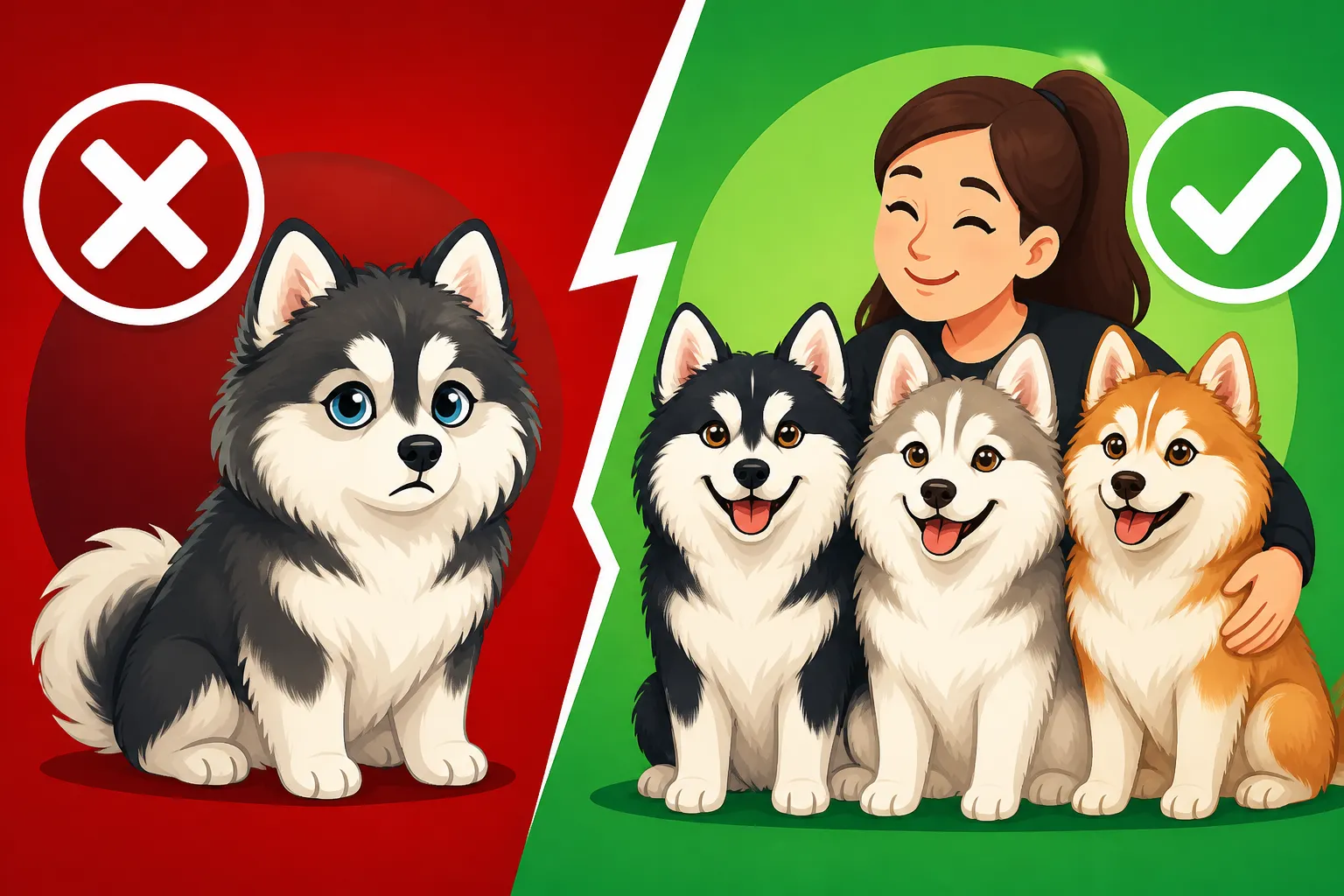
Why an F1 Pomsky Is Not the One Breeders Want
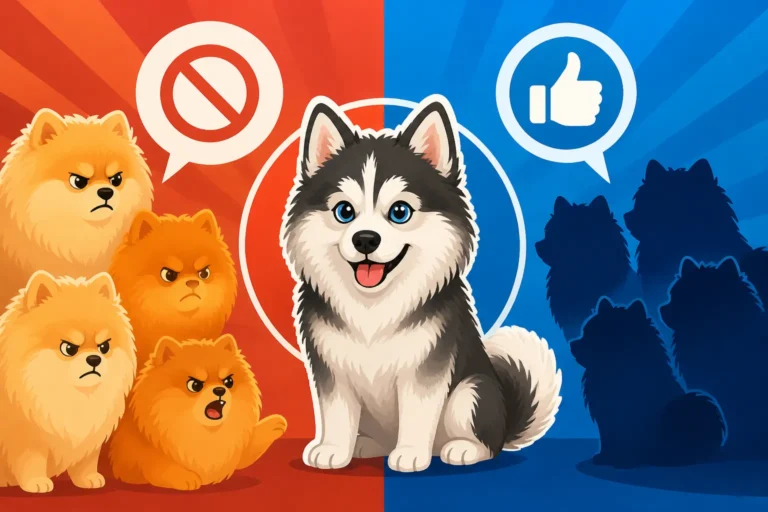
Many aspiring Pomsky owners, especially newcomers to the world of designer breeds, often mistakenly believe that an F1 Pomsky is the gold standard, the "original" or "purest" form of this delightful cross. However, the reality within serious Pomsky breeding circles is quite different; many experienced breeders actively aim beyond the F1 generation, often finding it to be the least desirable for their long-term goals of consistency and predictability. This guide will unravel why the F1 Pomsky, despite its common perception, isn't always what breeders are striving for and what that means for you as a prospective owner.
Understanding F1 Pomskies: The First Generation's Unpredictability
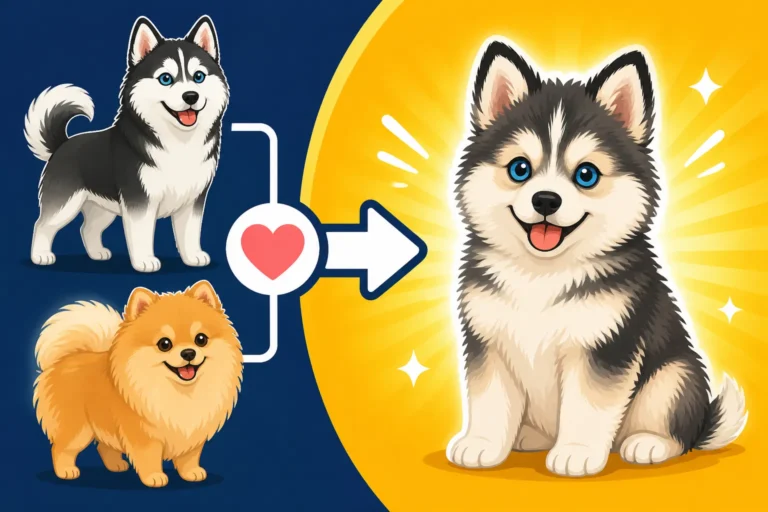
When we talk about an F1 Pomsky, we're referring to the very first cross between a purebred Siberian Husky and a purebred Pomeranian. "F1" simply means "first filial generation." This initial cross represents a fascinating genetic lottery, where traits from both parent breeds can manifest in a myriad of ways, making each puppy a delightful, yet often unpredictable, surprise.
What "F1" Actually Means in Pomsky Breeding
An F1 Pomsky is a direct offspring of a purebred Siberian Husky dam (mother) and a purebred Pomeranian sire (father). This is the foundation upon which the entire Pomsky breed was built, stemming from the desire to create a miniature husky-like companion. You see, the large size difference between the parent breeds means that Why a Pomsky Cannot Be Bred Naturally, necessitating artificial insemination. Every single Pomsky line begins with this F1 generation, but it's where the journey starts, not necessarily where a breeder wants it to end.
Think of it like mixing two very different paint colors for the first time. You might get an interesting new shade, but each batch might be slightly different. One puppy might inherit more of the Husky's independent nature, while another in the same litter might lean heavily into the Pomeranian's sass and vocal tendencies. This variability is the hallmark of the F1 generation, offering a wide spectrum of possibilities that can be both exciting and challenging for a breeder trying to establish a consistent look and temperament.
The Wide Genetic Range of F1 Litters
The genetic makeup of an F1 Pomsky is essentially 50% Siberian Husky and 50% Pomeranian. While this sounds straightforward, the expression of those genes is anything but. Imagine a litter of F1 puppies: one might have the striking blue eyes and markings of a Husky, but the small size and double curl tail of a Pomeranian. Another might be larger, with brown eyes and a woolier coat, while a third could be a perfect blend, or perhaps something entirely unexpected. This incredible variability is both the charm and the main challenge of F1s. What F1 Means on a Pomsky dives deeper into this foundational understanding.
This genetic "roll of the dice" means that predicting an F1 Pomsky's adult size, coat type, temperament, and even health predispositions can be incredibly difficult. A breeder might meticulously choose two excellent purebred parents, but the resulting F1 litter can still surprise them with puppies that are significantly larger or smaller than anticipated, or with coats that are either too short or too long. This lack of consistency makes it difficult for breeders to confidently market their puppies to owners with specific expectations, or to further their breeding program towards a standardized appearance and behavior.
The Breeder's Vision: Why Consistency Matters
For breeders dedicated to establishing a stable, recognizable Pomsky breed, consistency is key. They aren't just looking to create cute puppies; they're working towards a future where a Pomsky is instantly identifiable and reliably possesses certain traits, much like any established purebred dog.
The Goal of Predictable Traits and Appearance
Reputable Pomsky breeders aren't just making "mixes"; they're endeavoring to develop a new breed. This long-term vision requires generations of careful selection to achieve predictability in appearance, size, and temperament. An F1 litter, by its very nature, lacks this predictability. You might see a range of sizes from 15 pounds to 40 pounds, different ear sets (floppy or erect), varied coat textures (from short and sleek to dense and wooly), and a spectrum of personalities within the same litter. This wild variation makes it almost impossible to tell a potential buyer, "This is what a Pomsky looks like."
A breeder's aim is to produce dogs that consistently meet a certain "type" – a specific set of characteristics that define the breed. When you see a Golden Retriever, you have a clear image in your mind. The same goes for a Pug or a German Shepherd. For the Pomsky to achieve such recognition, the F1 generation, while crucial as a starting point, is too much of a genetic grab bag. Breeders want to move beyond the excitement of the "first cross" to a stage where they can refine and stabilize the desired traits over successive generations.
Moving Beyond the "Designer Dog" Label
Many "designer dogs" like the Pomsky start as F1 crosses. But for a breed to truly be established, it needs to move past the novelty phase and demonstrate consistent traits that can be reliably passed down. This is where the F1 generation falls short for breeders. While exciting for the initial novelty, it doesn't offer the genetic stability needed to create a recognized breed. A dedicated breeder isn't just selling a cute puppy; they're investing years, sometimes decades, into a breeding program that aims to produce predictable, healthy dogs.
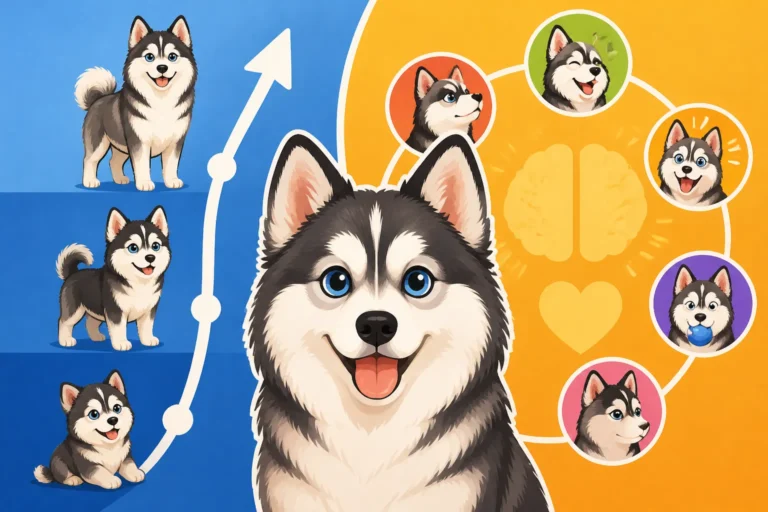
This push for consistency means breeders will often breed F1 Pomskies to other F1 Pomskies to create F2s, or F1s back to one of the parent breeds (though this is less common in Pomskies due to size constraints) or even F2s to F2s for F3s, and so on, working towards what's known as "multi-generation" Pomskies. The goal is to narrow the genetic variability seen in the F1s, allowing for a clearer, more consistent expression of the desired Pomsky characteristics. It's a challenging and long process, but it's what separates a serious breeding program from someone just breeding two different purebreds for a quick sale.
Genetic Lottery: The Wide Range of F1 Traits
The beauty of an F1 Pomsky lies in its unpredictability, but this is also its biggest challenge for breeders and sometimes for owners too. You might get a miniature Husky, or you might get a large Pomeranian, or something else entirely.
Size Variability: A Breeder's Headache
One of the most significant challenges with F1 Pomskies is the unpredictable adult size. While people often dream of a perfectly miniature Husky, the reality is that F1 puppies can range dramatically in weight and height. One pup might mature to a petite 12 pounds, while another from the same litter could easily reach 35 pounds or more. This is a huge factor when you consider that many people specifically seek a Pomsky for its expected smaller stature compared to a full-sized Husky. What a Pomsky Actually Weighs Full Grown explores this in more detail.
For a breeder trying to cater to specific size preferences, this variability is a genuine headache. They cannot reliably tell a prospective buyer that their F1 puppy will fall within a narrow weight range. This can lead to disappointed owners if their "toy" Pomsky grows into a medium-sized dog, or if their expected robust companion turns out to be much daintier than hoped. It’s a gamble, and for breeders trying to build a reputation for specific sizing, it's a huge hurdle to overcome.
Coat Types and Their Maintenance
The coat of an F1 Pomsky is another area of immense variation. You might end up with a coat that leans heavily towards the Husky's dense double coat, requiring significant grooming, especially during seasonal "blow-outs." Or, you could get a coat more reminiscent of a Pomeranian's fluffy, stand-offish fur. There are even those with shorter, less dense coats. Each type has its own grooming requirements, and an owner expecting one type might be overwhelmed by another. The Three Pomsky Coat Types details these differences.
A breeder cannot guarantee which coat type an F1 puppy will develop, even if they can make an educated guess based on the parents and early puppy fluff. This means a buyer expecting a low-maintenance coat might find themselves brushing daily, dealing with mats, and constantly battling shedding hair. Conversely, someone prepared for heavy grooming might get a relatively easy-care coat. For breeders, this makes it harder to provide accurate care advice upfront or to produce a consistent offering in terms of grooming needs, which can be a major selling point for potential owners.
Temperament Spectrum: From Husky Independent to Pomeranian Sassy
Just like physical traits, an F1 Pomsky's temperament can be a delightful, yet challenging, mix. Some F1s inherit the Husky's independent, sometimes aloof nature, complete with their famous "talking" and howling. Others might lean towards the Pomeranian's confident, sometimes bossy, and often vocal personality. Then there are those who get a perfect blend, showcasing both loyalty and a playful mischievousness. The Husky Howl in a Pomsky and Recall on a Pomsky Bred From a Dog That Runs are great resources for understanding some of these inherited traits.
For a breeder aiming to produce a specific temperament, this wide range is difficult to manage. They want to ensure their puppies are good family companions, but an F1 litter could produce dogs with very different energy levels, training challenges, and social tendencies. This unpredictability can lead to mismatches between a dog's natural inclination and an owner's lifestyle, potentially resulting in frustrated owners or rehomed dogs. Breeders want to breed for calm, trainable, and adaptable temperaments, and F1s offer less certainty in achieving this ideal consistently.
Health Considerations and F1 Generational Breeding
While "hybrid vigor" is often touted as a benefit of F1 crosses, suggesting they are inherently healthier, the reality for Pomskies is a bit more nuanced. Breeding these first generations still requires careful consideration of the genetic health issues present in both parent breeds.
Understanding Hybrid Vigor in Pomskies
The concept of "hybrid vigor," or heterosis, suggests that crossing two genetically diverse purebreds can result in offspring with increased health and vitality compared to their purebred parents. This is because the cross-breeding can reduce the likelihood of inheriting two copies of a recessive gene for a specific genetic disease. For instance, if the Husky parent carries a gene for one condition and the Pomeranian parent carries a gene for another, an F1 Pomsky might only inherit one copy of each, remaining unaffected. However, this doesn't make an F1 Pomsky immune to all health problems, nor does it mean every F1 is healthier than an F2. Whether an F1 Pomsky Is Healthier Than an F2 explores this topic in depth.
While hybrid vigor can be a real benefit, it's not a magic bullet. An F1 Pomsky can still inherit any of the common health issues found in either Huskies or Pomeranians if both parents carry the respective genes. For example, Dental Crowding in a Pomsky's Small Mouth is a common issue that can arise from combining the smaller jaw of a Pomeranian with the larger teeth of a Husky. Responsible breeders still conduct extensive health testing on their parent dogs to minimize the risk, regardless of the generation.
Inherited Health Concerns from Parent Breeds
Even with hybrid vigor, F1 Pomskies are still susceptible to conditions common in Siberians and Pomeranians. For example, Huskies are known for certain eye conditions, while Pomeranians can be prone to patellar luxation (slipping kneecaps) and collapsing tracheas. An F1 puppy could inherit a predisposition to any of these issues. A breeder's goal is to produce healthy dogs, and simply making an F1 cross doesn't automatically guarantee this.
A responsible Pomsky breeder will always screen both parent breeds for known genetic conditions, such as hip and elbow dysplasia, various eye disorders, and patellar luxation. This due diligence is crucial to reduce the risk of passing these issues on to the F1 puppies. However, the genetic blending in an F1 generation means that predicting which predispositions will manifest, or with what severity, remains somewhat uncertain, making long-term health tracking and genetic analysis more complex than with a purebred line.
The Challenges of Breeding F1 to F1 for Future Generations
To move beyond the unpredictability of the F1 generation and work towards a more consistent breed standard, breeders often choose to breed F1 Pomskies to other F1 Pomskies. This process creates the F2 generation and is a critical step in establishing a true breed, but it comes with its own unique set of challenges.
Introducing F2 and Multigenerational Pomskies
When two F1 Pomskies are bred together, their offspring are designated as F2 Pomskies. The intention behind this is to start stabilizing the desirable Pomsky traits that appeared in the F1 generation. However, because F1s are so variable, breeding two F1s can actually lead to even more genetic variation appearing in the F2 litter. Think of it this way: if both F1 parents each have a mix of Husky and Pomeranian traits, their F2 puppies can inherit almost any combination, sometimes even reverting back to looking much more like one purebred grandparent than a blended Pomsky.
This is where the real work of selective breeding begins. Breeders are looking for those F1 individuals that best exemplify the ideal Pomsky characteristics—a certain size, a particular coat, and a balanced temperament—and then pairing them carefully. The goal is to start consistently reproducing those ideal traits. However, this is a slow and meticulous process, requiring a keen eye for genetics and a deep understanding of what traits are dominant versus recessive, and how they combine. Why Pomsky Breeders Prefer F2 and Beyond highlights why breeders undertake this complex task.
The Intensification of Desired and Undesired Traits
Breeding F1 to F1 (or F2 to F2 for that matter) allows breeders to double down on traits they want, but it also means that any less desirable traits, or even genetic health issues, can become more pronounced. If both F1 parents carry a recessive gene for a specific condition, there's a 25% chance that an F2 puppy will inherit two copies of that gene and express the condition. This means health screening becomes even more critical in these later generations, not less.
Consider the physical appearance: a breeder might select two F1s that both have lovely blue eyes and a compact size. In theory, breeding them together should increase the chances of those traits appearing in their F2 offspring. However, if those same two F1s also both carry genes for Slipping Kneecaps in a Pomsky (patellar luxation), then the F2 litter could potentially have a higher incidence of this problem. This careful balance of selecting for desired aesthetics while rigorously screening for health is a tightrope walk for ethical breeders. It requires immense dedication, comprehensive health testing, and a willingness to make tough breeding decisions, sometimes even retiring dogs from a program if they carry undesirable traits or health concerns.
The Appeal and Reality for Owners: F1 vs. Later Generations
For prospective Pomsky owners, understanding the differences between F1, F2, and multigenerational Pomskies is crucial. It directly impacts what you can expect in terms of your dog's appearance, size, temperament, and even long-term care needs.
What F1 Promises Versus What It Delivers
The allure of an F1 Pomsky often comes from the idea of the "original" cross, and perhaps the romanticized notion of hybrid vigor. Many buyers imagine getting a perfect 50/50 split of Husky and Pomeranian traits, leading to a miniature version of the majestic Husky. However, as we've discussed, the F1 generation is the most unpredictable. You might get exactly what you pictured, or you might end up with a dog that leans heavily towards one parent breed, either in size, appearance, or personality.
This disconnect between expectation and reality can be a source of frustration for owners. Someone expecting a small, calm companion might get a larger, more vocal escape artist with a high prey drive. Conversely, someone wanting a more independent dog might find themselves with a Velcro Pomeranian personality. The truth is, with an F1, you're embracing a bit of a genetic mystery. While the result can be absolutely wonderful, it’s vital to go into it with open eyes and a flexible mindset, ready to love whatever unique combination of traits your F1 Pomsky displays.
The Benefits of Predictability in F2 and Multigenerational Pomskies
This is where F2 and multigenerational (F3, F4, etc.) Pomskies shine for breeders and often for buyers too. By carefully selecting which F1s to breed, and then subsequent generations, breeders can gradually reduce the genetic variability. This means that an F2, F3, or even later generation Pomsky is much more likely to exhibit consistent traits. For example, if a breeder is aiming for a specific "look"—say, a blue-eyed, husky-marked, medium-sized Pomsky with an upright tail—they can work towards this goal over generations. Whether a Multigen Pomsky Is More Predictable is a great resource if you're curious about this process.
For owners, this increased predictability is a huge advantage. When you choose an F2 or multigenerational Pomsky from a reputable breeder, you have a much better idea of what your puppy will look like as an adult, how big it might get, and what kind of temperament to expect. This allows for a more informed decision and a better match between owner and dog, reducing the chances of surprises that might lead to rehoming. While an F1 might be a charming surprise, later generations offer the stability and consistency that many people genuinely seek in a companion.
Navigating the Pomsky Market: What to Look for Beyond F1
Understanding that F1 isn't always the breeder's preferred generation helps you, as a prospective owner, make more informed decisions. It encourages you to look beyond simple generation labels and focus on what truly matters: responsible breeding practices.
Researching Reputable Breeders and Their Goals
When looking for a Pomsky, whether F1, F2, or multi-gen, the most crucial step is to find a reputable breeder. A good breeder isn't just churning out puppies; they have a clear vision for their breeding program. They're working towards a specific type of Pomsky, focusing on health, temperament, and consistency. They will be transparent about their goals, their breeding pairs, and the health testing they perform. Don't be shy about asking specific questions about their breeding philosophy and why they choose particular generations.
A responsible breeder will openly discuss the parentage, the health clearances of the parent dogs, and what you can realistically expect from a puppy of that generation. They'll also be an invaluable resource for support and guidance throughout your dog's life. Look for breeders who are members of relevant associations or clubs dedicated to the Pomsky breed, as this often indicates a commitment to ethical standards and ongoing education. Avoid anyone who seems solely focused on the "F1" label without being able to articulate their breeding goals beyond that.
Prioritizing Health Testing Over Generation Labels
Regardless of whether a Pomsky is an F1, F2, or multi-generational, health testing of the parent dogs should be your absolute top priority. Reputable breeders will screen their Siberian Husky and Pomeranian breeding stock for known genetic conditions. This includes screenings for hip and elbow dysplasia, patellar luxation, eye conditions, and cardiac health. They should be able to provide documentation or certificates for these tests. Do not be swayed by a "cheap" F1 Pomsky if the breeder cannot prove the health of their parent dogs. The Health Tests a Pomsky Breeder Should Show is a must-read if you're vetting a breeder.
Remember, a health-tested F2 or F3 Pomsky from a reputable breeder is likely to be a healthier, more predictable companion than an F1 from a less scrupulous source who doesn't prioritize health. The generation label alone tells you very little about the individual dog's health or temperament; it's the quality of the breeding program behind it that truly matters. Investing in a healthy puppy from the start will save you a lot of heartache and potential vet bills down the line. Sites like Chewy also offer a wide array of health supplements and specialized foods that can support a Pomsky's wellbeing, but they are never a substitute for responsible breeding and genetic health screening.
Understanding What Your Lifestyle Demands
Before you even start looking at puppies, take an honest inventory of your own lifestyle. Are you prepared for a dog that might be quite vocal, like a Husky, or one that demands constant attention, like a Pomeranian? Do you have the time and energy for daily exercise? Is your living situation suitable for a dog that might shed heavily or have a strong prey drive? These are all factors that can vary wildly in an F1 Pomsky.
By contrast, an F2 or multigenerational Pomsky from a program focused on specific traits will offer more certainty, allowing you to choose a puppy that is a better match for your specific needs and expectations. For example, if you know you need a relatively quieter dog for apartment living, a breeder working with later generations might be able to guide you towards lines that have consistently produced less vocal offspring. The more clarity you have about what you need in a companion, the better equipped you'll be to find a Pomsky that thrives in your home, regardless of whether it's an F1 or later generation.
| Generation | Parentage | Predictability (Appearance & Temperament) | Genetic Diversity | Breeder Preference | Common Perception |
|---|---|---|---|---|---|
| F1 | Purebred Husky x Purebred Pomeranian | Very low (wide range of traits) | Highest | Often a starting point; not preferred for consistency | "Original," sometimes seen as "best" or "healthiest" |
| F2 | F1 Pomsky x F1 Pomsky | Moderate (reduced variability, but still surprises) | High | Preferred for stabilizing traits and moving towards consistency | More predictable, closer to desired "type" |
| F3+ | F2 Pomsky x F2 Pomsky (or later generations) | High (more consistent and predictable) | Moderate | Ideal for establishing a consistent breed standard | "Multigenerational," often signifies a more developed line |
Disclaimer
This article is for general informational purposes only and does not constitute professional advice. Laws, prices and regulations vary by location and change over time. Consult a qualified professional for guidance on your specific situation.