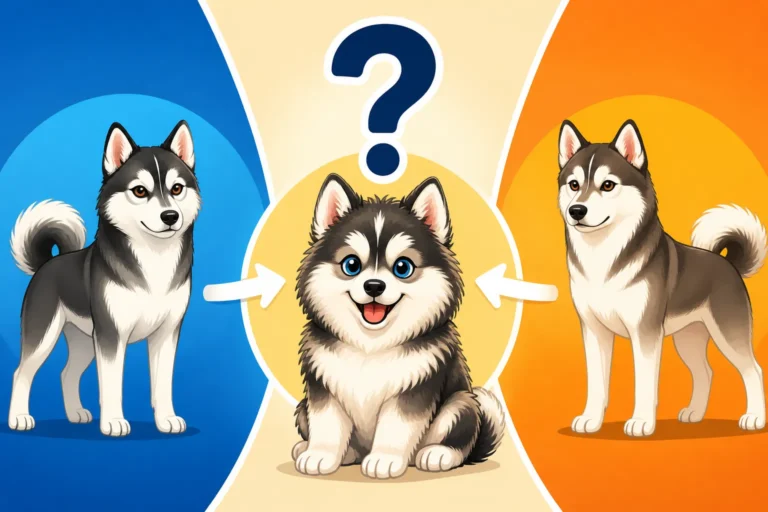
Whether the Pomsky Has a Written Standard
One of the most frequent questions I get from folks who are new to the Pomsky world, or even just curious about this charming designer breed, is whether there’s a consistent "look" or a set of rules they adhere to. It can be incredibly confusing when you see pictures online ranging from tiny fluffballs to mini-Huskies, all claiming to be Pomskies. This guide is here to shed light on whether the Pomsky truly has a written standard and what that means for owners and breeders alike.
Understanding What a "Written Standard" Truly Means for a Dog Breed
When we talk about a "written standard" in the dog world, we're not just discussing a suggestion box of preferences. It's a foundational document, a blueprint, that describes the ideal characteristics of a recognized purebred dog. Think of it as the ultimate guide that judges use in conformation shows, and responsible breeders strive to achieve in their breeding programs. Without one, consistency becomes a real challenge.
The Purpose of a Breed Standard
A breed standard is a detailed word picture of an ideal specimen of a particular breed. It covers everything from physical attributes like size, weight, coat type, color, eye shape, and ear set, to less tangible qualities such as temperament, gait, and overall impression. The whole point of these standards is to maintain the distinct identity and characteristics of a breed over generations. They ensure that a German Shepherd looks like a German Shepherd, and a Poodle looks like a Poodle, regardless of where they were bred in the world. This consistency isn't just for aesthetics; it often relates to health and function, aiming to breed out undesirable traits and amplify those that make the breed unique and fit for purpose. It’s a tool for preservation, guiding selection and ensuring that future generations maintain the breed's integrity.
How Established Breeds Get Their Standards
For a dog breed to acquire a formal, written standard, it typically needs recognition from a major national or international kennel club, such as the American Kennel Club (AKC) in the United States or The Kennel Club in the UK. This process is a marathon, not a sprint. It often begins with a group of dedicated fanciers who are passionate about developing and preserving a specific type of dog. They work for many years, sometimes decades, to establish a stable breeding population, track pedigrees, prove consistency in type and temperament, and gather support for their breed.
During this long journey, they’ll form a parent club, which then drafts the breed standard. This document is meticulously debated, refined, and eventually approved by the parent club before being submitted to the kennel club for review. The kennel club then evaluates the breed's health, temperament, and consistency before granting full recognition, which includes formally adopting the written standard. It’s a rigorous process designed to ensure that new breeds are robust, distinct, and deserving of a place among established purebreds.
The Current Reality of the Pomsky and Formal Recognition
This brings us to the Pomsky, a relatively new designer crossbreed that has captured many hearts. Given its recent emergence, the journey towards a universally recognized written standard is still very much in its infancy, and perhaps not even the ultimate goal for everyone involved. The very nature of a crossbreed introduces complexities that purebreds don't face.
Why the Pomsky Lacks Kennel Club Recognition
The primary reason the Pomsky lacks formal recognition from major kennel clubs like the AKC is simply that it's a hybrid, not a purebred dog. Kennel clubs typically have stringent rules about recognizing new breeds, often requiring generations of documented breeding to a consistent standard, known pedigrees, and a stable gene pool that reliably produces dogs true to type. Because the Pomsky is a first-generation (F1) or subsequent-generation cross between two distinct purebreds – a Siberian Husky and a Pomeranian – it doesn't fit the traditional mold for purebred recognition. The genetic diversity inherent in crossing two different breeds means that traits can vary widely, even within the same litter. You might see one puppy lean heavily towards its Husky parentage in size and markings, while another sibling might resemble a larger Pomeranian in coat and facial features. Whether an F1 Pomsky Is Healthier Than an F2 or if whether an F1 Pomsky is not the one breeders want are common discussions in this vein, as breeders try to introduce more predictability.
This unpredictability, while charming in its variety, goes against the very principle of a standardized breed. Furthermore, the breeding of Pomskies often involves artificial insemination due to the significant size difference between the Husky dam and the Pomeranian sire, which is a departure from natural breeding practices often preferred by traditional kennel clubs for establishing a breed.
The Role of Designer Dog Associations
While major kennel clubs haven't opened their doors to the Pomsky, a different kind of organization has emerged to cater to designer breeds: designer dog associations. These groups, like the International Pomsky Association (IPA), play a crucial role in bringing some semblance of order, ethics, and documentation to the world of hybrid dogs. They understand that there's a strong demand for these unique mixes, and they aim to promote responsible breeding practices even without full purebred status.
These associations often create their own "breed standards" or guidelines, which, while not formally recognized by the AKC or similar bodies, serve as a guide for their members. They focus on defining desired traits, promoting health testing for parent breeds, and encouraging ethical treatment of breeding dogs. They provide a framework for breeders to work within, helping to move beyond purely random pairings towards more thoughtful and health-conscious breeding decisions. This helps buyers understand what to expect, even if variations are still a part of the Pomsky experience.
What the International Pomsky Association (IPA) Does for the Breed
The International Pomsky Association (IPA) is one of the most prominent organizations dedicated to the Pomsky. It was founded with the intention of guiding the development of the breed and providing resources for both breeders and owners. They recognize the challenges of a new crossbreed and strive to bring consistency and health considerations to the forefront.
IPA's Efforts to Define the Pomsky
The IPA has put a significant amount of effort into defining what an "ideal" Pomsky should look and act like. While it's not a legally binding, universally recognized standard in the way a purebred standard is, it serves as a guideline for member breeders. This includes outlining desired size ranges – understanding that What a Pomsky Actually Weighs can vary greatly – acceptable coat types, eye colors, and even temperament traits. They aim to steer the breed towards a consistent aesthetic and behavioral profile, moving it closer to being a truly predictable breed, even if it's still a ways off. They've established different generations (F1, F1b, F2, etc.) to help track lineage and predict traits, which can be immensely helpful for prospective owners.
This guidance isn't about rigid enforcement, but about offering a framework. It helps breeders make informed decisions and gives buyers a clearer picture of what to expect from an IPA-registered Pomsky. It's a proactive step towards formalizing a breed that began largely from internet demand and viral photos, like The Pomsky the Internet Ordered Before It Existed.
The Importance of a Code of Ethics Over a Formal Standard
Perhaps even more important than a physical description of the ideal Pomsky, the IPA emphasizes a strong code of ethics for its breeders. In the absence of formal kennel club oversight, it's these ethical guidelines that truly protect the welfare of the dogs and the integrity of the breeding program. This code typically covers things like health testing of parent breeds (for conditions common to Huskies and Pomeranians, such as Slipping Kneecaps in a Pomsky or The Eyes a Pomsky Gets From the Husky), responsible breeding practices, proper puppy care, and transparent communication with buyers.
For buyers, What an IPA Registered Pomsky Guarantees often revolves more around these ethical considerations and health assurances than a precise aesthetic. It's a commitment from the breeder to prioritize the health and well-being of their dogs, and to provide accurate information about the puppies. This is crucial for a breed that doesn't have generations of documented health data from a recognized registry. It means that while your Pomsky might still vary in appearance from its littermates, you have a better chance of getting a healthy, well-socialized puppy from a breeder who adheres to these principles.
The Impact of No Universal Standard on Pomsky Appearance and Temperament
The lack of a universally recognized, consistent breed standard is perhaps the most defining characteristic of the Pomsky experience. It's both a source of its unique charm and a potential challenge for new owners who might have very specific expectations.
The Wide Variation in Pomsky Characteristics
Because there's no official standard enforced by major kennel clubs, Pomskies exhibit a remarkable degree of variation. You could line up five "Pomskies" and find them looking like entirely different breeds! This variation manifests in:
- Size: From small, almost Pomeranian-sized dogs, to larger ones that strongly resemble a small Husky. What a Pomsky Actually Weighs can be anywhere from 10 to 35 pounds or more, making it hard to predict your puppy's adult size.
- Coat Type: Some have the fluffy, stand-off coat of a Pomeranian, others the denser, slicker double coat of a Husky, and then there are the wooly coats, which require specific grooming. Understanding The Three Pomsky Coat Types is vital for grooming expectations.
- Color and Markings: Pomskies can come in an incredible array of colors and patterns, including the classic Husky black and white, agouti, sable, merle, and solid colors. Masks, goggles, and bi-colored eyes are also common.
- Ear Set: While most adult Pomskies have erect ears, some might retain softer, floppier ears reminiscent of a puppy or a less upright Pomeranian ear.
- Temperament: This is perhaps the most significant variation. You might get a Pomsky with the stubborn independence and prey drive of a Husky, or one with the bold, sometimes sassy personality of a Pomeranian. Many fall somewhere in between, but the exact mix is unpredictable. This can lead to unexpected behaviors, like The Pomsky Escape Artist in a Twenty Pound Body or Recall on a Pomsky Bred From a Dog That Runs.
This means that Whether Pomsky Buyers Got What the Photos Promised is a constant question, as the "mini-Husky" look often seen in initial viral photos isn't guaranteed.
Navigating Breeder Claims Without a Standard
In the absence of a universal standard, potential Pomsky owners are left to navigate a landscape of individual breeder claims. Breeders might advertise "toy Pomskies," "mini Pomskies," or describe specific coat types or temperaments as if they are guaranteed. This is where your due diligence becomes paramount. Without a recognized standard, there's no external body to verify these claims beyond the breeder's own reputation and promises.
It's important to approach these claims with a critical eye. A reputable breeder will be transparent about the potential variations and won't promise a dog with an exact look or size. They'll show you photos of both parents, discuss the health testing performed, and allow you to meet the puppies and ideally the dam. They might even guide you through the selection process, helping you understand Whether You Pick a Pomsky Puppy or the Breeder Does. Look for breeders who are members of associations like the IPA, as this at least indicates a commitment to a common set of ethical guidelines and defined goals for the breed. Don't be swayed by extravagant claims that seem too good to be true, especially if they can't provide solid evidence or transparent breeding practices.
What This Means for Prospective Pomsky Owners
So, if you're dreaming of bringing a Pomsky into your home, understanding this reality is key. It means your approach to finding a puppy will be different from someone seeking a purebred with a long-established history.
Researching Breeders in the Absence of a Standard
Your research into breeders will be the most critical step. Since there's no overarching kennel club standard for the Pomsky, you need to rely heavily on a breeder's reputation, transparency, and personal ethics. Here’s what to look for:
- Health Testing: Ask for proof of health clearances for both parent breeds, covering common issues like hip dysplasia, patellar luxation, and eye conditions. A good breeder will freely provide OFA or PennHIP certifications for hips, patella exams, and CERF eye exams. Don't be shy about asking specific questions related to potential health issues like Hip Dysplasia in a Twenty Pound Pomsky or The Collapsing Trachea a Pomsky Gets From the Pomeranian.
- Transparency and Communication: A reputable breeder will be open about their breeding practices, answer all your questions, and be upfront about the potential variations in size, coat, and temperament. They won't make guarantees they can't keep.
- Parent Pictures and Temperament: Always ask to see pictures of both parents, and if possible, meet the dam. Observe her temperament – is she friendly, confident, and well-adjusted? This gives you a better indication of what her puppies might be like.
- References and Reviews: Ask for references from previous puppy buyers. Look for reviews or testimonials online, but remember to verify their authenticity.
- Contract and Guarantee: A solid contract should outline health guarantees, return policies, and what happens if the puppy doesn't meet certain expectations (though remember, specific size or look guarantees are rare and often unreliable for Pomskies).
- Visit if Possible: If geographical distance allows, visit the breeder's facility to see the conditions the puppies are raised in. Are they clean, stimulating, and socialized?
Reputable breeders will often have waitlists, and while a What a Pomsky Deposit Costs might be part of securing your spot, ensure you understand the terms, including Whether a Pomsky Deposit Is Refundable.
Embracing the Unpredictability of a Pomsky
Ultimately, owning a Pomsky means embracing a certain level of unpredictability. You might have a vision of a tiny Husky with piercing blue eyes, but you could end up with a fluffier, slightly larger dog with brown eyes and an entirely different personality. This isn't a flaw; it's simply the nature of the crossbreed.
Instead of focusing on a precise aesthetic, be prepared for a wonderful companion whose traits might surprise you. What you can expect is a dog with a vibrant personality, intelligence, and often a beautiful double coat that requires significant grooming (and probably plenty of brushes from places like Chewy!). They are known for their playful nature, vocal tendencies (Why a Pomsky Talks Instead of Barking), and often a strong bond with their families. Being open to the unique individual your Pomsky turns out to be is the best mindset for happiness. What Nobody Warns a Pomsky Buyer About often comes down to this very unpredictability in traits and care needs. If you’re truly looking for a dog that consistently adheres to a very specific, traditional breed standard, a purebred might be a more suitable choice. But if you're ready for an adventure with a unique, charming, and sometimes surprising canine companion, a Pomsky might be just the dog for you.
Disclaimer
This article is for general informational purposes only and does not constitute professional advice. Laws, prices and regulations vary by location and change over time. Consult a qualified professional for guidance on your specific situation.